One of the goals I set for myself as I returned to Bosnia after a long absence, was to taste again as many of the traditional dishes that were a staple part of my diet when I worked here from 1998-2012 but have not had for quite a while. I made myself a list before I traveled so let’s see how I have done.
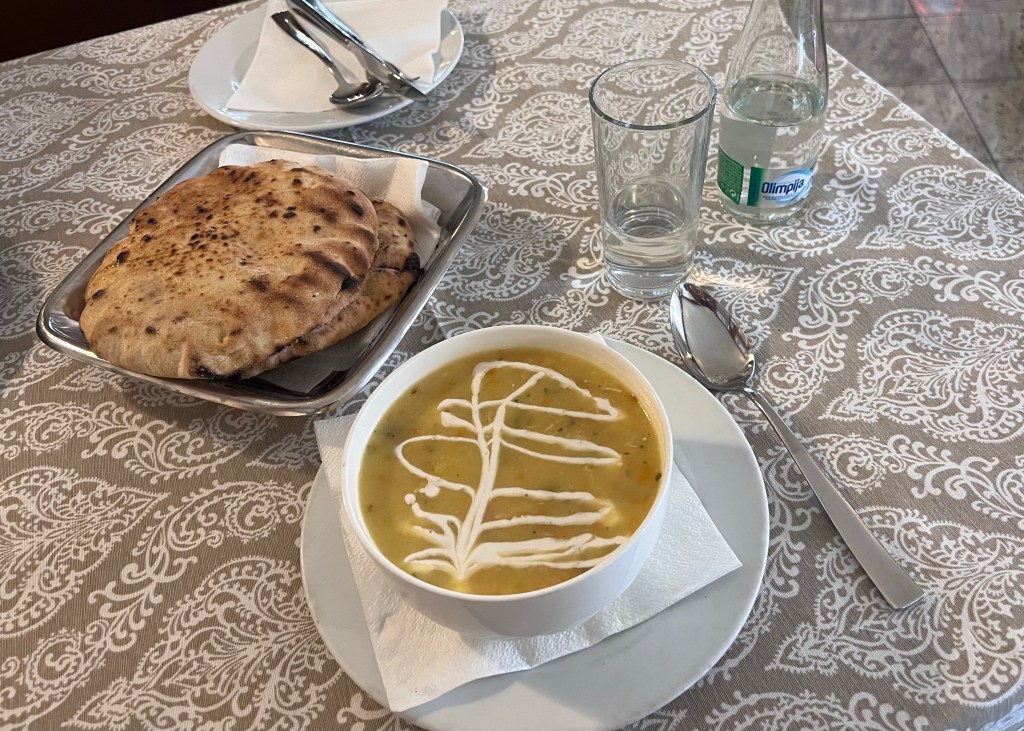
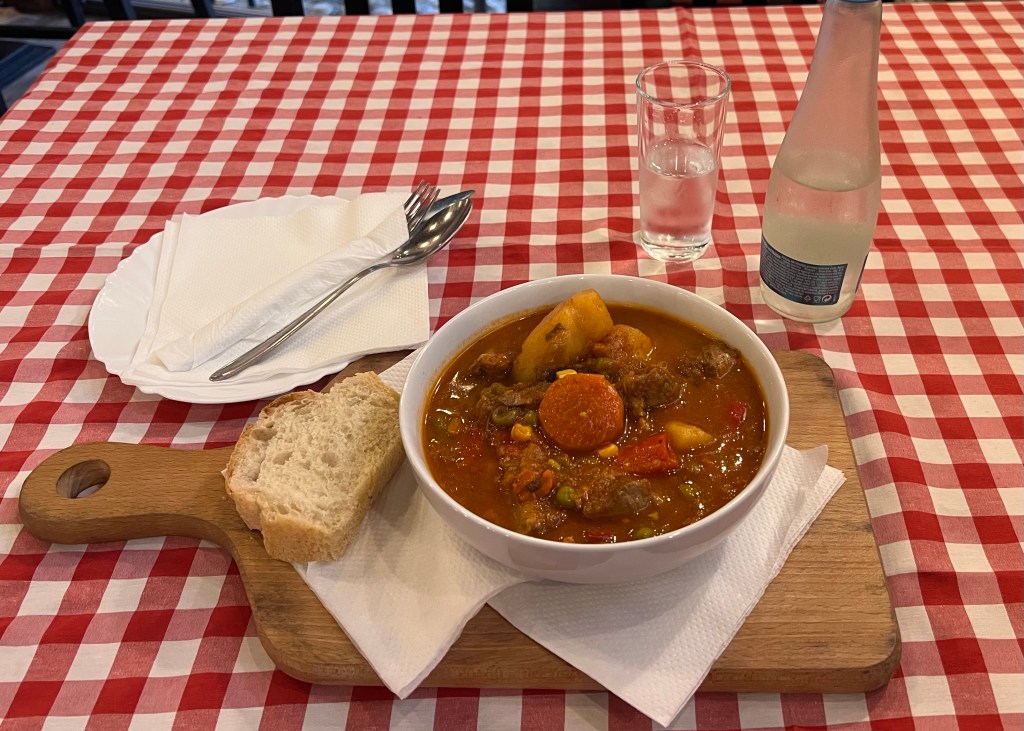
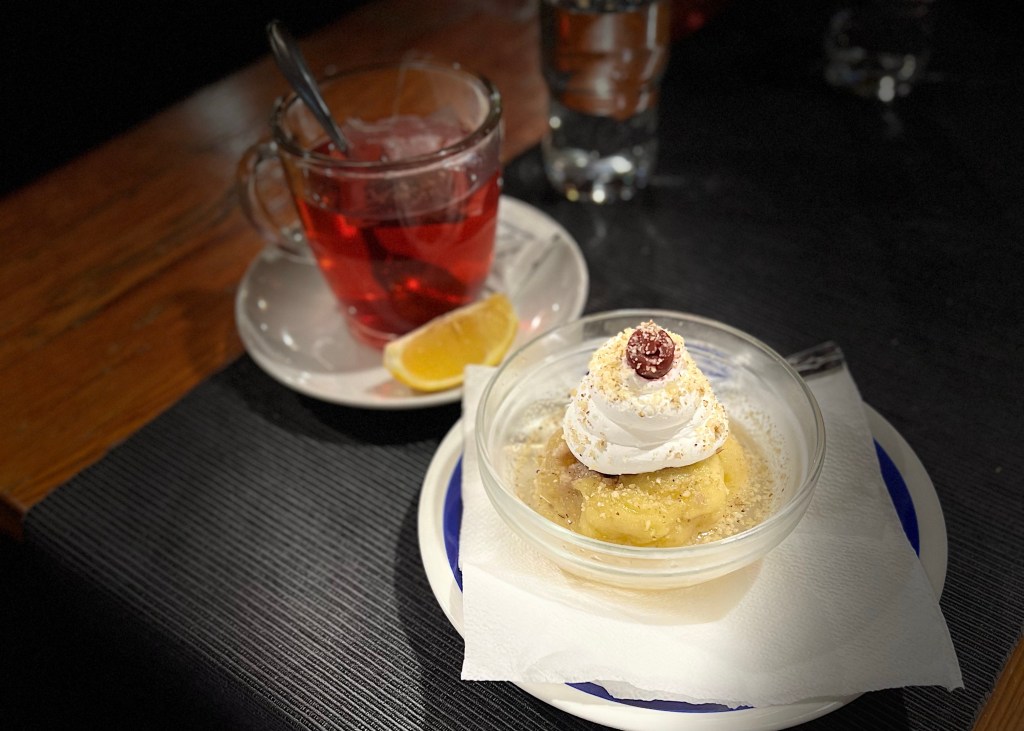
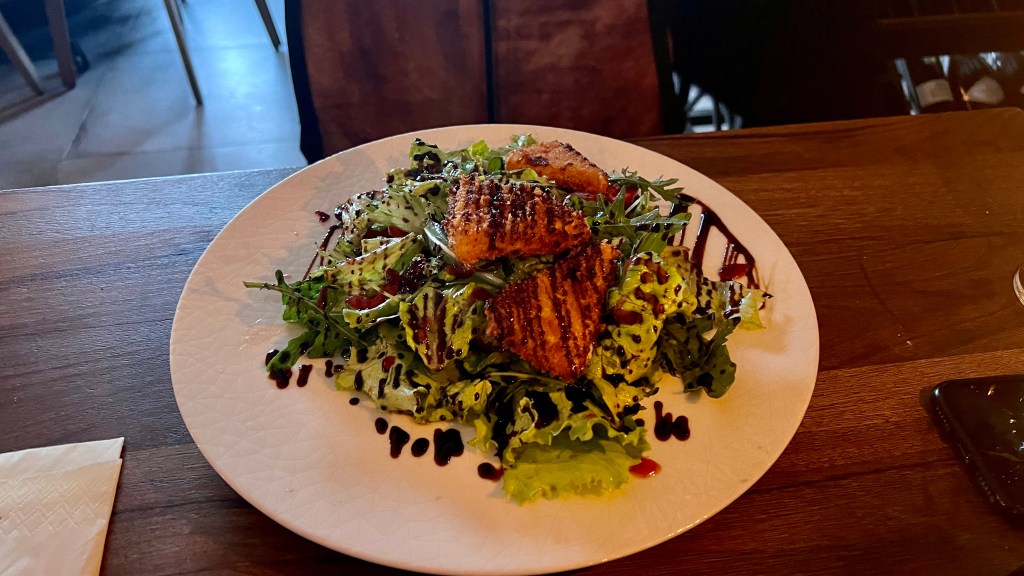
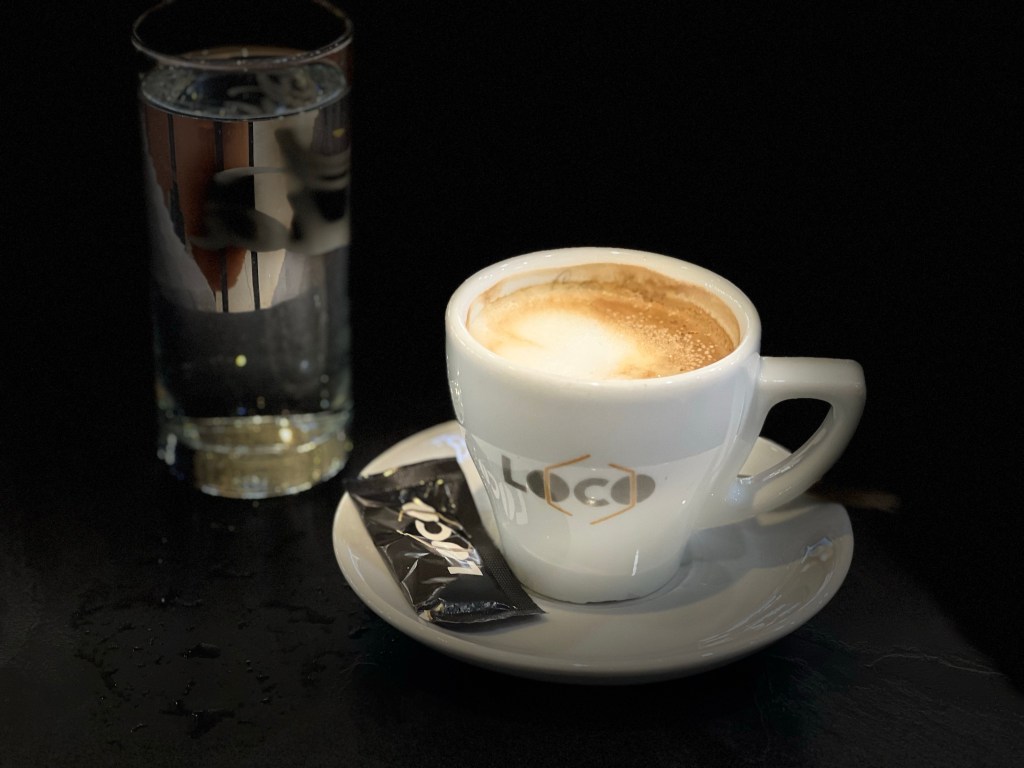
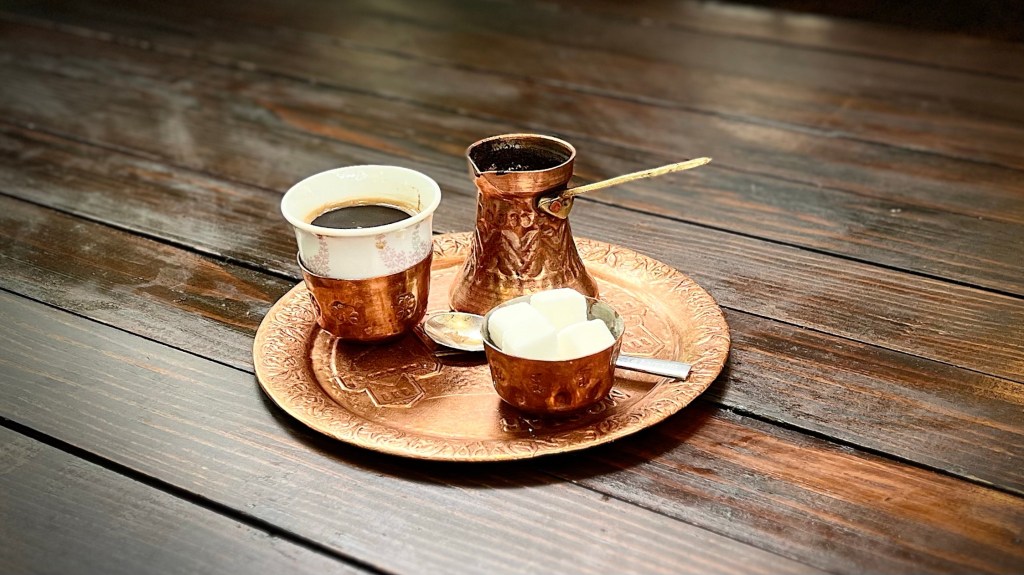
Ćevapćići. This was my introduction to Bosnian cuisine in 1998 at a restaurant called Hodzić in Sarajevo. So I had to go back there to do it again. Basically these are little skinless spiced sausages of lamb and beef grilled up when you order it and served with onions in a tasty, fresh pita-like bread called somun. It is often served with drinkable yoghurt but I am not a yoghurt fan so I take it will beer!Once again the somum bread accompanies Begova Ćorba, s creamy chicken/vegetable soup that also has sour cream in it. Great lunch dish.When at the Slava celebration in RS, part of the meal was sarma and corn bread muffins. Sarma is basically a cabbage roll, The filling typically consisting of a combination of ground meat (commonly beef and/or pork), rice, finely chopped onions, garlic, and a blend of spices such as paprika, salt, pepper, and sometimes herbs like parsley.Mućkalica is a flavorful stew that typically includes cubed or diced pieces of meat, such as pork, beef, or lamb, sautéed in oil or fat until browned. Onions, garlic, and bell peppers are then added and cooked until softened. The stew is further enriched with the addition of tomato sauce or crushed tomatoes, along with paprika, salt, pepper, and other seasonings. It is then simmered slowly until the meat becomes tender and the flavors meld together.At Inat Kuća in Sarajevo I had a mix of Bosnian specialties including dolme ( stuffed cooked onions), bamija (okra – always said to be “good for the potention”) and ćevaps. Served with a dollop of sour cream and a Sarajevsko pivo (beer)For dessert we wandered down the street to another old restaurant where I always enjoyed Tufahija, a poached apple stuffed with walnuts and topped with whipped cream. Accompanied by voćni ćaj (pronounced vochni chai) or fruit tea.Burek is a savory pastry made of phyllo dough and filled with either meat, cheese, or spinach. Sliced up like a pizza and good for breakfast or lunch.Fresh salads are always good, often with tomatoes and cheese and greens and cucumber.When I worked in Sarajevo I spend many a memorable Friday night in this little corner of Avlija with my co-workers Daren and Al and Donna in particular. What a treat to be there again with Lejla, Aldina, Saša and Muco. We ordered a couple of platters of food that included proccuitto, Travnik cheese, olives, tomatoes and a basket of Uštipci or Lokum. Uštipci are sort of like fried doughnuts that are often served as a snack or side dish. They are light and chewy and are often served with kajmak cheese or ajvar spread. Kajmak cheese is known for its rich, creamy texture and a slightly tangy and salty flavor. It has a smooth consistency that spreads easily. The other solid cheese on the tray is Travnik cheese often made from sheep milk. It is crumbly and salty and much like feta.Our second platter was grilled beef, baked potatoes, zucchini, deep fried chicken and mushrooms, more kajmak and lokum. And another toćeno pivo. (draft beer).My go-to request for coffee for breakfast or a break was usually is “Ja BiH Produženu kafu sa mlijekom, molim” that translates to “I will take an exyended coffee with milk, please. Sort of like a small latté. Comes with a glass of water and sometimes a little biscuit or lump of sugar.And then there is Bosnian coffee . Bosnian-style coffee or Turkish coffee, is a traditional method of preparing and enjoying coffee in Bosnia and Herzegovina. It is a strong and aromatic coffee brewed in a special long-handled pot called a “džezva.” Lots of grounds in the pot and foam on the top. The grounds settle to the bottom of the small coffee cups. Usually sweetened with sugar cubes you can drop into the cup before decanting the coffee or sometimes you dip the sugar cube into the coffee and eat it.
I loved getting a taste of all these foods that I had enjoyed years a go. I also sampled local beers from all the cities (Nektar in Banja Luka, Tuzlanski pivo and Sarajevsko pivo and Mostarsko pivo in those cities.
The downside was that with all this beer and bread and Bosnian cuisine, I put on 4 pounds over my visit to BiH!
When I worked in Tuzla 15-20 years ago I always find the town to feel industrial and the people to be “salt of the earth”. The city had experienced a lot of trauma during the war and there were many refugees, particularly women who had escaped from Srebrenica when their husbands and sons ( 6000 of them) were slaughtered in July 1995.
Now “salt of the earth” is appropriate in more ways than one. The people here are sturdy and diligent and resilient. But Tuzla also got is name from the Turkish word for salt – Tuz. The area was once covered by a shallow sea, and as the sea dried up, it left behind large deposits of salt. Over time, the salt deposits were buried under sediment and rock, and geological processes caused the salt to dissolve and form underground brine lakes. These were mined for many years by a process where the salt was dissolved underground and brought to the surface as salivated water which was evaporated.
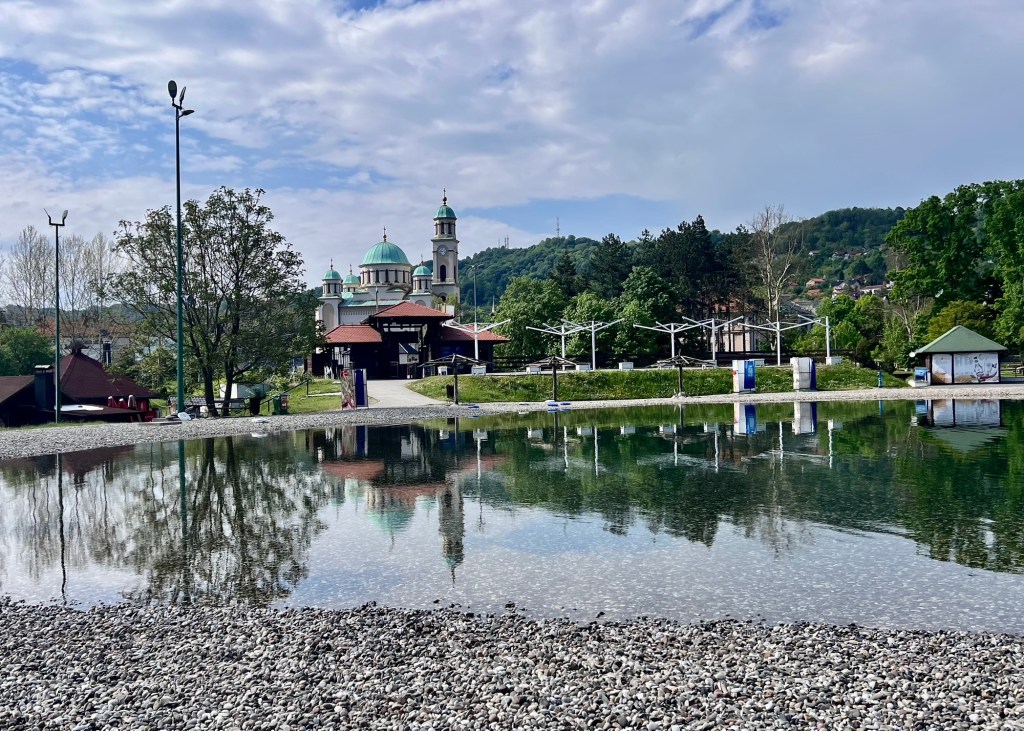
As a result of this process some of the land in the centre of the town is unstable and has sunk a bit in places. But when you are given salt…make some salt lakes. In the centre of the city are three small salt lakes that have been developed as a recreational area for swimming and exercise and enjoying summer weather. These have been more fully developed since I was working here and are now even an attraction for tourism.
One of the three salty lakes in the centre of the city.
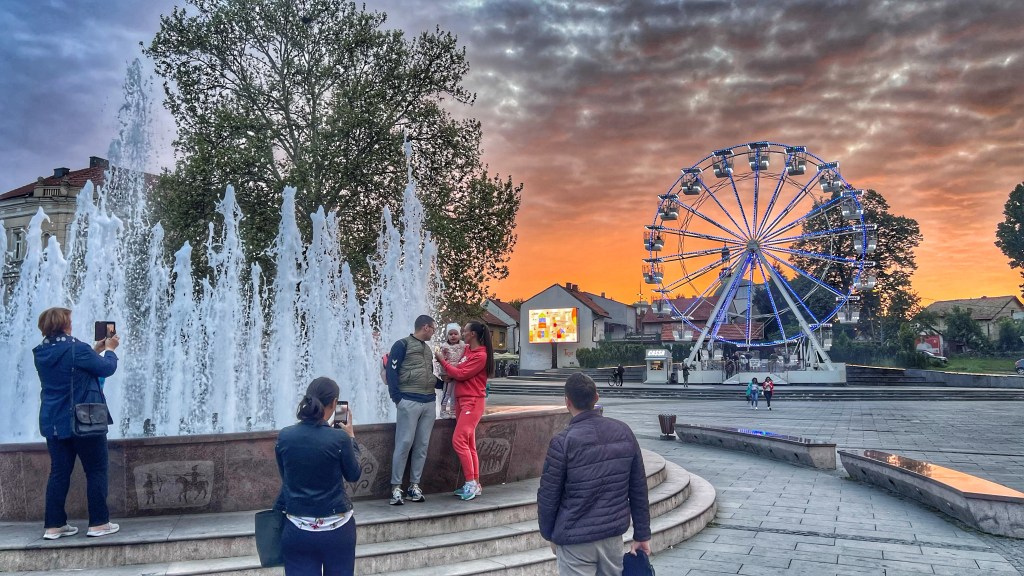
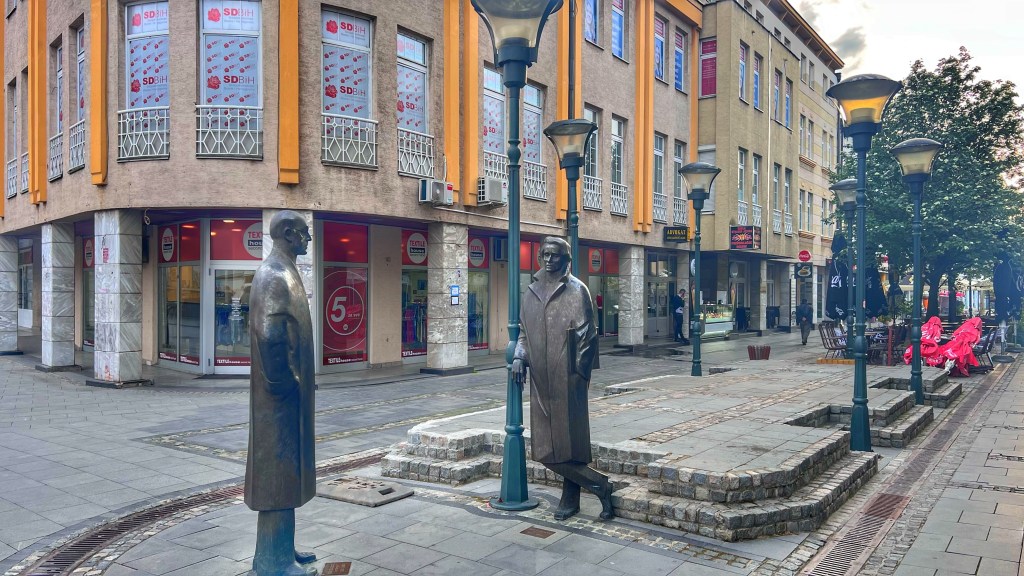
Today the city also seems more vibrant than I remember it. The core area walking street is livelier and more colourful but still has a sense of history. The main square has been upgraded with a big fountain and there are lots of restaurants with patios around it and a big Ferris wheel.
The main Peace Square is a friendly gathering spot.
I had lunch in a restaurant that I used to go to twenty years ago, called Citte del Sale. I have been on a quest to eat some of the traditional Bosnian foods that I enjoyed over my years here and for lunch I got some Begova Ćorba creamy soup made with veal or chicken, vegetables, and sour cream that was served with some fresh hot Somun bread. Somun bread is a type of flatbread that is a staple in Bosnian cuisine. It’s similar to pita bread, but is thicker and softer, with a chewy texture and a slightly sour taste.
Begova ćorba with Somun.
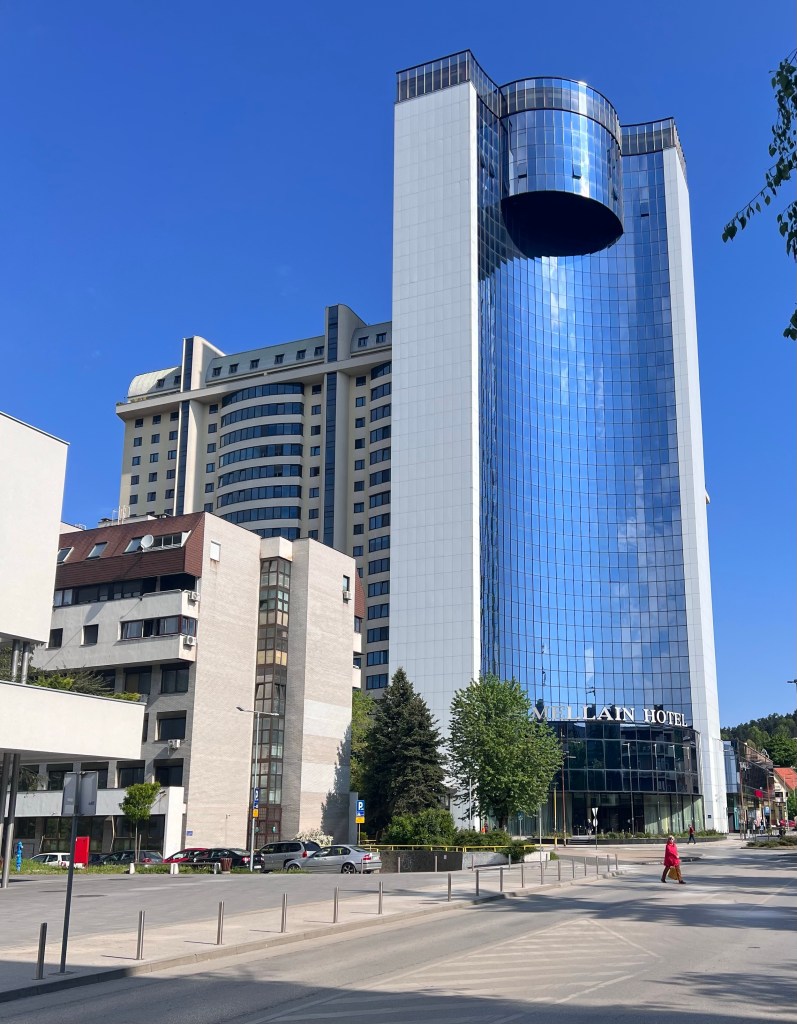
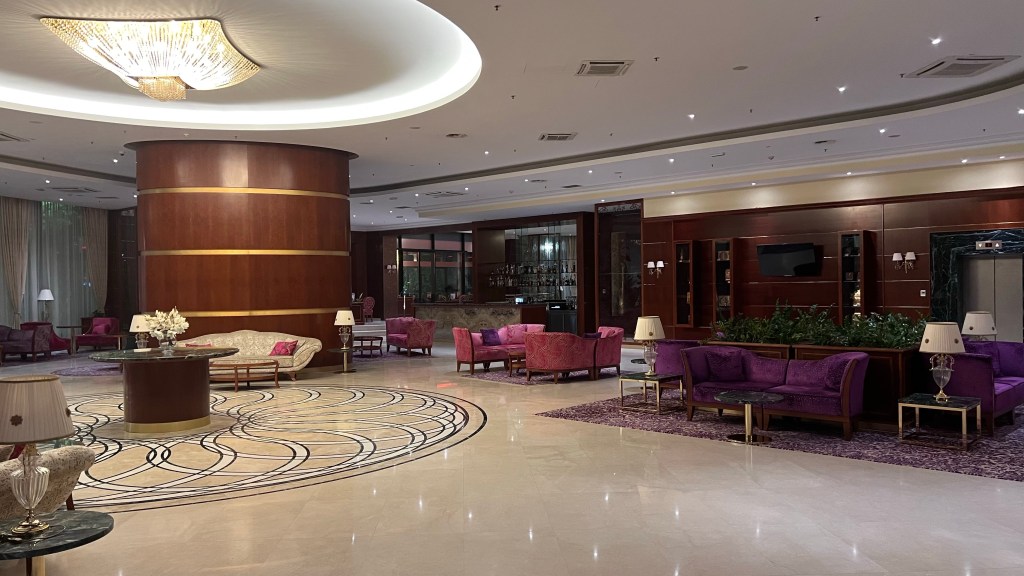
There is a large new modern hotel that is so much more appealing than the Hotel Tuzla where I used to stay. It looks modern and spacious and well appointed and has a gym and pool.
Lobby of the new Mellain Hotel
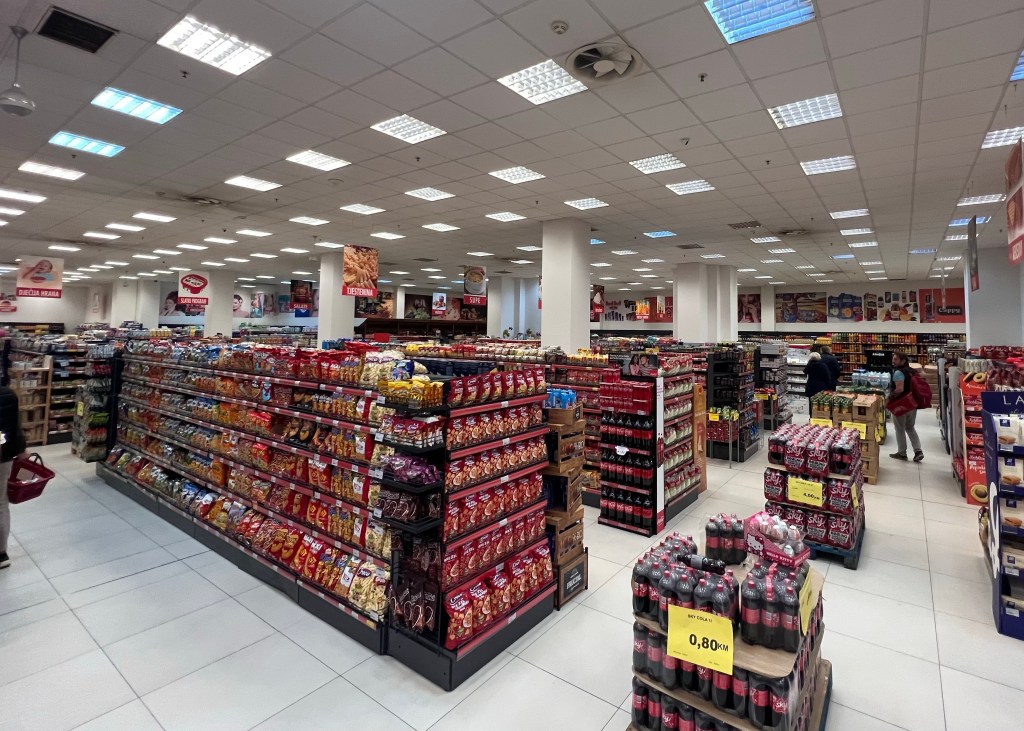
There are larger shopping centers and grocery stores. One supermarket below the new hotel is gigantic and a far cry from the little shops that were the norm in the past. Shops along the main walking street also seem more colourful.
Well-stocked Megsstores have sprung up in all Bosnian towns – a far cry from what was available 20 years ago.Walking street in central Tuzla.Small central street at night.
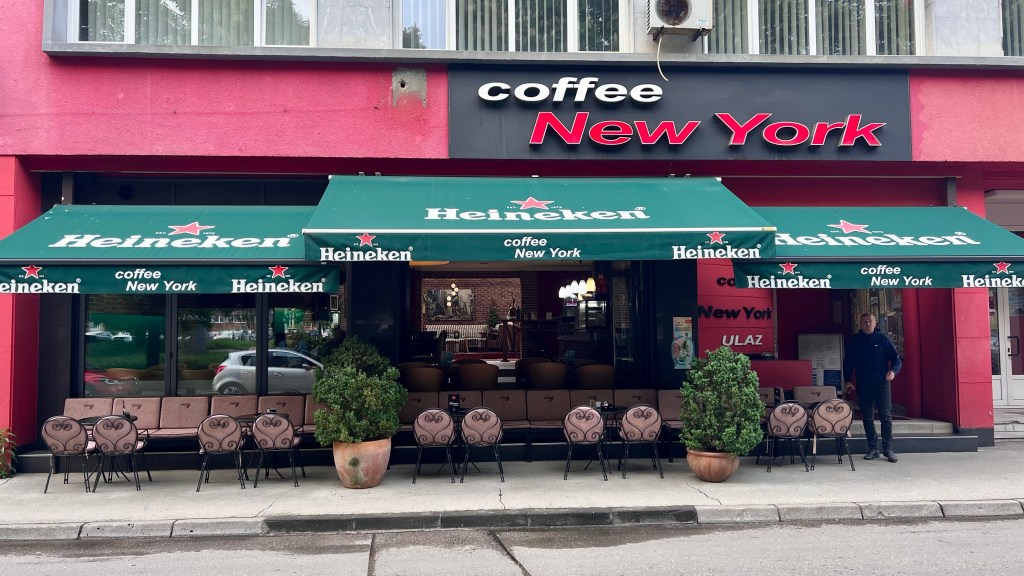
When revisiting Tuzla I made a point of going into a café that I used to haunt several years ago for a “produženu kafu sa mlijekom” (sort of an Americano coffee with milk). The café used to be called “Mozart”. The name has been changed to Coffee New York but the café has not changed much.
I was reminded of a post that I made twenty years ago about this cafè and the story is good enough to share again. The waitress who served me was probably not even born when this story unfolded. And the cat is long gone.
Bosnia and Herzegovina September 10, 2002.
If Sarajevo is the Montreal of Bosnia, then Tuzla is its Hamilton. Not much to do here in the evenings except wander the streets with many of the rest of the people who live here. During the day I work teaching principles of Family Medicine to local doctors. At night I am on my own.
Last night was a bit rainy and I thought I would wander downtown for some dinner. While I was looking for some keys in my knapsack, I came across the Stuart McLean Vinyl Café book that friends had given to me for Christmas a couple of years ago. I had brought it along with me, knowing that it would be good for short reads on the plane or while waiting for my meal in a restaurant. I tucked it under my arm and headed out.
I ate in a restaurant called Cite del Sale, a Bosnian version of an Italian restaurant and I was actually able to order Vegetarian Lasagne – not bad in a country that sometimes seems to worship meat. The beer, a local Tuzla variety, smelled a bit sulphury but it tasted OK. I started into a story about Dave and Morley and Harrison Ford’s toes and smiled to myself, all the while hearing Stuart McLean’s distinctive voice tell me the tale.
After the meal I decided to head down to a café called Mozart that is a short stroll along the main walking street in the city. I often go there for a cappuccino in the morning – a replacement for my Canadian Starbucks habit. The café has a small outdoor section that was not busy since it was misting rain, another large main room and then a wicker- furnished salon at the back that is kind of separate from the rest. I usually sit back there in the morning and read a bit while having my coffee and at 8 am, I am often the only one there. In the evening, I discovered, the music is louder – sort of Euro Disco. I wondered as I ordered my tea if I would be able to concentrate on my book.
There were three couples spread around the room. I pulled out the Vinyl Café and started to read. Soon I was distracted, not by the beat of the music but by the sound of kissing which seemed to be going on all around me. I quickly realized that I had stumbled into a make-out area of the café. So, here I was, a middle aged foreigner, sitting at a little table in the middle of the room, reading Stuart McLean and trying not to look up at the couples surrounding me who were fiercely groping at one another. This felt worse than the week before when I had accidentally found myself in the middle of a Nudist Colony on the Adriatic coast! But that is another story.
The stereo sound of smacking and sucking seemed to rise above the music. I was having trouble concentrating. I casually looked up. One couple, kind of fat were making most of the noise. The guy had a sort of Henry VIII look to him. I imagined that he makes similar noises as he tears into his chicken legs for dinner. Another couple had ordered both coffee and coke to drink. They must have wanted to stay awake. They smooched away between drags on their cigarettes. The third couple were in the corner and at first I thought they were having a bit of a tiff. I decided that if I had to look up, I would gaze in their direction. Soon, unfortunately for me, true love rose to the surface and they started kissing away, the woman also chewing gum between slurps.
I thought maybe I would leave but I had ordered a veliko caj (large tea), which came in a cup the size of a sink. So I was stuck, feeling a lot like a High School Hall Monitor.
Just as I was starting to feel sorry for myself, a small kitten appeared at my feet. It was a nice little grey striped thing that was sharpening its claws on the carpet. It started to pounce around and jump like it was being poked by an imaginary stick. I put my hand down to play with it but as it got closer, I noticed that its right eye was oozing and crusted and swollen shut. I withdrew my hand, thinking that I didn’t want to catch anything. But this didn’t deter the cat. Soon it was pouncing on my feet and grabbing at the laces of my sneakers and climbing my pant legs. I tried to look inconspicuous, periodically shaking my leg to detach the tiny sharp little claws from my pants. The kissers broke apart and looked over at me as I tried unsuccessfully to discourage the cat. I ended up downing the rest of my tea as quickly as possible and headed back to the hotel.
February 20, 2003
I am back in Tuzla.
I find the breakfast at the hotel simply annoying. It usually consists of dry buns, scrambled eggs that have turned greenish black from sitting in the warming pan too long and “orange juice” that is a cross between Tang and Fanta , a watery orange coloured sugar water that is sometimes even effervescent. My preference is to start the day on a more positive note, by walking to a local Pekara or bakeshop to pick up a fresh bread roll filled with cherry jam. I then head a bit further down the street to the Mozart café for some coffee. They don’t serve food there so they don’t mind if you bring your bun in a bag and eat it while you have your drink. And I usually go to the Wicker room at the back of the café that I have come to view as the nocturnal lair of lust. In the morning, however, it remains bright and cheery and almost empty. This morning was no exception.
I ordered my coffee, pulled out a journal to read, and got the cherry bun out of the paper bag. I put the bag on the chair beside me rather than have it obviously displayed on the table. I was trying to be discrete about bringing food into the café although I know that this is a common practice and the waiter really doesn’t mind.
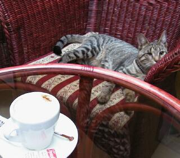
I hadn’t counted on the rustling sound of me getting my food out of the bag to attract…the cat. Suddenly this little grey striped beast ran from the other side of the room and jumped up on my chair to quickly begin exploring the empty bag. Within seconds he was halfway buried into the bag. He pulled his head out of the bag and stared up at me. We hadn’t seen each other for five months. He had grown but was still scrawny and where his right eye should be was now a hollow socket.
We sat together, the cat and I, reacquainting. Periodically he would chase the shadow of a bird on the roof, bounding over the furniture as he ran around the room. I crumpled up the bag and he batted it around on the floor. We played and visited while I drank my coffee. When I got up to leave, he lay back on the chair pad and cocked his head to look up at me with his good eye. I imagined him thinking, “Nice to see you again”
This little cat has it’s niche in a café here in Tuzla. I travel all over but I can still come back to find this friendly kitten here several months later.
It was great to go back to the centre if Banja Luka and stroll around the streets where I had lived and worked on and off over several years.
Basically the place looks pretty much the same as it did when I was last here in 2012. Here are some photos of the centre of the city which has a population of 200,000 spread around it.
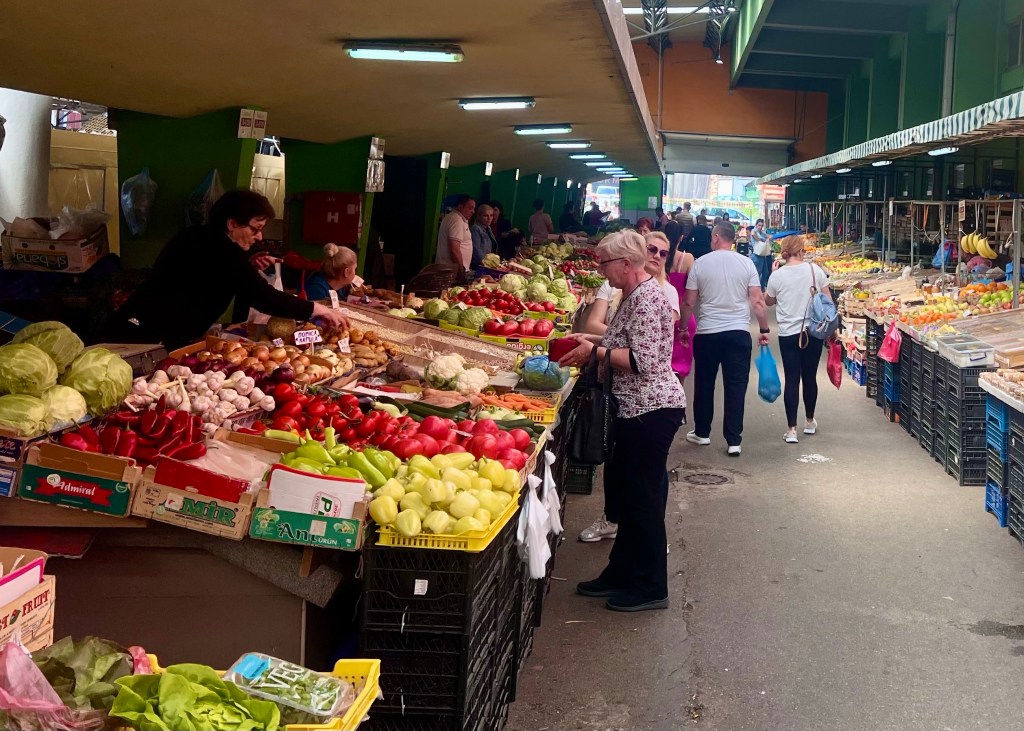
The main waking street has not changed much in 15 years.This market behind the mosque used to be open air, cold in the winter and wet when it rained. Now it is covered and larger. Lots of fresh fruit, flowers and vegetables.This little restaurant is where we had our burek lunch.
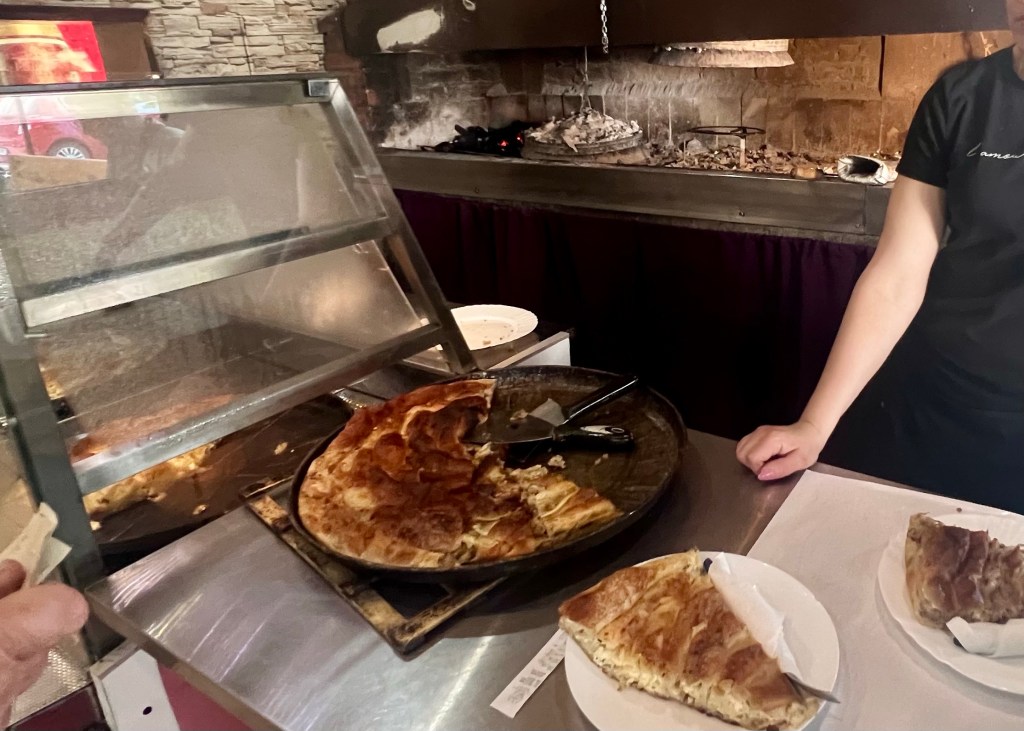
We stopped for lunch at a small restaurant that makes burek under the sać. Burek is a pastry made of phyllo pastry stuffed with cheese, meat or spinach and in this case cooked on a pan that is covered with a lid and then with hot coals piled on top. This way of cooking can also be used to cook meat and vegetables under a dome piled with coals. It was filling and delicious lunch of a traditional food made in a very traditional way.
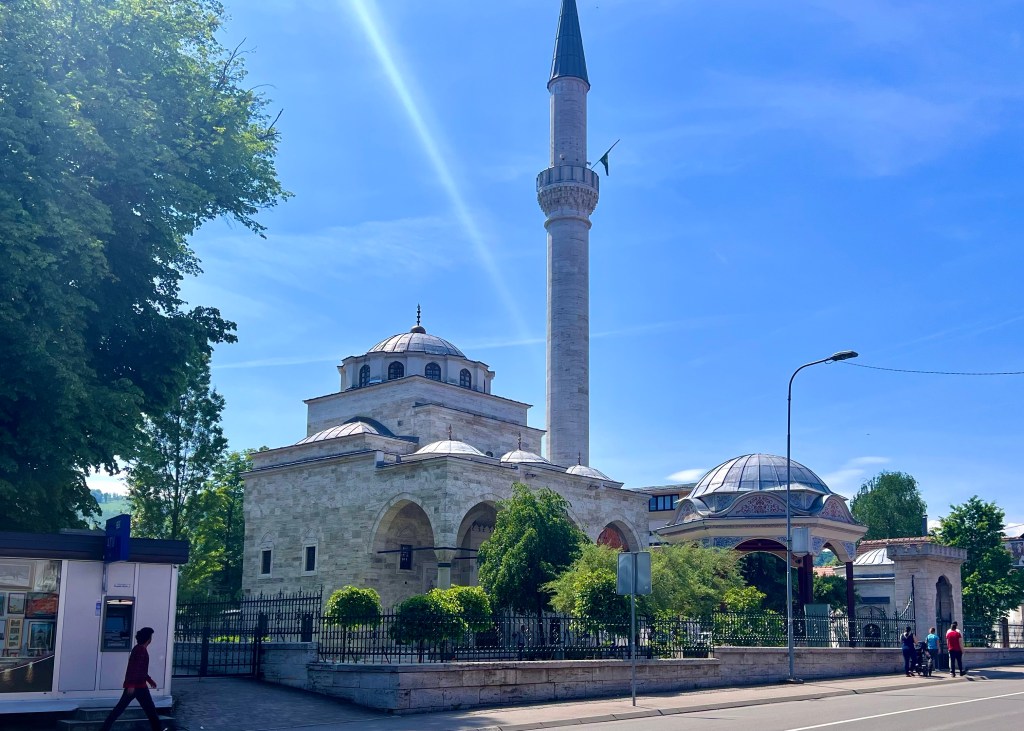
A pan of burek just off the coals from the oven behind.The reconstructed Ferhadija mosque in the centre of Banja Luka
Exactly 22 years ago to the day, May 7, 2001, Saša and I had stood on this same corner when a large crowd gathered and hooligans held 200 Muslims (and the Canadian ambassador) hostage in a building by an empty lot here. The group had come to lay a cornerstone to rebuild the Ferhadija mosque that had been destroyed during the war.
The original mosque at this site was built in 1579 during the Ottoman period and was named after its founder, Ferhad Pasha Sokolović. The mosque was an important religious and cultural landmark in the region, serving as a gathering place for Muslims in Banja Luka for over 400 years.
However, during the Bosnian War in the 1990s, the Ferhadija Mosque, along with many other historic buildings and cultural sites, was heavily damaged as ethic conflict plagued the country. The mosque was set on fire and its minaret was destroyed, leaving only the stone walls and foundation intact.
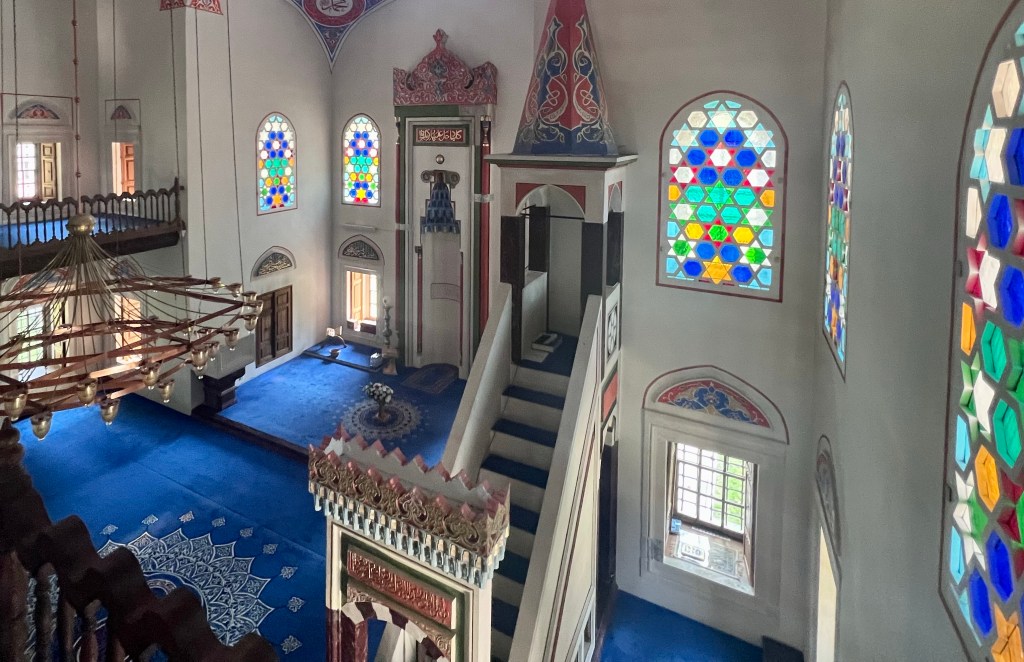
As tensions tose on that 2001 May Day, two busses that had brought some of the people now barricaded in the building burned and black smoke rose over the site. SFOR helicopters roared overhead. Thankfully the tensions were eventually brought under control and no one was injured but it was a day filled with uncertainty and threat. My co-worker and friend, Daren Trudeau and I were forced to make a hurried escape through the mountains to Sarajevo while the crisis was evolving. Today, 22 years later, I was delighted to see this beautifully reconstructed Ferhadija mosque.
On the street , men gather in the spring sunshine to play chess.
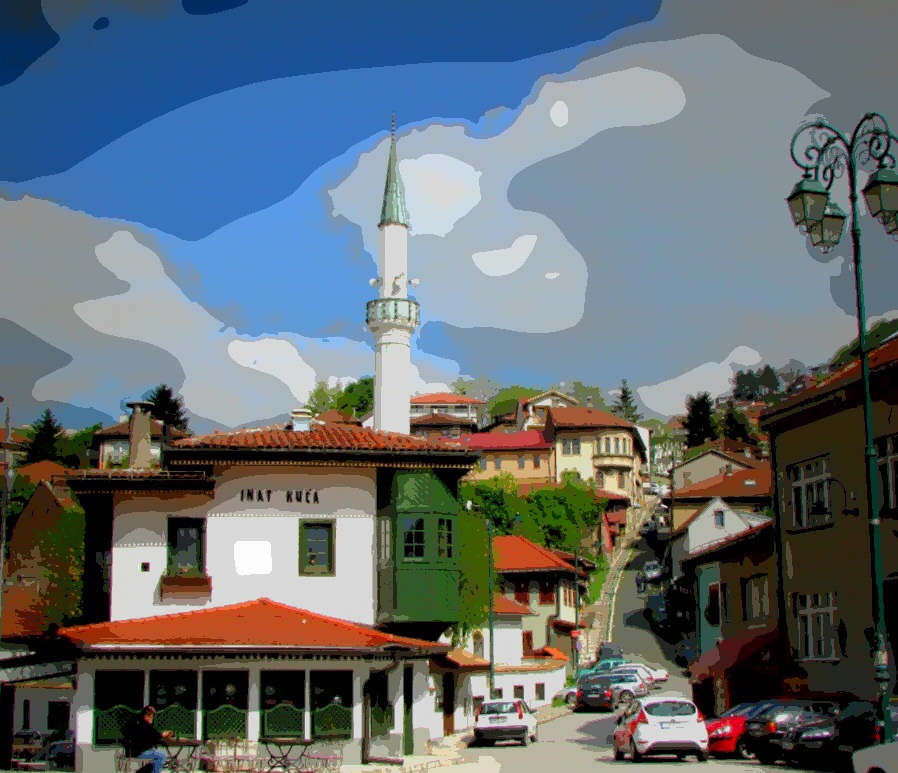
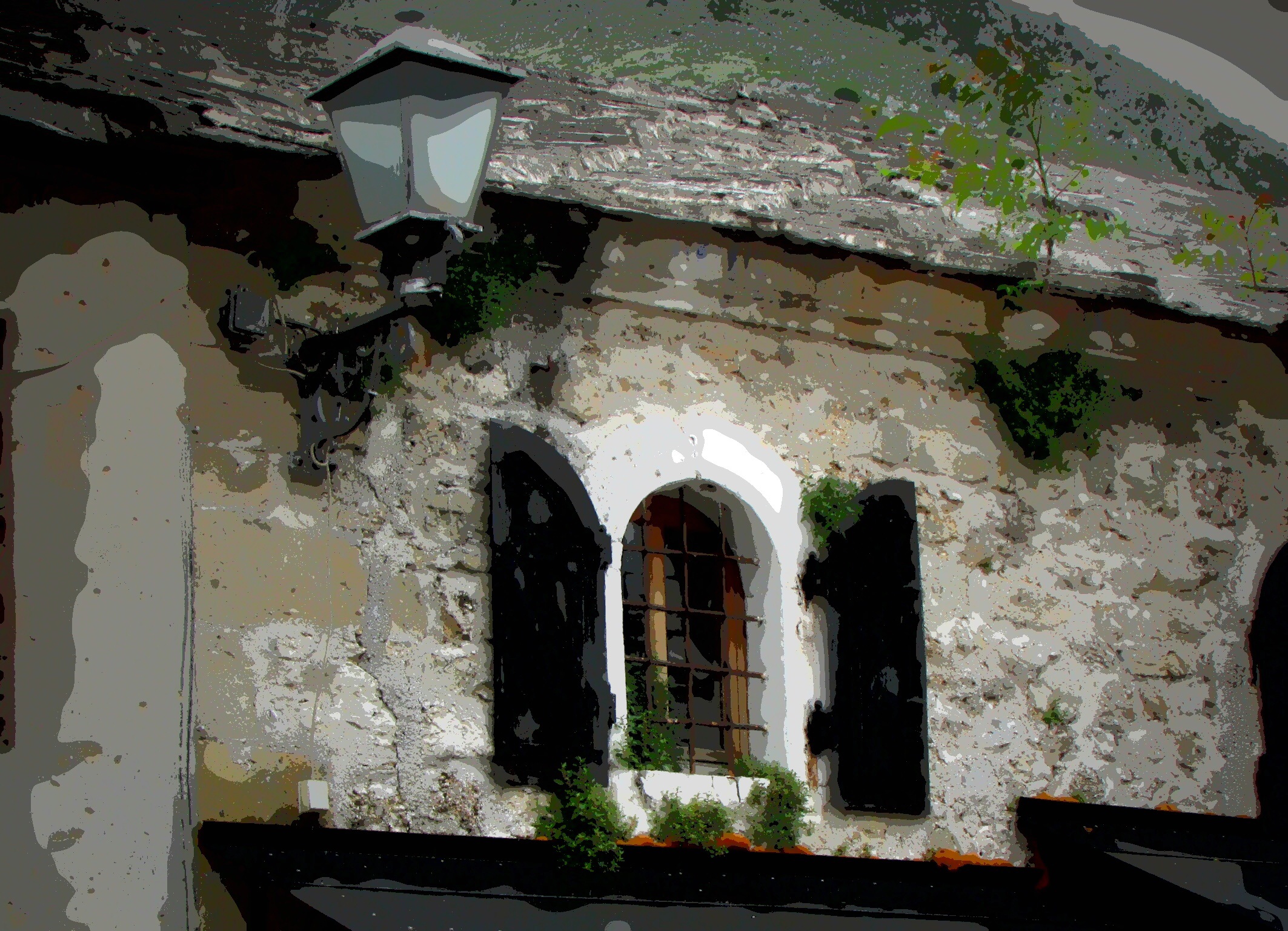
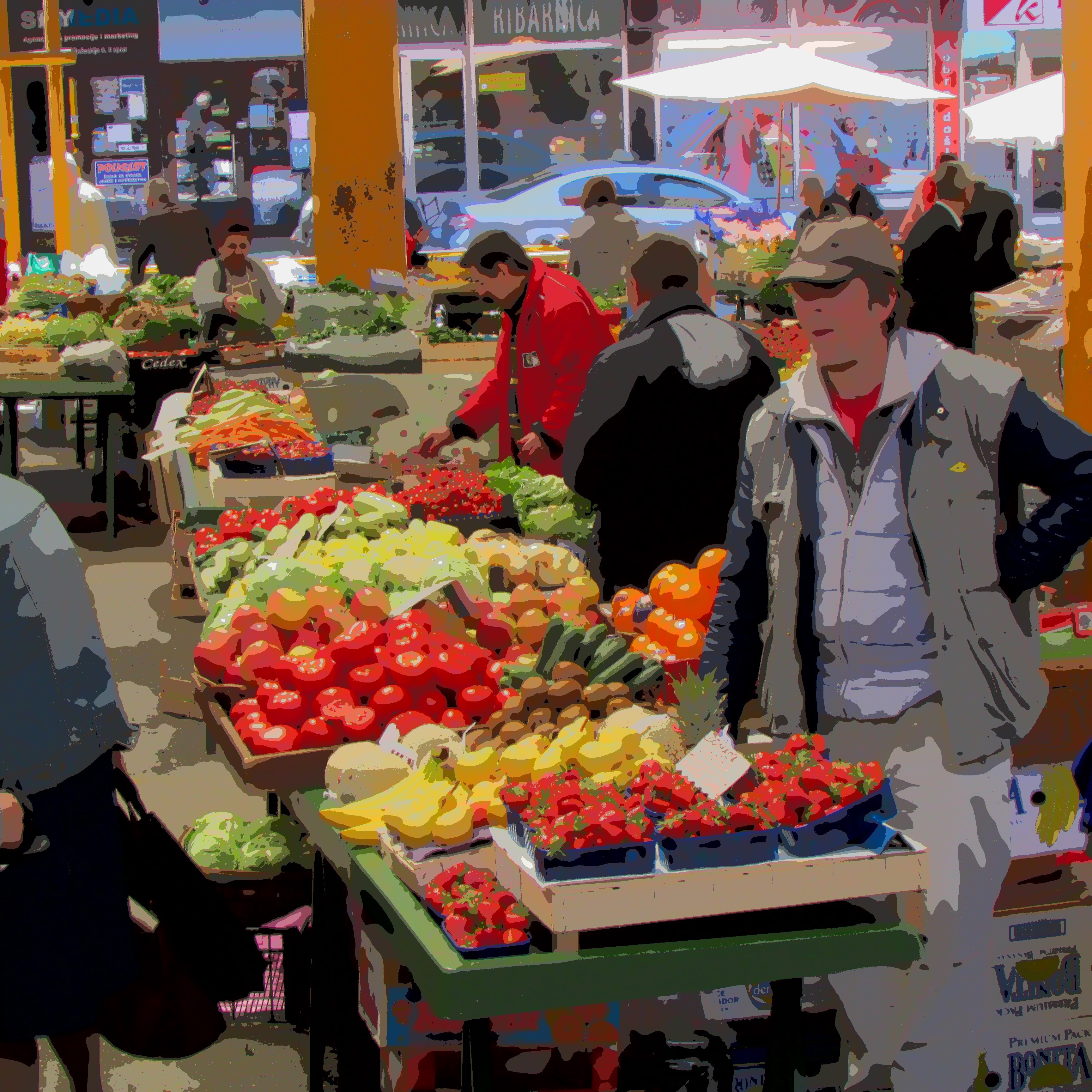
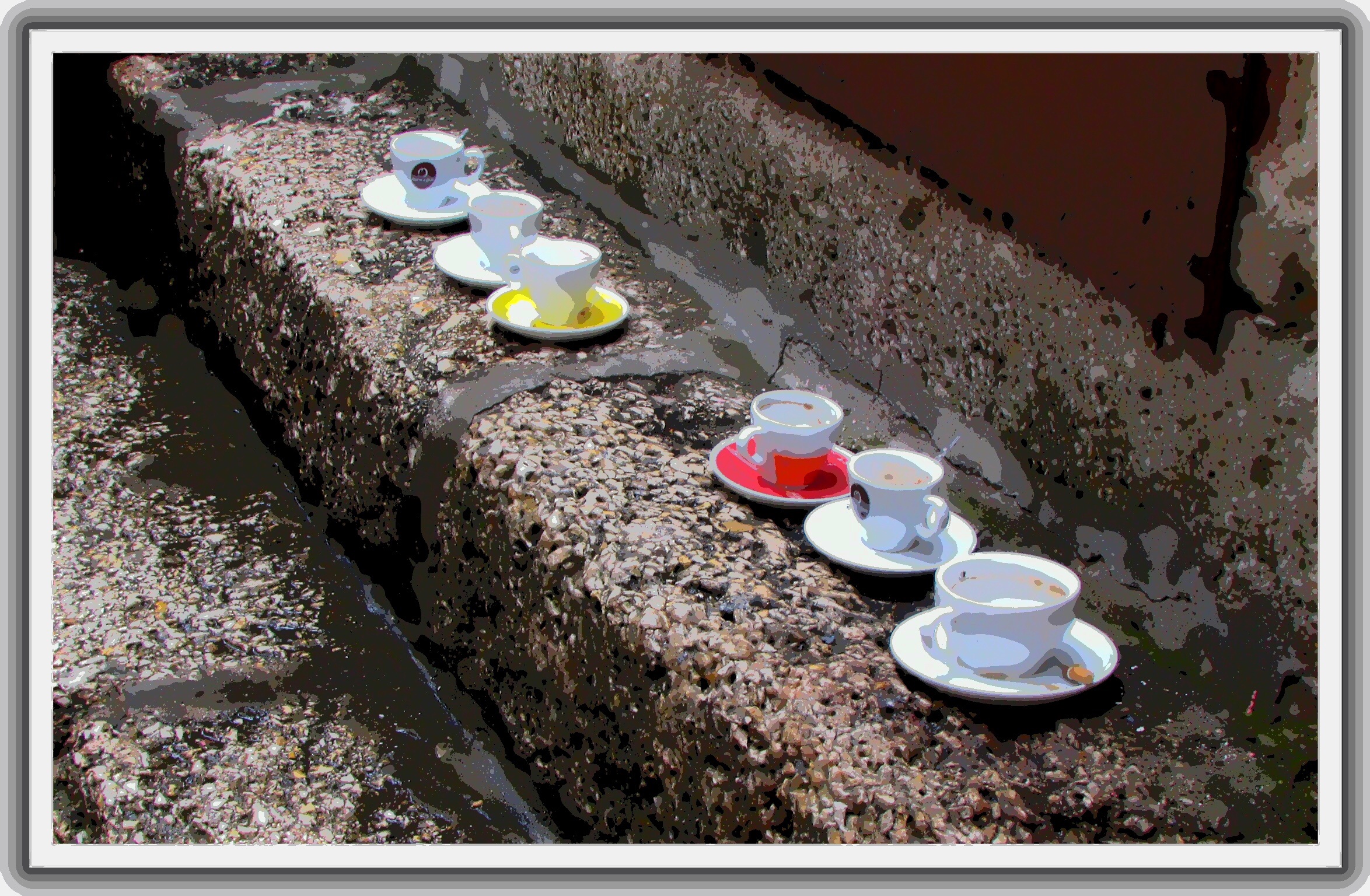
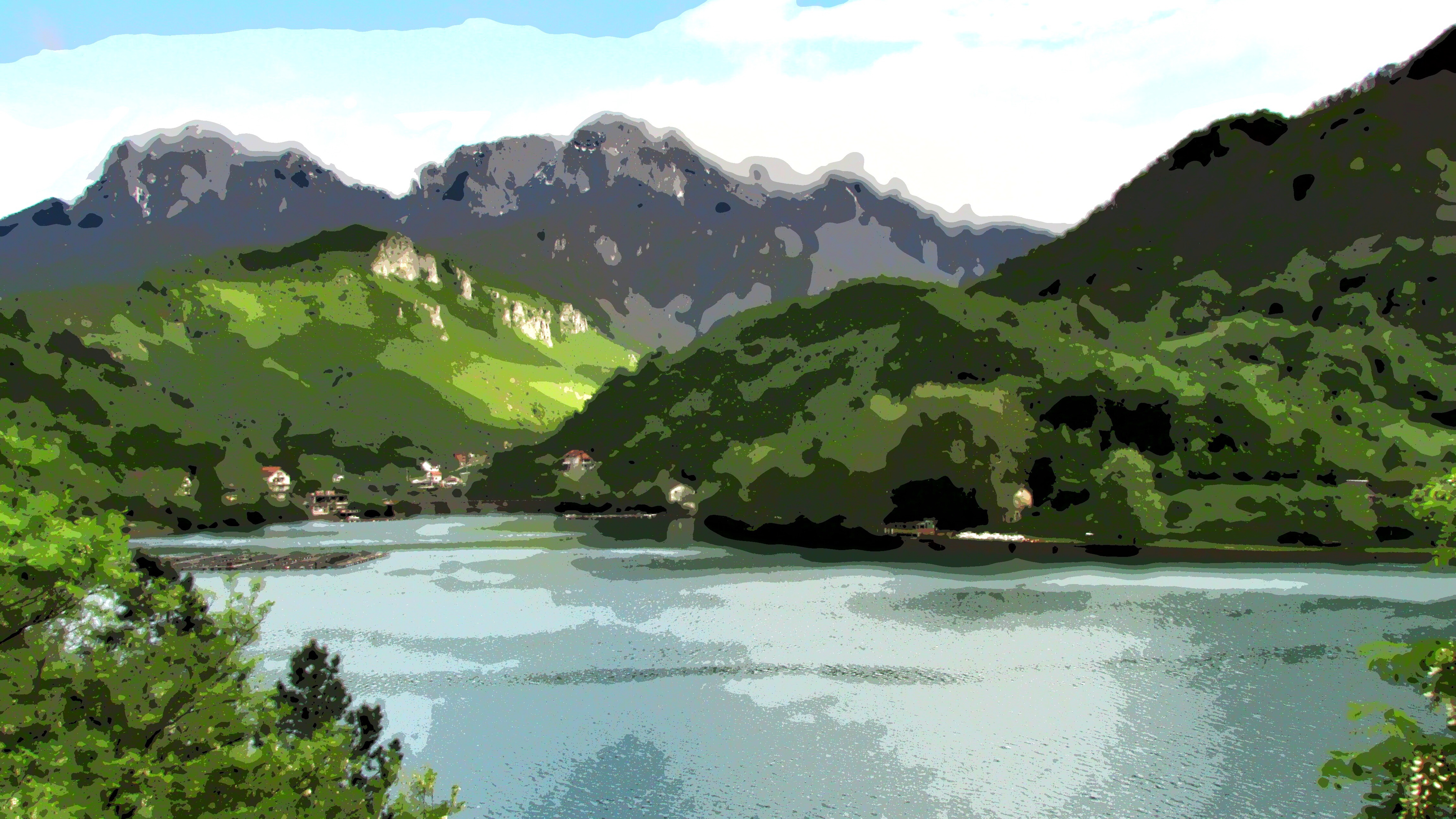
When I visited Bosnia in the spring the weather was particularly cool and damp. I wondered if my photos would be a bit dreary. I was looking through my pictures last night and realized that many of them held vibrant colour and they cried out to me for a poster treatment. So here are a few of my photos, posterized. I don’t usually tart my photos up this way but I kind of like these. Enjoy a brief visit to Bosnia and Herzegovina.
The hill behind Inat Kuča in Sarajevo.
The Mostar Bridge
Street in old Mostar.
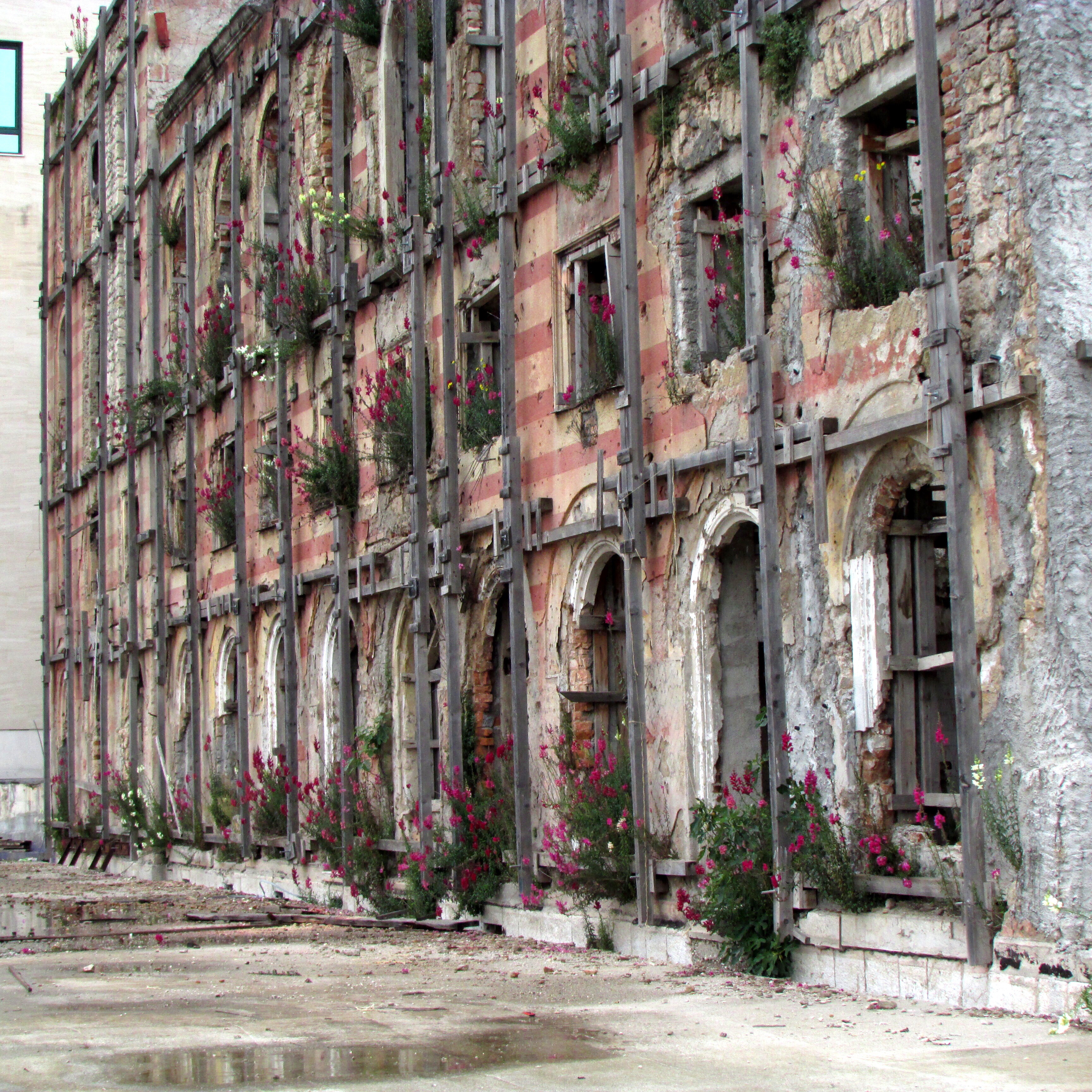
This building in Mostar near the river was heavily damaged during the war. It has been shored up with timbers. Snapdragons grow between the bricks on the window ledges. In fact, I didn’t alter this photo. This is how it looked. Dramatic.
Mostar
Sarajevo Market
Coffee time.
The old bridge – Stari most – from which Mostar gets its name.
The Neretva River on the very scenic drive between Sarajevo and Mostaf.
Last month I stood on a Sarajevo corner and tried to imagine the day 100 years ago when, on that very spot, an event changed the history of Europe and the whole world for the upcoming century.
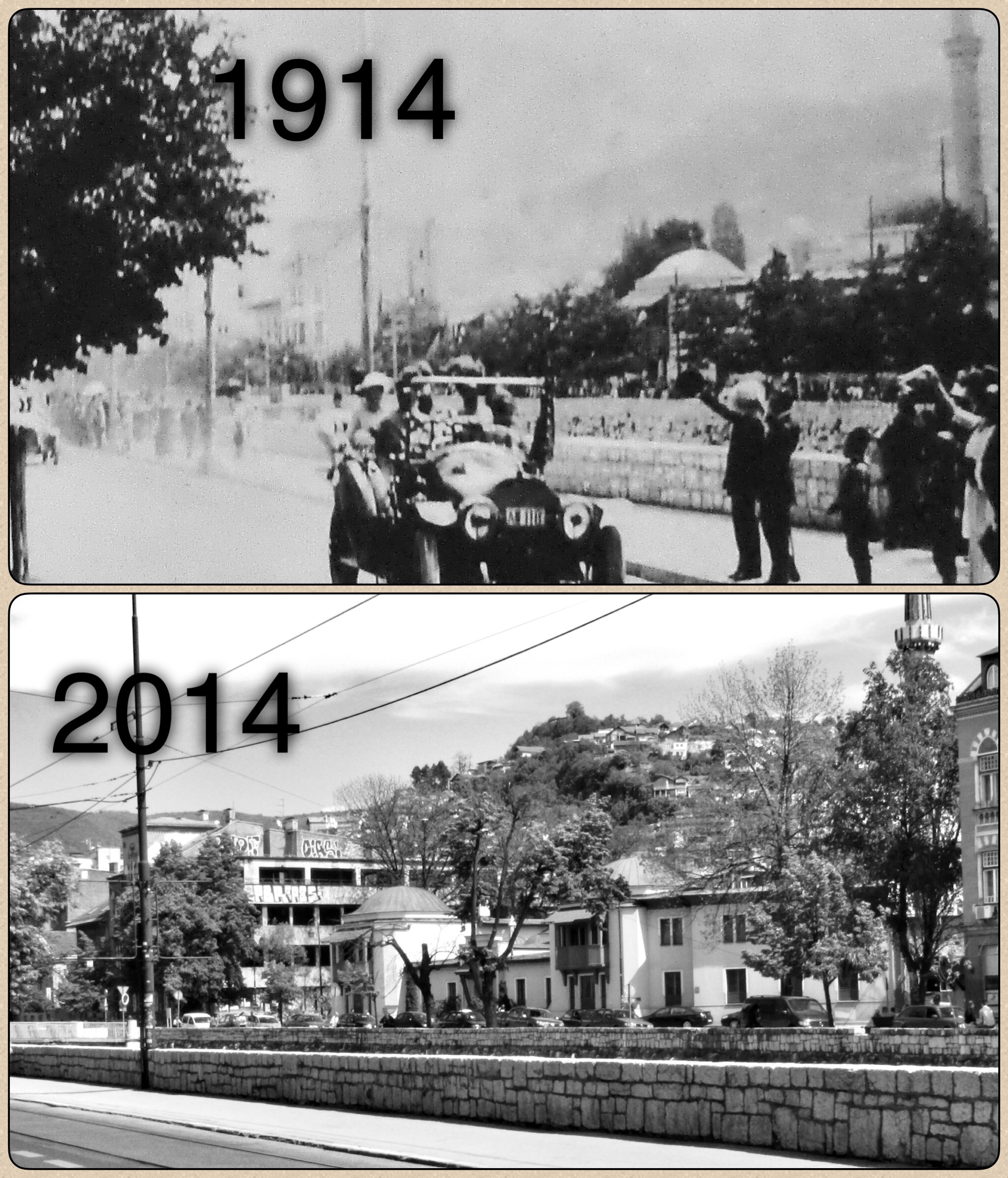
Today this corner looks very much like it did 100 years ago. In May I stayed in a great little hotel (Old Town Hotel) that was just at the end of this historic little street.
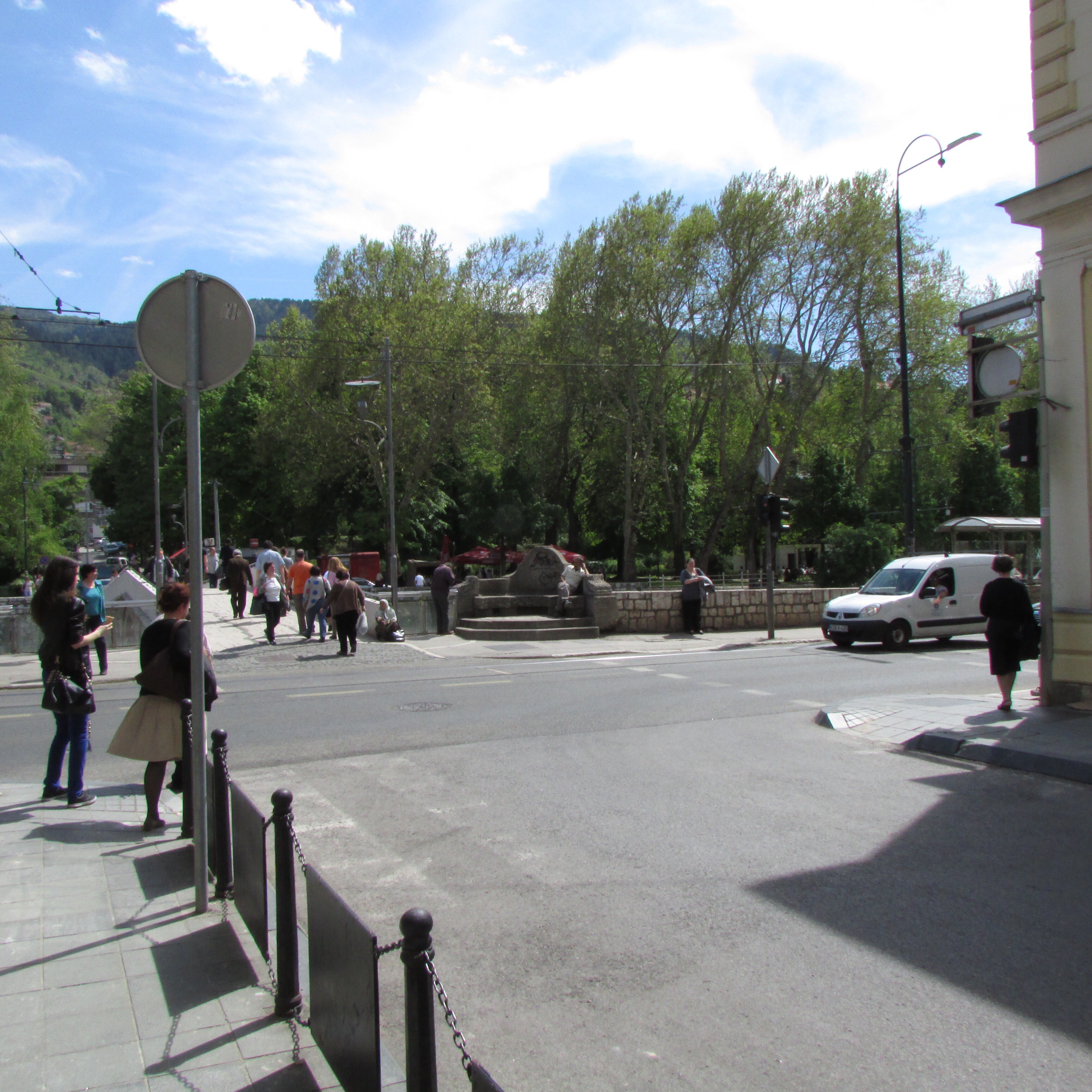
Today, the intersection is unremarkable. People stand waiting for the next tram. Traffic pushes by. A small plaque in the wall of a building on the corner states “From this place on 28 June 1914, Gavrilo Princip assassinated the heir to the Austro-Hungarian throne Franz Ferdinand and his wife Sophia.”
That’s it. Nothing mentioned that within a month after this shooting, all of Europe was drawn into the war that became World War I, a global conflagration that apparently claimed over 16 million lives and wounded another 20 million — staggering statistics that have ranked this as one of the most deadly conflicts in human history.
Earlier that spring, while Austrian Archduke Ferdinand planned his trip to Sarajevo, proud to have his pregnant, commoner wife, Sophie accompany him, a group of Serbs who were disgruntled with the Austrian control over their region plotted to assassinate him. Knowing that Ferdinand would be exposed in his motorcade through Sarajevo streets and inflamed by recent Austrian military activity in Bosnia, the seven Black Hand conspirators hatched their plan.
They smuggled weapons, guns and grenades, into Sarajevo and seven of them traveled individually into Bosnia from Belgrade. Their plan would position them at several spots along the motor route to the town hall. Each would have a chance to kill the Archduke and all had vials of cyanide to kill themselves afterward if captured.
It was a bright sunny Sunday morning and crowds lined the streets to greet the Archduke and his wife, both decked out in regal finery and waving from the raised seat of their open car. Part way along the street that ran beside the river, Nedeljko Cabrinovic threw a grenade at the royal vehicle. It bounced and rolled under the Archduke’s the car and toward the car behind. It had a ten second delay on the fuse so when it exploded it damaged the vehicle that was behind Ferdinand’s, injuring the occupants. Ferdinand’s car sped up and proceeded to the city hall.
After the official function was done, local officials persuaded Ferdinand to make a speedy exit from the city due to the obvious danger to him and Sophie. Ferdinand agreed but first wanted to go to the hospital to check on the members of his entourage that had been injured earlier in the day. They got back into their car and set off down the street.
Here is how the story goes from there.
The driver is uncertain of the new route and makes a turn up a small street, not far from the city hall. The local governor, also in the car, shouts to the driver that he has taken a wrong turn off Apple Quay. The driver stops the car and tries to reverse onto the main thoroughfare. The car stalls.
Nineteen year-old Gavrilo Princip, one of the Black Hand seven, thinking that chances to carry out the assassination had passed has stopped for a something to eat at Moritz Schiller’s Shop near the corner of Franz Joseph Street and the main Appel Quay. He looks up to see Ferdinand and Sophie perched in the stalled car only a few feet from him. From his waistcoat he pulls his revolver and fires two shots, almost at point blank range. One hits Sophie and the second hits Ferdinand in the neck. Both stump forward, utter a few words to each other and die shortly thereafter.
Gavrilo Princip is arrested shortly after shooting Ferdinand and Sophie in Sarajevo on June 28, 1914.
Princip and Cabrinovic both took their cyanide but if was outdated and only made them vomit. Cabrinović also jumped into the river but it was only a few inches deep. Princip was quickly apprehended. Both were convicted and died in prison of tuberculosis before 1918.
For its day, this was a terrorist event that equates in political significance with the 9-11 attack in New York. It is deemed to be the spark that ignited wars that involved Europe and the globe for the 20th century and beyond. June 28 also happens to also be the date of the famous Battle of Kosovo in 1389 — one that was often mentioned by Slobodan Milosović in partial motivation for the conflict in Kosovo at the end of the century.
When I was a young student this assassination was the only thing that I knew about Sarajevo. I also knew that my grandfather went to war in Europe as an indirect consequence of this event. It always surprises me when I walk past this Sarajevo corner, how little official notice has been given to mark the spot where this world-altering event happened.
But the fact that so much about that fateful corner is unchanged, allows one to stop and just imagine how it unfolded and reflect on the consequences of the place where you are standing. A more striking remembrance than a huge cenotaph, perhaps.
*** Published in the Kingston Whig Standard – June 17, 2014.***
Since I have returned from my visit to Bosnia and Herzegovina, my first in five years, I have been asked many times “What has changed since you were there last?” I have been surprised to have to say, “Not much.”
I worked in Bosnia on and off from 1998 to 2009. I came to be very familiar with much of the country but was usually based in Sarajevo, a second home for me for a few years. It was in the relatively immediate post-war period so there were a lot of international dollars being spent in recovery in one way or another. Every time I returned, there would be some obvious changes – new roofs on buildings that were damaged during the conflict, people moving back into neighborhoods that had been demolished by war. Many of the locals were being employed or supported in some way by the recovery efforts. Recovery was the industry but many of those programs had a ten year lifespan. Ours went for about 15 years, but like the others, the money to maintain it was doled out over a fixed term and once that was done, we withdrew and our local associates needed to find other sources of income.
Ready for the tourist dollar.
So now, five years later, it seems like the country is once again stalled. The one area where there has been more development is in the tourism sector. Of course, during the post war period, tourists, except for very curious and courageous ones, were not coming to Bosnia. Now it seems that industry is stuck or even declined and tourism is the only sector that is in some way flourishing. This is true of the Croatian coast as well.
Hotels have been fixed up and are quite presentable, comfortable and not expensive. When I first went to Bosnia in 1998, there was no internet or banks or computers. Now the coffee shops and hotels all have WiFi, there are ATM’s on all city streets and credit cards are accepted widely.
The people are a bit frustrated. In fact, there have been some demonstrations throughout the country protesting lack of economic security.
To add to the economic woes, in the last week the region has received record rainfall – three months worth of rain in three days – with resulting catastrophic flooding and landslides causing havoc, destruction and loss of life. It has been estimated that 40% of the country has been affected by flooding and damage exceeds 2 billion dollars, money that Bosnia doesn’t have. The flooding has uncovered or exposed buried land mines left over from the war, adding to the disaster and many are without safe drinking water. Thousands have again been made homeless.
An election scheduled for the fall but there is skepticism that anything significant will (or can) change. In the next few months there will be a lot of mopping up to do. Bosnians are, once again, facing the challenges of coping with recovery – financial, infrastructure and political. They will need some help.
The hotel in Sarajevo where I am staying this week (Hotel Old Town) is about 50 metres from one of the most historic sites of the 20th century. But you would never know it.
In June 1914, Gavrilo Princip assassinated Archduke Franz Ferdinand of Austria as his motorcade stalled at a corner on a Sarajevo street. This event is seen as the trigger that set the path to World War 1 in 1914 and shaped political events in Europe for most of June 20th century.
Taken from near the spot where Princip stood as he fired the two shots that led to the First World War.
The corner is unremarkable. There is a small museum, now covered with scaffolding, in the building that was once Schiller’s store where Princip ostensibly had just purchased a sandwich, thinking that his chance at assassination had passed, when the Archduke and his wife, Sophie rounded the corner in an open car. The driver had made a wrong turn and when he stalled the car in an attempt to back out of the little street, Princip seized the moment to draw out his pistol and shoot both Ferdinand and Sophie dead.
This June will mark the 100th anniversary of that event and the start of the war. I am sure that you will be reading more about this event as the anniversary approaches. It is interesting to be so close to the spot where this event occurred. I took a photo of the street and matched it with one taken on that fateful day in 1914 moments before the assassination as the motorcade reached the corner. You can still see some of the landmarks today that were in that 1914 photo.
Photo of Ferdinand and Sophie in their motorcade as they approached the corner in Sarajevo where they were assassinated in June 2014
I have switched countries. Now on the east side of the Adriatic in Bosnia where I worked for several years between 1998 and 2009. It is nice to be back. My friend Saša picked me up at the airport and we headed along one of my favourite drives from Sarajevo to Mostar. A twisty road lined with mountains and following the Neretva River.
The weather was threatening rain but the sky was dramatic and there were lots of bursts of sunshine to give great light for photography.
Not only were lives and buildings destroyed by the four-year Bosnian war, the economy was decimated. What international companies was going to invest in a country torn by ethnic violence, widespread corruption and uncertainty?
The move to privatization that happened in the years immediately after the war widened the gap between the rich and the poor. People with money had power and politicians in all sectors used their political influence to fill their pockets. A political appointment was a ticket to financial influence. Bribery was common and almost accepted by everyone. The tripartite government that was born after the war was/is cumbersome and inefficient.
While I was working in Bosnia from 1998 to 2009, it was not uncommon for nurses or teachers or doctors to go several weeks without receiving their pay. The government leaders claimed lack of resources as they drove around the country in black SUV’s with a police escort. Government workers were threatened with losing their jobs if they did not show up to work despite not being paid. It astounded me that there was not more backlash from the mistreated workers.
For a few years, this may have been chalked up to a post-war recovery process. But it appears that things have gotten worse in the past few years.
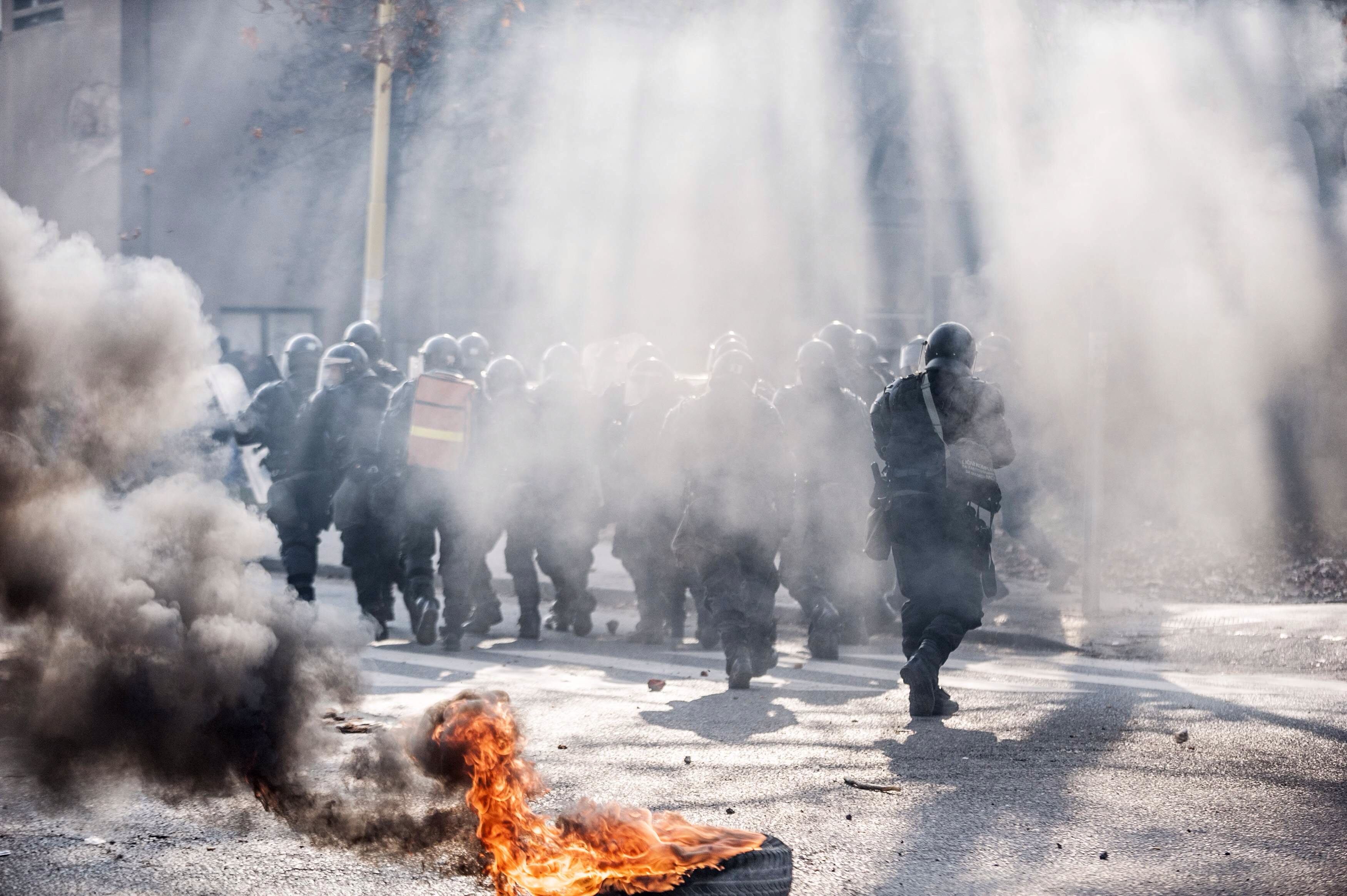
Scenes of protests against the government in Bosnia last week . They took a violent turn.
Depending on the source, it is claimed that there is 25 to 40 per cent unemployment now in Bosina. Young adults are particularly hard hit. Poverty and boredom and hopelessness are a bad combination that can lead to unrest. Last week in Bosnia the tension boiled over and protests in many cities turned violent with government buildings being burned, police using tear gas and several people injured.
I can’t say that I blame the protesters for being fed up with corrupt and ineffective governments. But I deplore the vandalism that is particularly sad when it takes place on the streets so recently destroyed by war and so painstakingly rebuilt. Sometimes it feels like this country is bent on self-destruction.
I have been been making plans to travel back go Bosnia this spring. I would really like to reconnect with all the friends that I met while worked there. I had visions of sunny afternoons in a street cafe in old Sarajevo or overlooking the Neretva river from the reconstructed bridge in Mostar.
On a Sarajevo street last week.
The images of police cars burning on streets that were so familiar to me have stunned me. My immediate thoughts were to postpone my return to Bosnia this May. But 24 hours of reflection have calmed my thoughts. Will I go? Of course, I will!
When I look at the news photos that I have posted here, I realize that many were all taken within a few blocks of each other. (I used to enjoy my lunch at a restaurant that is about a block from these burning cars.) The images are dramatic for sure. Disturbing. But are they representative of how 99.9% of Bosnia looked at those moments?
I know lots of sensible and peace-loving Bosnians in all districts. Did people stop coming to Toronto when images of the 2010 riots in Toronto at the G-20 conference hit the news?
I remember bringing some Bosnian colleagues to Canada for a study visit in the midst of the SARS epidemic that was getting widespread global news coverage. Did they back out in fear? No.
I booked my ticket this week. I will avoid mass gatherings and demonstrations and If things are too unstable I will relocate to neighbouring Croatia. Look here in May to see how I make out and what I find when I revisit Bosnia and Herzegovina.




























 johnageddes