Everyone is a winner…

I am always happy to be part of a win-win situation. Last year I enjoyed one that was win-win-win. If I think about it I could add more win’s but you get the point, I am sure.

The St Gorety School is a secondary school in a small village called Mikei, Kenya. It is pretty rurual, about 20 km inland from Lake Victoria and in Nyanza Province, one of the least advantaged districts of Kenya.

Through CanAssist, and with my Canadian friends, Virginia and Suzanne I met Edward Kabaka a couple of years ago. Edward is a founder of a local support group called Rieko Kenya. Well, to make a rather long story shorter, Edward brought the needs of St Gorety School to our attention. Basically the school, serving secondary students from the surrounding region, was overcrowded and needed more classroom space.

St G classroom 2013So in 2012, CanAssist agreed to construct one classroom and complete another which had been partially built with Kenyan government funds which dried up before the roof could be put on the building.

Virginia and Suzanne, secondary school teachers themselves in Kingston, promoted this project to some of their students who responded with fundraising to help with this building.

At the same time, the Queen’s Health Outreach group, university students whose mandate is to promote Health education to students and youth in various parts of the developing world, were looking for a new district in Kenya to work. I have been an ad hoc mentor to this group for the past several years and it seemed natural to put them in touch with Edward and the St. Gorety School.

QHO students visited several schools and community groups in the Nyatike region in 2012.

QHO students visited several schools and community groups in the Nyatike region in 2012.

Last year the QHO group spent several weeks in the Mikei/Nyatike community, living in a house overlooking the rolling Kenyan hills and interacting with schools and women’s groups in the region to educate and promote healthy living practices. Another group of six QHO students are excited to be returning to the community in May/June this year.

When I visited the St Gorety School and other groups in the region in February, they all lit up with smiles at the mention of the QHO students and were ecstatic to hear that there would be a group returning this year.

So where do all the “win’s” come in?

  • CanAssist has been delighted to be able to provide infrastructure support to the school (and three other community groups as well…more about those in later posts).
  • The QHO group has found a welcoming community where they are able to do their outreach work to promote education about health to young Africans.
  • The community which was actually quite neglected and off the beaten track for development has been excited to welcome visitors from Canada who are eager to help them improve their living circumstances. Kenyans love visitors.
  • Edward Kabaka has found support for his dream of improving well-being in the community.
  • Some of the students at KCVI and LCVI in Kingston have established pen-pal relationships with students in Kenya and have the satisfaction of having been able to help their peers in Africa.

And I sit back and smile. It’s all so good.

Treat yourself to the joyous music from the St. Gorety school choir in the Youtube video below.

A delicate matter …

Imagine being a 14 year old girl heading off to school with your menstrual period and not having a clean place to tend to your sanitary needs – or any money to buy sanitary towels for protection. This is the dilemma faced by young African women have no money for the luxury of sanitary pads.

Young African women have enough to contend with but when I visit African schools, the female students are quite vocal about this disadvantage. Schools recognize that girls miss a few days each month because they have no means of dealing with the problems caused by menstruation. This slows their ability to achieve at school and causes them to fall behind the boys.

Sanitary pads are expensive. Particularly if you are barely getting by with other school expenses or even food. In some communities there are initiatives for producing reusable, washable sanitary towels but even this requires a private place to look after your needs which is often not available.

The women at St Mark’s Church in Barriefield, Ontario heard about this problem at one of the schools that has been supported by the CanAssist African Relief Trust for the past few years. Provision of ongoing supplies and consumables is not within the mandate of CanAssist so we approached this Anglican Church Women’s Group for help. And they responded.

The ACW at St Mark’s have been providing funds to purchase sanitary towels and undergarments for the young girls at Kanyala Little Stars School for the past 18 months. And the reward has been better attendance from the girls who now can match the boys in academics. One young woman even got top marks for the region in the last set of standardized exams before secondary school.

Another Kingston couple came forward with a donation to CanAssist to build construct improved latrines and washing areas for the girls. What an improvement!

This problem is huge. But I commend the women at St Mark’s who have determined that they will help the young girls at Kanyala Little Stars with this somewhat delicate problem.

The school is running low on supplies and the St Mark’s ACW will be looking to send another $450 to help for the next few months. In order to keep this ongoing, I’m sure they would welcome a $10 from other Canadian women (or men) who would like to contribute.

Next time you see me, pass me $10 and I will be glad to send it on to the St Mark’s ACW and thence to the Kenyan young women. Evelyn Bowering (ebowering@cogeco.ca)would also be happy to be the intermediary to help bolster the ACW funds to keep this program going.

ACW friends
To quote Mama Benta “I have to congratulate those Anglican girls. They are good ladies!”

Sanitation improvements on Rusinga Island

Rusinga Island, on the shore of Lake Victoria, is off the beaten path for development and in a very poor region of Nyanza Province, Kenya. The people in lakeshore beach villages rely on fishing for their meagre incomes and the population of the villages fluctuates with the season. Declining fish stocks in Lake Victoria and lowering sale prices for their catch has made living conditions difficult for these people.

Kaswanga Beach - Rusinga Island, Kenya

Kaswanga Beach – Rusinga Island, Kenya

The CanAssist African Relief Trust has been looking to improve sanitation in four of these lakeside commnities. The villages may have a population of between 100 and 400 inhabitants throughout the year and have had no toilets or washing facilities. Bathing has been done in the lake where there was no privacy and near the same region where household water was drawn for both cleaning and even drinking. The fields near the village were makeshift night toilets and became both contaminated and a health hazard. When it rained, fecal contamination was washed into the lake close to the bathing/water retrieval areas. This, of course, provided a significant health hazard for diarrheal diseases like typhoid and cholera.

CanAssist has been working through the Badilisha Ecovillage Foundation on the island to improve this situation.

VIP (Ventilated Improved Pit) latrines and a washing room at the Kaswanga Beach community.

VIP (Ventilated Improved Pit) latrines and a washing room at the Kaswanga Beach community.

We  built latrines at four of these villages around the island. Although four stalls may not really seem adequate to serve the population of the village, these are four more than zero and the communities are grateful for their addition. The fields adjacent to the villages are much cleaner. Fecal contamination no longer is washed into the lake near the village where water for drinking, washing and cleaning is gathered.

The communities have also asked for washing facilities so that they can have some privacy when cleaning themselves and also discourage contamination of their water supply with detergents and soaps. Last year, assisted by a specific donation from the Mission Committee of St.Peter’s Cathedral in London, Ontario, CanAssist built two washing rooms with cement floors, four private stalls with doors and drainage into a grey-water underground pit.

I visited the Kaswanga Village in February (see the movie trailer here! and was assured that these improvements, which may seem rudimentary and even crude to the North American reader, were making a grand difference to the people who live there.

The treasurer of the Beach Management Unit smiled and added ” If we could get a water pump to bring water from the lake to a raised tank near the washing facility it would be warmed in the sun and we could have warm showers.”

Some things that we just take for granted are deemed luxuries to many African villagers.

Congratulations are in order …

The CanAssist African Relief Trust has been a supporter of the Kanyala Little Stars School on Rusinga Island for the past few years. We have become good friends, visited often and shared the friendship with other Canadians who, like me, love to visit Mama Benta and the kids at the school.

Since we first met the school in 2007, it has grown. When I first visited them there were four classrooms with students up to about Grade 3. There are now 300 students at the school. It is bursting at the seams. Despite this crowding, they are not compromising on academics.

LS WP banner

Last year they graduated their first Class 8 students and when I was there earlier this month they proudly showed me the results of the standardized country-wide exams that students write to gain entrance to Secondary School.

They had 19 candidates and all of them passed. In addition, one of the “Little Stars” was first on Rusinga Island and second in the much larger Suba District. They also proudly reported that the second standing at the school was a girl, Phelistus Ogola.

This week I also learned that Elisha Onyando has been “awarded a full comprehensive scholarship from Equity Bank Kenya based on his superb academic performance.”

I am so proud of the students, teachers and directors of the Kanyala Little Stars organization. They are all working to build a better Kenya.

Congratulations to Elisha Onyando on his academic successes and the scholarship to help him pursue his Secondary School education.

Congratulations to Elisha Onyando on his academic successes and the scholarship to help him pursue his Secondary School education.

A letter to my grandson, Noah …

Dear Noah

This week I visited the Kanyala Little Stars school on Rusinga Island in Kenya. I have come to this school every year for the past nine years. The school is quite small in size but there are now 306 students registered at it from nursery class to grade 8. Last year they graduated their first Grade 8 students who are now eligible to go on to secondary school. Unfortunately many of these kids don’t have parents who can afford to send them on to high school. Their academic performance in the standard exams was very good – one of their students was second amongst hundreds in the district.

imageWhen I went into one classroom their first quesion to me was “How is Noah Budd?” They remembered that last year on your birthday you told your friends not to bring presents to your party but to bring some money to buy supplies for these students in Kenya. When I visited the school last February,I took them school supplies and a soccer ball and
a picture of you that they have hanging in the school office. The students in grade 3 wanted me to say hello to you. I though it was better if they do this themselves so I took this short video to bring their greetings back to you and a song for you as well. I hope that you enjoy it and that you are glad to know that your kindness to these students who you don’t know and who live far away in Africa is something that they know is special and they are grateful for your caring.

In one class they were studying mathematics, doing algebra equations. I told them that you, too, like math and that some day I hope that you can come and visit these kids in person.

In the schoolyard is a tree that I planted in July 2011 when I brought some CanAssist supporters to Kenya and we visited the school on what they called “The Big Day”. The tree is growing just like the students and hopefully will soon be providing some shade in the small play area.

image

Noah, I want you to know that the kindness you showed to these fellow students by giving up a few birthday presents last year to send school supplies to Little Stars School was a generous and thoughtful act which they remember with thanks. And I, too, am proud of you for your kindness in sharing with others.

Love,

Dedo

Osiri, a Lake Victoria fishing village

Osiri village is a 15 minute walk from the Luanda ferry dock that takes me to Mbita town. It is a small fishing village with a population of about 500. The people there struggle with poverty and the unfortunate lack of adequate clean water and sanitation.

Osiri fishermen

Osiri fishermen

I was introduced to the community through Meshack Andiwo, a fellow who as had the opportunity for a bit more education than most there. He indicated that the community was concerned about the children not getting any schooling. It is near this village that CanAssist has built the Stewart Geddes School. Fishing had been the main source of income for people in the village but this is becoming more challenging for a number of reasons.

Firstly, as in the rest of lake Victoria, the fish stocks are being depleted. Nile perch were introduced to the lake in the 1950’s as a potential source of fishing income. This was both a blessing and a curse as these fish have a voracious appetite and have consumed many of the smaller species in the lake, upsetting the ecological balance. They can grow to be very large. Nile perch caught in the lake are packed in ice and taken to a larger city, Kisumu or Nairobi, for filleting and shipping to Europe.

Day catch of Nile Perch. These four fish weighed 38.5 kg.

Day catch of Nile Perch. These four fish weighed 38.5 kg.

Although the price that the fishermen can get for the fish has fallen, it is still an income. So the people who live here are forced to sell the fish and go without. Despite being close to this nutritious food source, they can not afford to keep the fish which end up in European markets.

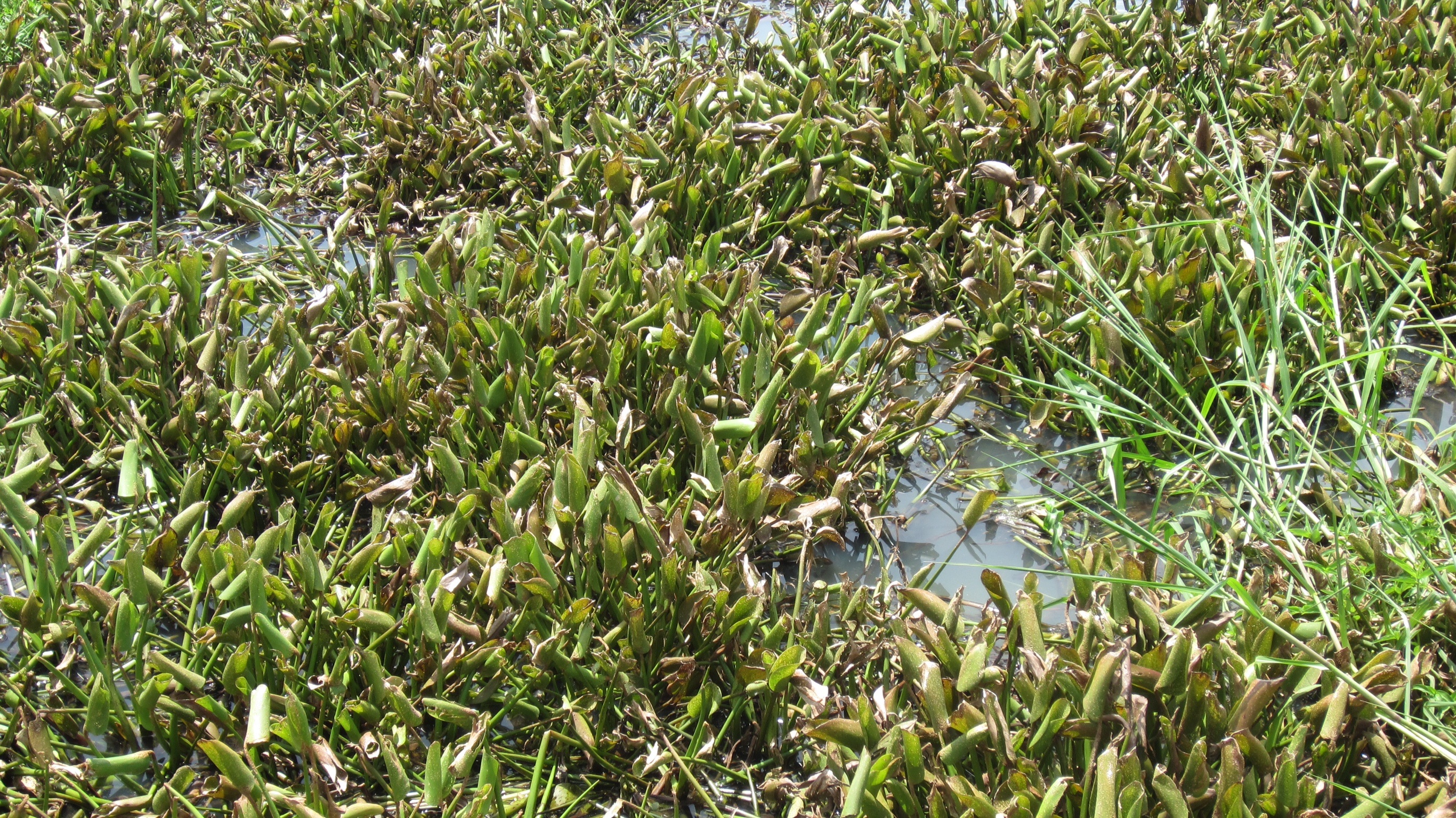
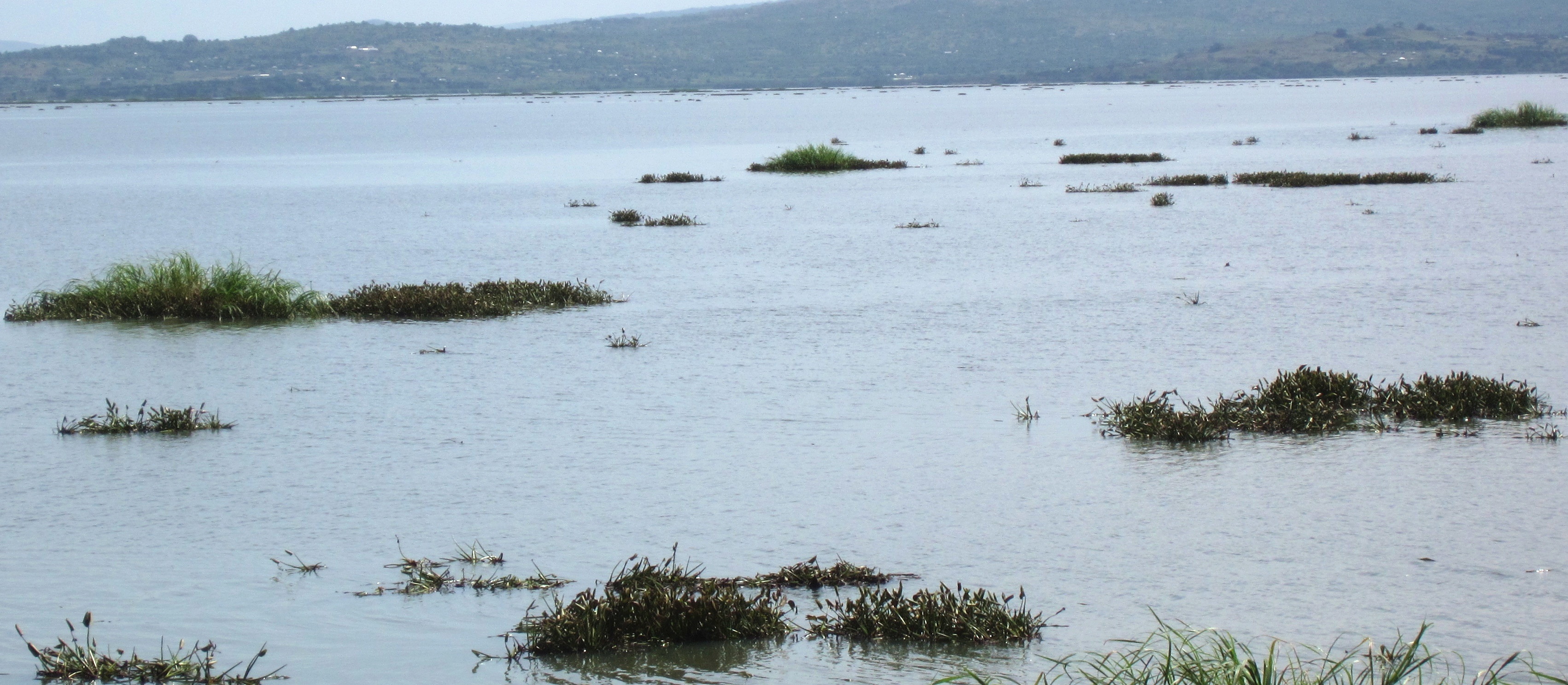
Another introduced species that is causing problems in the bay is Water Hyacinth. You may know this as the lettuce-like floating plant on ornamental garden ponds in Canada. They sell for $4-$5 each in garden centers in May and June. They have a nice purple flower and spread out over the pond only to be frozen at the first frost.

Somehow, this native of South America entered the Lake Victoria system in the 1980’s and since then, they have rapidly taken over. Millions of them float in clumps or even large islands in the lake, being blown around by the wind and currents.image Although they may shelter the fish in some ways, the fishermen have trouble with their nets brewing caught up in the rafts of plants and when a large crop blows in to the shore at the village, it makes landing or launching a boat impossible.

Water hyacinth floating on the lake.

Water hyacinth floating on the lake.

They also act as a breeding ground for mosquitoes, thus increasing the spread of malaria and dengue fever.

I told the folks here that the poverty problem in their community could be solved if they could just sell these plant pests to North Americans and Europeans for their backyard ponds. Another inequitable obscenity, when you think about it very much.

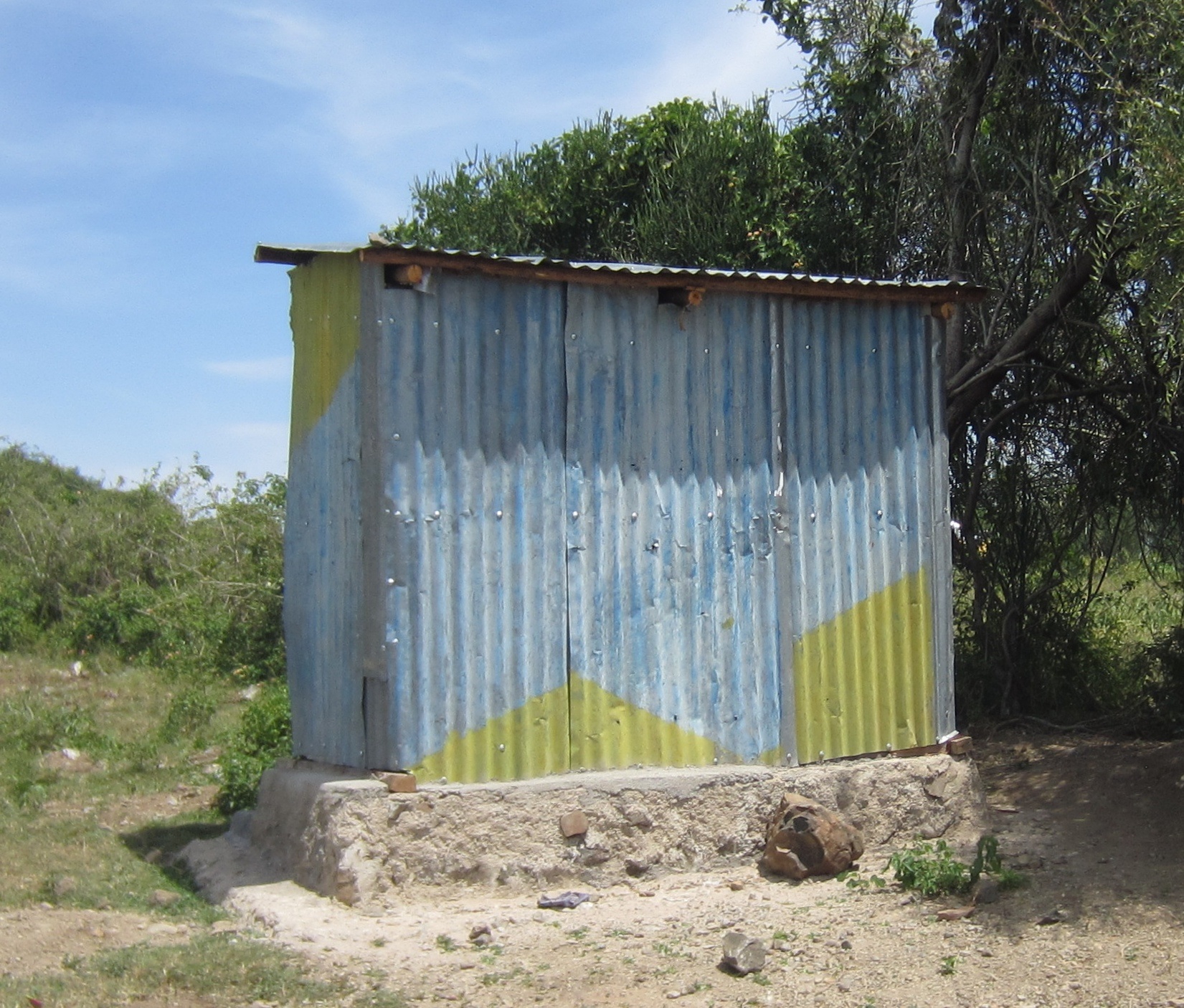
This unventilated latrine is the only toilet for the 500 people living in Osiri village.

This unventilated latrine is the only toilet for the 500 people living in Osiri village.

There are few households with any toilet and most of the people in the community either use the bush or one small latrine found near the centre of the village. They collect their water from the lake but the lake is becoming increasingly polluted with sewage, laundry detergents and other effluents. Many do not boil or purify their water before consuming it as this takes time and money or consumes scrounged firewood that is needed for other cooking.

Kids swim in the lake and others bathe there. Many are infected with bilharzla, a parasitic fluke that can infest kidneys and bowel.

Despite these challenges, the people who live in Osiri Village are cheerful and optimistic and my visit to the community and the Stewart Geddes school was heart-warming.

image

A surprise at the Stewart Geddes School

My father, Stewart Geddes, has been generously supporting the development of a small rural school in Kenya for the past couple of years through the CanAssist African Relief Trust. Today I headed back across to the mainland on the ferry to visit the community and the school which has about 75 students from age 3 to 8. Without this small school these little kids would have to walk several kilometers every day to receive education … or not get any at all. Girls, in particular were at a disadvantage and only two girls in the community of 500 people, have gotten beyond grade 4 until now.

I was enthusiastically welcomed and treated to demonstrations of counting and identifying animals in English (remember this is a seoond or maybe third language for these young pupils.) The name S P GEDDES EARLY CHILDHOOD DEVELOPMENT CENTRE is emblazoned on the school gate and the children were happy to chant a Thank you message that they wanted me to take back to my Dad.

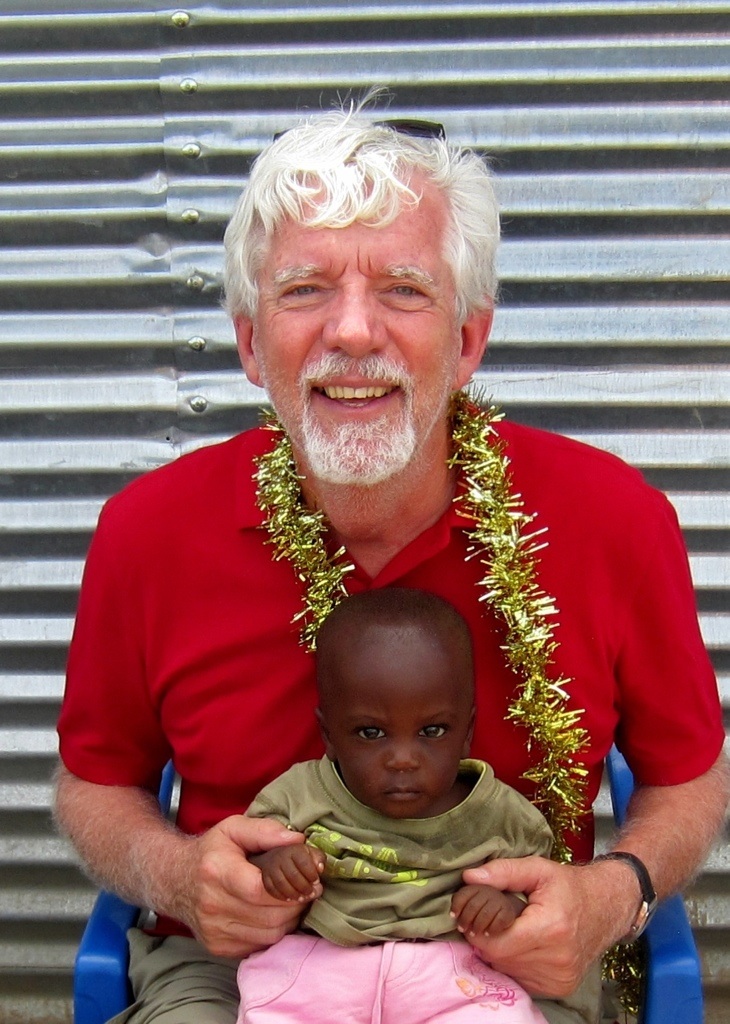
Me and little  Stewart Geddes at Osiri Village, Kenya.

Me and little Stewart Geddes at Osiri Village, Kenya.

But the big surprise for me was when the head teacher showed me her six month old Grandson. “We have named him Stewart Geddes”, she said. “At home he goes by Geddes.” I found this both amusing and touching. When I got back to Mbita, I called Dad to share with him the deep appreciation that this community has for his gift to them. I plan to visit a few CanAssist project sites in the next several days and I know that this is just the beginning of the wonderful expressions of gratitude to Canadian Donors through CanAssist that I will receive. I wish that this was something that I could bottle and send back to share with all of you who have supported what we do through CanAssist. Perhaps this little video clip will give you a taste.

image

Getting the jump on jiggers

A couple of years ago, while I was traveling in Uganda, I thought that I had a blister or a plantar wart on the end of my little toe. I even bought new running shoes to try to remedy the situation.

Little did I know.

When I was sitting on a patio in sandals, one of my African friends looked at my foot. “You have a jigger.” he said. I pooh-poohed this suggestion but he insisted. ” I know jiggers. When I was a kid I had so many of them. Sometimes when I was going to fetch water, I would sit down and cry because my feet hurt so much.”

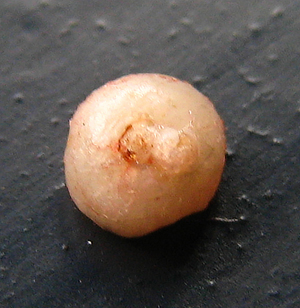
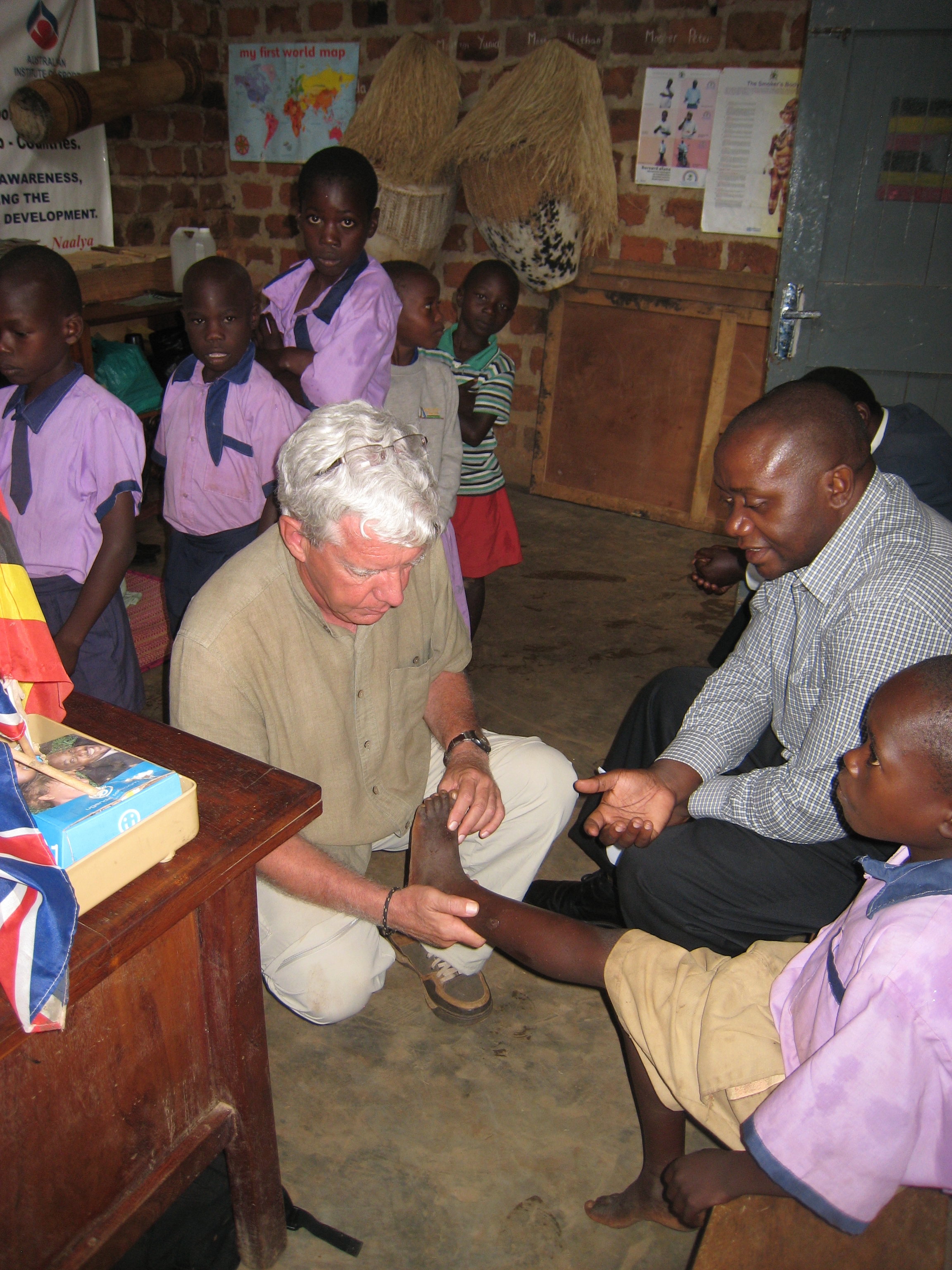
I was surprised when my friend “delivered” this cyst full of jigger eggs out of the tip of my right pinkie toe.

“I can cut it out for you.” he offered.

He could have started that sentence with “I’m no doctor, but …”

So as he whittled away at my toe, extracting a lump that was the size of a small kernel of corn from the tip, I learned about jiggers.

Jiggers (quite different from chiggers) are little fleas that live in the soil. They are a common plight in East Africa. The female finds some flesh into which she can burrow and produce hundreds of eggs which are encased in a cyst-like structure that gradually grows within the flesh of the host. Eventually the cyst bursts and the eggs scattered back into the dirt where the cycle starts again.

These fleas live in tropical environments where people are often barefoot or wearing minimal footwear. In addition, traditional homes and even schools and churches often have dirt floors, the perfect environment for the jiggers to flourish. Children’s feet in crowded, dirt-floored classrooms are particularly vulnerable to infestation.

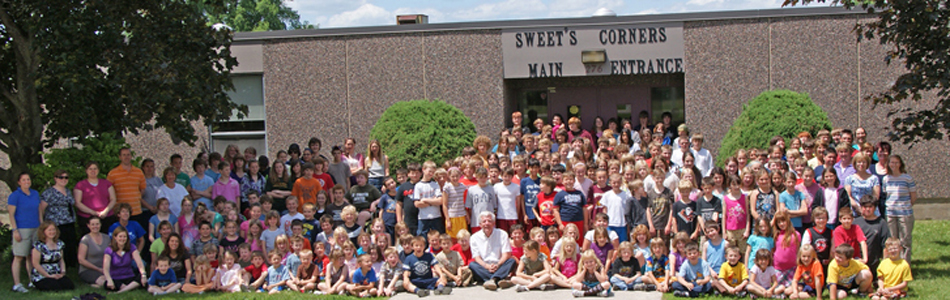
The CanAssist African Relief Trust learned of this plight for children in the Hope for Youth School near Mukono Kenya. The teachers insisted that cementing the floors of the classrooms would help eliminate this scourge. So, with money raised by the children at Sweet’s Corners School near Lyndhurst, Ontario, CanAssist set about cementing the floors of the Hope for Youth School.

The children of Sweet’s Corners Elementary School helped their African counterparts by funding the cementing of school floors to prevent jiggers.

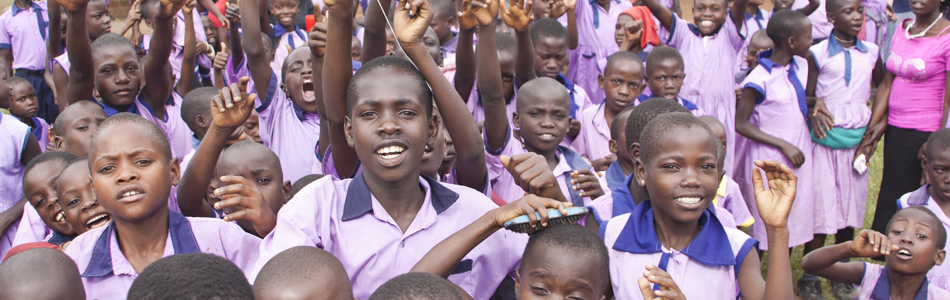
The children at Hope for Youth school were happy to show me their healthy feet after the classroom floors had been cemented to prevent jiggers.

With development projects it is often difficult to evaluate outcomes. But for this one it seemed relatively simple.

I had the school check the feet of all 107 children in the classrooms before the flooring was installed. 74% of the kids had jiggers and more than half of these had more than three in their feet. A few months after the floors were cemented, I was in the school and personally checked the feet of all the same children. The prevalence of jiggers went from 74% to 7%. The children were delighted.

The cost of this project was in the range of $1500  It brought relief to over 100 children and also demonstrated that cement floors that can be washed and swept can stop a jigger infestation.

A dilemma

A recent article that I wrote for the Kingston Whig Standard about little Jerry O, a 4 year old Kenyan orphan that I encountered earlier in 2012, brought several responses that included questions about adoption. Here is a response that I sent to one couple who inquired about adopting this child.

“There are many, many children in Africa who are vulnerable in so many ways. Your offer to help is kind and generous.

By “adopt” I am not sure if you are meaning a true adoption – bringing a child to Canada – or a distance adoption which amounts to sponsorship and support from here.

The true adoption process is long and complex and I really know very little about it. African countries tend to be pretty strict on the process of adoption to another country, requiring that the adoptive parents actually live in the African country for a period of time prior to any adoption happening. Private adoption would also likely entail similar restrictions. But I am not familiar with all the laws and rules. You may have explored them already.

Sponsoring a child is often the support from a distance that an individual child needs for schooling, food, security. Some individuals decide to do this through an organization or on a one-to-one basis. It certainly provides good support for children in need and is much less expensive and also keeps the child in their own cultural environment. (This piece entitled “A Small Act” was on CBC radio a few months ago can illustrate the value of this kind of support. http://www.cbc.ca/thecurrent/episode/2011/09/26/a-small-act-chris-mburu/ )

Individuals who support a child through organizations like World Vision can be sure that money that they donate is being used in the community where the child lives. Your “adopted” child benefits through the supprt that is given to the community for sanitation, education and health.

At the CanAssist African Relief Trust, we realize that it is impossible to help any one child specifically without overlooking someone else who may be as deserving. Our preference has been to provide help within a community or school that will, in some way, benefit all. CanAssist does not facilitate individual supportive programs for school fees, etc, but rather works to help within the community, using community leaders, teachers and health care workers to guide our work there.

You may have heard this talk that I did at a Chalmers United Church service in Kingston, Ontario a couple of years ago. My talk addresses this dilemma. A Youtube link to it is here:

I commend your interest in helping these vulnerable children.

There are, no doubt, families in Canada who would gladly “adopt” a struggling orphan child from a developing country. But it is not simple. Not only is the adoption process encumbered with discouraging red-tape, but rescuing one child leaves many others behind who are equally needy and deserving of support.

Through CanAssist we try to do what we can to help a community to improved water access, sanitation, health or education. Hopefully there will be many children who will benefit in some way from this process rather than by plucking just one for exceptional attention.”