A delicate matter …

Imagine being a 14 year old girl heading off to school with your menstrual period and not having a clean place to tend to your sanitary needs – or any money to buy sanitary towels for protection. This is the dilemma faced by young African women have no money for the luxury of sanitary pads.

Young African women have enough to contend with but when I visit African schools, the female students are quite vocal about this disadvantage. Schools recognize that girls miss a few days each month because they have no means of dealing with the problems caused by menstruation. This slows their ability to achieve at school and causes them to fall behind the boys.

Sanitary pads are expensive. Particularly if you are barely getting by with other school expenses or even food. In some communities there are initiatives for producing reusable, washable sanitary towels but even this requires a private place to look after your needs which is often not available.

The women at St Mark’s Church in Barriefield, Ontario heard about this problem at one of the schools that has been supported by the CanAssist African Relief Trust for the past few years. Provision of ongoing supplies and consumables is not within the mandate of CanAssist so we approached this Anglican Church Women’s Group for help. And they responded.

The ACW at St Mark’s have been providing funds to purchase sanitary towels and undergarments for the young girls at Kanyala Little Stars School for the past 18 months. And the reward has been better attendance from the girls who now can match the boys in academics. One young woman even got top marks for the region in the last set of standardized exams before secondary school.

Another Kingston couple came forward with a donation to CanAssist to build construct improved latrines and washing areas for the girls. What an improvement!

This problem is huge. But I commend the women at St Mark’s who have determined that they will help the young girls at Kanyala Little Stars with this somewhat delicate problem.

The school is running low on supplies and the St Mark’s ACW will be looking to send another $450 to help for the next few months. In order to keep this ongoing, I’m sure they would welcome a $10 from other Canadian women (or men) who would like to contribute.

Next time you see me, pass me $10 and I will be glad to send it on to the St Mark’s ACW and thence to the Kenyan young women. Evelyn Bowering (ebowering@cogeco.ca)would also be happy to be the intermediary to help bolster the ACW funds to keep this program going.

ACW friends
To quote Mama Benta “I have to congratulate those Anglican girls. They are good ladies!”
Digging in to help Africa

Food security is a major issue in Africa. The cost of living in East African countries has risen substantially over the past couple of years and, coupled with erratic climate changes, this has resulted in a situation where people who are already living on the edge are having trouble affording basic foods, let alone nutritious diets.

The CanAssist African Relief Trust has sponsored  school garden projects that have been very successful. Our first project related to this was with the Kanyala Little Stars school on Rusinga Island, Kenya. The first step in starting a garden here was to put up fencing to keep hippos and other grazing domestic animals like donkeys and goats out of the garden. If you think think squirrels and rabbits are a garden nuisance, imagine the havoc that can be created by a family of hippos lumbering up from Lake Victoria to graze overnight. For the Little Stars garden,  CanAssist also arranged appropriate irrigation through a pump and sprinkler system and set up a work shed, toilets and provided seeds and fertilizer. The garden has proven to be a great boon to the school and community, now producing fruits and vegetables that supply the school children with better nourishment, and provide a bit of extra income to help with other school expenses, provide nutritious supplements to needy families in the community at reasonable cost. It has worked well.

In other schools in Kenya and Uganda we have supported similar projects which are also proving to be equally successful.

Earlier this year, we also helped a local youth group in Migori district of Kenya and this week we received an encouraging report from Edward Kabaka, director of Rieko Kenya, a local development organizaton.

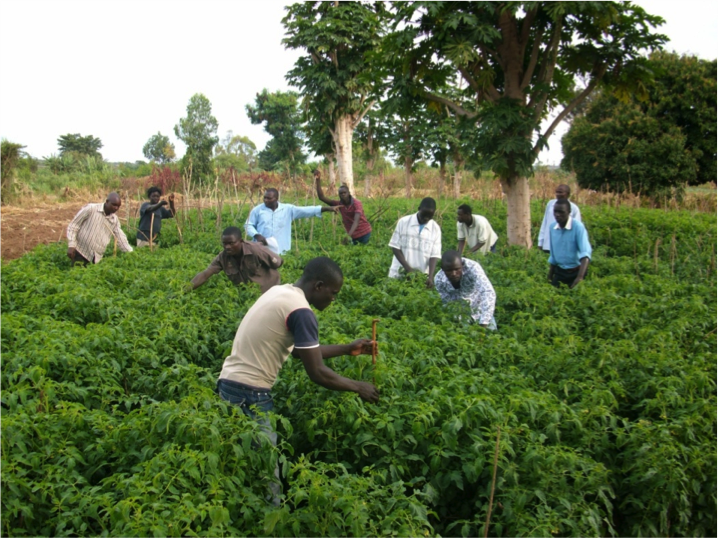
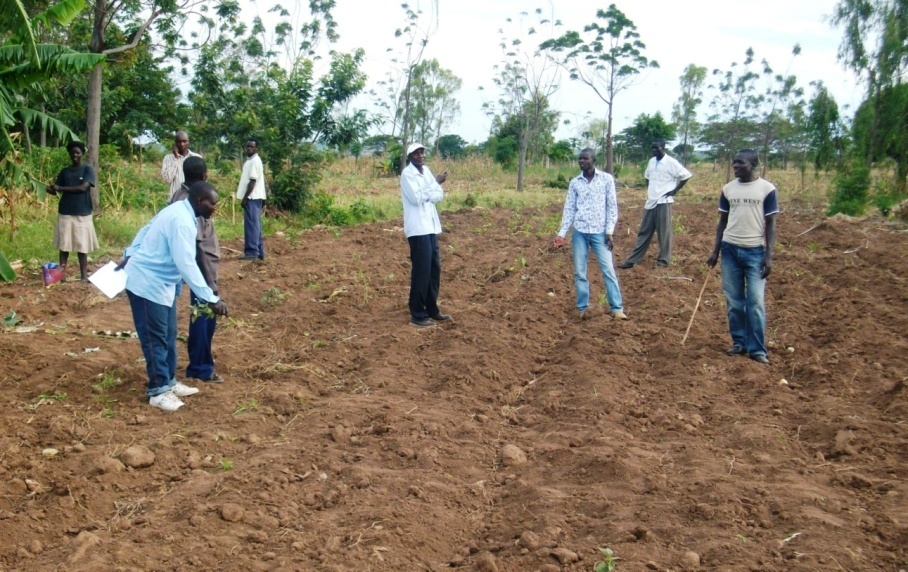
The Nyaruanda Youth group provides the manpower to till and maintain their local garden.

“The Nyaruanda Youth Development Group is a community based initiative started in March 2010 in south Kadem Location, Nyatike District in Kenya. It was started by a group of orphaned youths who were left behind as head of households in their families. When they were 10-12 years old, many of them lost their parents to HIV/AIDS. They have graduated to replace their deceased parents in roles of fending for their siblings. As they grew up together, they realized that they were facing the same challenges and started organizing themselves in small groups. They need to provide food, clothing, shelter, medical care and above all schooling for their families.

A first harvest of Tomatoes, Watermelons and Sukuma wiki (a staple African green rich in iron and vitamins) from the CanAssist-supported Nyarunda Youth Group garden.

In the beginning of 2012, Rieko Kenya had the opportunity to be visited by John Geddes, the Executive Director of CanAssist African Relief Trust (CAART). Rieko Kenya considered Nyaruanda Youth as one of the groups to be visited by John. John agreed to present an application to CAART to help support the group, through Rieko Kenya, with small scale irrigation equipment and materials. The support from CAART was realized with Rieko Kenya providing training and facilitating the purchase of the irrigation equipment and materials (Water pump and pipes) and presented to the group. After a period of a half a year and following this life saving and transforming support, the Nyaruanda group is very excited and happy to report a huge financial gain. They are now able to be self reliant and meet their financial obligations.”

CanAssist is delighted that these local agriculture projects are not only providing better nutrition to communities; they are helping to stimulate economic development.

A letter from Africa

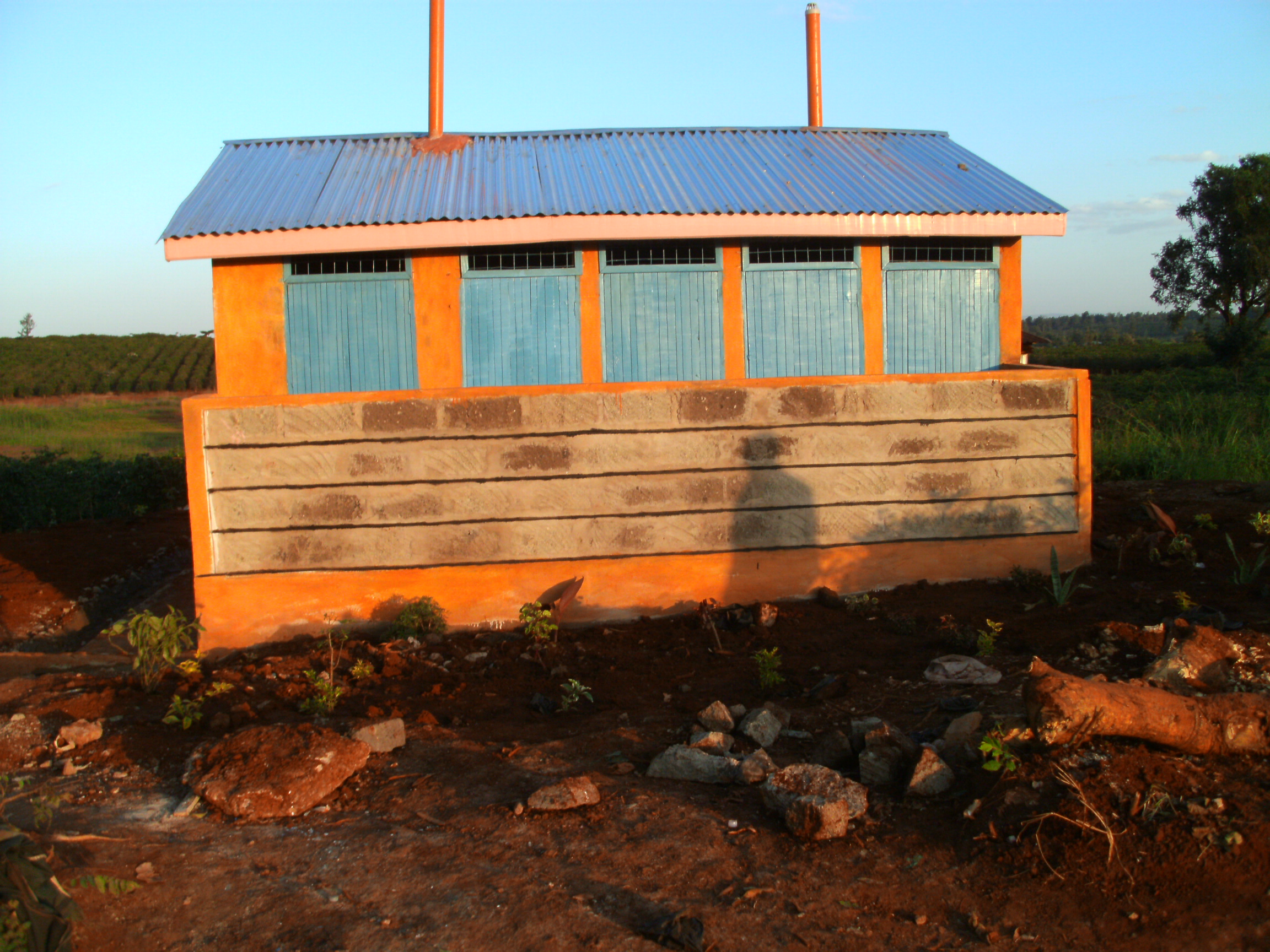
One of the three completed latrines that will dramatically improve sanitation for students at the Mutundu School in Kenya – funded by CanAssist African Relief Trust

I am happy to share this letter of appreciation from Michael Gichia who has been the African contact with the Murera Community Empowerment group and the Mutundu School where the CanAssist African Relief Trust has funded construction of new latrines and provision of clean water.

See these earlier posts for background on this project.

Sanitation…or lack of it
Sanitation..making progress
Not just new latrines

Dear John,
I hope you are doing fine as we are here in Kenya. I would like to let you know that we have completed the proposed project successfully and I’m taking this opportunity on behalf of MCESO to thank all the trustees, board members, staff and the friends of Can Assist African Relief Trust for their generosity in support of our project titled, provision of clean portable drinking water and construction of enhanced sanitation facilities in Mutundu primary school in Ruiru District 0f Kenya. Your financial commitment has incredibly helped and has allowed us to reach our goal. We would like to let you know that your financial inputs towards our proposed project have greatly helped the project turn into a successful and replicable model and the situation at Mutundu pry school has improved from worst to best.

We pray that may God keep continue giving you good health as well as good will to keep on helping marginalized communities.Please find attached our end project for your files.Too, we have kept all the project invoices safe.We look forward to submitting another project proposal to Can Assist African Relief Trust soon.

Thank you once more and God bless.
Sincerely,
Michael.

Read Michael’s full report on this project here.

Mutundu school latrines

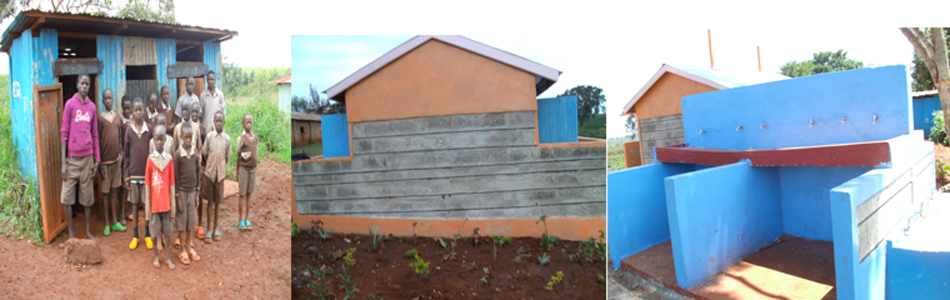
Before and after photos of the boys latrines at Mutundu School. In addition to the latrines, sanitation has been improved by the construction of handwashing stations. CanAssist has been delighted to have funded these sanitation improvements.

Not just new latrines

I’m delighted to have received further updates about the sanitation improvements that CanAssist is funding at the Mutundu Primary School in Kenya.

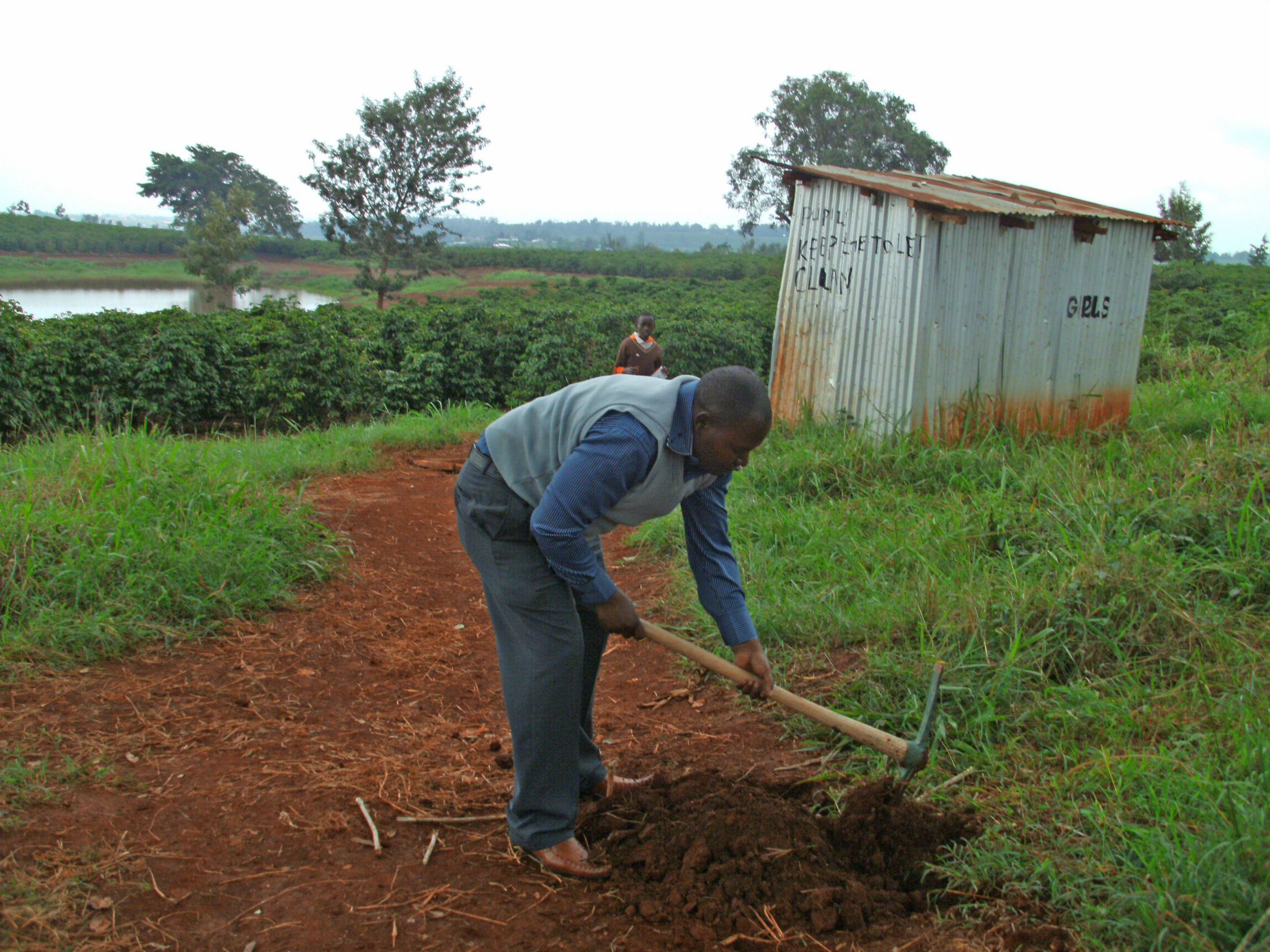
Toilet for girls at the Mutundu School – Spring 2012

I first wrote about this in a blog article in June (Sanitation – or lack of it) and subsequently updated it last month (Sanitation – Making progress) As you can see from the photos, the state of the toilets for staff and students at the school when our Kenyan assistant, Dan Otieno, assessed them was nothing short of disgusting.

Last week I received more pictures of the new latrines at the Mutundu School I would like to share along with some hidden advantages to the community from the kind of development work we are doing through the CanAssist African Relief Trust.

New CanAssist-funded girls toilet at Mutundu School. August 2012

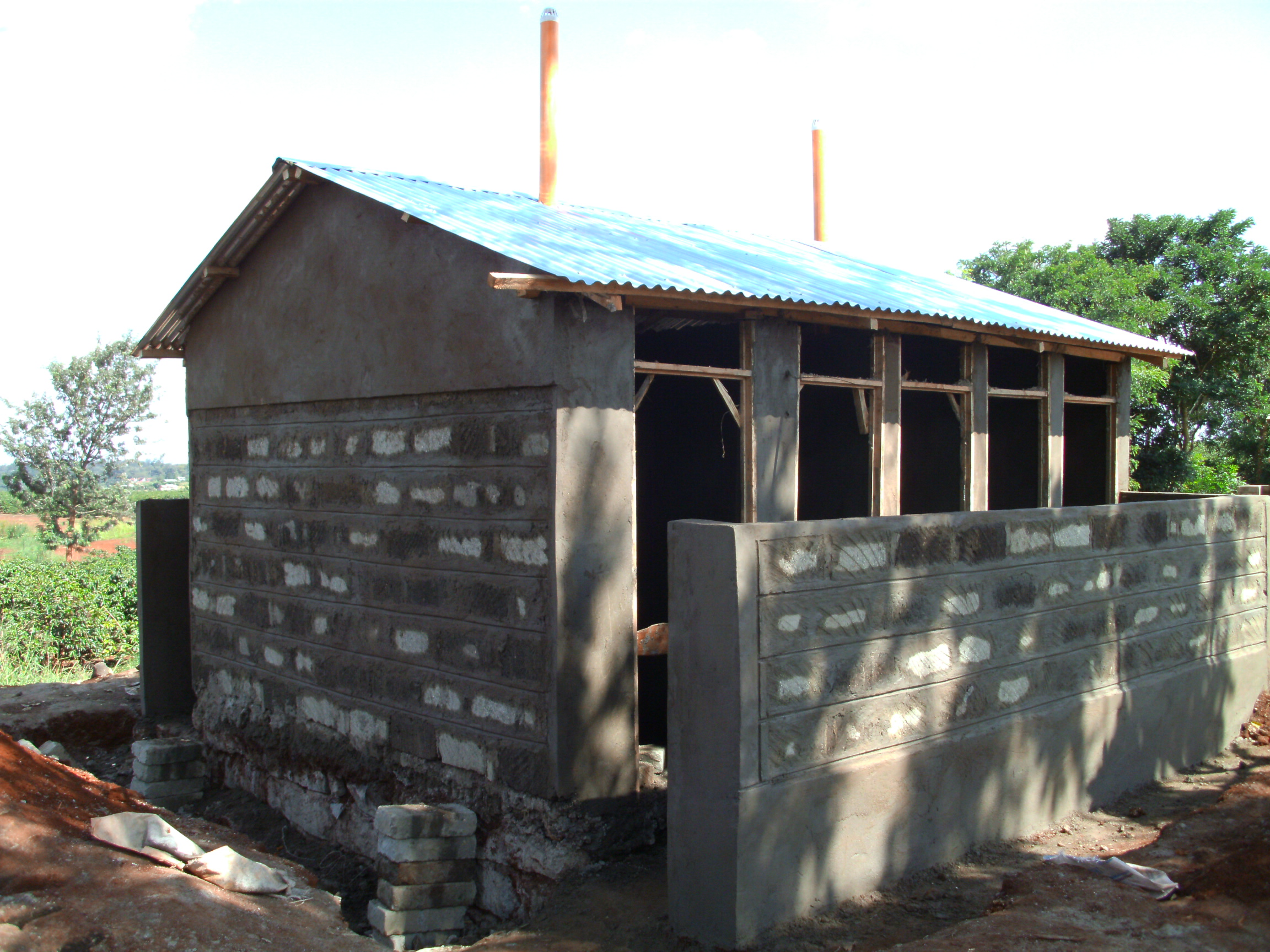
I have come to realize that often the stimulus to a community provided by the funding of an infrastructure project such as this one has other less obvious benefits. The materials for construction are all locally purchased and the skilled (and unskilled) labourers to construct the projects are local tradesmen, often without much work. So we are not only providing the structure or item that will be part of the community and improve well-being there, we are also giving some employment to the locals, albeit temporary.

CanAssist recently sent money to another school in Uganda – Hope for Youth School near Mukono – to purchase 70 desks and chairs for the school. The cost comes to just over $5000 to do this. The bonus is that the desks and chairs will all be made locally by carpenters who will therefore benefit as well. This is a Win-Win situation. The school gets the needed furnishings and the local carpenters (and suppliers) benefit from the business.

It makes me happy to see this work at the Mutundu school progressing, knowing that the sanitation (and thereby health) conditions at the school will be greatly improved. I am also glad that the community are having some opportunity to participate in the construction and even earn a bit of money as they contribute to achieving these goals.

When money for infrastructure projects like the latrines at Mutundu School becomes available, it creates lots of interest in the community, a sense of ownership of the project and employment for tradesmen in the region.

Sanitation – making progress

A month ago, I wrote in my blog about the need for latrines at an elementary school in Kenya – “Sanitation – or lack of it”.

The CanAssist African Relief Trust board approved of this project and sent money (about $5200 Can) to the school last week to start construction of latrines for the school with 8 stances for girls, 8 for boys and 2 for staff. This will be a huge improvement in the sanitation for the school,

Today, I received photos from the community showing that their construction has already started. Once these people have the funding, they dig right in (literally) to get the job done.

It will be delightful to follow this project through to completion. Congratulations to the community for your enthusiastic initiation of this improvement to your school.

Thank you to Michael Gichia of the Murera Community Empowerment and Support Organization for the photo updates.

A Canada Day Challenge

Every year around July 1, I unfurl a big, red and white Canadian flag over my balcony with pride. I consider myself fortunate to live in a country where people value the notion of respect for one another.

Collectively, we respect our democratic government process, even if we don’t always agree with our politicians.

We respect and protect the rights all Canadians despite religious, cultural or ethnic differences. Diversity makes up the colourful fabric of our nation. On Canada Day, new citizens from around the globe are welcomed to Canada in ceremonies across the land. I remember attending one such occasion a few years ago when the family of one of my co-workers from Bosnia and Herzegovina officially became Canadian. At that ceremony, the Mayor of Kingston had been born in Scotland, the Governor General in China (both were women, by the way) and the Ontario MP was born in Holland. That tangible recognition of our varied backgrounds reminded me of what it is to be Canadian.

And we are generous to the rest of the world with our support – military, moral and financial.

This week I was reminded of this generosity when I received notice that the Sasamat Foundation in British Columbia will donate $10,000 to the CanAssist African Relief Trust to be put toward building two classrooms for the Hope School in Mbita, Kenya. This gift is being given with no strings other than the accountability of CanAssist and the recipient community to use the money for their school. It is independent of other obligations and given without cynicism or suspicion, cultural or religious bias, but with trust that the community in Africa will utilize it to benefit their children. I think this is a very “Canadian” gesture.


In addition to their generous $10,000 donation, the Sasamat Foundation has presented CanAssist with a challenge. They will donate another $5000 to the school, matching donations that CanAssist receives 2:1. But this has to happen within the month of July.

Are you be willing to support this initiative with a donation of $50 to CanAssist and the Hope School? You can make a secure, tax-receiptable donation online now with a credit card by following the Canada Helps link below. You can even select a small monthly donation option through the Canada Helps link. Indicate that your gift is to bolster the Hope School Fund.

Donate Now Through CanadaHelps.org!Faire un don maintenant par CanadaHelps.org!

CanAssist is always happy to receive a donation by mail.
CanAssist African Relief Trust, 562 Sycamore Street, Kingston, Ontario. K7M7L8

Happy Canada Day!

Check out out the CanAssist web page about Hope School at http://canassistafrica.ca/Mercy.html

Donate Now Through CanadaHelps.org!Faire un don maintenant par CanadaHelps.org!

Images of Africa – Elephant in the room

Take a moment to close your eyes; think of Africa; form an image.  What comes to mind?

In all likelihood the image is of a lion…or a Maasai warrior dressed in red, adorned with beads and carrying a spear…or of an emaciated child struggling for life in the arms of her distressed mother.

Although these images are all legitimate, they represent only a small portion of the cultural depth and diversity in sub-saharan Africa.  They are icons.  Is Canada thoroughly represented by a photograph of a  Mountie on a horse in a red tunic? Niagara Falls? A beaver? A big bull moose with horns like a hat rack?  Chances are that a large portion of the Canadian population has never come across a moose in the wild.  And the reality is that the majority of Africans have never seen a lion.

One of Heather Haynes paintings depicting the characteristic image visitors to East Africa retain forever.

The images we get are iconic and restrictive.  Charities often show pictures of starving kids to tug at heartstrings and garner donations. But these sad images do not reflect what one sees when visiting Africa. Instead the majority of people you meet there are polite and open and generous. They smile and are often immaculately dressed, no matter where they come from.  They are friendly and outgoing and eager to interact.  They know what they need to help their communities…they just don’t have the resources to put their ideas and dreams into action.

At the CanAssist African Relief Trust we try to present an accurate description of the needs of the communities we support without indulging in what has been called “the pornography of poverty”.  Some African people may be very needy by our standards but they are still proud and deserve not to be exploited with images of their poverty being the primary focus.

Heather Haynes, a Kingston artist, has travelled in East Africa and has found beauty and colour in the villages she has visited.  Her safaris in Africa have transformed her as an artist. She paints remarkably stunning life-sized portraits of African women and children and gives part of the profits from selling them back to charities working in Africa.  Heather has become immersed in this work and along with her sister, Whitney, who makes jewellery with an African theme, has opened the Heather Haynes Gallery in Kingston, Ontario at 318 King Street – across from the market. 

I recommend a visit to the Heather Haynes gallery, if only to see an accurate portrayal of the colourful, resilient people one meets every day while traveling in Africa. It would be wonderful if these were the images that pop into your mind when the word Africa is mentioned.


Sanitation….or lack of it.

When I was selling my house three years ago, prospective buyers were always anxious to see the kichen and the bathroom(s) as a priority.  What was the bathroom countertop like?  Were there two sinks? A rain shower?  One of those toilet lids that closes quietly without banging?   Magazines and web sites intrigue us with bathrooms where we could luxuriate all day. We in North America are certainly spoiled when it comes to bodily ablutions and evacuations and we have all been in service station washrooms that make us cringe.

According to Unicef and World Health Organization data, less than 35% of the population of Kenya has access to “improved sanitation” – which might just mean a clean ventilated outdoor latrine. Flush toilets for most…forget it.

One of the areas of focus for the Canassist African Relief Trust is to help schools in East Africa improve the situation for their students by constructing new latrines and having rainwater collection for both drinking and washing.

Let’s compare our expectations for sanitary toilet facilities with what some students and teachers endure in Kenya

These are the two buildings that serve as toilets for 300 pupils at the Mutunda School in Kenya

Recently CanAssist received another request for latrines from a school in a region where we were not acquainted with anyone as a contact.  So we sent one of our Kenyan colleagues to check it out.

Initially he was surprised that the request was coming from this community which, on the surface, seemed to be reasonably well off.  But as he went a bit more rurally to one of the schools, even he was shocked by what he found.

The Mutunda Primary School has about 300 pupils and ten teachers.  There are six stances in two toilet buildings to serve the students. The latrine for teachers  had long ago collapsed and was unusable.  The student latrines were in disrepair.  There was no access to water for hand washing.

The toilets that were used by the teachers have collapsed and can not be used. Want to teach here?

Dan sent photos. I have seen other latrines like this in Africa and remember the smell. Just looking at the photos almost made me gag.

The girls’ toilet. No further explanation necessary.

How on earth can you teach young people the health advantages of using clean sanitation facilities and hand-washing when the school toilets look like this?

The school has requested $5000 to build new toilets – ventilated drop toilets that are 30 feet deep. There will be 8 stances for the boys, 8 for the girls and two for the teachers (about $250 for each unit).  They will also install some rainwater catchment gutters on the school building to help promote hand-washing.  Hand-washing has been demonstrated to be as effective as clean drinking water to reduce disease from fecal contamination.

The CanAssist board has yet to review this proposal but I can’t imagine that we will not approve of this project.  How can we refuse? This is not only a matter of sanitation and health but also one of simple dignity.

Something new

Not sure if this is the place where I welcome you to my blog or you welcome me to the Blogosphere.   Maybe we should do both.

I have returned this week from a very stimulating and helpful conference called MyCharityConnects in Toronto. I went there to get ideas about how to reach out to people about the charity that has consumed me for the past couple of years – The CanAssist African Relief Trust.   I came away with the instruction to “get the story out there” by blogging and Facebook and Twitter so I am going to jump right in.

I have lots of stories. And know lots of very interesting people in Africa.  I hope that by sharing them with you on this blog, I can excite you, too, in some way about global issues, reducing poverty in the third world and just being a global citizen.

I am very proud to be Canadian. But in the past several years I have worked in post-war Bosnia and Herzegovina and made over a dozen trips to Africa and I have developed close ties with a family in Italy. I have families in all of these places that have made me feel like I am part of them. I have been given nicknames and pet names in several languages – Oseuri, Otim, John Ole Moiko, Amooti.  My family here in Canada all refer to me as Dedo – Bosnian for Grandpa.  So, although I am Canadian to the core, I feel very globally connected.  I care about all these people who have shown me love and respect and connection that is hard to describe…and in MasterCard terms, Priceless.

Since starting to work in Bosnia in 1998, I have published over 80 articles in the Kingston Whig Standard about my experiences. Perhaps I will uncover some of those to share in this blog as well.

I hope I can make it interesting. I hope I can entertain, educate and enthuse you.  I hope that you will give me feedback and that we can chat about issues and stories for which we share some common ground.

And what I have learned from my travel is that we all share a lot of common ground. This world.