Getting the jump on jiggers

A couple of years ago, while I was traveling in Uganda, I thought that I had a blister or a plantar wart on the end of my little toe. I even bought new running shoes to try to remedy the situation.

Little did I know.

When I was sitting on a patio in sandals, one of my African friends looked at my foot. “You have a jigger.” he said. I pooh-poohed this suggestion but he insisted. ” I know jiggers. When I was a kid I had so many of them. Sometimes when I was going to fetch water, I would sit down and cry because my feet hurt so much.”
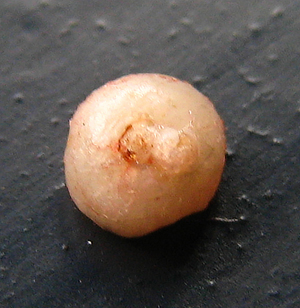
I was surprised when my friend “delivered” this cyst full of jigger eggs out of the tip of my right pinkie toe.

“I can cut it out for you.” he offered.

He could have started that sentence with “I’m no doctor, but …”

So as he whittled away at my toe, extracting a lump that was the size of a small kernel of corn from the tip, I learned about jiggers.

Jiggers (quite different from chiggers) are little fleas that live in the soil. They are a common plight in East Africa. The female finds some flesh into which she can burrow and produce hundreds of eggs which are encased in a cyst-like structure that gradually grows within the flesh of the host. Eventually the cyst bursts and the eggs scattered back into the dirt where the cycle starts again.

These fleas live in tropical environments where people are often barefoot or wearing minimal footwear. In addition, traditional homes and even schools and churches often have dirt floors, the perfect environment for the jiggers to flourish. Children’s feet in crowded, dirt-floored classrooms are particularly vulnerable to infestation.

The CanAssist African Relief Trust learned of this plight for children in the Hope for Youth School near Mukono Kenya. The teachers insisted that cementing the floors of the classrooms would help eliminate this scourge. So, with money raised by the children at Sweet’s Corners School near Lyndhurst, Ontario, CanAssist set about cementing the floors of the Hope for Youth School.
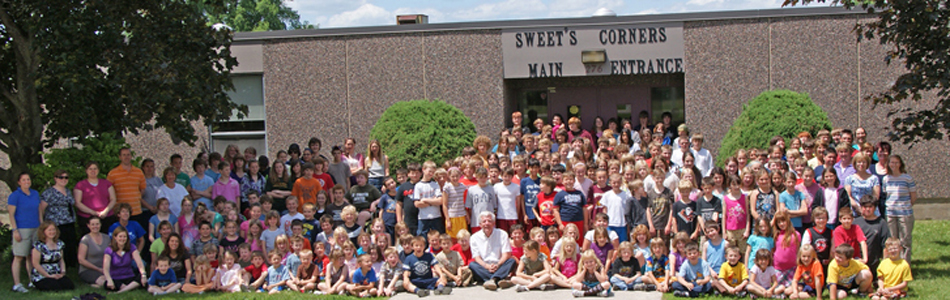
The children of Sweet’s Corners Elementary School helped their African counterparts by funding the cementing of school floors to prevent jiggers.
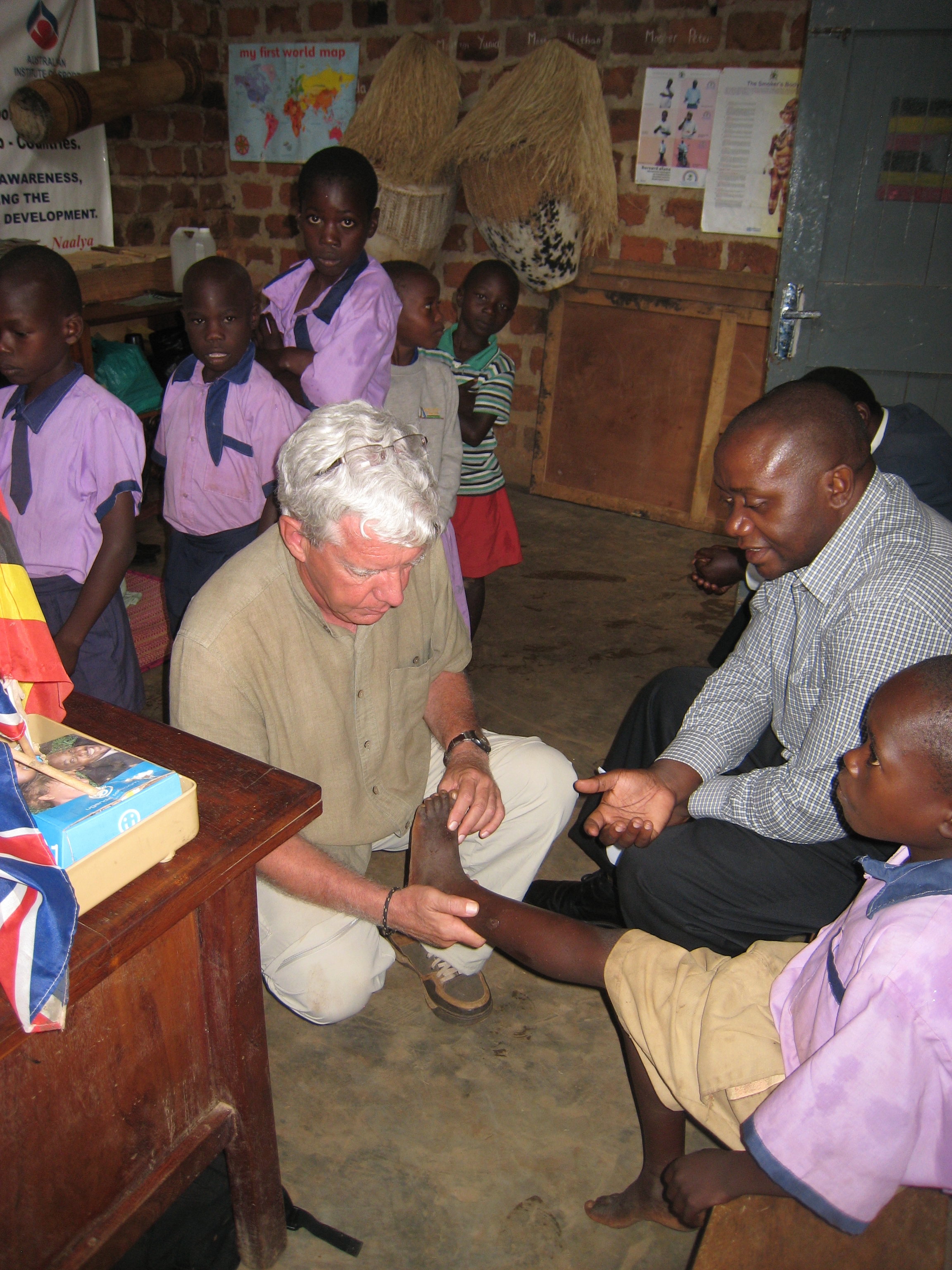
The children at Hope for Youth school were happy to show me their healthy feet after the classroom floors had been cemented to prevent jiggers.

With development projects it is often difficult to evaluate outcomes. But for this one it seemed relatively simple.

I had the school check the feet of all 107 children in the classrooms before the flooring was installed. 74% of the kids had jiggers and more than half of these had more than three in their feet. A few months after the floors were cemented, I was in the school and personally checked the feet of all the same children. The prevalence of jiggers went from 74% to 7%. The children were delighted.

The cost of this project was in the range of $1500  It brought relief to over 100 children and also demonstrated that cement floors that can be washed and swept can stop a jigger infestation.
A dilemma

A recent article that I wrote for the Kingston Whig Standard about little Jerry O, a 4 year old Kenyan orphan that I encountered earlier in 2012, brought several responses that included questions about adoption. Here is a response that I sent to one couple who inquired about adopting this child.

“There are many, many children in Africa who are vulnerable in so many ways. Your offer to help is kind and generous.

By “adopt” I am not sure if you are meaning a true adoption – bringing a child to Canada – or a distance adoption which amounts to sponsorship and support from here.

The true adoption process is long and complex and I really know very little about it. African countries tend to be pretty strict on the process of adoption to another country, requiring that the adoptive parents actually live in the African country for a period of time prior to any adoption happening. Private adoption would also likely entail similar restrictions. But I am not familiar with all the laws and rules. You may have explored them already.

Sponsoring a child is often the support from a distance that an individual child needs for schooling, food, security. Some individuals decide to do this through an organization or on a one-to-one basis. It certainly provides good support for children in need and is much less expensive and also keeps the child in their own cultural environment. (This piece entitled “A Small Act” was on CBC radio a few months ago can illustrate the value of this kind of support. http://www.cbc.ca/thecurrent/episode/2011/09/26/a-small-act-chris-mburu/ )

Individuals who support a child through organizations like World Vision can be sure that money that they donate is being used in the community where the child lives. Your “adopted” child benefits through the supprt that is given to the community for sanitation, education and health.

At the CanAssist African Relief Trust, we realize that it is impossible to help any one child specifically without overlooking someone else who may be as deserving. Our preference has been to provide help within a community or school that will, in some way, benefit all. CanAssist does not facilitate individual supportive programs for school fees, etc, but rather works to help within the community, using community leaders, teachers and health care workers to guide our work there.

You may have heard this talk that I did at a Chalmers United Church service in Kingston, Ontario a couple of years ago. My talk addresses this dilemma. A Youtube link to it is here:

I commend your interest in helping these vulnerable children.

There are, no doubt, families in Canada who would gladly “adopt” a struggling orphan child from a developing country. But it is not simple. Not only is the adoption process encumbered with discouraging red-tape, but rescuing one child leaves many others behind who are equally needy and deserving of support.

Through CanAssist we try to do what we can to help a community to improved water access, sanitation, health or education. Hopefully there will be many children who will benefit in some way from this process rather than by plucking just one for exceptional attention.”

Digging in to help Africa

Food security is a major issue in Africa. The cost of living in East African countries has risen substantially over the past couple of years and, coupled with erratic climate changes, this has resulted in a situation where people who are already living on the edge are having trouble affording basic foods, let alone nutritious diets.

The CanAssist African Relief Trust has sponsored  school garden projects that have been very successful. Our first project related to this was with the Kanyala Little Stars school on Rusinga Island, Kenya. The first step in starting a garden here was to put up fencing to keep hippos and other grazing domestic animals like donkeys and goats out of the garden. If you think think squirrels and rabbits are a garden nuisance, imagine the havoc that can be created by a family of hippos lumbering up from Lake Victoria to graze overnight. For the Little Stars garden,  CanAssist also arranged appropriate irrigation through a pump and sprinkler system and set up a work shed, toilets and provided seeds and fertilizer. The garden has proven to be a great boon to the school and community, now producing fruits and vegetables that supply the school children with better nourishment, and provide a bit of extra income to help with other school expenses, provide nutritious supplements to needy families in the community at reasonable cost. It has worked well.

In other schools in Kenya and Uganda we have supported similar projects which are also proving to be equally successful.

Earlier this year, we also helped a local youth group in Migori district of Kenya and this week we received an encouraging report from Edward Kabaka, director of Rieko Kenya, a local development organizaton.

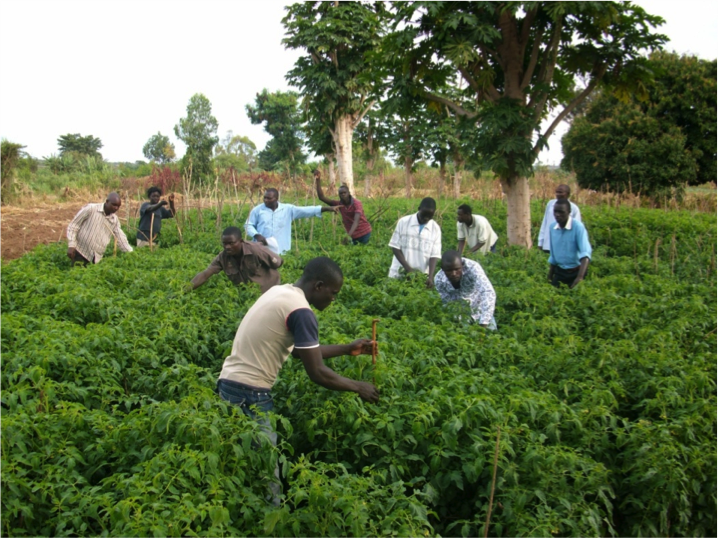
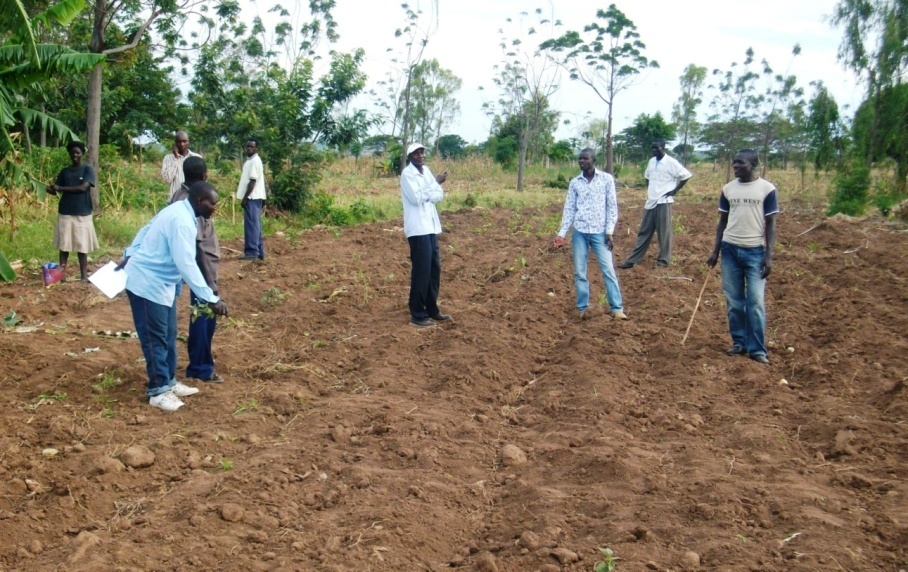
The Nyaruanda Youth group provides the manpower to till and maintain their local garden.

“The Nyaruanda Youth Development Group is a community based initiative started in March 2010 in south Kadem Location, Nyatike District in Kenya. It was started by a group of orphaned youths who were left behind as head of households in their families. When they were 10-12 years old, many of them lost their parents to HIV/AIDS. They have graduated to replace their deceased parents in roles of fending for their siblings. As they grew up together, they realized that they were facing the same challenges and started organizing themselves in small groups. They need to provide food, clothing, shelter, medical care and above all schooling for their families.

A first harvest of Tomatoes, Watermelons and Sukuma wiki (a staple African green rich in iron and vitamins) from the CanAssist-supported Nyarunda Youth Group garden.

In the beginning of 2012, Rieko Kenya had the opportunity to be visited by John Geddes, the Executive Director of CanAssist African Relief Trust (CAART). Rieko Kenya considered Nyaruanda Youth as one of the groups to be visited by John. John agreed to present an application to CAART to help support the group, through Rieko Kenya, with small scale irrigation equipment and materials. The support from CAART was realized with Rieko Kenya providing training and facilitating the purchase of the irrigation equipment and materials (Water pump and pipes) and presented to the group. After a period of a half a year and following this life saving and transforming support, the Nyaruanda group is very excited and happy to report a huge financial gain. They are now able to be self reliant and meet their financial obligations.”

CanAssist is delighted that these local agriculture projects are not only providing better nutrition to communities; they are helping to stimulate economic development.

Where were you when….

Neil Armstrong, first man to plant a foot on the surface of the moon, died today. I got to thinking about where I was on July 20, 1969 when that event was taking place. In many ways it was the equivalent of Christopher Columbus landing in North America. An historical voyage of exploration.

That afternoon I was at a family gathering that was honouring my upcoming marriage three weeks later. I had been Best Man at the wedding of friends the day before. We were all 21 years old. So young when I think about it now. But unmarried young couples didn’t openly live together back in the sixties. If you wanted to live together and be socially accepted you were obliged to get married. Not that there is anything wrong with that.

It was a summery afternoon and we were all sitting on webbed lawn chairs in the back yard of my future wife’s Aunt Una, drinking beer and preparing a barbecue. We shared with the rest of the world as Neil Armstrong gave his “One small step for man“** sentence and later that night marvelled as we looked up at the moon and thought that there was indeed a man up there.

One of the other powerful things about that event was that it was broadcast live on television. Bear in mind this is long before the days of the Internet and even home computers. Transmission of a live TV signal from the moon so everyone could watch this historic happening was remarkable in itself.

I wrote last week about “turning” 65. Part of my reflections around that birthday were also centred on all the things that had happened in my 65 years – the first step on the moon being one of them.

What were some of the others and where was I when they happened?

November 22, 1963. That afternoon as I sat in the row next to the inner wall in the upstairs classroom of my high school, Jackie Kennedy was leaning over her assassinated husband in the back seat of a limo in Dallas.

I remember exactly where I was sitting in Miss Allison’s French class at London Central Collegiate Institute when news came over the intercom that President John F. Kennedy had been fatally shot. I remember walking home from school in a daze and spending the weekend in front of my grandparent’s TV as the rest of the weekend happened, including seeing Jack Ruby emerge from the crowd shoot Lee Harvey Oswald as he was being transferred somewhere.

I remember where I was when I learned that Elvis Presley had died. It was the day before my 30th birthday. I was feeling like part of my past had disappeared and I remember sharing that thought with a young woman who was in the hospital with metastatic breast cancer. “He was so young“, she said. She was less than 40 with three kids and was dead within the month.

Even earlier I remember the day that Marilyn Monroe was found dead. I know it was a Sunday. I was a teenager then, spending the summer at Bluewater Beach near Goderich, Ontario. A friend and I had a job peeling potatoes for french fries in a local restaurant (that is a story in itself) and the news happened to come on the restaurant radio as the owner of the restaurant scraped fat off the big iron grill to make fried eggs for the patrons…and for him and his wife who sat in the back booth smoking and eating between customers.

It is intriguing to me that many of the triggers for these very distinct memories are around the deaths – Elvis, Princess Diana, JFK, Martin Luther King, the Challenger Astronauts, 9-11. They all call forth distinct pictures of where I was exactly when I heard the news. Perhaps the passing of someone famous triggers a landslide of thoughts and reflections that are all bound up in one moment of information. Death events mark a finite irreversible transition point in history.

In contrast, the Moon Landing was one of celebration and achievement. And to be a witness to it with the rest of the world was pretty special.

My experience of the inauguration of Barack Obama was also influenced by memories of race riots in the U.S., Martin Luther King and segregated drinking fountains.

More recently, I shared watching the inauguration of Barack Obama with a bunch of students all gathered around a television in Nairobi, Kenya. It was a very special way to experience that historical event given that Obama’s family hailed from Kenya. Downtown in Nairobi the students at the University gathered to watch. They all stood up when the Oath of Office was administered in Washington. Respectful and touching. I did wonder, however, if my take on the first African-American President of the U.S.A. being sworn into office was different from the young students with whom I watched it. I remembered apartheid and segregated washrooms in the U.S. and Martin Luther King as well.

Do you have some moments that had so much impact that you remember exactly where you were and what you were doing when they happened? Want to share them with me? Enter your significant historical moments in a comment, I’d love to hear about them.

**Apparently Neil Armstrong was supposed to say “One small step for a man” but he left the “a” out when he made his step off the ladder onto the moon surface. Imagine the excitement for him of that moment.

Not just new latrines

I’m delighted to have received further updates about the sanitation improvements that CanAssist is funding at the Mutundu Primary School in Kenya.

Toilet for girls at the Mutundu School – Spring 2012

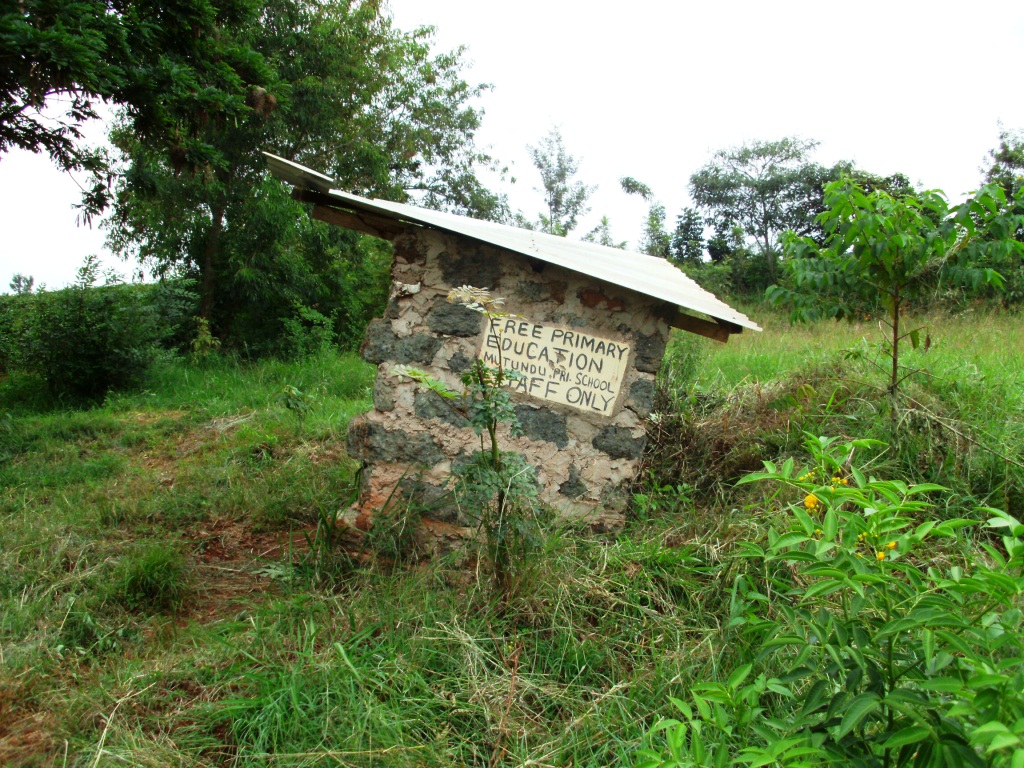
I first wrote about this in a blog article in June (Sanitation – or lack of it) and subsequently updated it last month (Sanitation – Making progress) As you can see from the photos, the state of the toilets for staff and students at the school when our Kenyan assistant, Dan Otieno, assessed them was nothing short of disgusting.

Last week I received more pictures of the new latrines at the Mutundu School I would like to share along with some hidden advantages to the community from the kind of development work we are doing through the CanAssist African Relief Trust.

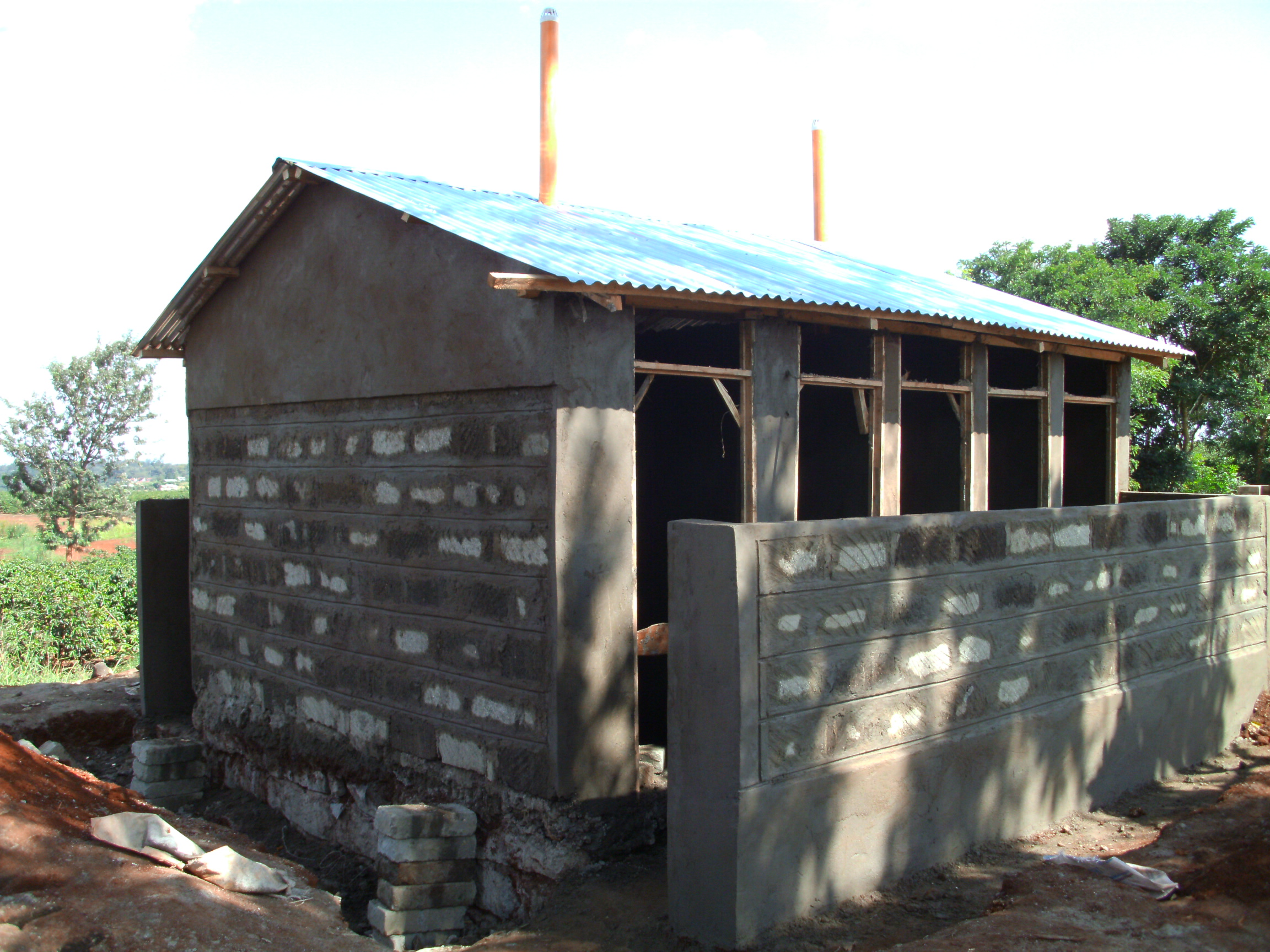
New CanAssist-funded girls toilet at Mutundu School. August 2012

I have come to realize that often the stimulus to a community provided by the funding of an infrastructure project such as this one has other less obvious benefits. The materials for construction are all locally purchased and the skilled (and unskilled) labourers to construct the projects are local tradesmen, often without much work. So we are not only providing the structure or item that will be part of the community and improve well-being there, we are also giving some employment to the locals, albeit temporary.

CanAssist recently sent money to another school in Uganda – Hope for Youth School near Mukono – to purchase 70 desks and chairs for the school. The cost comes to just over $5000 to do this. The bonus is that the desks and chairs will all be made locally by carpenters who will therefore benefit as well. This is a Win-Win situation. The school gets the needed furnishings and the local carpenters (and suppliers) benefit from the business.

It makes me happy to see this work at the Mutundu school progressing, knowing that the sanitation (and thereby health) conditions at the school will be greatly improved. I am also glad that the community are having some opportunity to participate in the construction and even earn a bit of money as they contribute to achieving these goals.

When money for infrastructure projects like the latrines at Mutundu School becomes available, it creates lots of interest in the community, a sense of ownership of the project and employment for tradesmen in the region.

The story of Jerry O.

(Published in the Kingston Whig Standard – July 18, 2012.)
My friends told me that I needed an updated photo for my Facebook page. I have been a somewhat reluctant Facebook user but I recently attended a conference for charities on behalf of the CanAssist African Relief Trust and the message was that “conversation and collaboration” are now the keys to successful charities and fundraising. And Facebook, with over eighteen million users in Canada … half our population … is the way to communicate in 2012.

So I opened up my previously fairly clandestine Facebook account to the world, started a blog and I am going to give it a good try in the next few months.

I had been using a photo of the Rift Valley as my profile picture. “Not good enough,” was the response. “It has to be a photo of you. People will communicate with you because of common interests so they have to see who you are.”

I compromised. I found a picture that was taken last winter when I was in Kenya of me and an African child. I have always liked the photo. But I knew little about the child.

It was taken at a very small school in Mbita Kenya, one where we were working to start a school farm. There were kids everywhere. Playing and running and singing. Many were curious about this “mzungu” who was standing in their midst with a camera. One little fellow was particularly eager to be near me. He followed me around for a few minutes, sometimes holding on to my pant-leg or “petting” my hairy arms. (African men usually have little or no hair on their arms so my furry forearms are a novelty that many African children cannot resist. “You are like a lion,” one kid told me a couple of years ago.)

I was drawn to this little fellow’s smile and after a few minutes I picked him up and carried him around as I greeted the other children. He beamed. I gave my camera to one of the teachers to take our picture. You can see joy on both our faces. We became friends quickly and were relishing the new-found bond between us.

This photo has become a symbol to me, representing the happy association that I cherish between me and African people, particularly the children.

So I put it up on my page. I immediately had comments and “likes” for the photo. It seemed a good choice.

Later that morning I happened to be chatting with the Director of the School in Kenya using Skype. I asked if he could identify the child.

His name is Jerry Otieno,” I was told. “Fantastic,” I thought. Jerry sounds like such an active, outgoing name and suits the smile that I remember. And Otieno is a very common Luo man’s name meaning “born at night”. I have dear friends with that name in Kenya. It seemed perfect.

What a sad case,” continued Kennedy.

This poor little fellow was brought to our school by a teenage caregiver. He had no money for school fees or food. He is about 4 years old. His mother worked for another woman in town as a housekeeper. She got pregnant and there was no father in the picture. Last year she became ill and was taken to a hospital in a neighboring town. She died there. Her body rots in the mortuary of the hospital, unclaimed. Jerry is being looked after by the woman for whom the mother worked but she has children of her own and cannot afford his care.

We have taken him into Hope School and support his education. He gets one meal a day here. He loves school, walking to school himself most mornings.

I was startled by this story. I had picked this photo because I thought it was upbeat and the child in it the epitome of a happy African kid. I have seen lots of heart-tugging photos of emaciated children covered with flies used by charities to promote their cause. I don’t want to use those images to portray African children because even though their stories would break your heart, most of them look like little Jerry. They are smiling and cuddly and loving and resilient.

The Hope School is one that CanAssist supports. The school has about 150 students ranging in age from about 4 to 12. Most of them are categorized as “OVC’s” (Orphans and Vulnerable Children). The teachers work at the school for little remuneration and the school struggles to provide both education and one meal of porridge a day to these kids. CanAssist has helped the school by providing funds to start a school garden that will both provide better nourishment to the students and perhaps a bit of extra income for the school to help with expenses. Children who can afford it, pay about $8 a month as a school fee. But at least 30% cannot afford even that and are included with no fee.

Jerry’s story shook me but it is not that different from many others I have heard. I still think about little Rose, the Ugandan waif that got me started with this business of trying to help out in Africa. Now Jerry has added motivation to my work through CanAssist and I will leave his picture with mine on my Facebook page to remind me — and my Facebook friends— of the happiness that can come from helping where you can and the joy that just caring brings to others.

Sanitation….or lack of it.

When I was selling my house three years ago, prospective buyers were always anxious to see the kichen and the bathroom(s) as a priority.  What was the bathroom countertop like?  Were there two sinks? A rain shower?  One of those toilet lids that closes quietly without banging?   Magazines and web sites intrigue us with bathrooms where we could luxuriate all day. We in North America are certainly spoiled when it comes to bodily ablutions and evacuations and we have all been in service station washrooms that make us cringe.

According to Unicef and World Health Organization data, less than 35% of the population of Kenya has access to “improved sanitation” – which might just mean a clean ventilated outdoor latrine. Flush toilets for most…forget it.

One of the areas of focus for the Canassist African Relief Trust is to help schools in East Africa improve the situation for their students by constructing new latrines and having rainwater collection for both drinking and washing.

Let’s compare our expectations for sanitary toilet facilities with what some students and teachers endure in Kenya

These are the two buildings that serve as toilets for 300 pupils at the Mutunda School in Kenya

Recently CanAssist received another request for latrines from a school in a region where we were not acquainted with anyone as a contact.  So we sent one of our Kenyan colleagues to check it out.

Initially he was surprised that the request was coming from this community which, on the surface, seemed to be reasonably well off.  But as he went a bit more rurally to one of the schools, even he was shocked by what he found.

The Mutunda Primary School has about 300 pupils and ten teachers.  There are six stances in two toilet buildings to serve the students. The latrine for teachers  had long ago collapsed and was unusable.  The student latrines were in disrepair.  There was no access to water for hand washing.

The toilets that were used by the teachers have collapsed and can not be used. Want to teach here?

Dan sent photos. I have seen other latrines like this in Africa and remember the smell. Just looking at the photos almost made me gag.

The girls’ toilet. No further explanation necessary.

How on earth can you teach young people the health advantages of using clean sanitation facilities and hand-washing when the school toilets look like this?

The school has requested $5000 to build new toilets – ventilated drop toilets that are 30 feet deep. There will be 8 stances for the boys, 8 for the girls and two for the teachers (about $250 for each unit).  They will also install some rainwater catchment gutters on the school building to help promote hand-washing.  Hand-washing has been demonstrated to be as effective as clean drinking water to reduce disease from fecal contamination.

The CanAssist board has yet to review this proposal but I can’t imagine that we will not approve of this project.  How can we refuse? This is not only a matter of sanitation and health but also one of simple dignity.

Something new

Not sure if this is the place where I welcome you to my blog or you welcome me to the Blogosphere.   Maybe we should do both.

I have returned this week from a very stimulating and helpful conference called MyCharityConnects in Toronto. I went there to get ideas about how to reach out to people about the charity that has consumed me for the past couple of years – The CanAssist African Relief Trust.   I came away with the instruction to “get the story out there” by blogging and Facebook and Twitter so I am going to jump right in.

I have lots of stories. And know lots of very interesting people in Africa.  I hope that by sharing them with you on this blog, I can excite you, too, in some way about global issues, reducing poverty in the third world and just being a global citizen.

I am very proud to be Canadian. But in the past several years I have worked in post-war Bosnia and Herzegovina and made over a dozen trips to Africa and I have developed close ties with a family in Italy. I have families in all of these places that have made me feel like I am part of them. I have been given nicknames and pet names in several languages – Oseuri, Otim, John Ole Moiko, Amooti.  My family here in Canada all refer to me as Dedo – Bosnian for Grandpa.  So, although I am Canadian to the core, I feel very globally connected.  I care about all these people who have shown me love and respect and connection that is hard to describe…and in MasterCard terms, Priceless.

Since starting to work in Bosnia in 1998, I have published over 80 articles in the Kingston Whig Standard about my experiences. Perhaps I will uncover some of those to share in this blog as well.

I hope I can make it interesting. I hope I can entertain, educate and enthuse you.  I hope that you will give me feedback and that we can chat about issues and stories for which we share some common ground.

And what I have learned from my travel is that we all share a lot of common ground. This world.