
I have been reading a lot of paranoid articles about Facebook’s intrusion into our privacy so I decided that I would see exactly what they had on me. Following simple instructions I was able to download everything that Facebook knows about me, all my posts and messages, all the photos and videos that I had posted and also see what advertisers know about me.
It is all pretty boring.
There were no real surprises. It was kind of nice to be able to have all my facebook photos in a file or see every post that I had made since I signed up in 2009. If nothing else, it allowed me to have a copy of all these photos just in case Facebook folds or somehow my file gets closed.
What about advertisers? Well there is a list of ads that I have clicked on to view more. No surprises there as they obviously had some item that actually interested me – or that I may have even bought online.

And there was a long list of items that I was supposedly interested in so advertisers could aim their merchandise at me. But this seemed bland and innocuous and even had a few weird things like skunks and rings of Saturn and Catholic Schools in the mix. Go ahead, advertisers and send me things about skunks. What do I care? The only advertiser that has my contact info is Airbnb and it is one that I use. They have my information elsewhere as well.
I was surprised to see a list of many of my
“friends” phone numbers in a file. Not all of them but many. Not sure where that came from. But it gives me a good phone directory for friends! I can also see a list of friends that I have “removed”. But don’t worry, I can’t see if you have removed me!
The bottom line is that Facebook seems not to know anything about me that I have not been open about in my posts or interested in following up on by clicking on a link or “Liking” it.
I came away from this exercise thinking that there was nothing there that I had not posted myself and that the advertisers knew nothing about me that I had not openly declared. Basically I have not posted anything that I consider to be “private” so what Facebook knows about me is what I have chosen to reveal. I think that is the key. Whatever you post is public and will remain. So taking some care not to post anything that you don’t want to persist in cyberspace is probably the best strategy.
I also have to be aware that what is showing up on my news feed is selected by Facebook and geared to what I have posted or liked in the past. So it is not an unbiased reporting of events or opinion. Suffice to say that I have not seen any pro-Trump posts.
Actually what bugs me more is those Facebook “friends” who lurk and are entertained by reading my posts and but are not open enough to share anything themselves or even post a “like” or a comment from time to time. Facebook is a social medium. To me, Social means interactive. If someone is not willing to share anything about themselves, but is happy to read all about someone else’s life events and opinions, perhaps Facebook is not the medium for them. Or perhaps they might eventually find themselves on my “removed” list.
Should I cancel my Facebook page because of privacy concerns? If this is all they know about me then I see no need. Do I wish I could spend a bit less time checking my Facebook feed? Yes. But that is not their fault but my being hooked on this 21st century communication with online friends.

 She got off on the “reasonable doubt” claim and to this day that verdict would have to hold. As a gruesome piece of evidence, the coroner had decapitated both Abby and Andrew and their skulls were submitted as evidence at the trial.
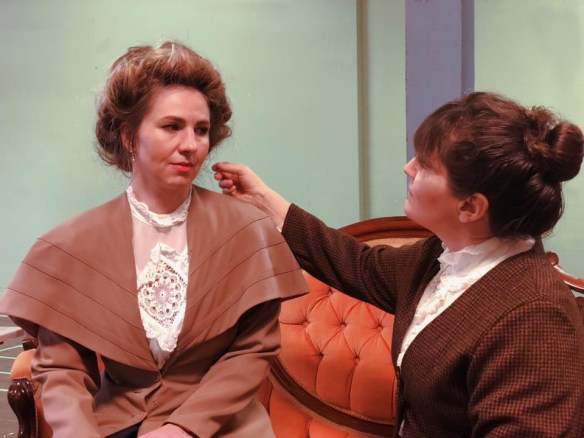

 The movie, all shot in Halifax, is about a black policeman who is finding his work as a policeman to be challenging when people of color are in trouble with the law, or accused unfairly of being lawbreakers. At one point when he is off duty, he is “carded” by another cop and treated badly, simply because he is a person of color. He snaps and starts to turn the tables, stopping white people and being abusive and hostile in his interactions with them. This gave our predominantly white audience a feeling for what it would be like to have the shoe on the other foot, to be suspected and abused simply because of your skin color. It was startling to experience and a provocative but very effective way of creating understanding of movements like Black Lives Matter.
 The two comedies were both fun but paled in comparison to Black Cop.
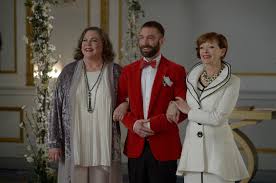 Another Kind of Wedding was filmed in Montreal. I loved the familiar locations including the bagel shop where Tara Foods gets their bagels. Kingston was also mentioned by none other than Kathleen Turner. Even though the line was a bit negative “Who would want to spend a week in Kingston?”, the audience loved to be acknowledged on film by this superstar.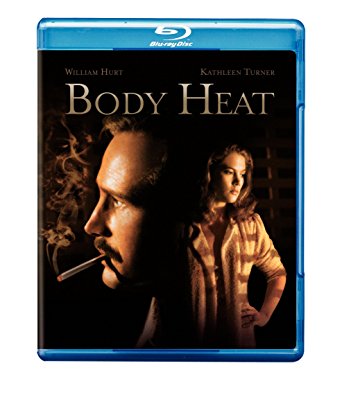
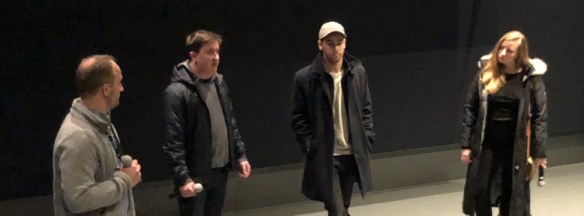
 Expo 67: Mission Impossible was a behind the scenes look at the seemingly unachievable task of putting together a World’s Fair on two yet-to-be-constructed man made islands in the St. Lawrence River in the heart of Montreal. It was indeed an Herculean task to build this site from the ground up at an escalating cost and with the skepticism of much of Canada outside of the province of Quebec, that it could be completed on time. Even the computer estimates suggested a probably completion date of mid 1969… two years too late.
 The documentary, Ninth Floor, that I saw this morning, however, was something special. This film told a story of the crisis at Sir George Williams University in Montreal in 1969 when students protested lack of action by the University on charges of racism. Now, I was a university student at UWO at that time so it was people my age making a statement and demonstrating to correct a wrong that they perceived. Canadian filmmaker Mina Shum is a great story-teller with diverse talent as evidenced by her film Meditation Park that was shown last night as the opening film of the festival. Ninth Hour, although a documentary, was also a very adeptly-crafted story combining present day interviews with now much older protesting students who were involved in 1969 (one of whom is now a Canadian Senator), archival montages of news coverage and film shot while the crisis was unfolding, and very cleverly-integrated film shot recently that fleshes out the story and seeming timeless. Shum was very careful not to include elements in the recent film that would date it in any way. Some of the images are quite beautiful and even arty but every one contributes to the story.
 The elders being interviewed (all protesters during the crisis) are wise and eloquent and intelligent and have the benefit of years of living and a unique and personal perspective on racism in Canada. I particularly liked the one fellow commenting with a smile, “Canadians are racist but they apologize for it.”
 Now, you may not be lucky enough to see Ninth Floor in a theater but you are able to see the film on the National Film Board web site – free and downloadable. I recommend it highly and if you are a certain age it will give you pause to think about how things were unfolding in Canada in 1969 and how oblivious we all were to it in many ways. Here is the link to the entire film, available free on the NFB site.
  johnageddes