So much stuff …

This is an updated version of an article that I had published in the Kingston Whig Standard in December 2012. As I leave Africa for home these thoughts are in my mind.

In July 2011, I led a group of 20 CanAssist supporters (at their own expense) to Kenya and Uganda to see first-hand some of the projects that our charity was funding there. We had a wonderful visit. There were smiles, hugs and tears of joy throughout the time we spent mingling with African communities and schools.

Our trip started auspiciously with our flight out of Montreal being cancelled on the morn-ing we were to depart. Not postponed – cancelled. Thanks to our friends at Odyssey Travel we were all rebooked to bounce through Paris, then Amsterdam to arrive as scheduled in Nairobi but we had to hustle as our changed itinerary had us departing three hours earlier than originally planned. We jostled in large customs and security lineups at the Paris airport. It was hectic. By the time we reached Amsterdam I was a bit frazzled.

Then, as we were leaving the Air France plane and wondering if we would get to our last connecting flight on time, a smiling dark-skinned fellow in a red jacket appeared. With a reassuring and gentle voice, he guided us through the Amsterdam airport securi-ty and onto a special bus to the gate where our Kenya Airways plane, already boarded with 200 other passengers, was waiting. We were ushered to our seats and greeted with smiles by the attendants. They had held the plane’s departure a few minutes so we could get there on time. The pilot then announced that we would be just a few minutes more before departure to be sure our luggage had all been transferred.

The atmosphere had miraculously changed from frenzied panic to one that was calm and soothing. I felt like I was already “home” in Africa. I could relax knowing these people would help us to arrive safely at our destination. What a relief.

Often I get asked if I have any culture shock or major adjustments to make when I travel in East Africa.

In fact, I find myself immediately comfortable when I arrive and smell the air at Nairobi airport and feel the warmth both of the climate and of the people. It is this warmth, like the relief I had when we were finally in the hands of the Kenya Airways crew, that draws me back to Africa and motivates me to promote the work we do through the CanAssist African Relief Trust.

The difficulty adjusting happens when I come home. Today I am heading to the Kisumu airport to start the 30+ hour trip home. I have had a productive and pleasant sojourn in Kenya since mid January. The weather and people here are both warm and inviting. I will still have some winter to face when I get home. And the usual cultural adjustment back to my Canadian ways.

I am proud to be a Canadian. I know how fortunate I am to live in a multicultural, tolerant and respectful society and among the top tier of people in the world with regard to food, security and fresh water to spare. I choke up when I sing “God, keep our land glorious and free” in our national anthem.

But when I come home I start to look around me and wonder where our priorities are.

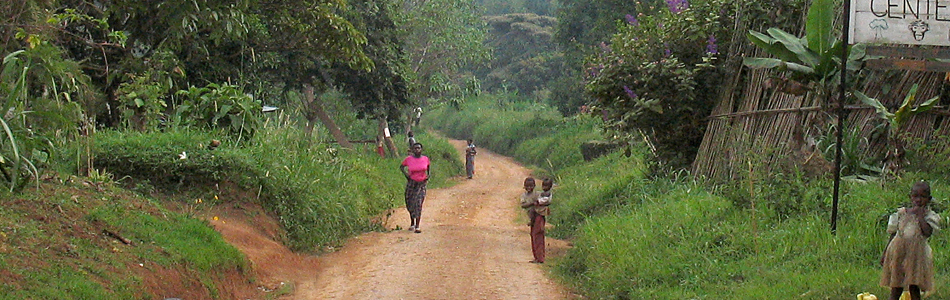
We have so much “stuff”. And despite having so much, our consumer-based society encourages us to want more. After spending time in a small African town where people do their shopping in kiosks or off straw mats on the street, I find that setting foot in one of our “Box” stores almost feels obscene.

Don’t get me wrong. I am a consumer, too. I enjoy comforts and unnecessary frills just as much as anyone. But when I look around me at all the “things” that we have – or think that we need to have – I start to ponder the differences between our society and the life I experience when I am in Africa. Their priority seems to be much more based on caring interaction with others, rather than with material accumulations.
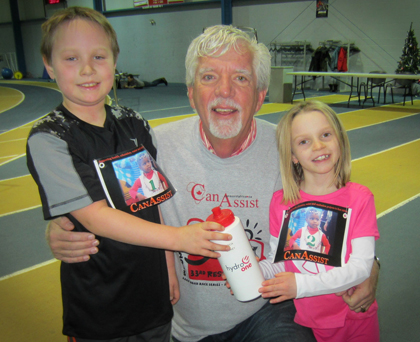
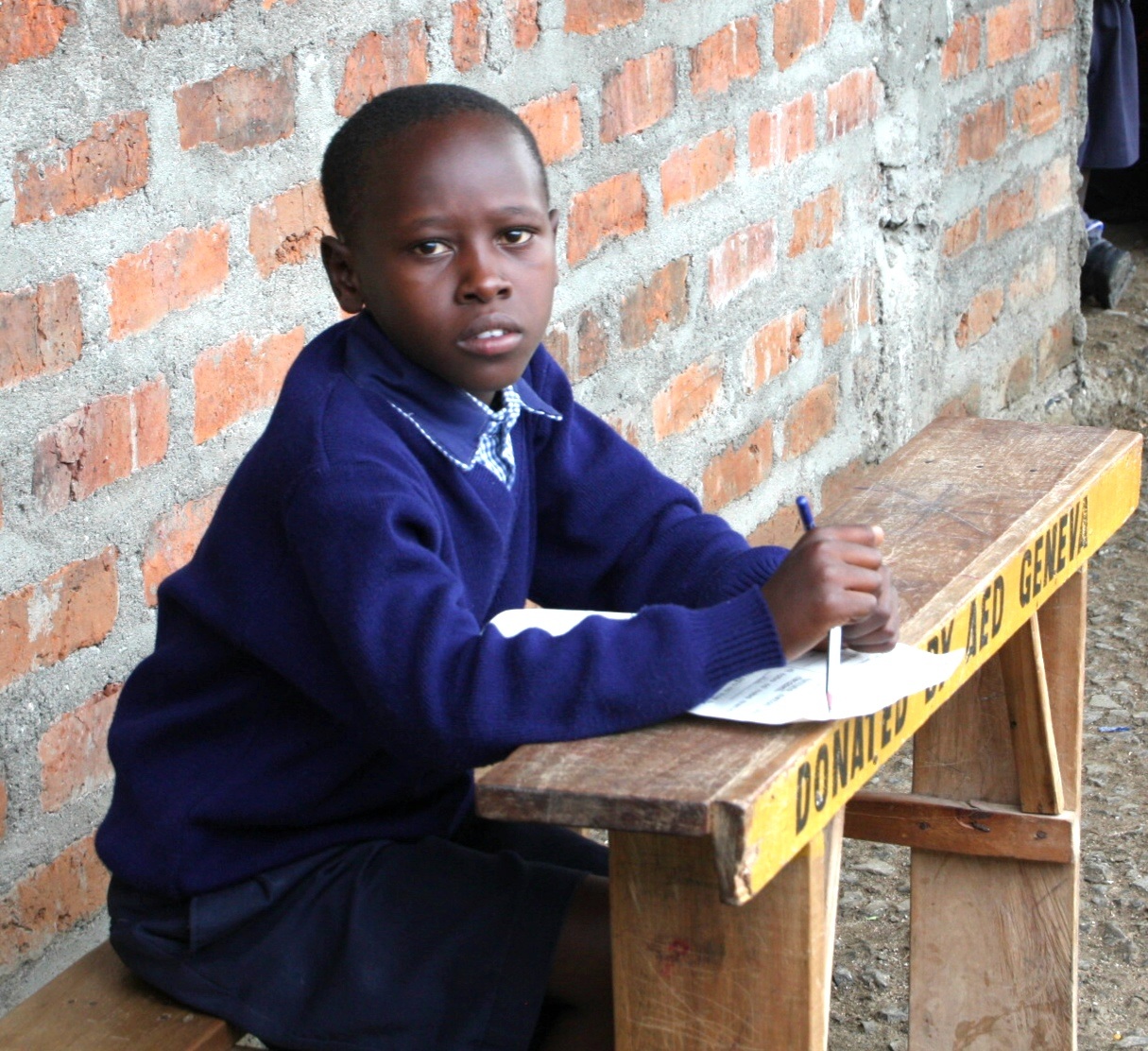
These Ontario School Children donated $176.11 from allowances in 2012 to help children in East Africa.  Sharing.

These Ontario School Children donated $176.11 from allowances in 2012 to help children in East Africa. Sharing.

So how do I find balance? I have come to agree with the recommendations made by Peter Singer in his book “The Life You Can Save”. Singer’s suggestion is that we should enjoy the luxuries we are accustomed to – and work to acquire – but that we must also share our good fortune in some way with developing nations. If we have enough money to spend $4.50 on a ‘low fat, extra hot, vanilla soy latte” or $2.00 on a bottle of water that would be free if we get it from the tap, surely we have some to share with people who have no access to clean water, adequate sanitation, food security or basic health care.

I am extraordinarily lucky to have the opportunity to spend time in both worlds. I can ex-perience the comfort and security of a Canadian society and also the friendly, caring warmth that envelopes me when I visit communities in Africa. Through the CanAssist African Relief Trust, I hope that I can share my good fortune, and encourage others to share as well, with people who live in communities that can use our help.
Logo420

Community

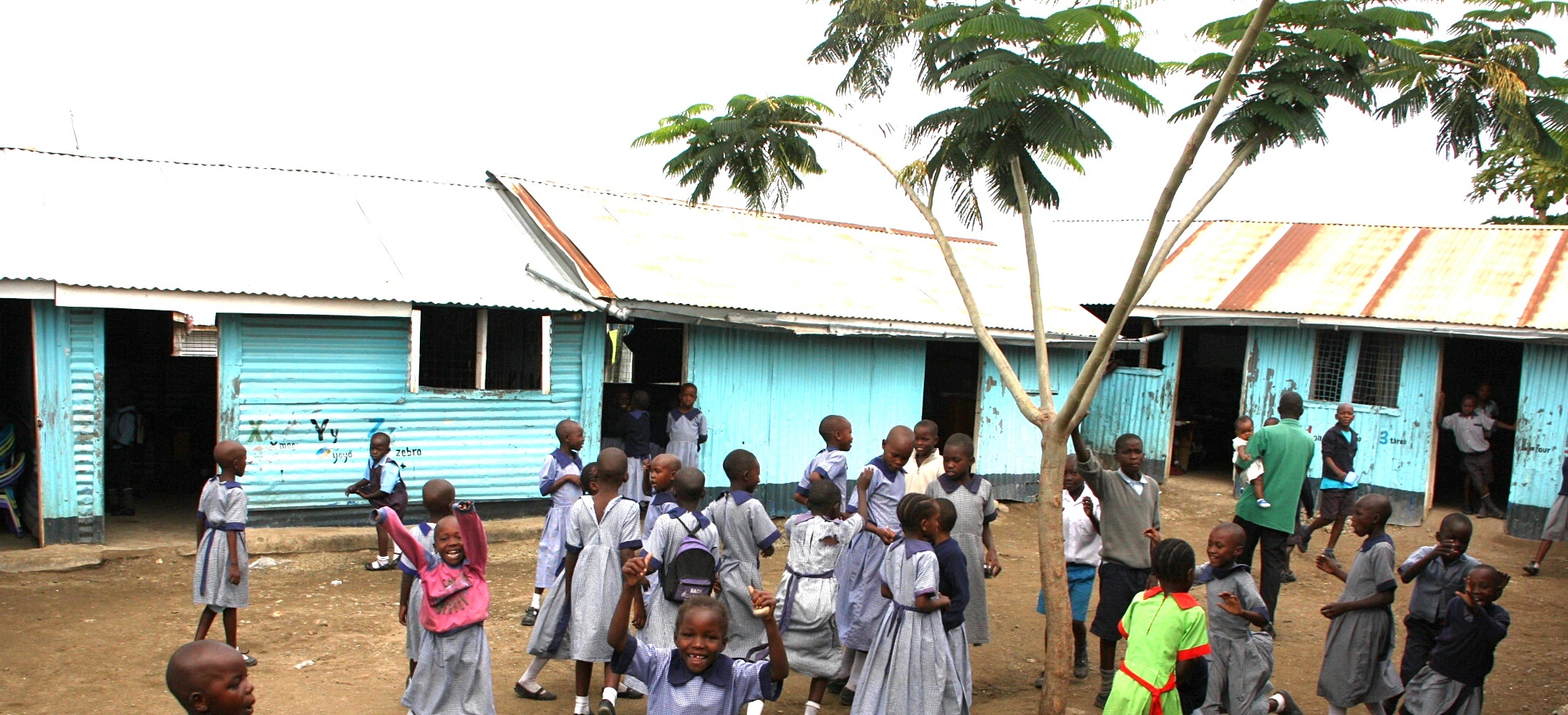
When visiting the CanAssist-supported Hope School in Mbita, Kenya I am always astounded how many of the children ( the happy ones singing in the van, by the way) have desperate life circumstances. Many who go to the school live in nearby slum communities. Their families are poor and suffer from the consequences of that with the kids being malnourished and eking out existence from day to day.

Well, the adults suffer too.

I was introduced to one young man who happens to be albino. As such he had been plagued by discrimination and rejection throughout his life. In some neighboring countries, albinos are thought to be spiritually haunted. There are reports as late as 2009 of young albino men being killed and their body parts sold for potions. Imagine living in the fear that your skin colour ( or lack of it ) puts your very life at risk – essentially to be poached for your body parts.

The man came into the little office room and we greeted each other with a handshake.

“This fellow lives in the slum community next to the school,” I was told. “He likes music and has been volunteering to help out at the school so we have accepted him here, both to help him out but also to help the children learn not to discriminate or reject people who look different from themselves. It is something else that the school can offer back to the community.”

“Wonderful.” I thought.

“His wife was pregnant and two days ago she gave birth to a son.”

“Congratulations” I blurted.

An awkward pause. “Oh no!” I thought.

“The child died. This fellow needed 1500 Kenyan shillings to bury his child but he has virtually nothing. Not even money for food now. ” (1500 KSh is about $20 Canadian)

While this was being related to me the man buried his head in his arms on the table in front of him and wept. African men will rarely show this kind of emotion to others. As he sobbed I was told the rest of his story.

“We have offered him a place at the corner of the school yard at the rural school where he will bury his child today. It is the least we can do to help him out.”

The grave was pointed out to me when I visited the school the next day.

This story was heartbreaking on so many levels. But it also demonstrated the kindness and community orientation that many Africans can demonstrate. They are compassionate people who are genuinely responsive to the needs of others within their capacity to help.

I am so blessed to know these kind, generous people who teach me so much about life.

Birdwatching at Mbita Kenya

I am not the most patient individual so sneaking around in the bushes and the trying to snag a photo of an African bird is a healthy activity for me. I have to stand still and wait for the moment. Good discipline training for someone who likes to keep moving. It can sometimes be a challenge to get the bird to sit still long enough for me to get the shot and often I am torn between gawking up into the trees or stepping gingerly through the grass to avoid snakes or monitor lizards.

Here are those of the birds I have seen in the past week.

Black Bishop

Southern Red Bishop

Yellow-backed weaver

Yellow-backed weaver

African Fish Eagle

African Fish Eagle

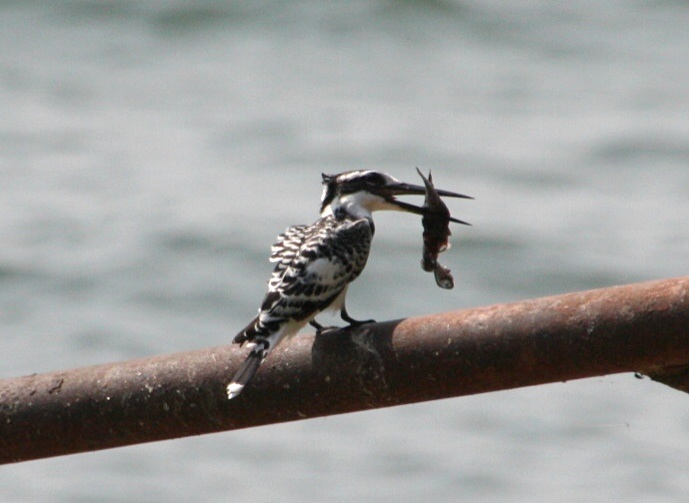
A pied kingfisher figures out how he will eat the fish he just caught. Eventually the fish went down the hatch.

A pied kingfisher figures out how he will eat the fish he just caught. Eventually the fish went down the hatch.

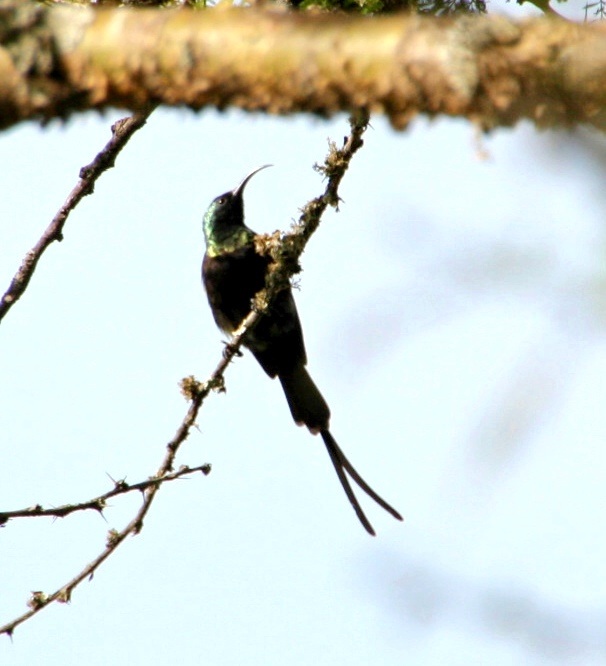
Bronze sunbird

Bronze sunbird

Bronze Mannikin

Bronze Mannikin

White-browned Coucal

White-browned Coucal

And this bird is driving me crazy. It has a lovely musical whistle and inhabits a tree outside my door. When I hear it whistling I head out with my camera only to find the bird hopping quickly from branch to branch behind the leaves, never giving me more than a second to get it. On my bucket list is to get a good photo of a Black Headed Gonolek! This is the best I could manage this week.

Black-headed Gonolek

Black-headed Gonolek

Beautiful Kenyan kids …

In July I related the story of Jerry O, a young Kenyan orphan boy whose story surprised me and touched my heart.

You can read the blog article here : The story of Jerry O.

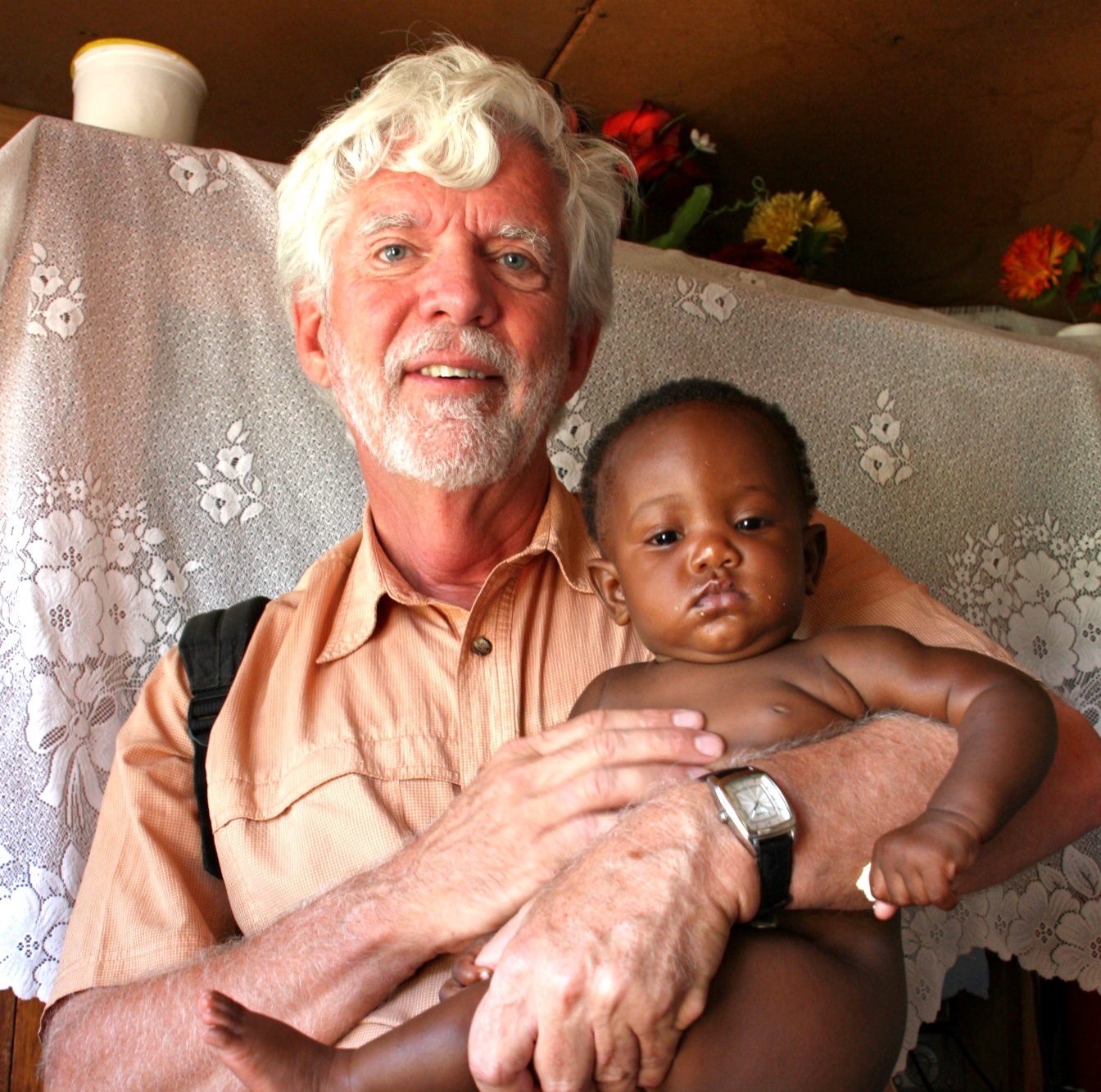
Today I visited the Hope School in Mbita Kenya and in one classroom the teacher plunked this kid into my arms. “Here is your friend, Jerry”

His problems continue but the child looks robust and is obviously being cared for by the school and his adoptive mother. A delight to see him again.

Me and Jerry O.  - 2012/2013

Me and Jerry O. – 2012/2013

On Tuesday morning I also met Lorraine Kathryn, six month old daughter of Kennedy Onyago who was name was taken from that of my mom (Lorraine) and my daughter (Kathryn) and granddaughter (Cate Lorraine). I introduced you to little Stewart Geddes last week … Well, meet Lorraine Kathryn (Kathy) today! Another Geddes namesake – an honour for our family.

Lorraine Kathryn (Kathy) Onyango

Lorraine Kathryn (Kathy) Onyango

A letter to my grandson, Noah …

Dear Noah

This week I visited the Kanyala Little Stars school on Rusinga Island in Kenya. I have come to this school every year for the past nine years. The school is quite small in size but there are now 306 students registered at it from nursery class to grade 8. Last year they graduated their first Grade 8 students who are now eligible to go on to secondary school. Unfortunately many of these kids don’t have parents who can afford to send them on to high school. Their academic performance in the standard exams was very good – one of their students was second amongst hundreds in the district.

imageWhen I went into one classroom their first quesion to me was “How is Noah Budd?” They remembered that last year on your birthday you told your friends not to bring presents to your party but to bring some money to buy supplies for these students in Kenya. When I visited the school last February,I took them school supplies and a soccer ball and
a picture of you that they have hanging in the school office. The students in grade 3 wanted me to say hello to you. I though it was better if they do this themselves so I took this short video to bring their greetings back to you and a song for you as well. I hope that you enjoy it and that you are glad to know that your kindness to these students who you don’t know and who live far away in Africa is something that they know is special and they are grateful for your caring.

In one class they were studying mathematics, doing algebra equations. I told them that you, too, like math and that some day I hope that you can come and visit these kids in person.

In the schoolyard is a tree that I planted in July 2011 when I brought some CanAssist supporters to Kenya and we visited the school on what they called “The Big Day”. The tree is growing just like the students and hopefully will soon be providing some shade in the small play area.

image

Noah, I want you to know that the kindness you showed to these fellow students by giving up a few birthday presents last year to send school supplies to Little Stars School was a generous and thoughtful act which they remember with thanks. And I, too, am proud of you for your kindness in sharing with others.

Love,

Dedo

A taste of Migori, Kenya

imageI met Edward Kabaka a couple of years ago and we have worked together on several projects in the Migori region of Kenya. On the weekend, Edward came to pick me up and we went to Migori where I was able to visit three CanAssist project partner groups.

After dinner entertainment

After dinner entertainment

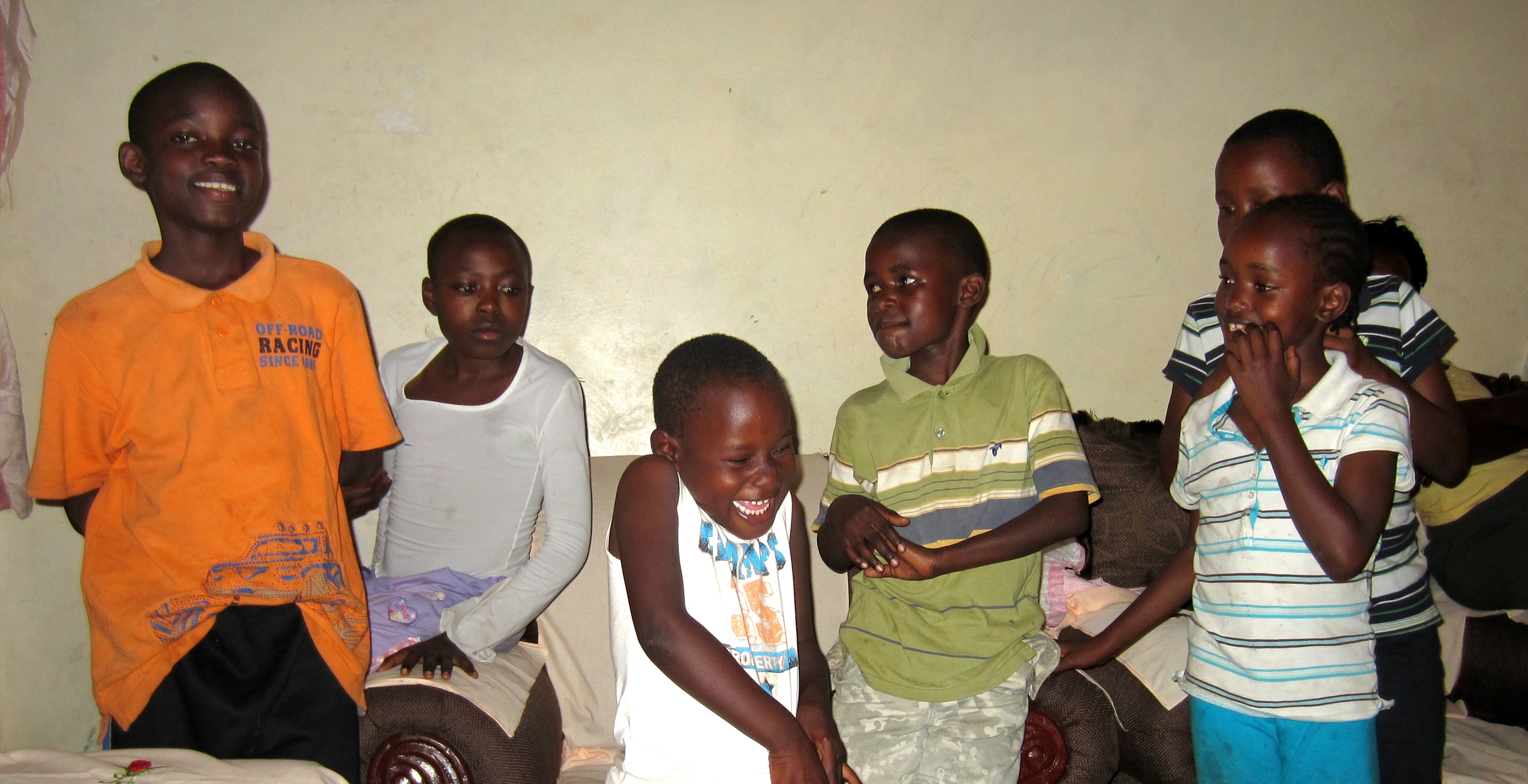
On Monday, Edward invited me to his home for dinner and his wife prepared a huge spread of food. After dinner the three youngest girls daughters and some of their neighbour friends sang and danced and recited poems for me. I thought how similar kids are all around the world, remembering my own putting on “shows” after dinner and thinking of my granddaughter, Emma, twirling around and showing me ballet moves.

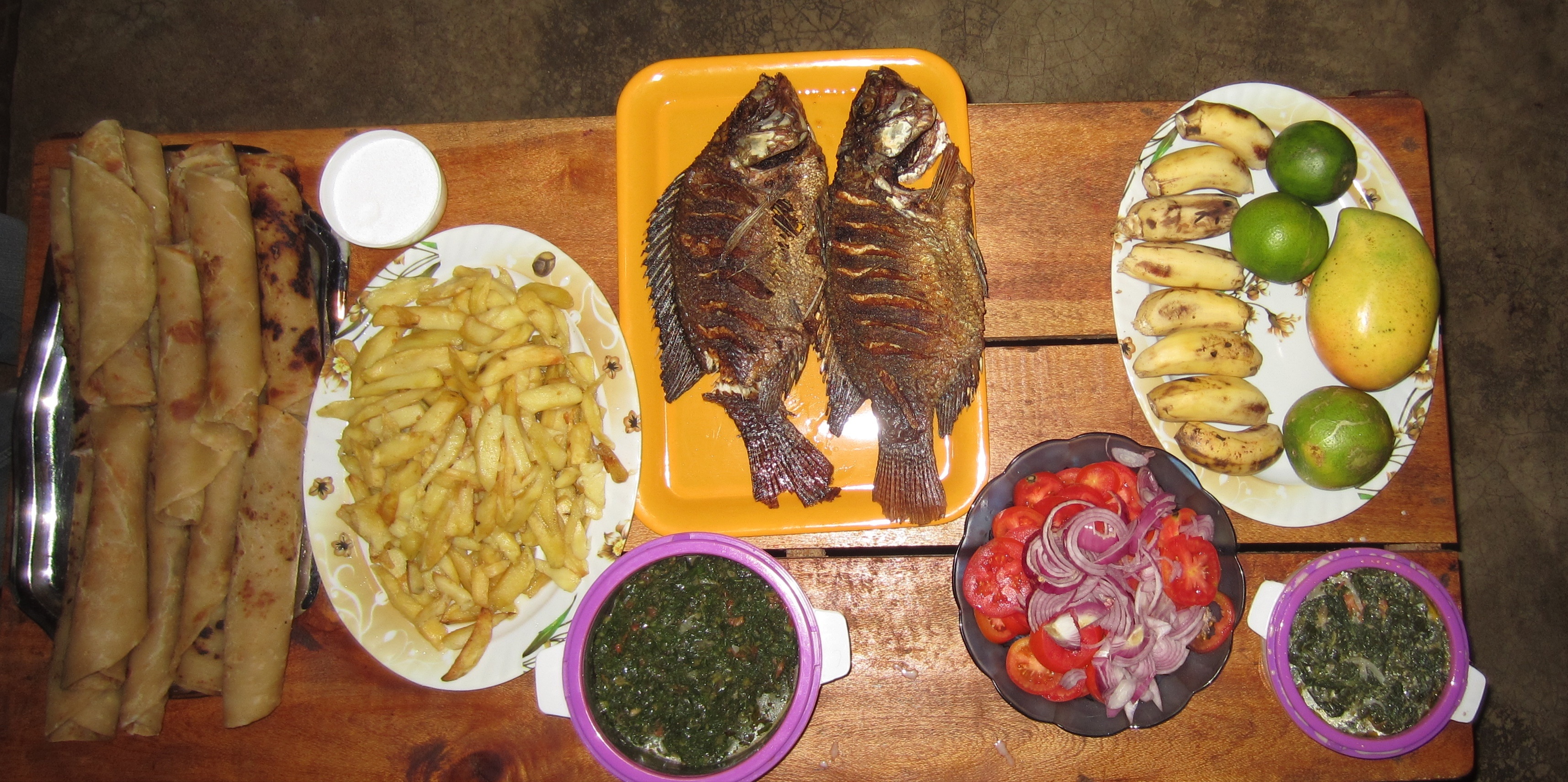
I took the opportunity to get a photo of the food before we dug in. I am often asked what i eat while in Kenya. This meal had many of the common staple foods that i am offered here, although not usually all together as in this spread. In addition to rice and beans which were on another table we were served chapati, chips, tilapia, sukuma wiki (shredded kale), tomatoes and onion, indigenous greens, bananas and papaya.

The other common staple for Kenyans which we did not have this night is uglali, a corn meal boiled doughy mixture that replaces our bread and is usually served in a huge mound. In addition to being a filling basis for a meal, uglali often acts as an edible utensil. The dough is rolled in one hand, a thumbprint cavity is made in the ball and used to scoop up other foods. It all pops into the mouth.

I came away stuffed with food and friendship and lots of smiles.

image