Last month I visited the Grade 4 class at Glenburnie School to tell them a bit about Africa.
Here is a “campaign” that resulted from my visit. This short video presentation, created by Ashley, one of the students in the class, speaks for itself.
Ashley had originally had “With a Little Help from my Friends” as her background music but YouTube is picky about copyright so we changed it to some original African sounds. I recorded the music in the video when I was visiting a CanAssist project site in the village of Olimai, Uganda in 2011. The thumb piano band had welcomed me to the community in the afternoon and serenaded me again after dark. What a delightful treat for a visitor.
As I headed home for lunch yesterday I had a carpe diem moment.
I am lucky to live a five minute walk to work through an old neighbourhood in Kingston. As spring has (gradually) unfolded I have enjoyed seeing bushes and trees and flower beds burst to life. It is really incredible that these same streets can be icy and cold and devoid of life in the winter months and then lush and green and fragrant in the spring.
I was startled by a cluster of great orange Oriental Poppies that were hanging over the edge of the sidewalk on Earl Street. I glanced at them as I walked by but continued on my way. They summoned up fond memories of similar flowers in my parents’ back garden 40 years ago. Twenty metres past the poppies I suddenly stopped. I realized that their beauty would be short-lived. Rain is forecast for the weekend. These stunning, delicate blossoms will likely lose many of their petals in the winds or rain or just with the passage of time. Their brilliance will be fleeting.
I returned to the flowers and stood for a moment to absorb their beauty and fragility and to recognize that this was one of those many delicious life moments that has to be savoured before it quickly passes, never to be relived like it was just then.
As I finished my walk home, I reminded myself to take notice of those moments more often.
Carpe diem is a phrase from a Latin poem by Quintus Horatius Flaccus (65 BC – 8 BC), more widely known as Horace, that has become an aphorism. It is popularly translated as “seize the day”. Carpe is the second-person singular present active imperative of the Latin verb carpō, which literally means “You pick, pluck, pluck off, cull, crop, gather, to eat food, to serve, to want”, but Ovid used the word in the sense of, “enjoy, seize, use, make use of”.[1] It is related to the Greek verb (carpoomae) καρπόομαι, (I grab the fruit, profits, opportunity), (carpos) καρπός=fruit of tree, of effort, etc. Diem refers to “day”. Thus, a more accurate translation of “Carpe diem” would be “enjoy the day” or “pluck the day [when it is ripe]”Wikepedia
Peter Singer starts a recent TED talk with a dramatic video of a small child in China being knocked down by a car on the street. As she lies there, injured, three passers-by totally ignore her. The incident is reminiscent of the Good Samaritan story from the Bible, where a priest and a Levite ignore the plight of the injured traveler on the road before the Samaritan stops to help.
Singer asks the audience – “How many of you would have stopped to help?” Not surprisingly, most of the hands go up.
African Child – can you overlook her needs?
Singer then says something like “Well, there are children all around the world who live in poverty, vulnerable to preventable violence and disease – millions of them. Are you paying any attention to them?”
“Unicef reports that in 2011 over 6.5 million children under age 5 died of preventable poverty-related diseases.”
Singer is an Australian philosopher and humanist who writes and speaks out about many ethical issues including poverty and animal rights. In 2009, he wrote a book called “The Life You Can Save”. In the book he encourages readers to commit to helping developing communities with a small portion of their income. If you can afford to pay $2.00 for a bottle of water that is free from the tap, do you not have money to spare – to share, in fact, with others who are living without many of the necessities of life that we take for granted?
His message is not a guilt trip. He encourages us to enjoy the fruits of our labours and our good fortune at living in a community where there is law and order, fresh water, social responsibility and enough food but to share a portion of that with others who must live without those amenities.
We are constantly bombarded in the media with photos of children in North America who have perished in the natural (or unnatural) disasters like the recent tornado in Oklahoma City or the bombing at the Boston Marathon. Our hearts go out to the families of these children and we feel sad and that these deaths seem unfair. These are a very few children whose stories touch us because they are in communities like ours.
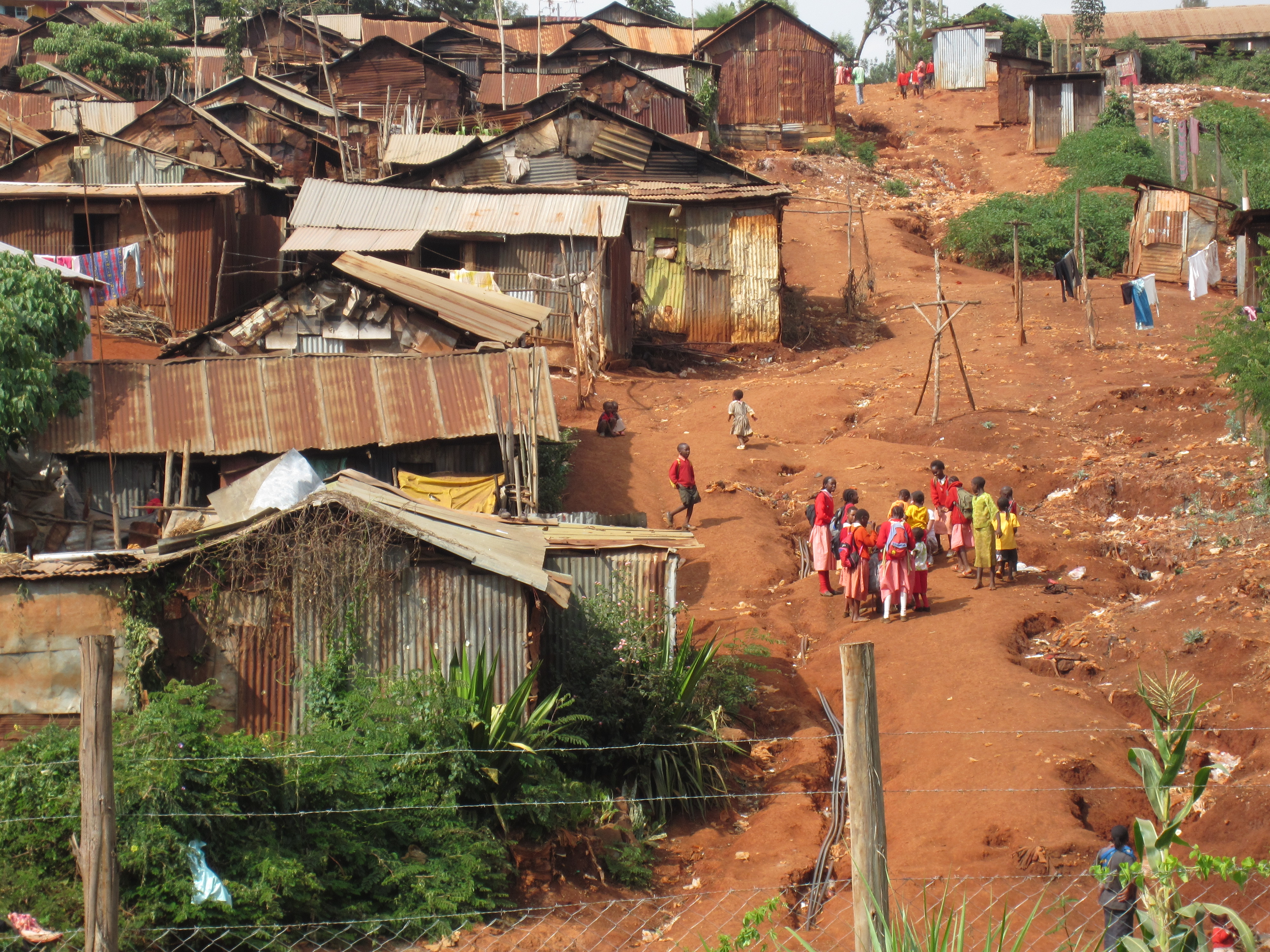
Nairobi slum
But what about the mothers of the 19,000 children who die in the developing world every day from preventable poverty-related problems? Do we give them much thought? Do we pour money into the developing world to help these 19,000 like we do to help families of the few North American families touched by tragedy?
Think about this for a minute. It is sobering. 19,000 per day.
The CanAssist African Relief Trust is attempting to so something, however small to help these families in East Africa. Rather than pick a few children for special attention, CanAssist funds community infrastructure projects like school classrooms, water and sanitation improvements, food security through local agriculture and health care facilities. We have funded around $300,000 in projects since 2008. Our Canadian community helping communities in Africa.
If you are interested in what we do, please look at our website http://canassistafrica.ca We are always happy to receive support, moral or financial, for the work we are committed to do to lessen the effects of poverty for vulnerable East African families.
(If you would like to participate in what CanAssist is doing to help communities in East Africa you can donate using the Canada Helps link below.)
Here is a link to the Peter Singer TED talk. If you have 15 minutes please listen to what he has to say.
In an effort to simplify the process whereby CanAssist selects new projects to fund, we set up a six-week application period this spring during which we received 81 very worthy applications for infrastructure funding in communities in Kenya, Uganda and Tanzania.
Our resources are limited. We could only promise to fund 14 of these projects in the upcoming year. Nevertheless we chose a variety of projects throughout East Africa ranging from rainwater catchment to latrines to classrooms to hospital beds. Here is the list of projects CanAssist will implement in the next several months. (*Canadian dollar estimates may vary slightly depending on International exchange and bank rates)
Twekembe Association Centre for Rural Systems and Development, Nakiwaate Village, Uganda. Rainwater collection tanks for a community school. $4600
Action for Research and Development (AFORD), Rambira Community, Kenya. School furnishings for three schools. 535,200 KSh ($6500).
Rieko Kenya, St Gorety School, Mikei, Kenya. Completion of a computer training building. 800,000 KSh ($9200)
Tom Mboya Peer Support Group, Rusinga Island, Kenya. Irriga6on of an agriculture plot. 506,000 KSh ($6000)
Stewart Geddes Kamin Oningo Early Childhood Development Centre. Osiri Village, Kenya. Repair of classrooms and school furnishings. 378,288 KSh ($4500)
Nyandema Water and Sanitation project, Nyandema Village, Kenya. 4x 10,000 litre rainwater catchment tanks. 400,000 KSh ($4800)
Gombe District Hospital., Butambala District, Uganda. Repair of Hospital Beds, replacement of matresses and bedding. 12,030,000 USh ($5000)
Kamin Oningo Beach Management Unit, Osiri, Kenya. Community Latrine. 140,789 KSh ($1800)
Olimai Clinic, Olimai, Uganda. Hospital beds and rainwater catchment . (6,685,000 USh and 24,289,456 USh) ($9500 and $2650)
Oltaraja School, Nguruman, Kenya. Permanent Classroom for school. 813,450 KSh ($9800)
TESO Children Chris.an Development Org. Soroti, Uganda. Tailoring equipment for community income generation. $1200
Murera Community Empowerment and Support Organiza.on. Ruriru, Kenya. Sanitation for TWIGA Primary School. 466,700 KSH ($5700)
Badilisha Ecovillage Founda.on, Kaswanga Beach, Kenya. Sanitation. 277,810KSh ($3400)
Kanyala Little Stars Organization. Rusinga Island, Kenya. Conversion of two temporary classrooms to permanent. 357,200 KSh ($4400)
Luckily, we do have some regular supporters who are eager to help. This week we received a donation from one Kingston family that will look after two of our proposed projects. One of these is to supply sanitation facilities to a wonderful little beach community on the shore of Lake Victoria in Kenya.
Over the next few months, I will provide updates and challenges and successes as CanAssist looks ever forward to help communities in East Africa. Stay tuned.
This short video outlines the need at the Kamin Oningo fishing village … one we are now ready to move ahead with, thanks to generous and caring supporters.
I am sure that you have all played this game. “What famous figure, alive or dead, would you like to meet?”
I keep this at “famous” figure as there are many deceased relatives that I would like to visit with again. I would really love to meet my grandparents, now, as an adult. How different it would be to relate to these people and see them for who they really are rather than through a child’s eyes.
And when I look online at the choices people make they range from Jesus Christ to Lady GaGa.
Today my choice is Angelina Jolie.
Apart from being incredibly beautiful, this woman intrigues me. I know very little about the Brangelina stuff that I see on the tabloids as I check out of the grocery store. I have not seen the Lara Croft movies (or any of her movies, in fact) nor do I have any desire to do so. I have, however, seen television interviews in which she has surprised me with her insight, intelligence, eloquence and general “down to earth” demeanour.
I have been impressed that Angelina Jolie has used her celebrity to promote awareness of problems in the developing world and has even adopted children from these areas. She is a United Nations Special Envoy for Refugees and has worked for the UNHCR for some time. In some ways her adoptions have followed the principles espoused by Peter Singer in “The Life You Can Save”. Enjoy the fruits of your work and privilege but also share some of that with others less fortunate. She has three kids of her own and has balanced that with three more that were adopted from the developing world. She has struck a chord with me as I think she has made a genuine effort to use her celebrity to help others.
I am anxious to see In The Land of Milk and Honey, a film that will be released in North America next month – one that Jolie wrote and directed. The plot revolves around a love story of a Serb and a Muslim in Bosnia during the war in that country. I worked in Bosnia for several years and heard horrible stories of violence, rape and ethnic hatred that tore families apart. The film is fictional but the setting real. So real, in fact, that Jolie ran into problems getting permission to shoot the film in Bosnia as originally planned and had to move filming location to Hungary. The film was shot in both Bosnian (with subtitles) and English. I want to see the Bosnian version. I admire Jolie’s gutsy decision to tackle this subject and put her reputation on the line at the same time as writer/director rather than actor with a film that will not be a blockbuster but will explore a delicate topic.
But today’s news was the topper. Angelina Jolie has revealed in the New York Times that she has had a bilateral mastectomy in order to reduce the risk of her acquiring breast cancer after finding that she carries the BRCA1 gene for the disease. Her mother died of breast cancer in 2007 and she is at significantly increased risk herself, being found to carry the genetic mutation that will elevate her lifetime risk of breast cancer significantly. She has made this decision so she can reduce her risk and be available for her children. This must have been a huge decision for a movie celebrity to make. By being open with this Angelina Jolie has also done a great service to other women who face the same risks. Once again today’s revelation by this celebrity also strikes home to me as my wife died of breast cancer at age 48 and one of my daughters, already touched by breast cancer at a young age, has elected bilateral mastectomy with reconstruction to minimize her risk of recurrence. I was proud my daughter for making this difficult life choice and I can relate to the angst that Angelina Jolie must have suffered as she made the same decision (at almost the same age).
We often look at celebrity through a very tainted lens. We see them through Hollywood gossip columnists and papparazzi. But under the movie star veneer live real people who live with personal challenges just like the rest of us.
Today my celebrity hero is Angelina Jolie. I am free for lunch tomorrow if she is.
Here is a letter that I have sent out today to friends and family of my 93 year old Dad.
Dear friends and family of S.P. Geddes,
As you may know, I have been very actively promoting infrastructure support in needy communities in East Africa through the CanAssist African Relief Trust. Dad’s example of being supportive of charitable work through the Alzheimer’s Society, CNIB and CanAssist has certainly provided an example to me of how sharing our good-fortune with others is not only a responsibility but a privilege.
Dad has generously been specifically sponsoring a small school in a rural lakeside village in Kenya called Osiri. Prior to Dad’s sponsorship through CanAssist, the small children in this community had no way of acquiring any early education as the nearest school was several kilometers away. This left young children without the basics and when they were eventually able to enter school they were behind and often dropped out.
Children outside the gate of the S.P. Geddes Early Childhood Development Centre in Kenya
Dad’s donations to CanAssist have allowed this small school to develop a fenced school-yard (the children are young who attend and supervision is important), latrines for the school and a two-classroom structure. Last year, the community named this school the S.P. Geddes Early Childhood Development Centre. Remarkably, one of
The original three school classrooms, tin structures with dirt floors, are in poor repair. The school has asked CanAssist for financial support to cement the flooring (providing cleaner, more comfortable foundation to the classrooms and also helpful in reducing the Jigger problem that is made worse by dirt floors in a school)
See this success story of combating jiggers through CanAssist work in this short Youtube video
They have also requested money to provide some rudimentary classroom furnishings for the school. The cost of the renovations to improve safety and stability of the classrooms will be approximately $3400 Can and the school furnishings will cost about $1300.
One way or another, CanAssist has agreed to fund these improvements. Our ability to do this work, however, depends on donations to the CanAssist African Relief Trust. I know that Dad would be supportive again of this school but I am hoping that some of his friends and family will take his example of outgoing generosity to a small needy African community and share in supporting this CanAssist Project.
Donations over $25 are eligible for a Canadian Income Tax receipt and can be made by check to; The CanAssist African Relief Trust, 562 Sycamore Street, Kingston, Ontario, Canada. K7M7L8
Be sure to specify with your donation that it is to be allocated to the SP Geddes school.
Thanks for considering this specific request and I know that both Dad and the S.P. Geddes Early Childhood Development Centre in Osiri Village, Kenya will greatly appreciate any support you can muster for this work. Please pass this on to anyone you think may find this an appealing request.
Cheers,
John
Little Stewart Geddes with a plaque acknowledging the contribution of his namesake to the school in Osiri Village Kenya.
I have acted in amateur theatre on and off for several years but this week was the first time that I totally missed my entrance cue. I will backtrack a bit so you know the story.
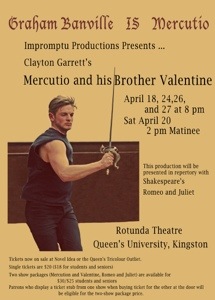
Impromptu productions, a Kingston-based theatre company has taken on the difficult task of presenting two plays in repertory, alternating performances one with the other. Shakespeare’s Romeo and Juliet is a tragic love story that most people know well. Kingston’s Clayton Garrett has written Mercutio and his Brother Valentine, involving characters mentioned in Shakespeare’s classic and presenting a surprising back-story to the interactions between Capulets and Montagues in “fair Verona”.
My part is Prince Escalus. He is uncle to Mercutio and Valentine and has raised them after their parents died. He hopes one of them will be groomed to take over as Prince of Verona to succeed him but there are snags.
In Romeo and Juliet, Escalus appears like bookends on the first half and at the end of the play. He has three entrances. In the first scene he comes in to yell at rowdy citizens to tell them to stop their bickering. Then he vanishes for about 90 minutes, only to appear again to exile Romeo for his part in killing Tybalt. At the end he shows up and says, basically “I told you something like this would happen”.
Of course, Escalus does make this all sound rather more complicated than it is. But that’s Shakespeare.
I decided that I would take my ipad to the theatre and while waiting for my three little entrances, would put together a video of photos that I had taken for both plays. I enjoy photography and also love to share the photos in different ways with friends.
So there I was in the hallway outside the dressing room trying to upload a video to YouTube when one of the stage managers hustled in and indicated that I was called to the stage. Usually we get five minutes warning to be in place. I assumed that I had time to pack up my iPad and get into position. I was wrong. It had been only when I failed to show up on the stage that they realized that I was not in place. My entrance was through a solid door at the back of the audience, the door hidden behind a black cloth. Unfortunately, in the dressing room which is in a totally different wing of the building, or even behind this solid door, it is impossible to tell what is happening on stage. I pulled the door open a crack to hear what was going on. Dead silence. What scene was this? Then someone pushed me from behind and whispered “Go Now”. The whole play had, at least momentarily ground to a halt. The next lines (and advancement of the plot) were mine. No wonder it was quiet on the stage. I regally appeared from behind the black cloth onto the stage to be greeted by one of my fellow actors who was looking at me with eyes that were like a deer in the headlights. Tybalt lay “dead” on the floor (likely wondering how he was going to get out of this one).
I am sure that there had been a very awkward silence and I owe poor Benvolio a beer. He would have wondered how on earth to get out of this situation if I never appeared. When something like this happens in front of an audience, seconds feel like hours.
I was able to jump right in and give my Blah Blah Blah, banish Romeo, tell them to drag the corpse away and confound the audience with the final line of the half – “Mercy but murders, pardoning those that kill.” Lights out. Applause. Intermission. An embarrassing story to tell. Live theatre.
Here is the video that I was uploading to YouTube while all this was happening. I hope it was worth it.
Mercutio and his Brother Valentine will continue next week at the Rotunda Theatre, Queen’s University, Kingston at 8 pm on April 24, 26 and 27. Romeo and Juliet will be at 8 pm on April 25 and 2 pm on April 27. I will try to make my entrances on time.
It’s strange how the mind can wander. Or at least mine can.
I had a brief Facebook interaction yesterday with friends in which I referenced Mohammed Ali with his well known “floats like a butterfly, stings like a bee” comment. It immediately called up a memory of being on holiday with my family in Western Canada in July 1963. I was a month away from turning 16 and Sonny Liston had just beaten Floyd Patterson to become heavyweight champion of the world. But Cassius Clay (he changed his name to Muhammed Ali a couple of years later) was able to immediately upstage Liston with a challenge and prophesy, “Liston’s not great, he’ll fall in eight.” I was not at all interested in heavyweight boxing at the time but I still remember being in the car and hearing this on the radio as we travelled through Manitoba. I also remember watching a solar eclipse through exposed film two days earlier and having vivid recollections of listening to 13 year old “Little Stevie Wonder” singing Fingertips Part 2. I bought the record – a “45” – when we got home.
Rehearsing for my role as Mr. Spettigue in Girl Crazy-1963
I started wondering what else was going on in 1963. I was going into Grade 12 at London Central Collegiate Institute. I was a nerd. I wore corduroy flood pants and sweaters with designs on them. I was into many extracurricular activities, including playing the role of Mr Spettigue in Girl Crazy and dressing up as Quack version of Bess the Landlord’s Daughter in an election skit for my friend Daphne Ward (now Bice). Her campaign theme was centred around Daffy Duck. She didn’t win. The Daffy Duck approach has not been used by politicians since.
I remember sock hops in the gym. I wonder what became of teachers like Hunk Wyatt, Miss Wyanko and Mr Webb who all seemed absolutely ancient (they taught my mom, in fact) but who were all likely younger than I am now.
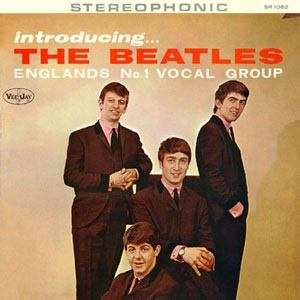
The Beatles released their first hit, Please Please Me in early 1963 and this was followed by other singles and an album…in stereo. They had not yet appeared on the Ed Sullivan Show but Beatlemania was sweeping the UK in 1963. Their long hair verged on scandalous.
Gasoline cost 29 cents a gallon (not litre) and a loaf of bread was 22 cents.
Alfred Hitchock’s “The Birds” was a popular movie along with Elizabeth Taylor and Richard Burton in Cleopatra. Ron Howard was Opie on the Andy Griffith’s Show.
You will be familiar with Bob Dylan’s song, “Blowin’ in the Wind” made popular by Peter Paul and Mary in 1963 but you may not have heard Eydie Gorme’s “Blame it on the Bossa Nova.” Does any body do the bossa nova any more? Blame that on Eydie Gorme.
By far the most memorable event of 1963 was the assassination of John F. Kennedy. I remember the moment that news broke. I recall where I was sitting, the teacher and in the classroom I was in when the principal of the school broke into the lesson over the PA system. I spent the rest of the dreary November weekend glued to the black and white TV that was in the corner of my grandparents’ living room as the rest of the drama, including the shooting of Lee Harvey Oswald, unfolded.
Earlier in the year, Martin Luther King gave his “I have a dream” speech and racism and civil rights were paramount in the news. Civil rights movements were being met with violent opposition and it took policemen to allow two black students admission to the University at Birmingham Alabama. Fifty years later the President of the United States is African American. A significant change for the good within my adult lifetime.
It is weirdly wonderful to me that I can remember these events from 50 years ago so vividly. Lots of images and experiences filed in there somewhere.
Oh, and just in case you think I am showing my age, Johnny Depp and Brad Pitt were both born in 1963 which makes them 50 this year. Time marches on.
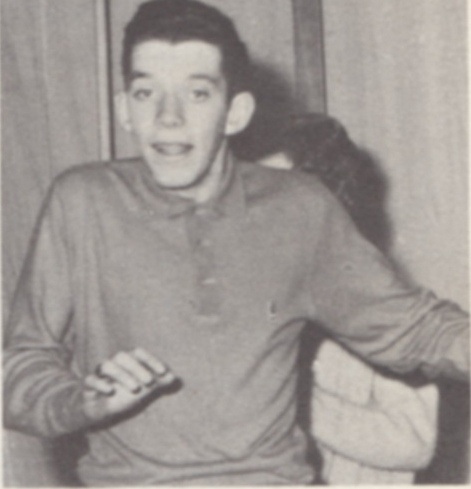
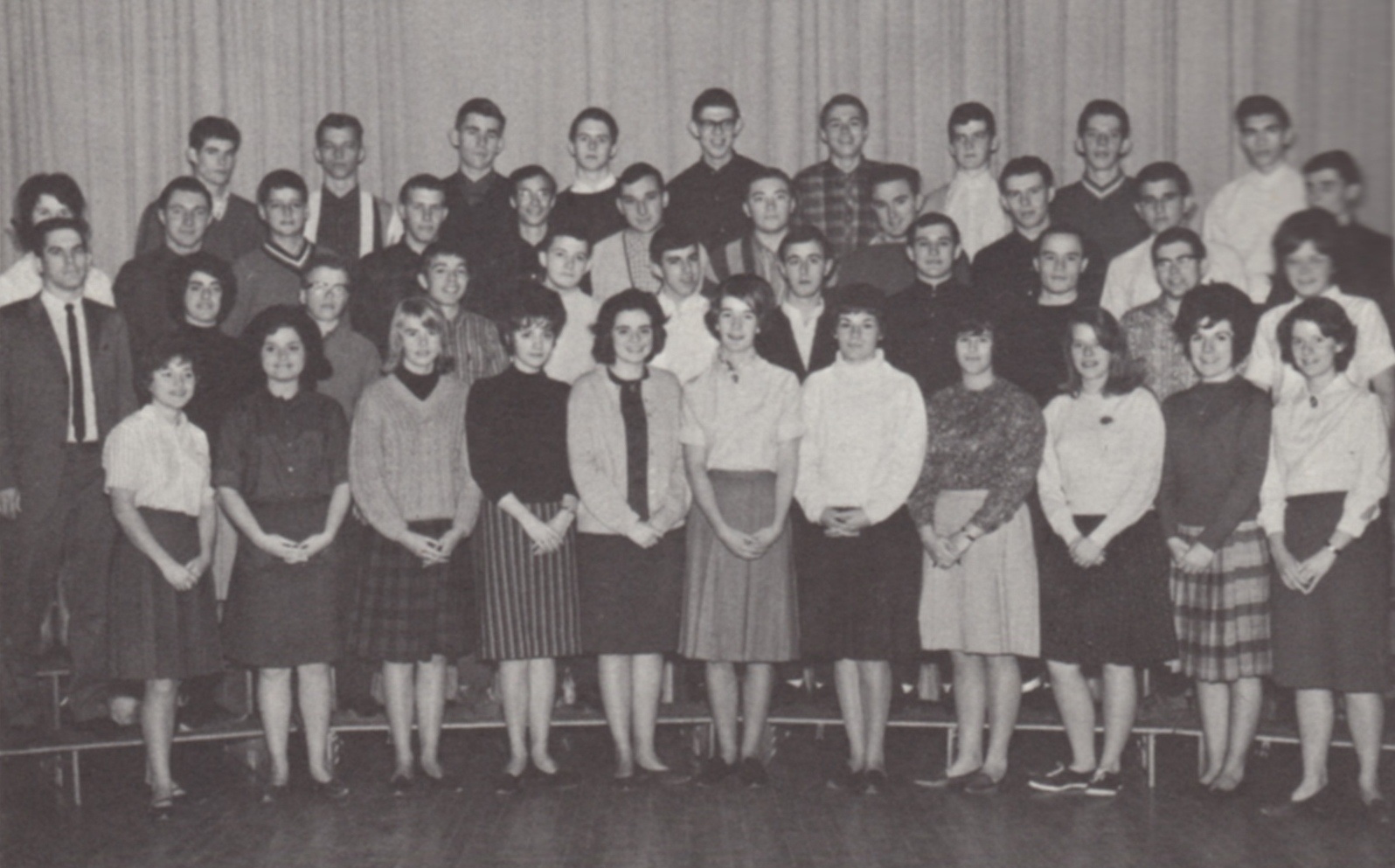
My grade 12 class in 1963. I am in the top right with the V-neck sweater. Over the years, my head has grown into my ears. At the far right in the first row is Lorna Harris . Lorna and I are still great friends after these 50 years, corresponding regularly by Facebook and email. An enduring friendship. Could we ever imagine what the next 50 years would bring?
“For never was a story of more woe, than this…”Prince Escalus, Romeo and Juliet.
Last month I posted a blog that contained references to my first spring in Sarajevo and the “Grandmother’s Breath” that swept the city that spring.
This spring I am in a production of Romeo and Juliet in Kingston that will happen in a couple of weeks.
This is the bridge in Sarajevo where a tragic real-life love story happened in 1993. I took this photo in 2005. At that time only a small bow and dried flower bouquet marked the incident.
Today I came across a wordpress blog article by a Bosnian blogger. His article combines the two themes in a story that is as poignant as Shakespeare’s play only a real-life event – a Muslim woman and a Serb man gunned down as they met to escape Sarajevo over the Vrbanja bridge at the start of the ethnically-driven war.
I share it with my readers. It triggers memories of similar sad stories I heard when I worked in Bosnia. I crossed the bridge where this tragedy occurred many times and sometimes stopped to note the small plaque that had been erected there.
Earlier in the month I posted a blog about the dilemma faces by African girls who attempt to cope with the monthly need for sanitary pads with no money to purchase them.
Here is a video of Mama Benta Odhiambo of Kanyala Little Stars on Rusinga Island, Kenya outlining that need.
I have also written a complementary article for the Kingston Whig Standard published on April 4, 2013. If you are interested, here is a link to that article.










 johnageddes