Wondering where the lions are…

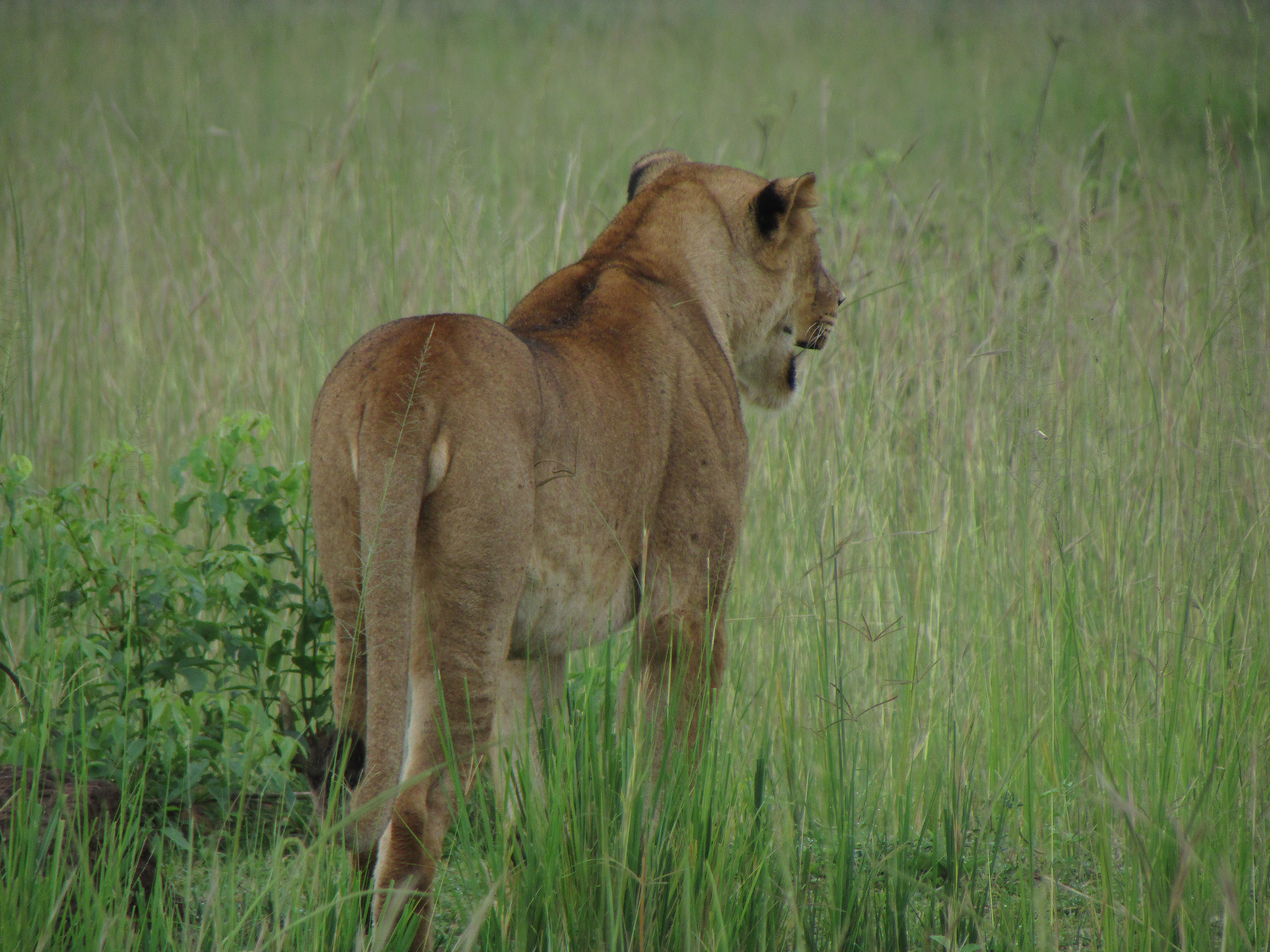
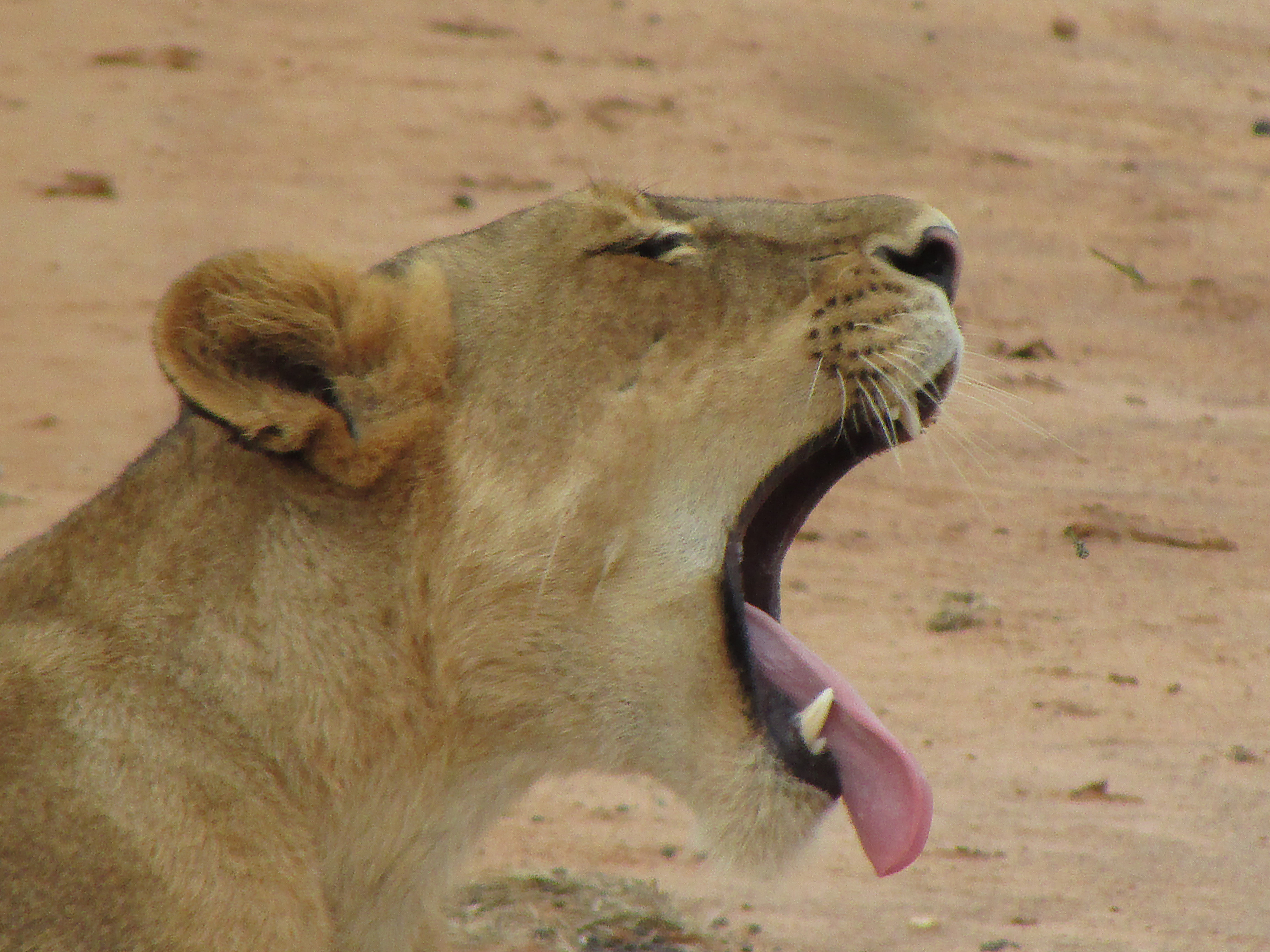
When one goes on a game drive in Africa, there is always the hope to come across lions.  Sometimes they are not that easy to find, particularly during mid day when they tend to lay under the bushes and nap.  I really didn’t expect to see lions on our morning drive in Murchison Park, Uganda but within half an hour we came upon two young female lions right out on the road in front of our vehicle.

We stopped and watched them for a while – always a pleasure.

lioness

lion 1

Lion 2_filtered

lioness 2

Looking for Chimps in Kibale Forest, Uganda

I have just returned from a three-week safari in Uganda.  One of the highlights was a morning spent climbing over bushes in Kibale Forest to watch chimpanzees.  They are boisterous and lively.   They squabbled and shrieked and ran past us in the brush, then ambled up a tree to swing from vines. It was as if we were not there, standing in the forest quietly watching. The Alpha Male kept them all in line. He would settle a fight or chase off a trouble-maker then lie down in the forest, legs crossed, for a rest.

Quite an amazing three hours.

Finishing our safari in style in Jinja, Uganda

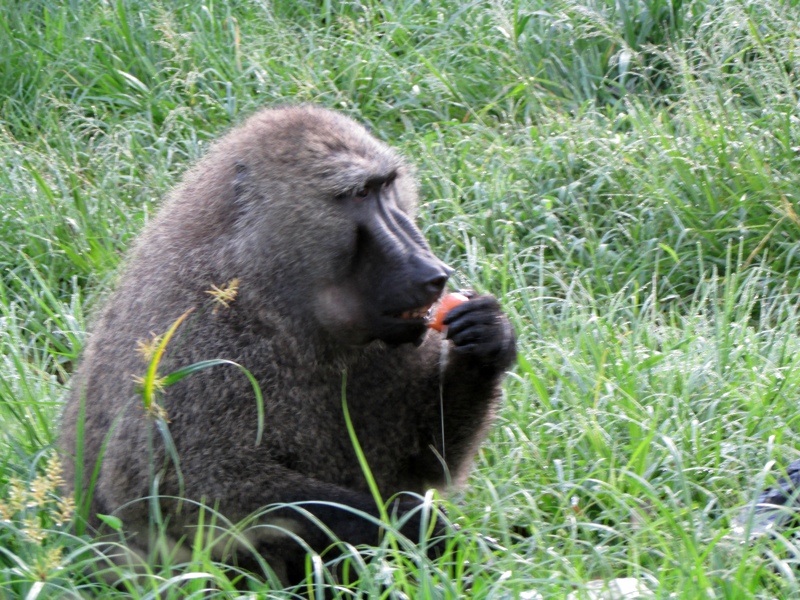
On our first morning in a cabin by Kibale Forest,this big baboon boldly came in through our back door and grabbed  bag containing a dozen eggs.  Our breakfast became his.

On our first morning in a cabin by Kibale Forest,this big baboon boldly came in through our back door and grabbed bag containing a dozen eggs. Our breakfast became his.

David Kay and I have been on safari in Uganda for the past three weeks. Our accommodation has varied throughout from a cabins by the rainforest where we cooked our own food using fruits and vegetables purchased from local trading centre kiosks, to the accommodation we have for our last two nights here in Jinja. In our cabin by the forest, we even had a huge baboon come into our “kitchen” and steal the eggs we were planning to have for breakfast. Today, we are staying at Surjio’s Guest House and Pizzaria in the upscale areas of the city not far from the place where the Nile River begins out of Lake Victoria – the infamous “Source of the Nile”.

The best food of our safari was curry at Aaswad's.  We are going back for  another Aaswad meal tonight.

The best food of our safari was curry at Aaswad’s. We are going back for another Aaswad meal tonight.

Last night we wandered along the Main Street seeking a restaurant that had been recommended to me by Hugh Langley. He said it had great food but an unfortunate name. Yes the place is called Aaswad’s Forever. The restaurant has mainly Indian food and we likely had the best meal there last night of our whole trip. So good, in fact, that we are planning to return tonight. Today rode a boda boda (motorcycle taxi) into the countryside to see the Bujagali Falls, listed in the lonely planet things to do in Jinja. Unfortunately the falls are no more…since a dam just below them flooded the area and raised the water level several feet. Dave has headed off to do white water kayaking on the Nile. I elected for something more sedate. I found myself on Main Street at 1 pm so I stopped at a little restaurant obviously catering foreigners where I had a midday treat of Apple and Passionfruit crumble with a big scoop of Vanilla Ice Cream and a cappuccino. Now this all sounds as if today I am living the life of luxury. Relative to most Africans, I am. But if you are willing and able to arrange your own travel and maybe take some motorcycles around town rather than a taxi, it is not that expensive. My lunch treat and coffee mentioned above cost me the equivalent of $6. Our dinner last night – Two large beers and a table ladened with delicious curried dishes cost us $16 each, including a tip.

The pool view from the patio in front of our room at Surjio's Guest House in Jinja, Uganda.

The pool view from the patio in front of our room at Surjio’s Guest House in Jinja, Uganda.

Our hotel, by far the most upscale we have taken will cost $120 for the two of us in a twin room and includes a full breakfast of fresh pineapple and banana, a Spanish Omlette with toast and a large bodum of coffee. Uganda is a land of great diversity and we have had that in our accommodation and food as well. We have been in places with no light, running water or indoor toilet and also in a hotel that is clean, comfortable, secure and with full amenities, including high speed internet WiFi. And with a little planning and flexibility, even comfortable upscale travel here can be less expensive than anything comparable at home.

Cappuccino, warm apple and Passionfruit crumble with  ice cream - $6 at Flavours on the Main Street of Jinja, Uganda.

Cappuccino, warm apple and Passionfruit crumble with ice cream – $6 at Flavours on the Main Street of Jinja, Uganda.

More Ugandan Safari photos

Here are a few more photos of the wildlife we saw last week in western Uganda.

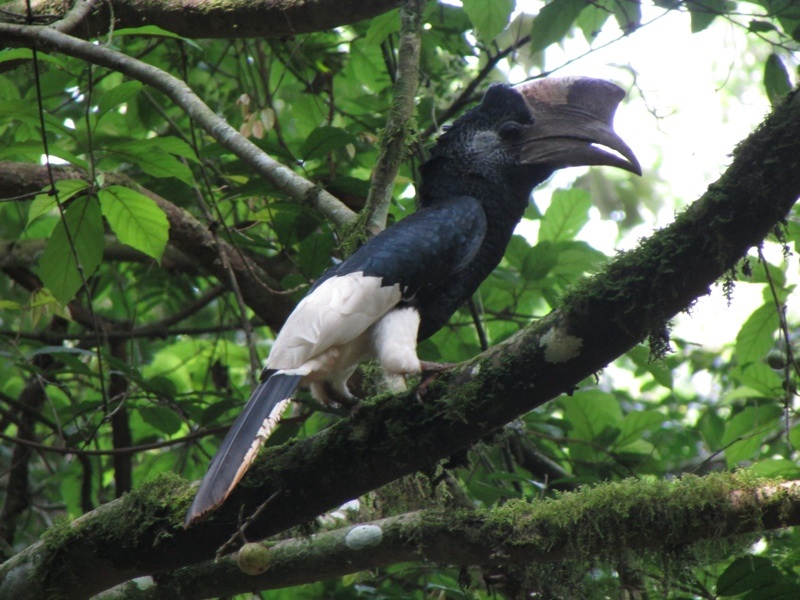
Hornbill in Kibale Forest

Hornbill in Kibale Forest

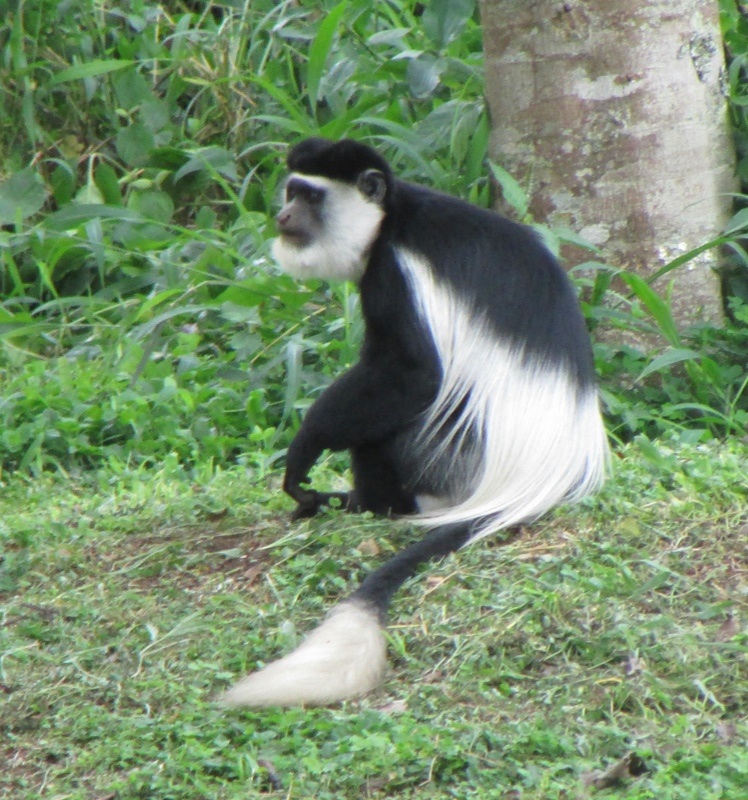
Black and white Colobus monkey in Kibale Forest.

Black and white Colobus monkey in Kibale Forest.

Giraffes by Lake Albert

Giraffes by Lake Albert

Waterbuck in Murchison Park

Waterbuck in Murchison Park

Crowned Crane at Ziwa. Uganda's national bird.

Crowned Crane at Ziwa. Uganda’s national bird.

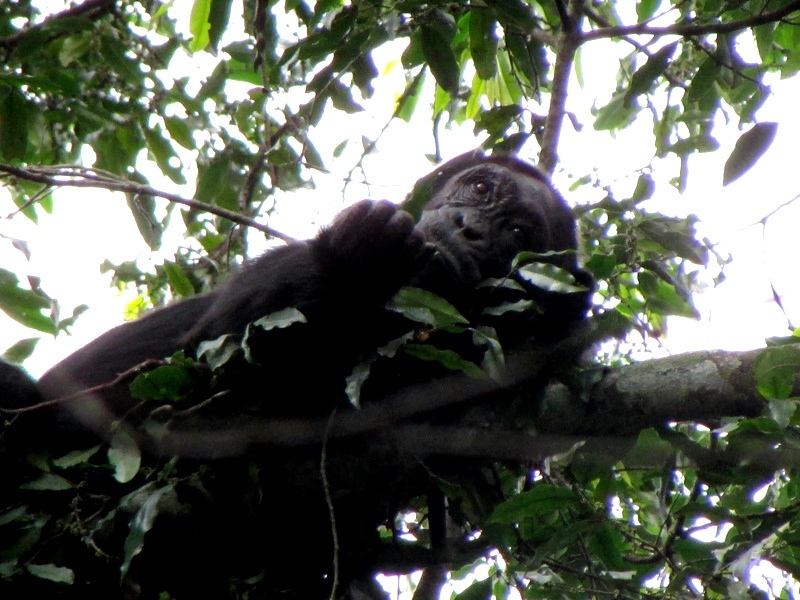
Chimp in Kibale Forest

Chimp in Kibale Forest

Great Blue Turaco

Great Blue Turaco

Risk aversion

Over the past several years when I traveled to Africa with students from McGill university, they were always briefed repeatedly prior to their safari about risk aversion. There was an acronym that was drummed into their heads – SSRAB. Never one for learning things this way I could never remember what SSRAB stood for. I did know that the general idea was that while traveling in Africa ( when traveling anywhere unfamiliar, in fact) one needs to be more cautious than usual to avoid putting yourself and your travel companions at risk.

imageNow some people have a greater risk tolerance than others. I am not one of those. I did, once, pay a keeper to let me into a compound with two cheetahs. But I like cats so….

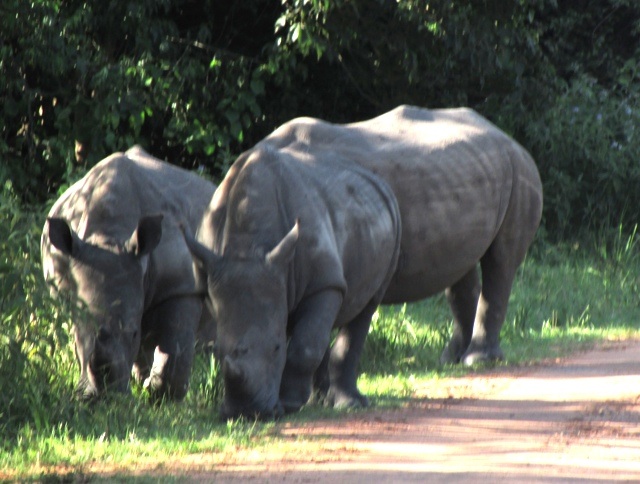
This week I am traveling with a friend in Uganda. One of our stops was at a rhino sanctuary a large park where several rhinos live free in the bush. The hope is that after several years their numbers will increase enough to release some back in to the Uganda parks. Rhinoceroses used to be found in Uganda but over years poaching for their horns reduced their number … to zero,

imagePart of the experience was to hike with a ranger into the bush to find the rhinos. We were warned that they were wild animals and that sometimes they would charge without much warning. Before we went out to the bush we signed a release which clearly stated that the sanctuary will not be responsible if you are injured or killed. Very reassuring. Adult rhinos weigh three tons and can run 35 km per hour. They have that big horn. Our escape, we were told was to climb a tree.

Those of you who know me can imagine me running through the bush being chased by a rhino and looking for a tree to climb. I am more likely to trip on my shoelaces and get trampled. So I was a bit anxious about meeting the animals in the bush.

The night before this we had a bit of a rehearsal. We encountered a hippo in the compound where we were staying. My friend, Dave, who is somewhat less risk averse than I am, found himself a bit too close for comfort as the hippo changed direction and he had to scramble up an acacia tree. Acacias have thorns. Dave spent the next morning picking thorns out of his hands.

imageYesterday, we walked into the bush and ten minutes from the guest house where we were staying, we suddenly came across four huge rhinos chewing grass in the bushes about 30 metres from us. We followed them for a bit and then they turned toward us in the grass and started coming our way. It didn’t take long for me to scoot back to a place of relative safety near a clear path out of the brush but Dave stayed in place, at least for a while. I think he was actually hoping to climb a tree and watch the rhinos pass below him.

All ended well. We survived. The rhinos took a right turn into the brush and meandered in, chomping on grass as the went.

As this was happening, I was blessing my camera zoom which let me get some photos from a safe distance.

The events in Nairobi this past weekend at the Westgate mall bring risk aversion for foreign travel to another level and make the rhino trekking trivial. For months, Western travelers to Kenya and Nairobi in particular have been advised to avoid places like malls and large international hotels or public gatherings because of the risk of terrorist activities.

SSRAB (Street Smart Risk Averse Behaviour is the translation I have dragged up from the depths) is always a good strategy.

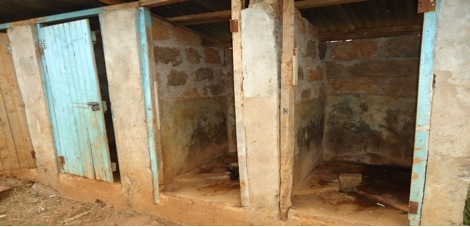
Would you send your child into these toilets??

Last year the CanAssist  African Relief Trust funded construction of new toilets at the Mutundu School in Ruriru District of Kenya.  There were about 250 children at this school all using two dirty and dilapidated toilet buildings. The “staff” toilets had already started to sink into the ground and were unusable.

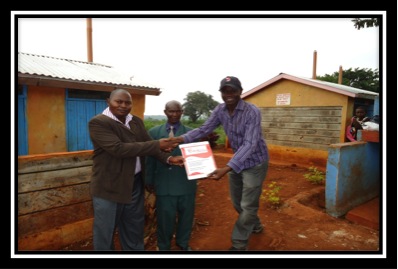
Dan Otieno presents a plaque to Michael Gichira of the Murera group outside the latrines constructed in 2012 with funding from CanAssist.

Dan Otieno presents a plaque to Michael Gichira of the Murera group outside the latrines constructed in 2012 with funding from CanAssist.

Through the Murera Community Empowerment and Support Organization, CanAssist was able to provide new, clean toilets for the school and hook up a water source to allow hand-washing. CanAssist’s representative in Kenya, Dan Otieno, visited the Mutundu school in July 2013. “The work has been successfully done and the schools sanitation has totally improved (250) kids can now enjoy better latrines and have access to water.” he reports.

Lack of adequate sanitation is a scourge throughout sub-Saharan Africa.  Less than 40% of people have access to any sanitation facility at all – mainly using fields and even the gutters for their toilet  needs.

In addition to the humiliation and lack of privacy which accompanies open defecation, the health risks from having raw sewage exposure are many.  Gastrointestinal diseases (typhoid, cholera, viral illnesses) abound and are a significant cause of morbidity and even mortality.  Access to clean water for hand-washing is also usually not available. This compounds the spread of disease.

This year CanAssist will fund a similar sanitation initiative in the Twiga School in Ruriru District, Kenya through the same Murera organization.  Dan Otieno, visited the school in July and reports:

“The school is in Ruiru District Kiambu country Kenya about 6 km North Ruiru town. The school has  a population of around 504 and 13 teaching staff and 4 non-teaching staff. The existing latrines are filled up while some are in bad conditions and as such even dangerous for the pupils to use.”

The condition of these toilets is deplorable.  Can you imagine sending your child to use these facilities? How can children be taught about hand-washing and prevention of fecal-oral spread of disease when these are the facilities being offered by their school?

Twiga boys

The boys toilet at the Twiga school. Can you even imagine?

Dan also visited the Mutundu School in July 2013.  “The work has been successfully done and the schools sanitation has totally improved (250) kids can now enjoy better latrines and have access to water.” he reports.

Given the successful improvements made at the Mutundu school last year, CanAssist is eager to find funding for this second school sanitation project in the same region.  The cost of providing latrines for this school will be about $6000.

Can you help? Any donations to CanAssist allocated to the Twiga School Sanitation Project will help us acquire the financing to go ahead with this project.

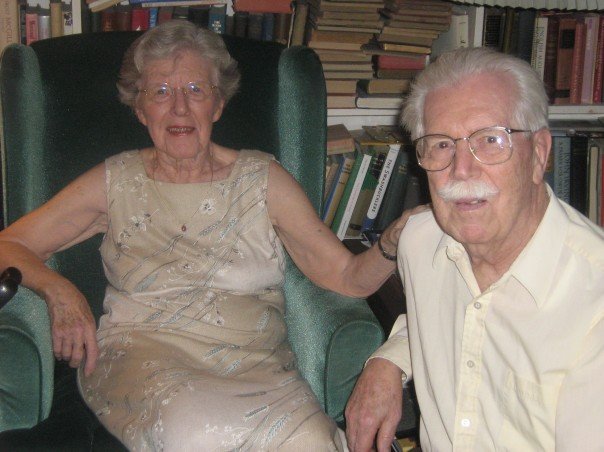
Ruth and Donald Redmond will celebrate 65 years of marriage on August 21. Congratulations!

Ruth and Donald Redmond will celebrate 65 years of marriage on August 21.  Congratulations!

The family of Ruth and Donald Redmond of Arbour Heights in Kingston Canada would like to celebrate this couple’s 65th wedding anniversary by helping to fund this project to improve sanitation at the Twiga School.  Donations specified to the Twiga School or the Redmond Anniversary Fund will be allocated to this project and can be made through Canada Helps (link below) or by mail to CanAssist, 562 Sycamore Street, Kingston, Ontario. K7M7L8

donateNow2b1

Planting seeds in the Oasis of Hope garden

Today, our associate in Kenya, Kennedy Onyango posted this message on the CanAssist African Relief Trust Facebook page. I want to share it. It read:

“Yesterday (6th August, 2013), I found myself thinking about all the seeds our friends, well-wishers and supporters has sown down through the years. The CanAssist African Relief Trust family have given an enormous amount of money to help hurting children of Usare Village, Mbita District, Kenya. There’s no telling how many lives we have touched through your infrastructural support. Beyond that, for nearly half a decade, Hope School has been a lighthouse, not only to our own community but beaming a message of hope and encouragement to people all over the world as it provides an opportunity to lend a helping hand of caring for the poor. 

There is never a quiet day at Hope School, and every day is different. It is most certainly an exciting and challenging place to be. It is amazing to watch as seeds of hope are planted, nourished and encouraged to grow. Teachers and counsellors plant these seeds, the little angelic girls plant these seeds for each other, sponsors plant these seeds, donors and other partners plant these seeds. It is a wonderful privilege to both plant and to watch the seeds grow.”

This classroom was constructed in early 2013 at Hope School, Mbita with CanAssist funding (helped greatly by the Sasamat Foundation)

This classroom was constructed in early 2013 at Hope School, Mbita with CanAssist funding (helped greatly by the Sasamat Foundation)

In 2012, the CanAssist African Relief Trust partnered with Kennedy and the ETDC organization in Mbita Kenya to help them with development of a school for vulnerable young children in their community. The school is called HOPE SCHOOL. Our first project with them was to fence and irrigate a garden at their rural school property. The school said that they would name this garden The Oasis of Hope. It has turned out to be just that.

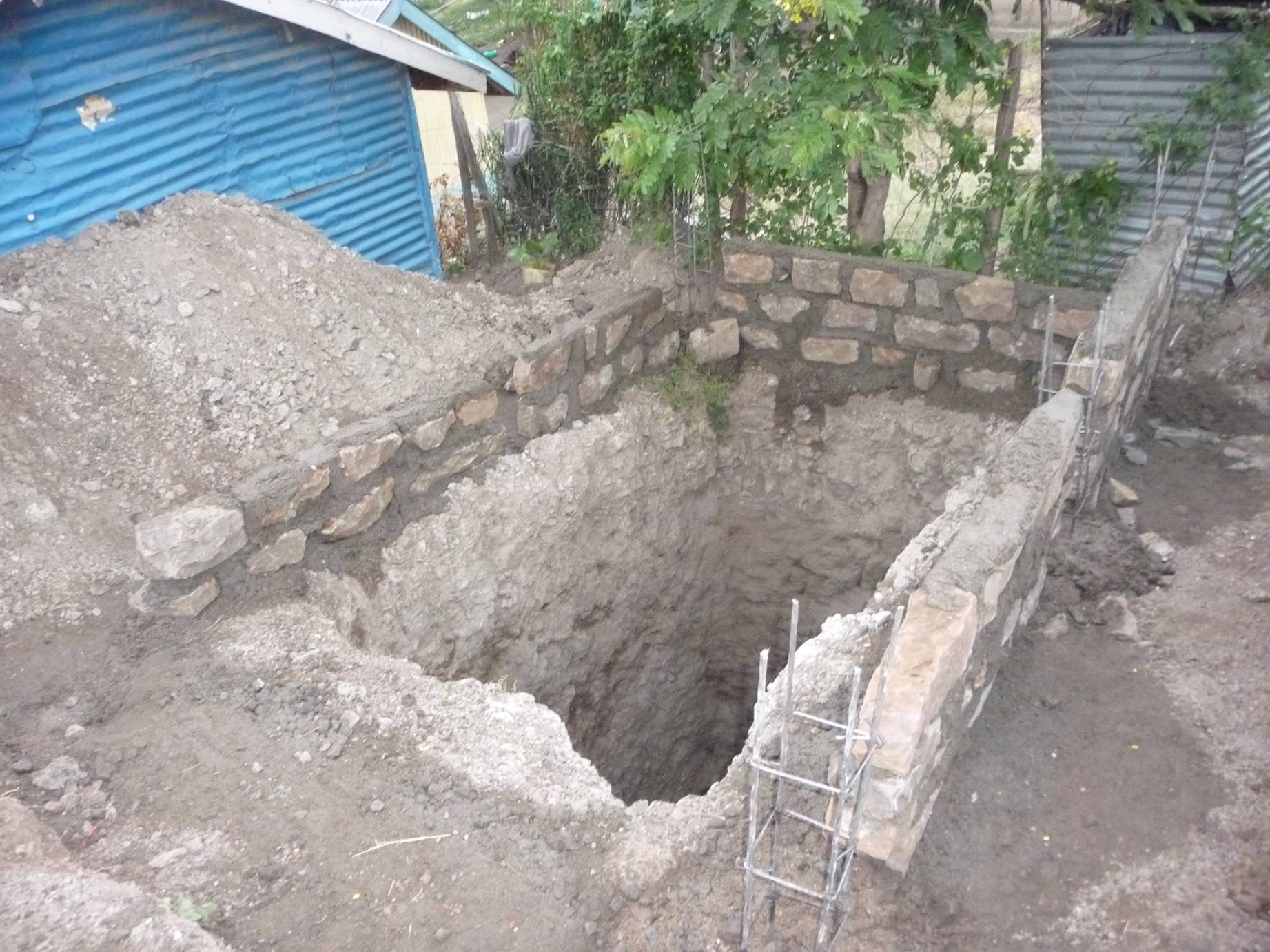
In Africa latrines are hand dug, often to a depth of 40 feet, through sand, gravel and stone.  A long labour-intensive job.

In Africa latrines are hand dug, often to a depth of 40 feet, through sand, gravel and stone. A long labour-intensive job.

Later in the year with significant help from CanAssist donors and donations to CanAssist from the Sasamat Foundation in British Columbia and the Toronto Rotary Club, we were able to build two new classrooms for the school. Right now we are in the process of installing latrines at the two school sites.

Kennedy Onyango sent me photos last month of the garden that is thriving and will be able to offer nourishment to the children at the school. Prior to CanAssist’s involvement here, this was a barren piece of land. Last year there was a bumper crop and Kennedy anticipates even better this year. Here is what he reports from the yield last year :

Kennedy Onyango outside the school gate in early 2012.  Along with CanAssist he was ready to "plant the seeds" of development that will help his community.

Kennedy Onyango outside the school gate in early 2012. Along with CanAssist he was ready to “plant the seeds” of development that will help his community.

“Last year we harvested 900Kgs of sourghum, 360Kgs of beans and 120Kgs of Maize in the Oasis of Hope Garden. The sourghum was mixed with cassava which we bought to make porridge for the children. We bought 4, 500kgs of cassava and this served from July 2012 up to April 2013. It served the two campuses of Hope School with current enrollment of 275 children in total. Thanks a lot to CanAssist Relief Trust and Donors for having made this possible. We look forward for a similar or more Kgs of sourghum this year.”

(Sorghum is a cereal crop that is not common in Canada but a staple in many tropical and sub-tropical parts of the world. It is relatively high in fibre, iron and even protein and is a whole grain that is added to other carbohydrates to supplement nutritional needs. Cassava is grown as a bush-like plant with large white tubers that are harvested and cooked like potato as a good filling source of carbohydrate. Cassava may be filling but contains little protein so admixture with sorghum or beans is important to avoid protein malnutrition, a common problem in poor tropical areas.)
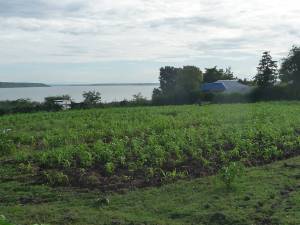
The thriving school farm - CAART fundedThe children who attend the Hope School come from very vulnerable situations. Many are orphans or partial orphans and most live in poverty. Many come to school on an empty stomach so the bowl of sorghum and cassava or maize that the school provides may be the only sustaining nourishment the children get. Provision of a school meal has proven to be beneficial to African children and has been one of the strategies endorsed by the Millennium Village Project, initiated by Jeffrey Sachs. The prospect of receiving what may be the only meal of the day is a vital encouragement to them to attend school where they are able to receive an education..

I hope that donors to CanAssist can feel as satisfied as i do that the gifts that they give to CanAssist are being used effectively to improve the well-being of many, many people in East Africa. I am proud of the work we do and also proud of our African partners who work hard to make ensure a successful outcome for our joint projects.
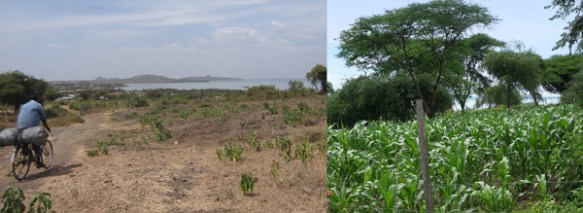
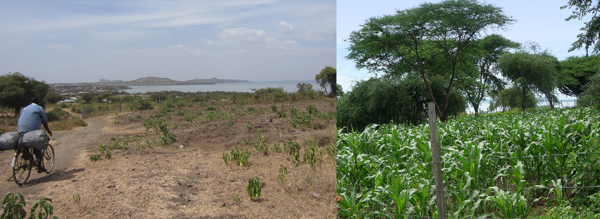
The Oasis of Hope garden in February 2012 and April 2013. Seeds that flourished.
The Oasis of Hope garden in February 2012 and April 2013. Seeds that flourished.
A successful July for CanAssist

Our July 2013 drive to fund two water projects in East Africa went over the top!

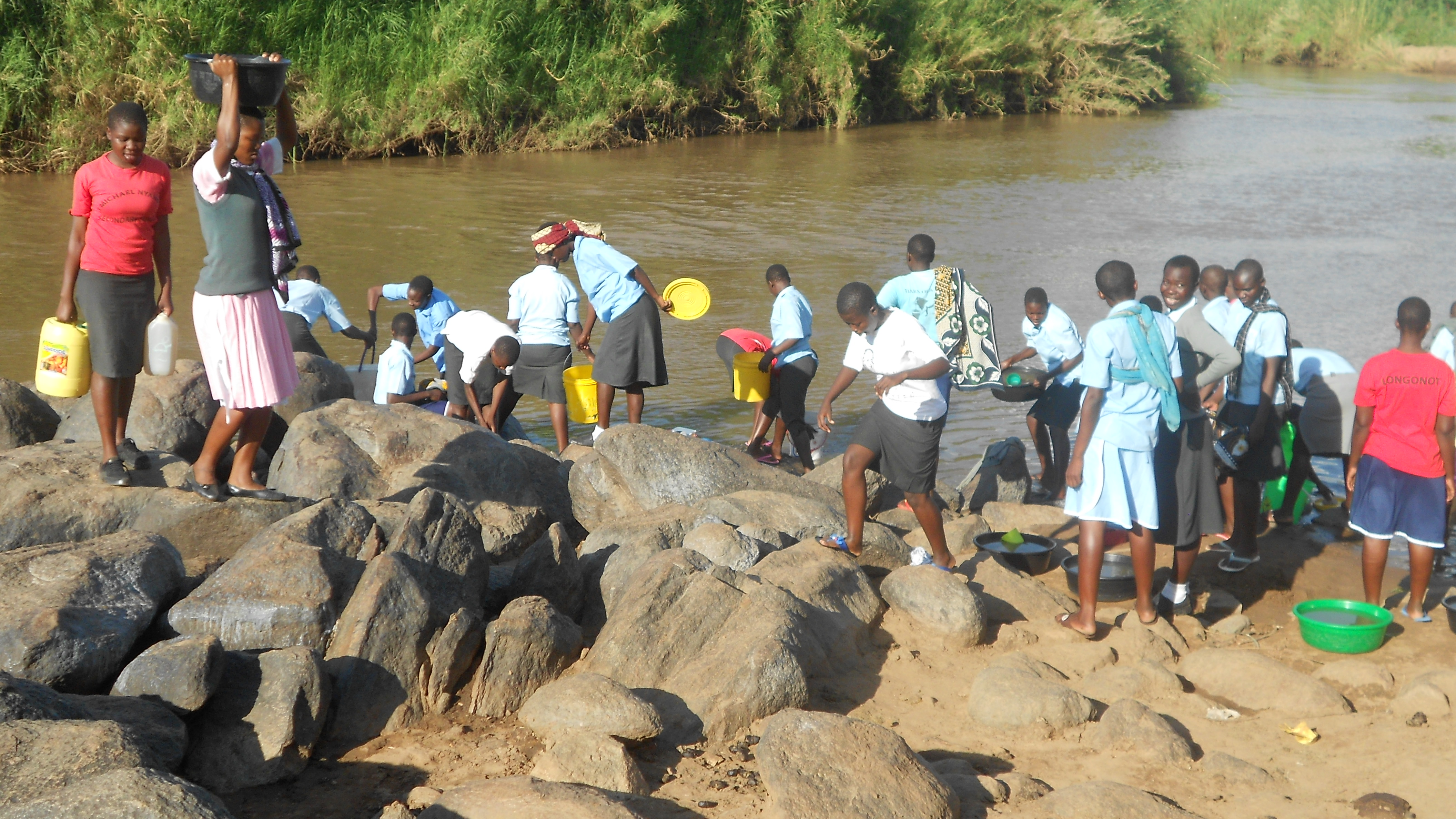
Students at the Nyandema Secondary School have to walk about 5km every day to get water... and then it is from this muddy river.  CanAssist will fund four rainwater catchment tanks at the school to provide a clean accessible water supply.

Students at the Nyandema Secondary School have to walk about 5 km every day to get water… and then it is from this muddy river. CanAssist will fund four rainwater catchment tanks at the school to provide a clean accessible water supply.

Earlier in the month, we were challenged by the Sasamat Foundation, a charitable organization in Vancouver B.C.  with the offer that they would match donations received by CanAssist in July that were allocated to a rainwater collection projects at the Olimai Health Clinic and the Nyandema Secondary School in Nyatike District, Kenya.Well, our supporters rose to the occasion and as of July 31 we have collected $6708 in donations toward these projects through our 2013 Sasamat Challenge.   Donors will be pleased that the first $5000 will be matched by Sasamat. Even better, Sasamat has offered another $10,000 toward these projects.  Great news for CanAssist and the project partner communities in East Africa.

Putting guttering on this building and providing rainwater storage tanks will help the community to acquire clean water.

CanAssist will fund construction of  guttering on this building and provide rainwater storage tanks to help the Nakiwaate community  acquire clean water.

The good news doesn’t end there.  With the money donated this month toward rainwater collection projects, we are able now to fund THREE of our approved 2013  water projects at the Olimai Clinic in rural Uganda,  the Nyandema Secondary School in Nyatike District, Kenya and the T.A.Crusade Institute of Professional Studies in Nakiwaate Village, Uganda.

We are all excited.

We are in the process of signing the Memoranda of Understanding with the groups and will forward the money to them by mid-August so that the projects can be started as soon as possible (and before the anticipated rainy season in October and November).

CanAssist extends thanks to all who supported this effort and to the Sasamat Foundation for their generous funding and confidence in CanAssist to get this work done!

Here are some responses we have received from these groups when they were notified of this funding availability on August 1.

From Amuge Akol at Olimai Clinic : “I woke up to heart racing news. We are so hapi with the successful fund-raising drives. We shall write directly to supporters to express our our sincere grattitude. I will go to town tomorrow and
process the MOU and return it. Thx a million.”

From Ronald Lutaaya in Nakiwaate Village, Uganda: “We are so happy to hear this great news! Thanks so much for your effort in making this dream project come true. You have saved life in this poor community. I have just passed on the news to our Staff Members and some of our beneficiaries. They are all thankful and happy about this news.”

From Hellen Omollo, Nyandema Secondary School: “We are very happy indeed to hear from you.Once againwe do say THANK YOU for considering the life and health of our
Nyandema students and the local community a priority.
Good luck, good health and Gods peace and Mercy be part of you in yourdeserving work to East Africa.”

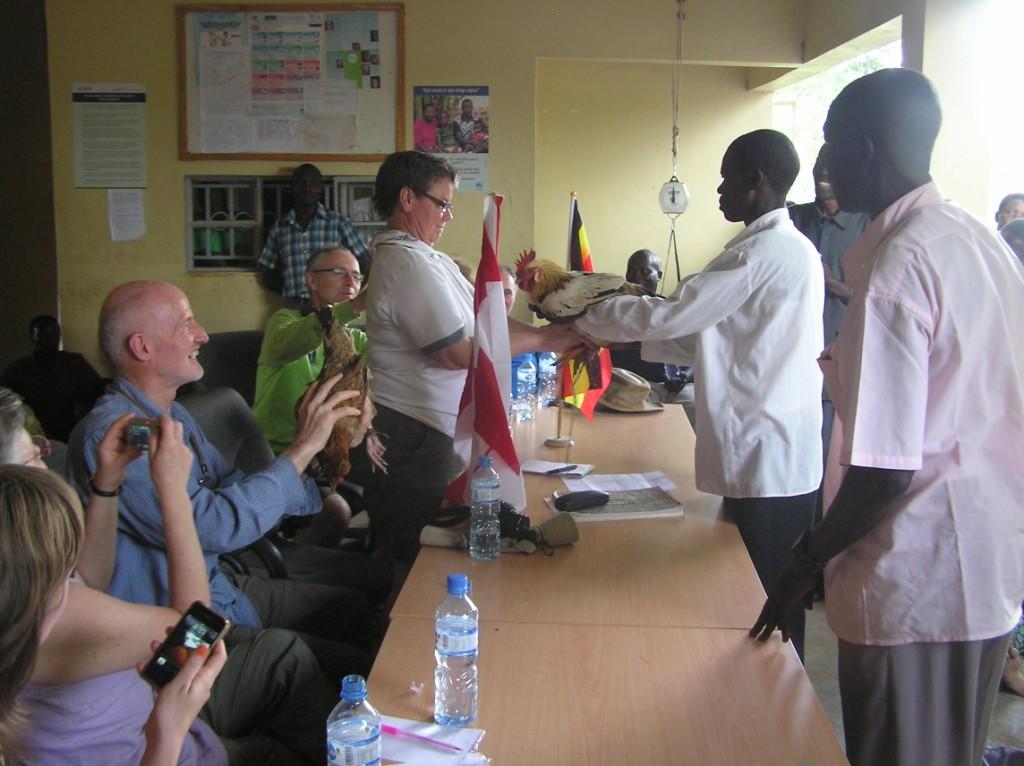
Canassist has had an ongoing relationship with the Olimai Clinic for the past three years. Here, some Canadian CanAssist supporters visit the clinic in 2012.

Canassist has had an ongoing relationship with the Olimai Clinic for the past three years. Here, some Canadian CanAssist supporters visit the clinic in 2012.

At a loss…

I was stunned this morning when I logged onto my Facebook page and started a chat with one of my friends in Mbita, Kenya. As we talked he received news that CanAssist’s dear friend and associate, Mama Benter Odihambo, had just died at the Mbita Hospital. Kennedy lives across the street from the hospital. I was getting the news before most of her community knew.

This is indeed sad news for everyone who knew her.

Benter was a cheerful, gentle, nurturing leader in her community on Rusinga Island, Kenya. A widow with a large extended family, she was the epitomy of the strong African grandmother who is wise and caring, not only to her family but to her entire community. I will cherish the memory of the afternoon she and I spent together in February, chatting as parents, grandparents and dear friends.

She founded the Little Stars Academy – an elementary school for vulnerable children that is on the edge of Mbita town.The school has grown from a few tin buildings with about three classes to a larger school that graduated students last year who will now go on to secondary school. Their school had top marks in the region and both the top boy and girl won scholarships to continue their schooling.

Benta banner 2

Benter was a dear friend and an adopted mother to many Canadians as well. She was always cheerful and helpful to students from the McGill Canadian Studies in Africa Program, some of whom came to know her well after their studies. She worked with the CanAssist African Relief Trust to improve her school and established the prototype school garden near her home which provides nourishing food for the children and income for the school. She worked with the women of St Mark’s Church in Barriefield Ontario to help establish a program to supply sanitary pads for the older girls at the school so they would not miss school during their monthly cycles. She, along with other members of her family, even had a part in the upcoming movie “Nightrunners”, shot on Rusinga Island in February of this year.

The sadness I feel at her passing is like losing a family member. I know that many people in Rusinga, Mbita and Canada will mourn her loss. At the same time we must resolve to continue in her spirit to help people who are vulnerable.

I will append some photos and videos of Benter that will remind us of her grace.

Mama Benter Odihambo.

Mama Benter Odihambo.

In 2013, CanAssist will continue the good work started by Mama Benter by helping to renovate classrooms at the Kanyala Little Stars School.  Friends who would like to donate to this project in her memory can do so at : http://www.canadahelps.org/CharityProfilePage.aspx?CharityID=d95557

What little people can do …

This is an article that I wrote which was published in the Kingston Whig Standard on Saturday June 22, 2013.

The pupils in Mrs. Pare’s class at Glenburnie Public School are ending the year on a high note and children in a rural Kenyan school are also celebrating, thanks to the generosity of their Canadian peers.

IMG_0485In May, I visited the Glenburnie School class to talk about Africa.  They had been reading a book called Alexandria in Africa by Eric Walters. In the book, Alexandria, a young teen from a privileged background ends up in Kenya and sees the challenges of people who live with much less. The Canadian students became both curious about the way people live in Kenya and also motivated to do something to help children living in communities that are not as fortunate as we are.

I showed the Glenburnie kids pictures of my many Maasai friends, told them how traditional Maasai people live, showed them Maasai beadwork and ornaments and photos of my goat, Veronica, whose family is ever growing in fields near the Rift Valley.

We also talked about schools in other regions of  Kenya and, in particular, about the S.P. Geddes Early Childhood Development school in a little fishing village on the shore of Lake Victoria.

Through donations to CanAssist from my 93 year-old Dad and some of his friends and family, we have been able to fence a schoolyard, put in latrines and build a couple of new classrooms at this rural lakeside village.  In appreciation, the community named the school after my father and when I visited them last February they even plunked a six-month old boy in my lap and said “Meet little Stewart Geddes.” You can imagine how wide my smile was and how excited I was to share this news of this Kenyan namesake with my father when I got home.

Although the village school has two classroom buildings, the older one needs repair and they have absolutely no furnishings.  The children learn sitting on mats on the floor – a dirt floor in the older building. CanAssist hopes to remedy that soon.

When the Glenburnie students heard about this they decided that they would like to help out.  They started a “Dimes 4 Desks” campaign at the school, set up a table at the school Fun Fair, took tin cans and jars around to other classes to collect dimes and told their neighbours about their project to help African children.  One of the students made a video/powerpoint presentation (which can be seen on the CanAssist website).

Last week I went back to the school and they made me guess how much they had raised.  I was astounded when the figure reached $1100.  I wondered, “If 24 grade four students could come up with $1100 in a month collecting dimes, how much could the same number of adults raise collecting toonies?” Does anybody out there want to try?

Thank you from AfricaI relayed the good news that the Kenyan school will soon be able to purchase desks and chairs  and soon received a photo of the kids at the school preparing a thank-you sign for their friends in Glenburnie.  I can only imagine the excitement of the children in her class when Mrs. Pare shows them this personal thank you from Africa.

The children at Glenburnie School told me that they had learned a lot about Africa in the last month. And I learned too.  These kids proved that with teamwork and enthusiasm goals can be met.  They proved that small financial contributions can mount to accomplish something significant if everyone contributes a bit and shares the load.  The smiles on their faces and their delight at being able to help others has buoyed me up for the ongoing work that CanAssist is doing in East Africa.

As Gavroche in Les Misérables says “This only goes to show what little people can do!”