Birdwatching at Mbita Kenya

I am not the most patient individual so sneaking around in the bushes and the trying to snag a photo of an African bird is a healthy activity for me. I have to stand still and wait for the moment. Good discipline training for someone who likes to keep moving. It can sometimes be a challenge to get the bird to sit still long enough for me to get the shot and often I am torn between gawking up into the trees or stepping gingerly through the grass to avoid snakes or monitor lizards.

Here are those of the birds I have seen in the past week.

Black Bishop

Southern Red Bishop

Yellow-backed weaver

Yellow-backed weaver

African Fish Eagle

African Fish Eagle

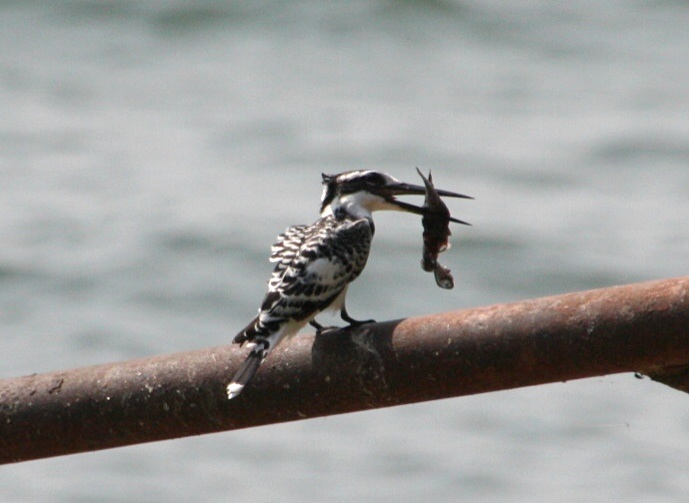
A pied kingfisher figures out how he will eat the fish he just caught. Eventually the fish went down the hatch.

A pied kingfisher figures out how he will eat the fish he just caught. Eventually the fish went down the hatch.

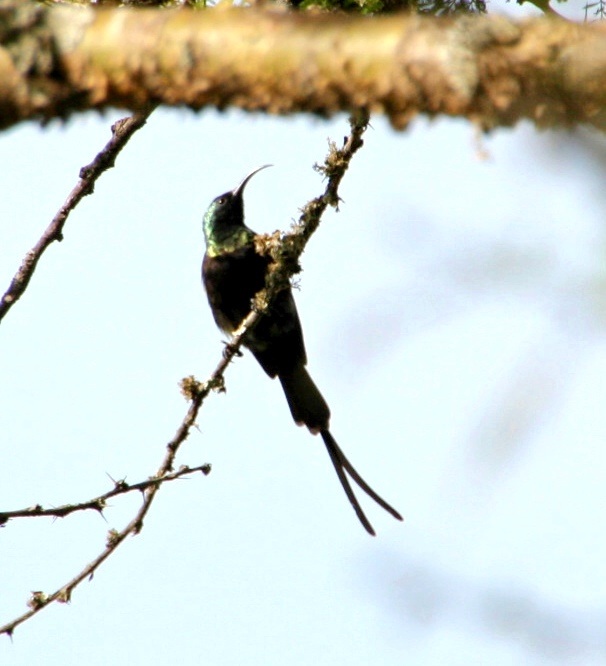
Bronze sunbird

Bronze sunbird

Bronze Mannikin

Bronze Mannikin

White-browned Coucal

White-browned Coucal

And this bird is driving me crazy. It has a lovely musical whistle and inhabits a tree outside my door. When I hear it whistling I head out with my camera only to find the bird hopping quickly from branch to branch behind the leaves, never giving me more than a second to get it. On my bucket list is to get a good photo of a Black Headed Gonolek! This is the best I could manage this week.

Black-headed Gonolek

Black-headed Gonolek

Beautiful Kenyan kids …

In July I related the story of Jerry O, a young Kenyan orphan boy whose story surprised me and touched my heart.

You can read the blog article here : The story of Jerry O.

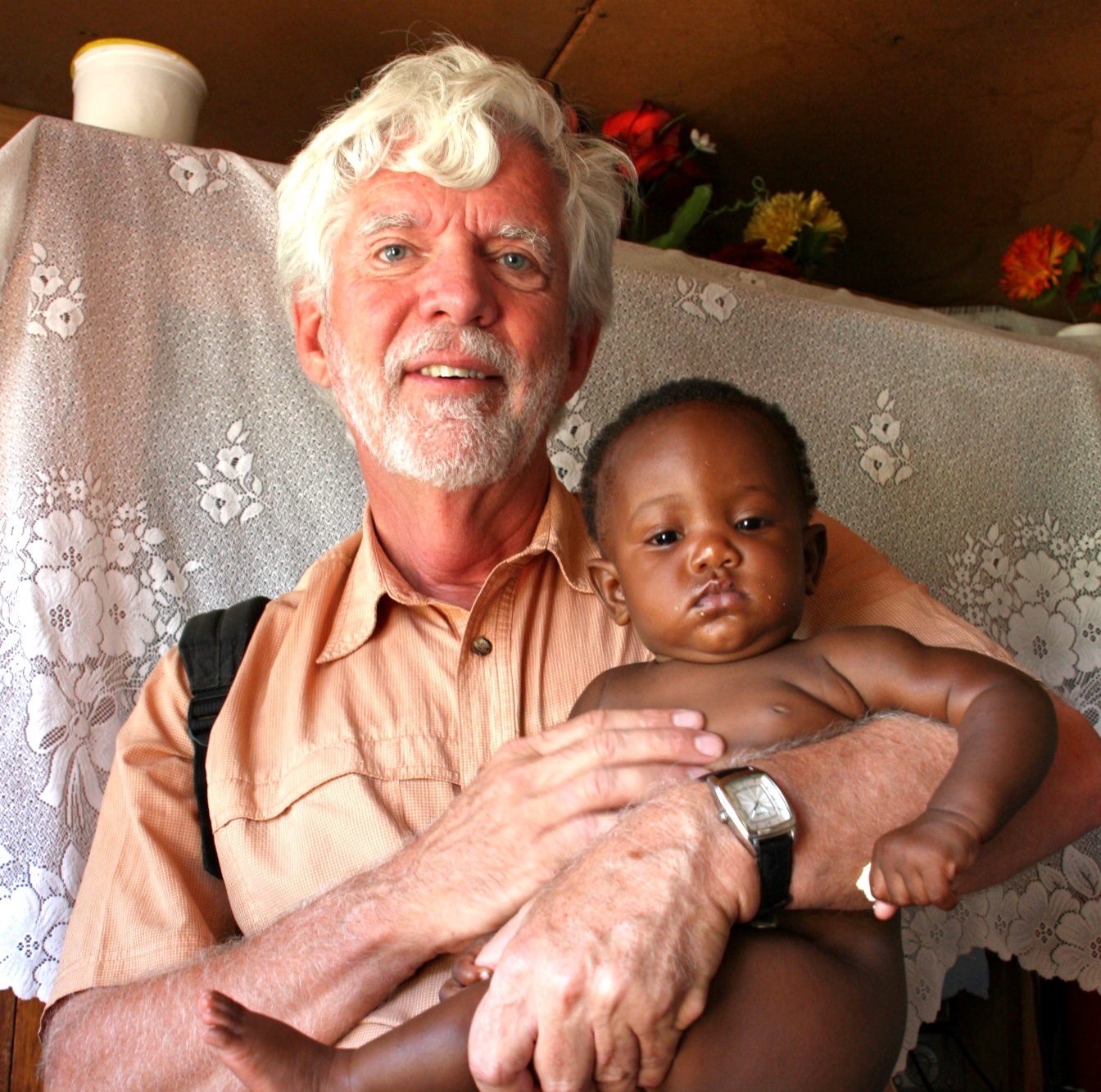
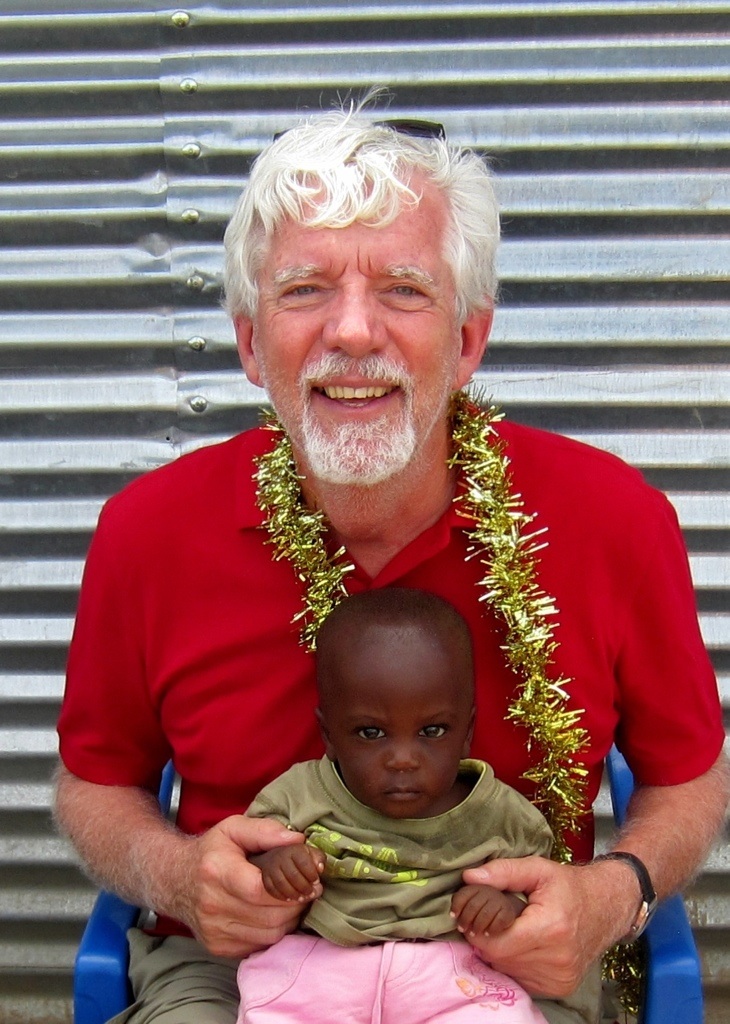
Today I visited the Hope School in Mbita Kenya and in one classroom the teacher plunked this kid into my arms. “Here is your friend, Jerry”

His problems continue but the child looks robust and is obviously being cared for by the school and his adoptive mother. A delight to see him again.

Me and Jerry O.  - 2012/2013

Me and Jerry O. – 2012/2013

On Tuesday morning I also met Lorraine Kathryn, six month old daughter of Kennedy Onyago who was name was taken from that of my mom (Lorraine) and my daughter (Kathryn) and granddaughter (Cate Lorraine). I introduced you to little Stewart Geddes last week … Well, meet Lorraine Kathryn (Kathy) today! Another Geddes namesake – an honour for our family.

Lorraine Kathryn (Kathy) Onyango

Lorraine Kathryn (Kathy) Onyango

A letter to my grandson, Noah …

Dear Noah

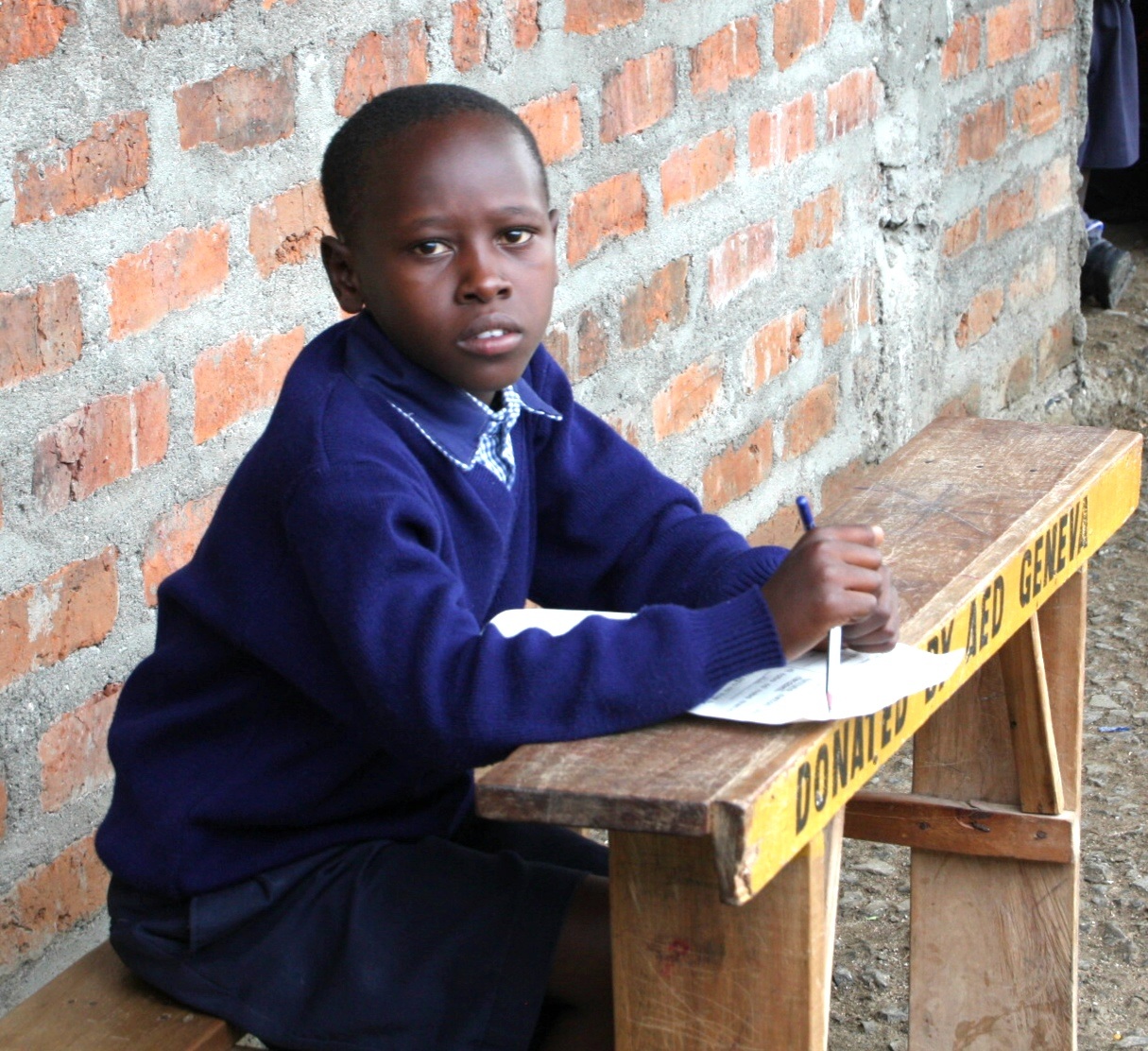
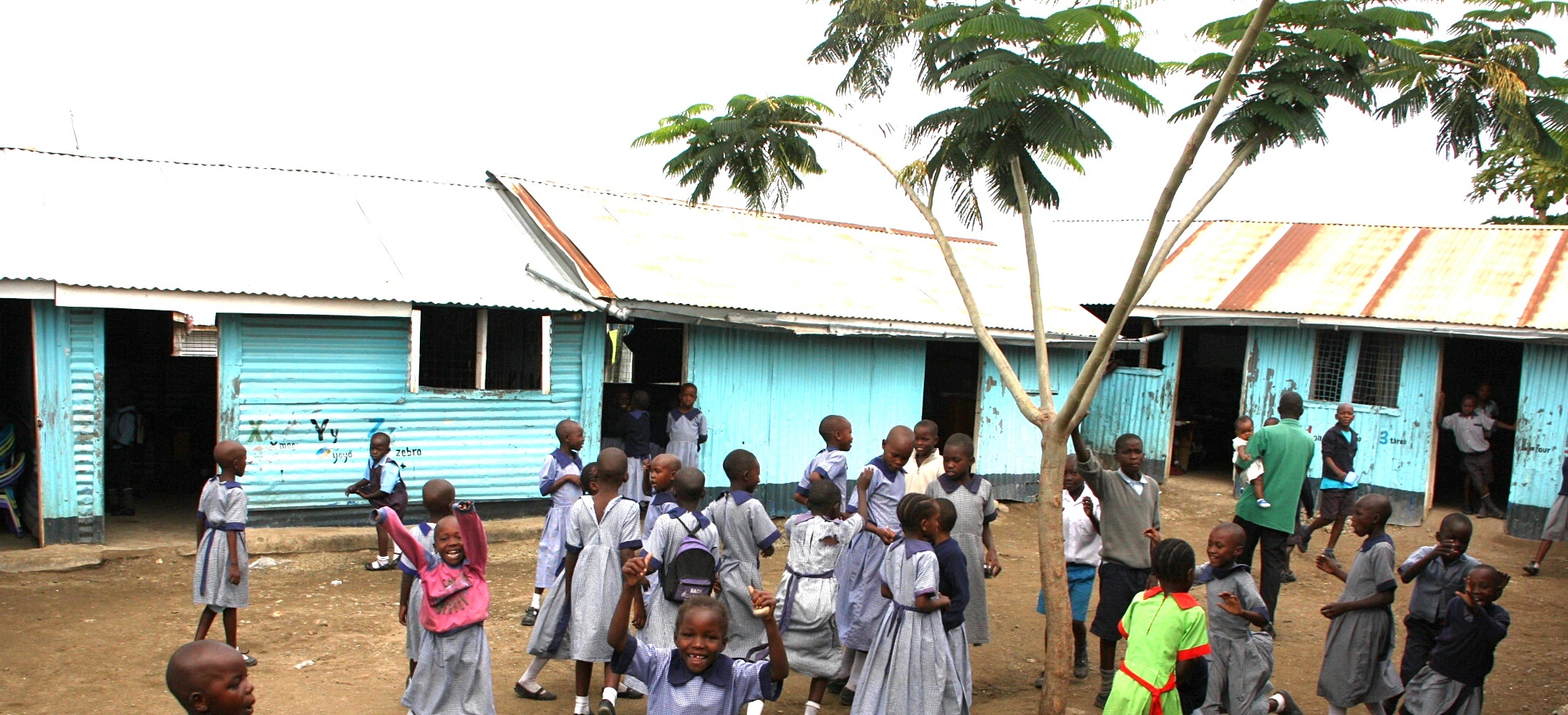
This week I visited the Kanyala Little Stars school on Rusinga Island in Kenya. I have come to this school every year for the past nine years. The school is quite small in size but there are now 306 students registered at it from nursery class to grade 8. Last year they graduated their first Grade 8 students who are now eligible to go on to secondary school. Unfortunately many of these kids don’t have parents who can afford to send them on to high school. Their academic performance in the standard exams was very good – one of their students was second amongst hundreds in the district.

imageWhen I went into one classroom their first quesion to me was “How is Noah Budd?” They remembered that last year on your birthday you told your friends not to bring presents to your party but to bring some money to buy supplies for these students in Kenya. When I visited the school last February,I took them school supplies and a soccer ball and
a picture of you that they have hanging in the school office. The students in grade 3 wanted me to say hello to you. I though it was better if they do this themselves so I took this short video to bring their greetings back to you and a song for you as well. I hope that you enjoy it and that you are glad to know that your kindness to these students who you don’t know and who live far away in Africa is something that they know is special and they are grateful for your caring.

In one class they were studying mathematics, doing algebra equations. I told them that you, too, like math and that some day I hope that you can come and visit these kids in person.

In the schoolyard is a tree that I planted in July 2011 when I brought some CanAssist supporters to Kenya and we visited the school on what they called “The Big Day”. The tree is growing just like the students and hopefully will soon be providing some shade in the small play area.

image

Noah, I want you to know that the kindness you showed to these fellow students by giving up a few birthday presents last year to send school supplies to Little Stars School was a generous and thoughtful act which they remember with thanks. And I, too, am proud of you for your kindness in sharing with others.

Love,

Dedo

A taste of Migori, Kenya

imageI met Edward Kabaka a couple of years ago and we have worked together on several projects in the Migori region of Kenya. On the weekend, Edward came to pick me up and we went to Migori where I was able to visit three CanAssist project partner groups.

After dinner entertainment

After dinner entertainment

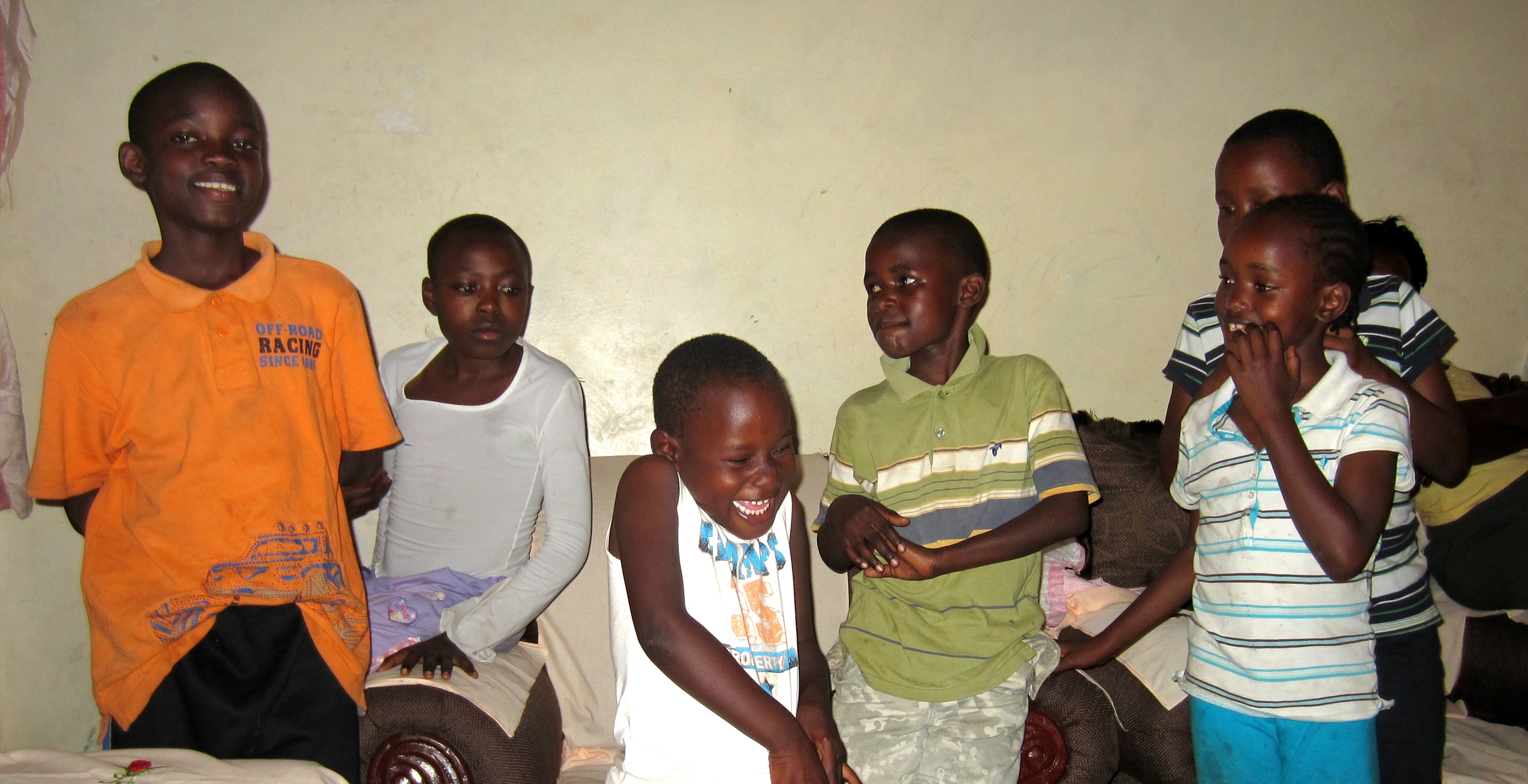
On Monday, Edward invited me to his home for dinner and his wife prepared a huge spread of food. After dinner the three youngest girls daughters and some of their neighbour friends sang and danced and recited poems for me. I thought how similar kids are all around the world, remembering my own putting on “shows” after dinner and thinking of my granddaughter, Emma, twirling around and showing me ballet moves.

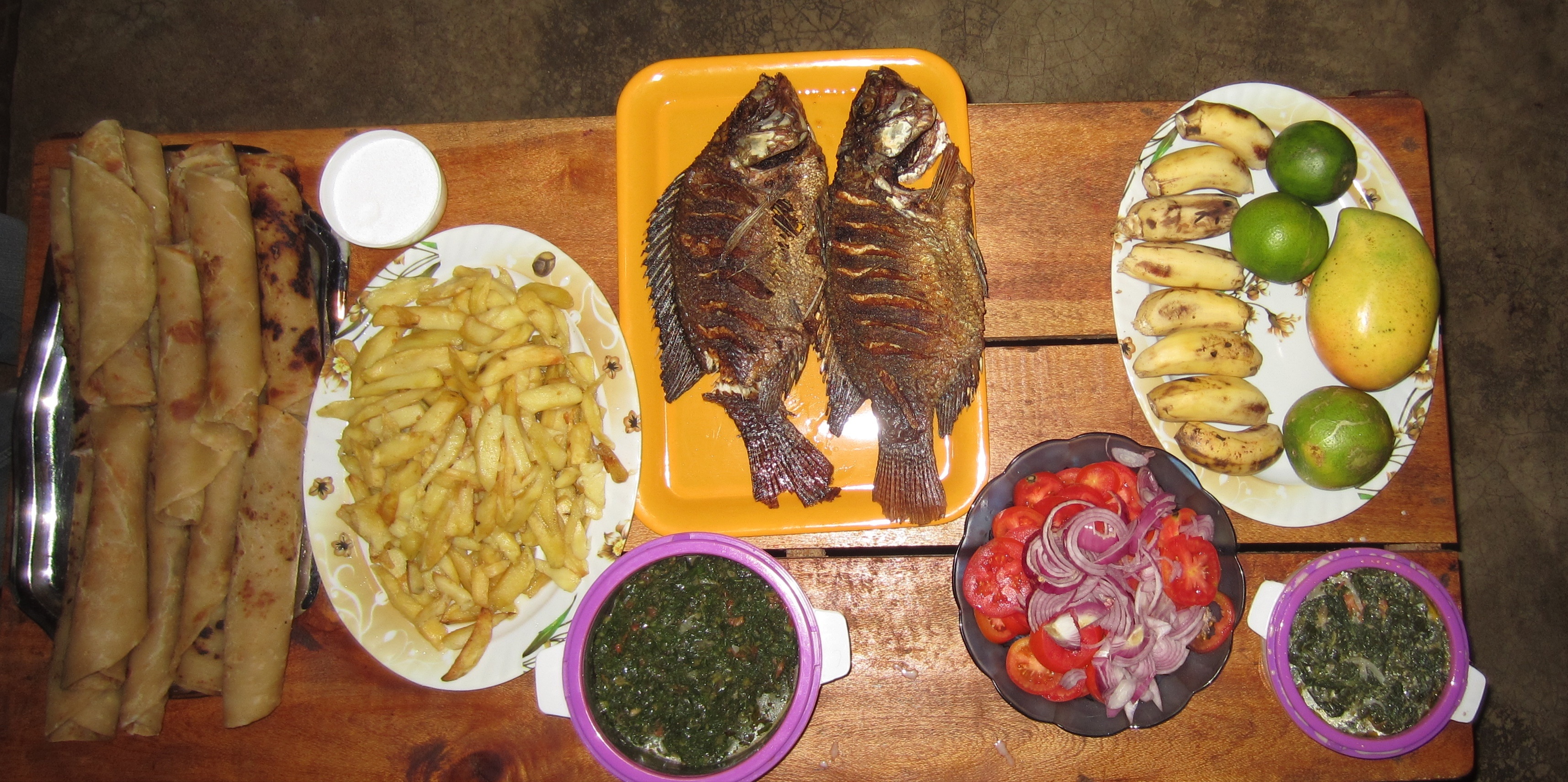
I took the opportunity to get a photo of the food before we dug in. I am often asked what i eat while in Kenya. This meal had many of the common staple foods that i am offered here, although not usually all together as in this spread. In addition to rice and beans which were on another table we were served chapati, chips, tilapia, sukuma wiki (shredded kale), tomatoes and onion, indigenous greens, bananas and papaya.

The other common staple for Kenyans which we did not have this night is uglali, a corn meal boiled doughy mixture that replaces our bread and is usually served in a huge mound. In addition to being a filling basis for a meal, uglali often acts as an edible utensil. The dough is rolled in one hand, a thumbprint cavity is made in the ball and used to scoop up other foods. It all pops into the mouth.

I came away stuffed with food and friendship and lots of smiles.

image

Osiri, a Lake Victoria fishing village

Osiri village is a 15 minute walk from the Luanda ferry dock that takes me to Mbita town. It is a small fishing village with a population of about 500. The people there struggle with poverty and the unfortunate lack of adequate clean water and sanitation.

Osiri fishermen

Osiri fishermen

I was introduced to the community through Meshack Andiwo, a fellow who as had the opportunity for a bit more education than most there. He indicated that the community was concerned about the children not getting any schooling. It is near this village that CanAssist has built the Stewart Geddes School. Fishing had been the main source of income for people in the village but this is becoming more challenging for a number of reasons.

Firstly, as in the rest of lake Victoria, the fish stocks are being depleted. Nile perch were introduced to the lake in the 1950’s as a potential source of fishing income. This was both a blessing and a curse as these fish have a voracious appetite and have consumed many of the smaller species in the lake, upsetting the ecological balance. They can grow to be very large. Nile perch caught in the lake are packed in ice and taken to a larger city, Kisumu or Nairobi, for filleting and shipping to Europe.
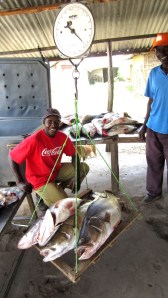
Day catch of Nile Perch. These four fish weighed 38.5 kg.

Day catch of Nile Perch. These four fish weighed 38.5 kg.

Although the price that the fishermen can get for the fish has fallen, it is still an income. So the people who live here are forced to sell the fish and go without. Despite being close to this nutritious food source, they can not afford to keep the fish which end up in European markets.

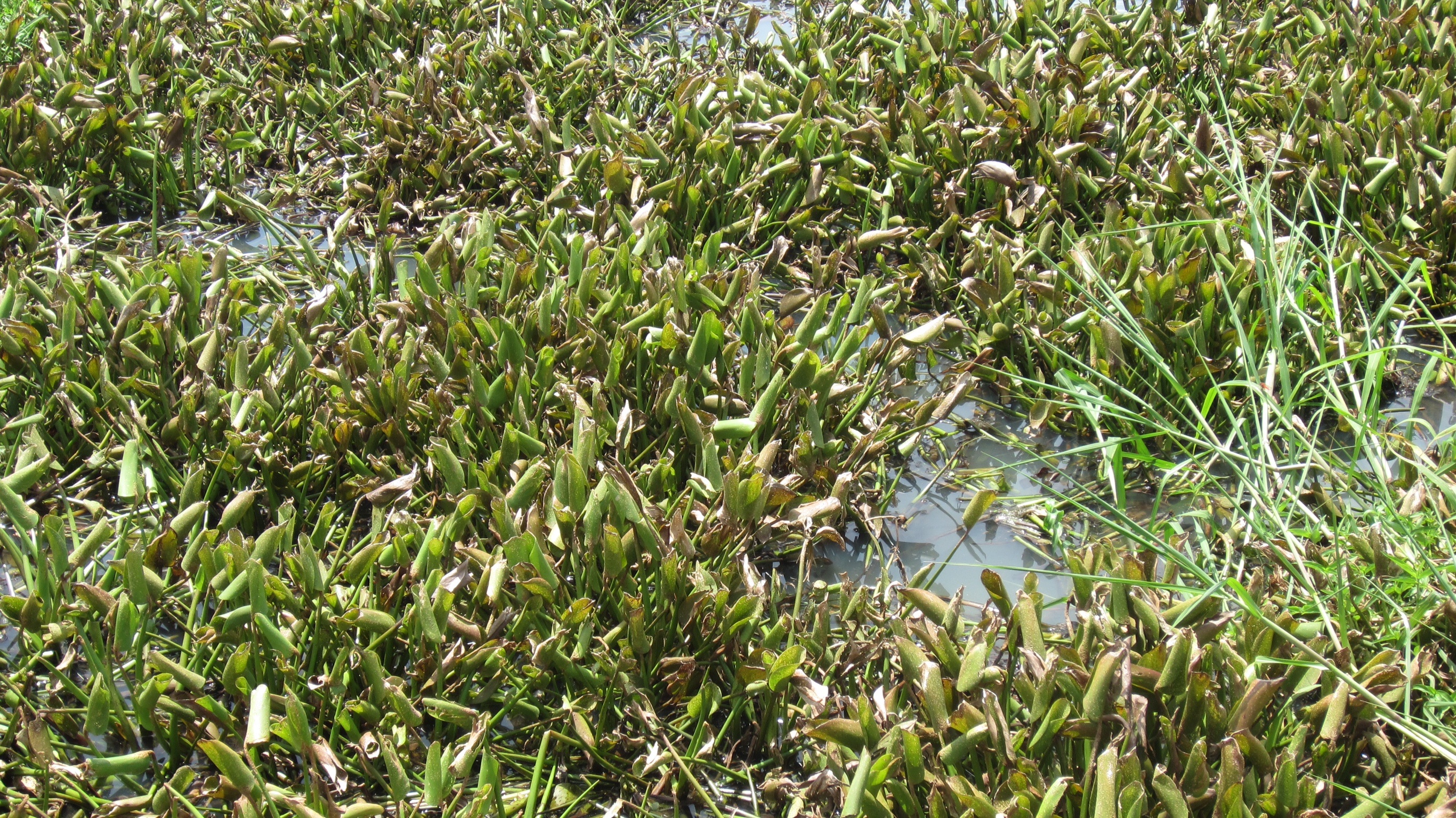
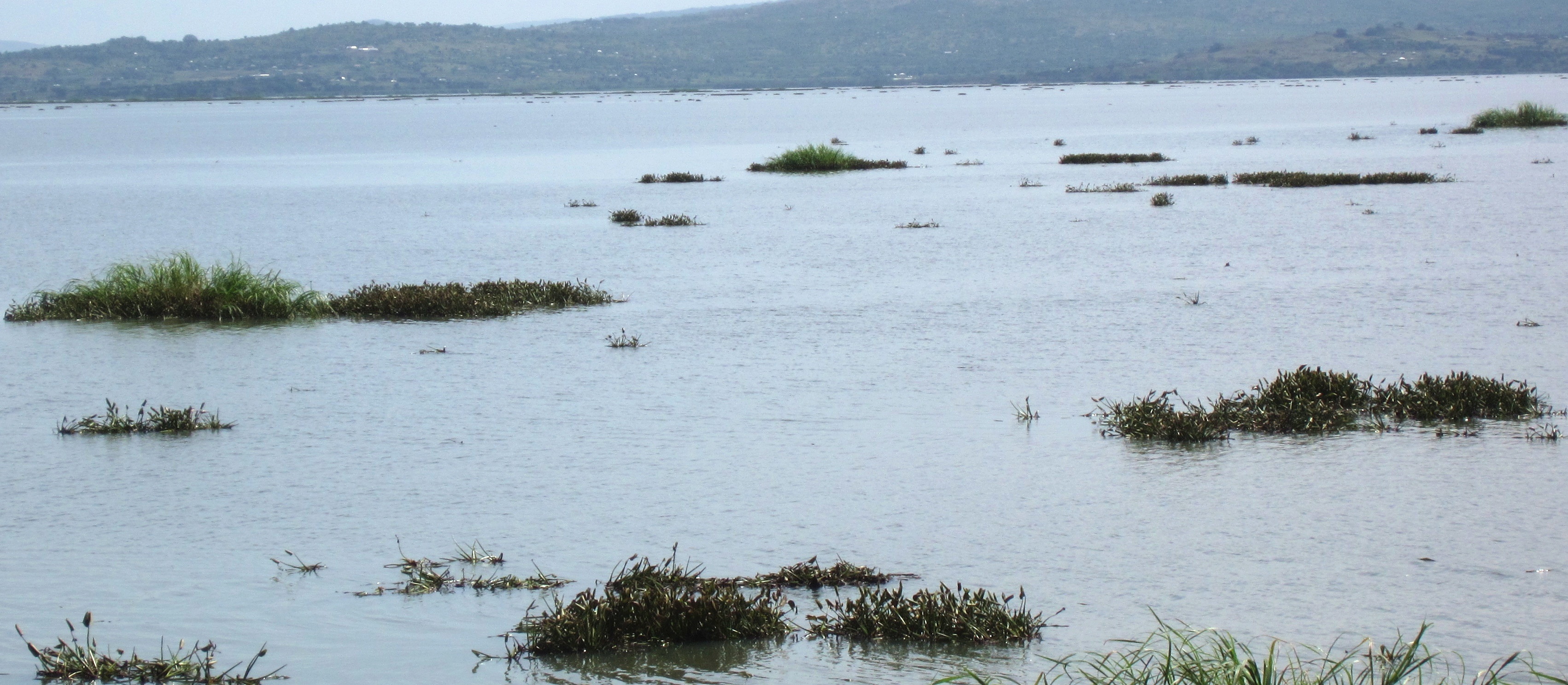
Another introduced species that is causing problems in the bay is Water Hyacinth. You may know this as the lettuce-like floating plant on ornamental garden ponds in Canada. They sell for $4-$5 each in garden centers in May and June. They have a nice purple flower and spread out over the pond only to be frozen at the first frost.

Somehow, this native of South America entered the Lake Victoria system in the 1980’s and since then, they have rapidly taken over. Millions of them float in clumps or even large islands in the lake, being blown around by the wind and currents.image Although they may shelter the fish in some ways, the fishermen have trouble with their nets brewing caught up in the rafts of plants and when a large crop blows in to the shore at the village, it makes landing or launching a boat impossible.
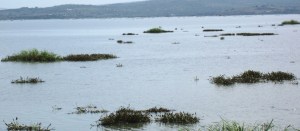
Water hyacinth floating on the lake.

Water hyacinth floating on the lake.

They also act as a breeding ground for mosquitoes, thus increasing the spread of malaria and dengue fever.

I told the folks here that the poverty problem in their community could be solved if they could just sell these plant pests to North Americans and Europeans for their backyard ponds. Another inequitable obscenity, when you think about it very much.

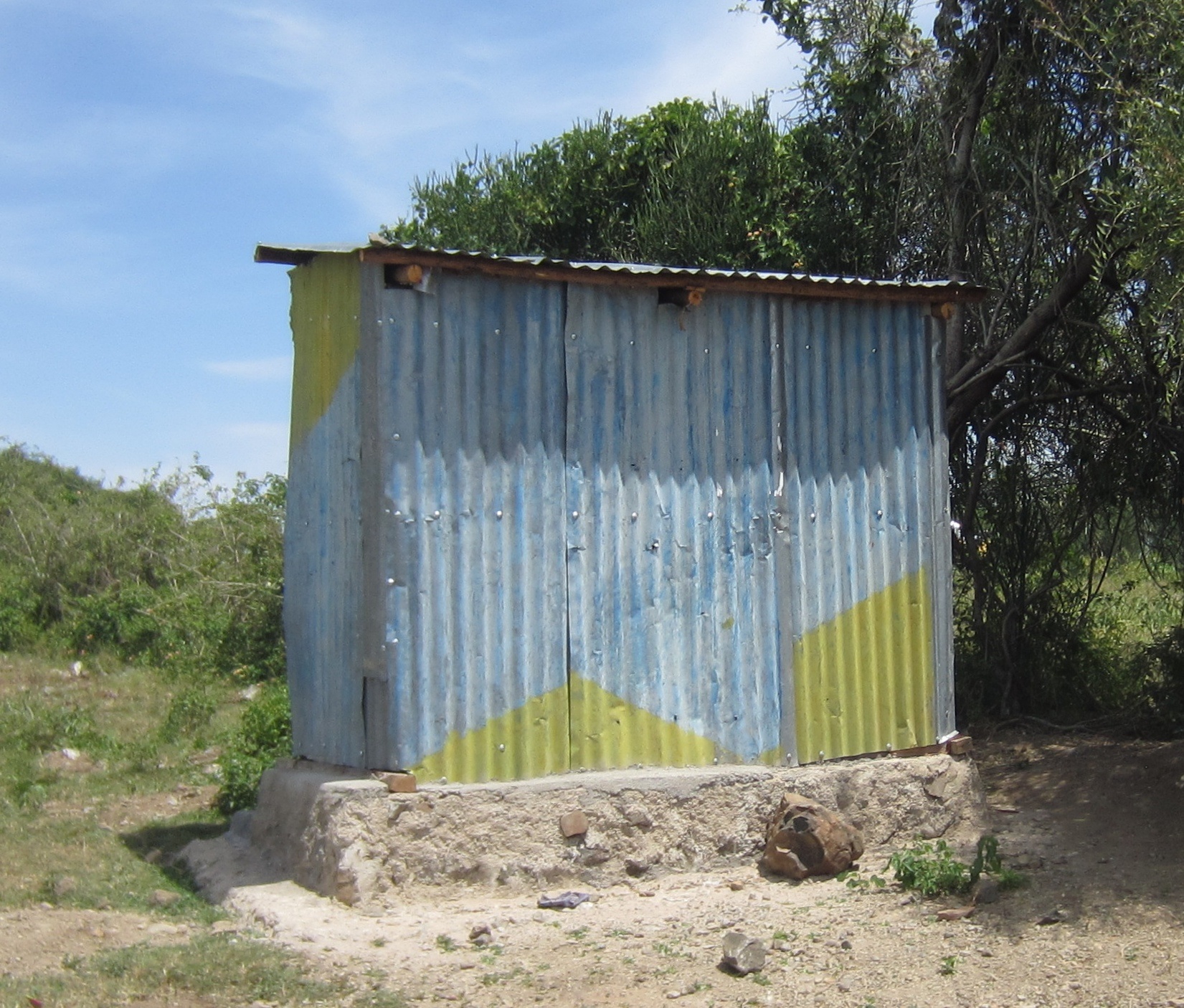
This unventilated latrine is the only toilet for the 500 people living in Osiri village.

This unventilated latrine is the only toilet for the 500 people living in Osiri village.

There are few households with any toilet and most of the people in the community either use the bush or one small latrine found near the centre of the village. They collect their water from the lake but the lake is becoming increasingly polluted with sewage, laundry detergents and other effluents. Many do not boil or purify their water before consuming it as this takes time and money or consumes scrounged firewood that is needed for other cooking.

Kids swim in the lake and others bathe there. Many are infected with bilharzla, a parasitic fluke that can infest kidneys and bowel.

Despite these challenges, the people who live in Osiri Village are cheerful and optimistic and my visit to the community and the Stewart Geddes school was heart-warming.

image

Leapin’ Lizards

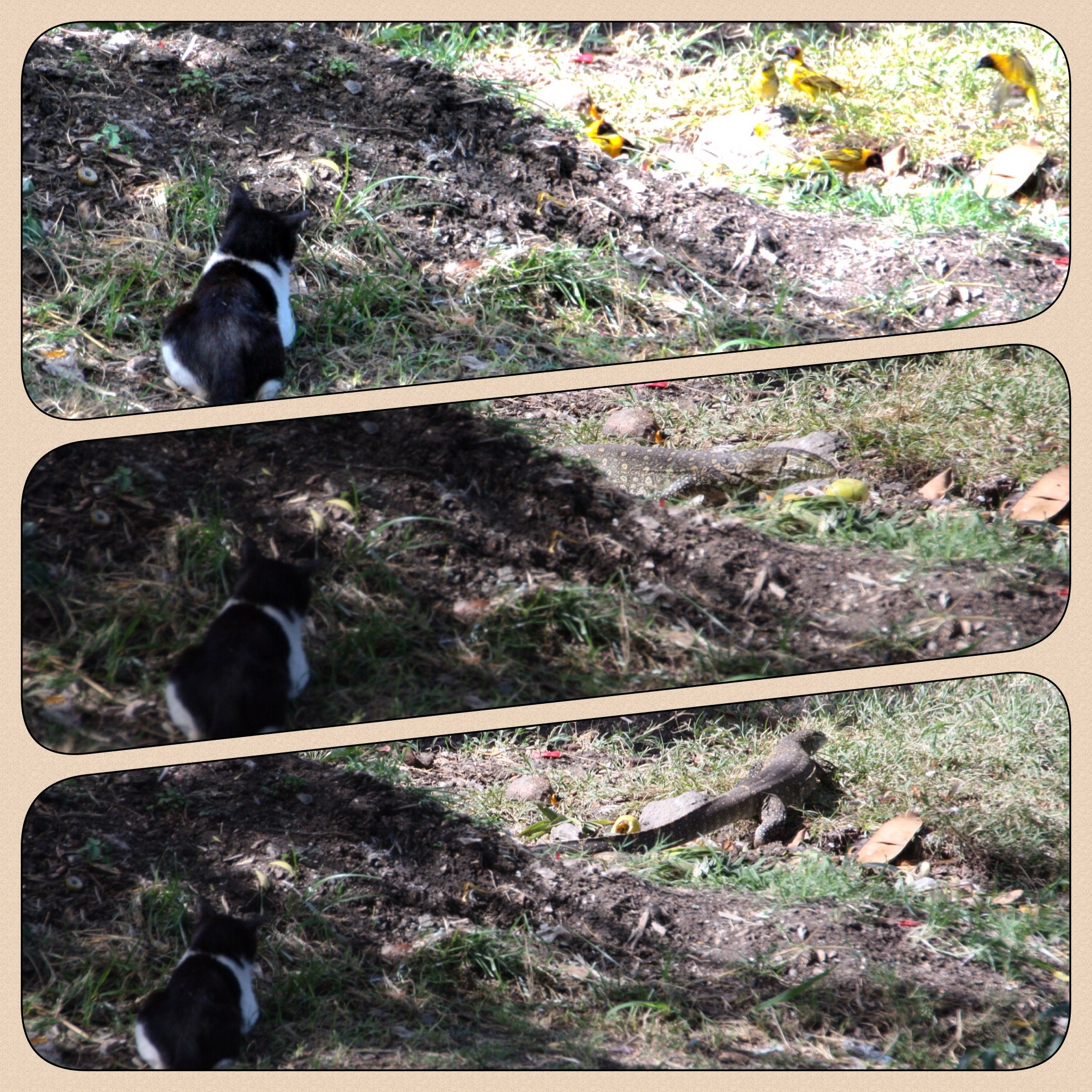
The first time that I saw a monitor lizard, I thought I was hallucinating. It was about three years ago. I had come out of my room, here at ICiPE and this three foot long lizard scurried across the pathway in front of me. I am used to geckos and small foot-long lizards that sometimes sun on the rocks (or the wall of the latrine) but I was totally unprepared for this huge reptile. They tend to live along the lakeshore, mostly camoflauged in the bush or under a rock. Today I was out taking some photos of birds, as I often do late in the afternoon. I came upon a cat by a pile of garbage. It was crouched watching some weaver birds and waiting for the right moment to strike. I took some photos of the cat and the birds, thinking it was a good photo opportunity. Suddenly through my viewfinder another movement appeared in the grass and the birds flew away. There was a monitor lizard slithering over a mound of grass toward the garbage pile. image But wait. At the garbage there were two, no three more. They are about three feet or more long and they scurry, low to the ground with a side to side motion, their tail waving behind them. When they stop they often flick their six-inch long black forked tongue in and out. I find them creepy. image Two days ago I startled one … No, it startled me … in the grass by the lake. But on this occasion I had enough gradual introduction to be able to control my instict to run away as quickly as possible and got some good photos.

Another uniquely Kenyan nature adventure.

A surprise at the Stewart Geddes School

My father, Stewart Geddes, has been generously supporting the development of a small rural school in Kenya for the past couple of years through the CanAssist African Relief Trust. Today I headed back across to the mainland on the ferry to visit the community and the school which has about 75 students from age 3 to 8. Without this small school these little kids would have to walk several kilometers every day to receive education … or not get any at all. Girls, in particular were at a disadvantage and only two girls in the community of 500 people, have gotten beyond grade 4 until now.

I was enthusiastically welcomed and treated to demonstrations of counting and identifying animals in English (remember this is a seoond or maybe third language for these young pupils.) The name S P GEDDES EARLY CHILDHOOD DEVELOPMENT CENTRE is emblazoned on the school gate and the children were happy to chant a Thank you message that they wanted me to take back to my Dad.

Me and little  Stewart Geddes at Osiri Village, Kenya.

Me and little Stewart Geddes at Osiri Village, Kenya.

But the big surprise for me was when the head teacher showed me her six month old Grandson. “We have named him Stewart Geddes”, she said. “At home he goes by Geddes.” I found this both amusing and touching. When I got back to Mbita, I called Dad to share with him the deep appreciation that this community has for his gift to them. I plan to visit a few CanAssist project sites in the next several days and I know that this is just the beginning of the wonderful expressions of gratitude to Canadian Donors through CanAssist that I will receive. I wish that this was something that I could bottle and send back to share with all of you who have supported what we do through CanAssist. Perhaps this little video clip will give you a taste.

image

Getting to Mbita …

The trip to Mbita from Nairobi involves a short flight to Kisumu, a two hour taxi ride to a ferry dock at Luanda and a one hour ferry trip across Homa Bay to Mbita town. There is now a relatively new Tarmac road to the ferry. Before this road was made asphalt, it was muddy and twice in the past, the McGill student group has been stuck on the road, once having to leave one of our overlander trucks mired in the mud overnight.

imageThe ferry trip is always amusing. This trip I arrived about 15 minutes after the ferry had left and had to wait two hours for the next one in a dirt-floored lean-to with benches adorned with ripped cushions, the stuffing belching out of them. It is certainly hotter in this part of the country. In Nairobi the temperatures were pleasant and actually cool. In Kisumu it was in the mid-thirties.

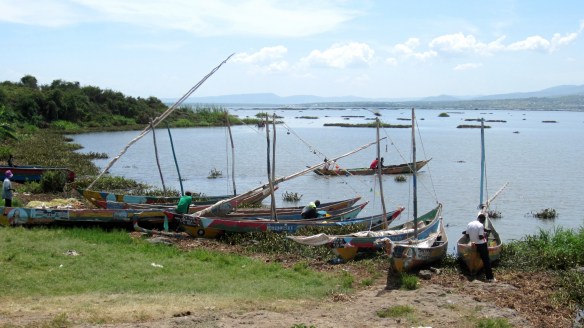
As I waited for the ferry, I watched the fishermen come into the landing nearby in their wooden boats, typical of the region. There is always an on-shore wind early in the evening and the lake actually turns from calm to treacherously rough.

Finally the ferry arrived and a few cars and passengers disembarked. However, there was a small herd of cows that had spent the trip on the main deck and they had to be cajoled and whipped to leave the boat down the car ramp. The region has had more rain than usual in the latter part of 2012 so the lake water level is higher than I have seen in the past. This meant that the ramp for cars ( and cows ) was steep so the cows balked and slid as they exited the boat. In their anxious ride over they had produced a fair amount of dung which littered the deck and the ramp, so much that the cars that were boarding ferry were having trouble getting up onto the boat, their wheels spinning in the “bullshit” and spraying it around. Eventually, two and a half hours after I had reached the landing, the ferry was loaded and ready to depart.

image

I happened to meet Linda, an Amercan woman who now lives on Rusinga Island. Our paths had crossed on my previous visits the region. She  was returning to Rusinga Island with some new wicker furniture including a couple of nice chairs, so the two of us sat on the deck of the boat amidst the dung having a visit and watching the sunset.

My "home away from home" for the next three weeks.

My “home away from home” for the next three weeks.

The bottom line is that I arrived safely in time to have dinner and a Tusker with the film crew for Nightrunners, the movie. I feel quite at home at the ICIPE station here and figure it is my 8th stay here. I know all the staff and vice versa. I will be staying in the same room I have had for the past few years, overlooking the grounds that lead to Lake Victoria.  I have already had welcoming  hugs from Tabitha, the lady that cleans my room. Another of my international homes.image

A visit with one of my “kids” …

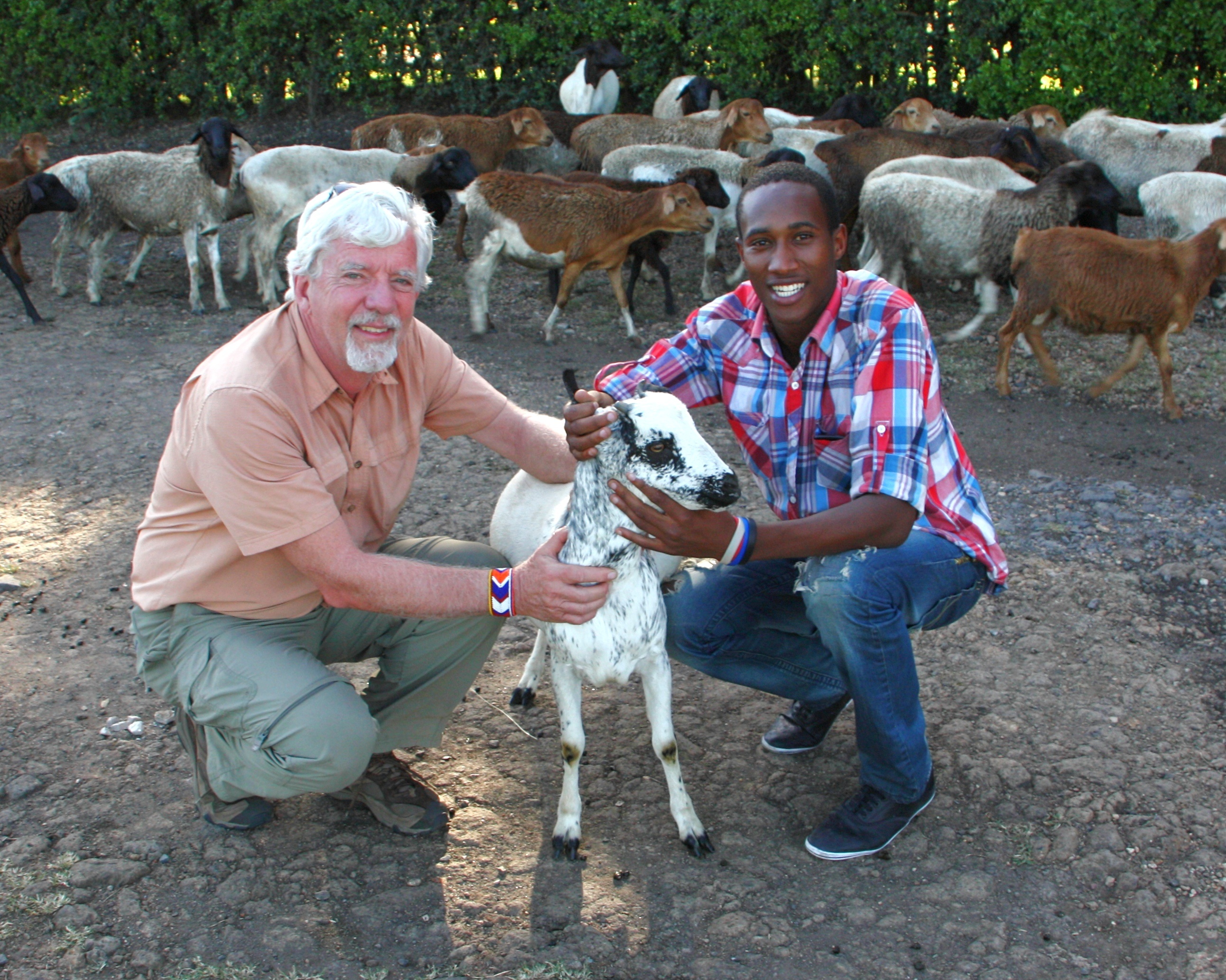
In blog post in December, I told you about my Maasai goat, Veronica. (My goat, Veronica – December 8, 2012) Well this weekend I had the opportunity to revisit V2, Veronica’s daughter. Veronica is apparently off with the larger goat herd grazing somewhere more removed from the Moiko farm but V2 was a bit too young to make the trek so is still at home with about ten other goats and the sheep. I think she had had sons as well since I inherited her but they have likely ended up in a stew.

Veronica Lake

Veronica Lake

I can now recognize V2 easily in the flock by her speckled face and the eyebrows inherited from her mother (which led me to name the mother Veronica after Veronica Lake, a movie star from the 1940’s)

The Massai mark their animals for ownership by making distinctive cuts in their ears. My goats have my own branding which is two cuts on either side of the left ear and nothing on the right ear. So if they get lost or when mixed with the other goats it is always clear that they are mine.

John, Dennis and V2  - 2013

John, Dennis and V2 – 2013

Me, Dennis and Veronica - 2005

Me, Dennis and Veronica – 2005

A bonus was that I also got to visit with Dennis, who gave Veronica to me in 2005. We got our photo with V2 who happens to be pregnant. Dennis promised to send me a photo of my next grand-kid so stay tuned to see the next member of the Geddes ole Moiko clan of goats.

You can notice, as well, that I am wearing the  same Maasai beaded bracelet that Dennis gave to me in 2005.  An enduring friendship .