What would you do?

Peter Singer starts a recent TED talk with a dramatic video of a small child in China being knocked down by a car on the street. As she lies there, injured, three passers-by totally ignore her. The incident is reminiscent of the Good Samaritan story from the Bible, where a priest and a Levite ignore the plight of the injured traveler on the road before the Samaritan stops to help.

Singer asks the audience – “How many of you would have stopped to help?” Not surprisingly, most of the hands go up.

African Child - can you overlook her needs?

African Child – can you overlook her needs?

Singer then says something like “Well, there are children all around the world who live in poverty, vulnerable to preventable violence and disease – millions of them. Are you paying any attention to them?”

“Unicef reports that in 2011 over 6.5 million children under age 5 died of preventable poverty-related diseases.”

Singer is an Australian philosopher and humanist who writes and speaks out about many ethical issues including poverty and animal rights. In 2009, he wrote a book called “The Life You Can Save”. In the book he encourages readers to commit to helping developing communities with a small portion of their income. If you can afford to pay $2.00 for a bottle of water that is free from the tap, do you not have money to spare – to share, in fact, with others who are living without many of the necessities of life that we take for granted?

His message is not a guilt trip. He encourages us to enjoy the fruits of our labours and our good fortune at living in a community where there is law and order, fresh water, social responsibility and enough food but to share a portion of that with others who must live without those amenities.

We are constantly bombarded in the media with photos of children in North America who have perished in the natural (or unnatural) disasters like the recent tornado in Oklahoma City or the bombing at the Boston Marathon. Our hearts go out to the families of these children and we feel sad and that these deaths seem unfair. These are a very few children whose stories touch us because they are in communities like ours.
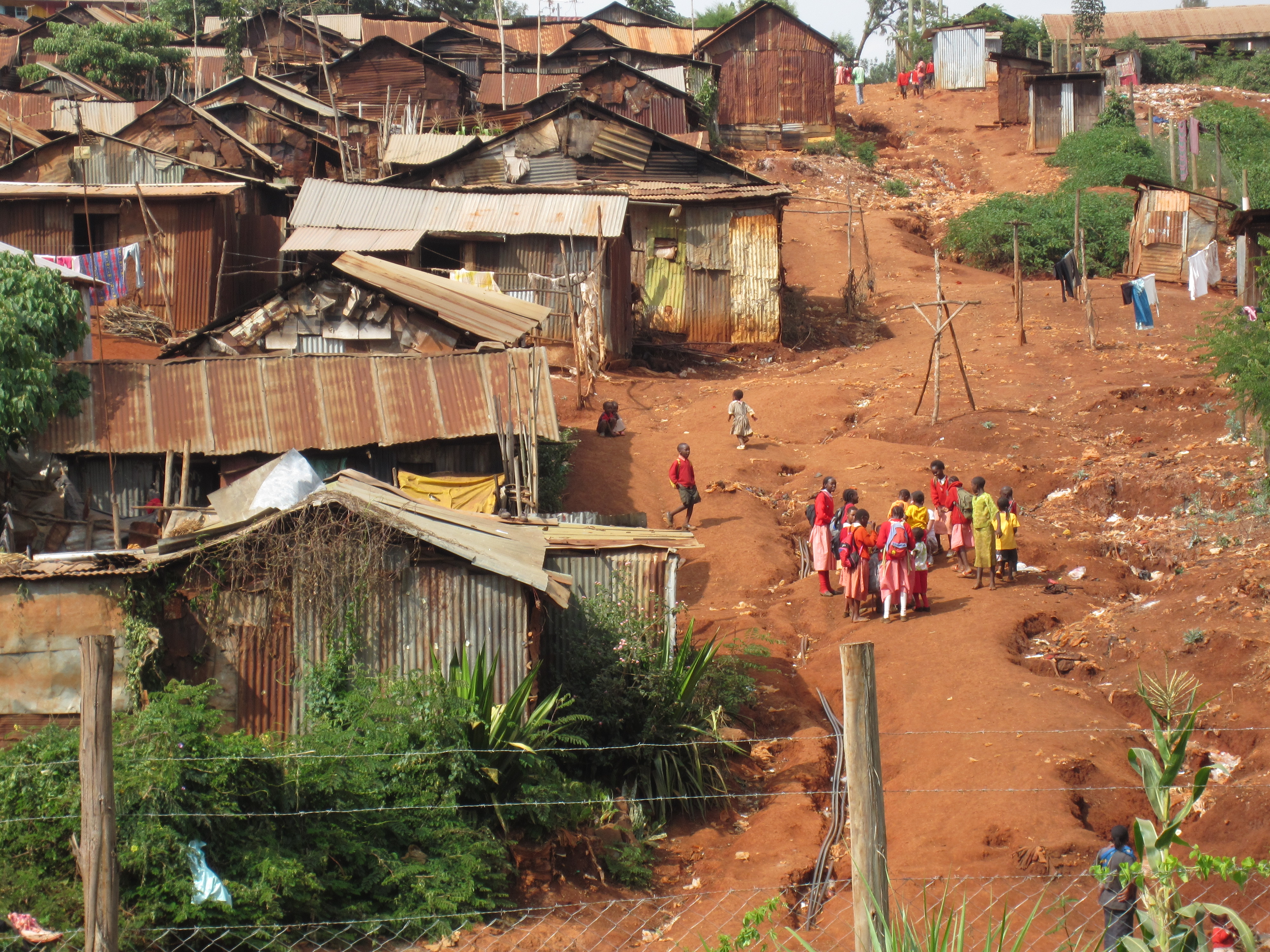
Nairobi slum

Nairobi slum

But what about the mothers of the 19,000 children who die in the developing world every day from preventable poverty-related problems? Do we give them much thought? Do we pour money into the developing world to help these 19,000 like we do to help families of the few North American families touched by tragedy?

Think about this for a minute. It is sobering. 19,000 per day.

The CanAssist African Relief Trust is attempting to so something, however small to help these families in East Africa. Rather than pick a few children for special attention, CanAssist funds community infrastructure projects like school classrooms, water and sanitation improvements, food security through local agriculture and health care facilities. We have funded around $300,000 in projects since 2008. Our Canadian community helping communities in Africa.

If you are interested in what we do, please look at our website http://canassistafrica.ca We are always happy to receive support, moral or financial, for the work we are committed to do to lessen the effects of poverty for vulnerable East African families.

(If you would like to participate in what CanAssist is doing to help communities in East Africa you can donate using the Canada Helps link below.)

donateNow2b1

Here is a link to the Peter Singer TED talk. If you have 15 minutes please listen to what he has to say.
CanAssist announces its upcoming project season…

In an effort to simplify the process whereby CanAssist selects new projects to fund, we set up a six-week application period this spring during which we received 81 very worthy applications for infrastructure funding in communities in Kenya, Uganda and Tanzania.

Our resources are limited. We could only promise to fund 14 of these projects in the upcoming year. Nevertheless we chose a variety of projects throughout East Africa ranging from rainwater catchment to latrines to classrooms to hospital beds. Here is the list of projects CanAssist will implement in the next several months. (*Canadian dollar estimates may vary slightly depending on International exchange and bank rates)

  •  Twekembe Association Centre for Rural Systems and Development, Nakiwaate Village, Uganda. Rainwater collection tanks for a community school. $4600
  •  Action for Research and Development (AFORD), Rambira Community, Kenya. School furnishings for three schools. 535,200 KSh ($6500).
  •  Rieko Kenya, St Gorety School, Mikei, Kenya. Completion of a computer training building. 800,000 KSh ($9200)
  •   Tom Mboya Peer Support Group, Rusinga Island, Kenya. Irriga6on of an agriculture plot. 506,000 KSh ($6000)
  •  Stewart Geddes Kamin Oningo Early Childhood Development Centre. Osiri Village, Kenya. Repair of classrooms and school furnishings. 378,288 KSh ($4500)
  •  Nyandema Water and Sanitation project, Nyandema Village, Kenya. 4x 10,000 litre rainwater catchment tanks. 400,000 KSh ($4800)
  •   Gombe District Hospital., Butambala District, Uganda. Repair of Hospital Beds, replacement of matresses and bedding. 12,030,000 USh ($5000)
  •   Kamin Oningo Beach Management Unit, Osiri, Kenya. Community Latrine. 140,789 KSh ($1800)
  •   Olimai Clinic, Olimai, Uganda. Hospital beds and rainwater catchment . (6,685,000 USh and 24,289,456 USh) ($9500 and $2650)
  •  Oltaraja School, Nguruman, Kenya. Permanent Classroom for school. 813,450 KSh ($9800)
  •  TESO Children Chris.an Development Org. Soroti, Uganda. Tailoring equipment for community income generation. $1200
  •   Murera Community Empowerment and Support Organiza.on. Ruriru, Kenya. Sanitation for TWIGA Primary School. 466,700 KSH ($5700)
  •  Badilisha Ecovillage Founda.on, Kaswanga Beach, Kenya. Sanitation. 277,810KSh ($3400)
  •  Kanyala Little Stars Organization. Rusinga Island, Kenya. Conversion of two temporary classrooms to permanent. 357,200 KSh ($4400)

Luckily, we do have some regular supporters who are eager to help. This week we received a donation from one Kingston family that will look after two of our proposed projects. One of these is to supply sanitation facilities to a wonderful little beach community on the shore of Lake Victoria in Kenya.

Over the next few months, I will provide updates and challenges and successes as CanAssist looks ever forward to help communities in East Africa. Stay tuned.

This short video outlines the need at the Kamin Oningo fishing village … one we are now ready to move ahead with, thanks to generous and caring supporters.

A tragic death in Tanzania

I never met Susan Wells. The news that this 41 year old Canadian aid worker had been killed in late November shortly after arriving in Tanzania to do charitable work struck home, however.

I imagined her arriving at the Kilimanjaro airport, tired from the long flight from Canada but invigourated and very excited to be back where she felt she belonged in some way. She would have been eager once more to meet loving children who would swarm her and welcome her in a heartwarming way that is hard to describe.

But she never made it. Her body was found in a field near Arusha. What exactly happened is still not certain but the bottom line is that her mission to East Africa ended in tragedy.

The message conveyed to others by this horrendous assault might be that East Africans are cruel and heartless. It is actually quite the opposite. I’m sure that the people living in the community where Susan Wells worked are grieving with a deep despair. I know that she would have had loving associations with many. Why else would she continue to return?

There are bad people everywhere. We don’t want all Canadians judged by the likes of Luka Magnotta, Russell Williams or Paul Bernardo. All of America can not be measured by the actions of the young man who murdered children at a Connecticut school this week. Tanzania has the same population as all of Canada. A tourism sector report in 2010 reported close to 1,000,000 tourist visits per year. Foreign visits  – both by tourists and by community aid workers – are  an important contributor to the local economy. Violence of this nature towards foreigners is rare.

Travel anywhere has its risks. Visitors to East Africa are aware that crime rates there are much higher than at home. Foreigners are perceived (and rightly so) as having more money than the locals. It must be tempting if you see a visitor using an iPhone that costs as much as you live on for a year, to want to relieve them of it. Pickpocketing and theft is rampant. Even the locals are cognizant of security risks and the potential for them to be victims of crime. Caution is always required. I’m sure that Susan Wells knew that and in all likelihood she thought she was being safe. Most of the people you meet are friendly and helpful. It is hard to imagine that you may be the victim of of such a violent crime – whether at home or abroad.

It is very sad that a young woman who had dedicated herself to sharing with people less fortunate in Africa has been brutally murdered. I suspect, however, that she would not want this crime to taint the reputation of the East Africans who had provided many other loving moments that she must have experienced while living and working there.

Visitors to East Africa are much more likely to be greeted with welcoming affection than negativity.

Visitors to East Africa are much more likely to be greeted with welcoming affection than negativity.

Getting the jump on jiggers

A couple of years ago, while I was traveling in Uganda, I thought that I had a blister or a plantar wart on the end of my little toe. I even bought new running shoes to try to remedy the situation.

Little did I know.

When I was sitting on a patio in sandals, one of my African friends looked at my foot. “You have a jigger.” he said. I pooh-poohed this suggestion but he insisted. ” I know jiggers. When I was a kid I had so many of them. Sometimes when I was going to fetch water, I would sit down and cry because my feet hurt so much.”

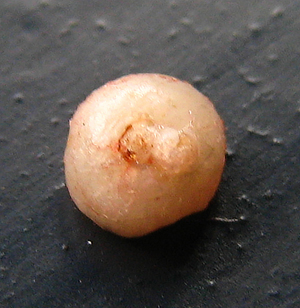
I was surprised when my friend “delivered” this cyst full of jigger eggs out of the tip of my right pinkie toe.

“I can cut it out for you.” he offered.

He could have started that sentence with “I’m no doctor, but …”

So as he whittled away at my toe, extracting a lump that was the size of a small kernel of corn from the tip, I learned about jiggers.

Jiggers (quite different from chiggers) are little fleas that live in the soil. They are a common plight in East Africa. The female finds some flesh into which she can burrow and produce hundreds of eggs which are encased in a cyst-like structure that gradually grows within the flesh of the host. Eventually the cyst bursts and the eggs scattered back into the dirt where the cycle starts again.

These fleas live in tropical environments where people are often barefoot or wearing minimal footwear. In addition, traditional homes and even schools and churches often have dirt floors, the perfect environment for the jiggers to flourish. Children’s feet in crowded, dirt-floored classrooms are particularly vulnerable to infestation.

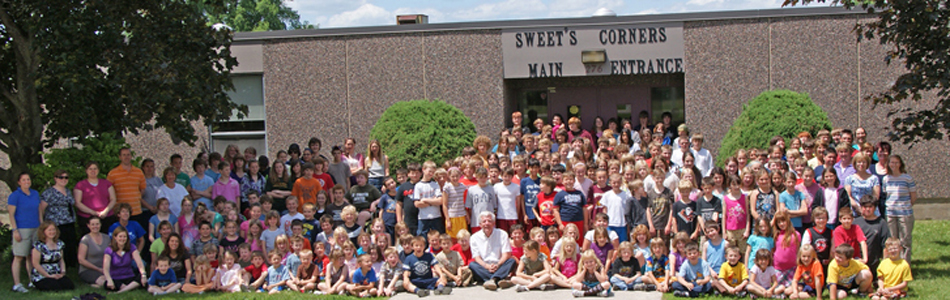
The CanAssist African Relief Trust learned of this plight for children in the Hope for Youth School near Mukono Kenya. The teachers insisted that cementing the floors of the classrooms would help eliminate this scourge. So, with money raised by the children at Sweet’s Corners School near Lyndhurst, Ontario, CanAssist set about cementing the floors of the Hope for Youth School.

The children of Sweet’s Corners Elementary School helped their African counterparts by funding the cementing of school floors to prevent jiggers.

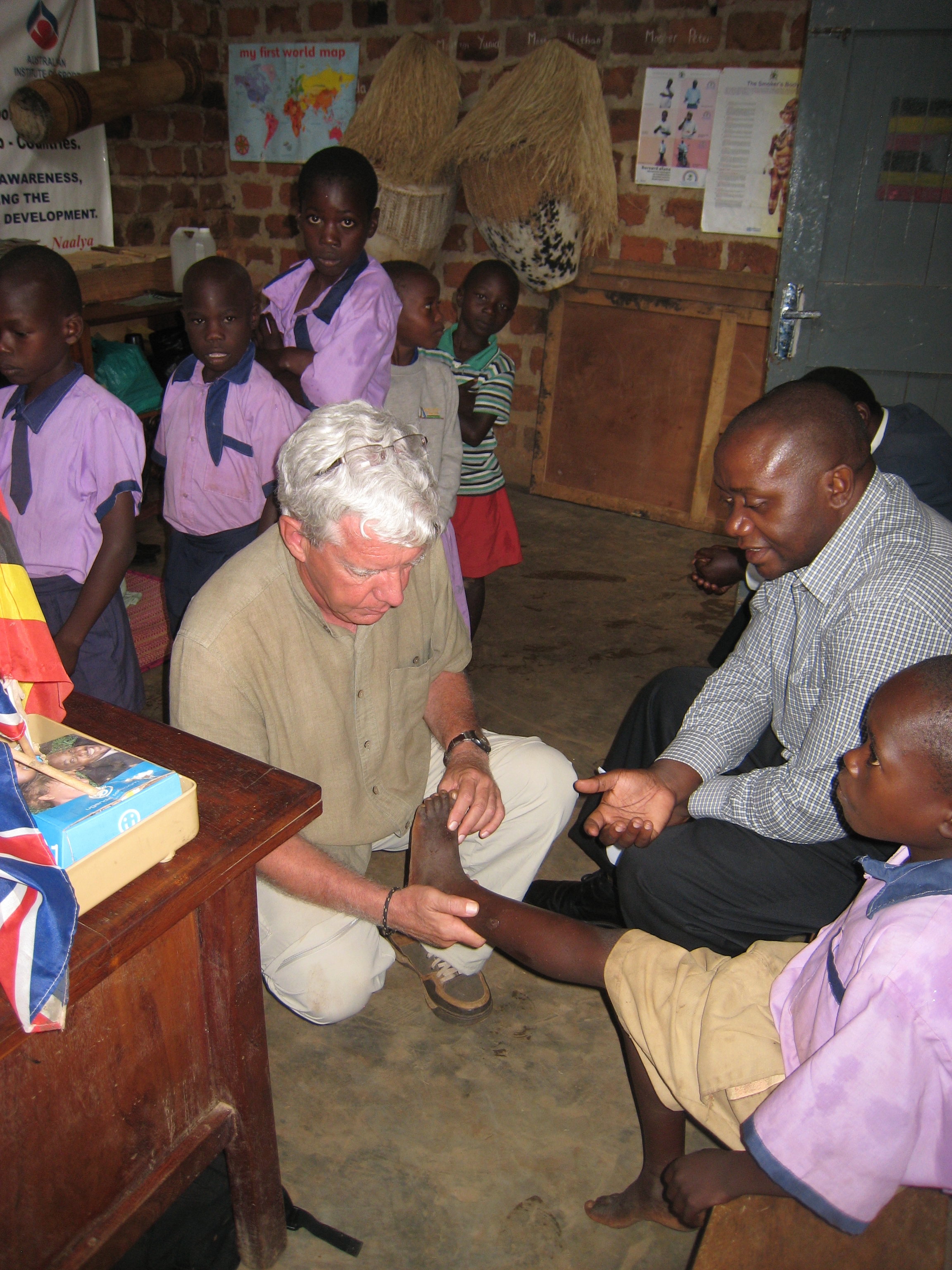
The children at Hope for Youth school were happy to show me their healthy feet after the classroom floors had been cemented to prevent jiggers.

With development projects it is often difficult to evaluate outcomes. But for this one it seemed relatively simple.

I had the school check the feet of all 107 children in the classrooms before the flooring was installed. 74% of the kids had jiggers and more than half of these had more than three in their feet. A few months after the floors were cemented, I was in the school and personally checked the feet of all the same children. The prevalence of jiggers went from 74% to 7%. The children were delighted.

The cost of this project was in the range of $1500  It brought relief to over 100 children and also demonstrated that cement floors that can be washed and swept can stop a jigger infestation.

A dilemma

A recent article that I wrote for the Kingston Whig Standard about little Jerry O, a 4 year old Kenyan orphan that I encountered earlier in 2012, brought several responses that included questions about adoption. Here is a response that I sent to one couple who inquired about adopting this child.

“There are many, many children in Africa who are vulnerable in so many ways. Your offer to help is kind and generous.

By “adopt” I am not sure if you are meaning a true adoption – bringing a child to Canada – or a distance adoption which amounts to sponsorship and support from here.

The true adoption process is long and complex and I really know very little about it. African countries tend to be pretty strict on the process of adoption to another country, requiring that the adoptive parents actually live in the African country for a period of time prior to any adoption happening. Private adoption would also likely entail similar restrictions. But I am not familiar with all the laws and rules. You may have explored them already.

Sponsoring a child is often the support from a distance that an individual child needs for schooling, food, security. Some individuals decide to do this through an organization or on a one-to-one basis. It certainly provides good support for children in need and is much less expensive and also keeps the child in their own cultural environment. (This piece entitled “A Small Act” was on CBC radio a few months ago can illustrate the value of this kind of support. http://www.cbc.ca/thecurrent/episode/2011/09/26/a-small-act-chris-mburu/ )

Individuals who support a child through organizations like World Vision can be sure that money that they donate is being used in the community where the child lives. Your “adopted” child benefits through the supprt that is given to the community for sanitation, education and health.

At the CanAssist African Relief Trust, we realize that it is impossible to help any one child specifically without overlooking someone else who may be as deserving. Our preference has been to provide help within a community or school that will, in some way, benefit all. CanAssist does not facilitate individual supportive programs for school fees, etc, but rather works to help within the community, using community leaders, teachers and health care workers to guide our work there.

You may have heard this talk that I did at a Chalmers United Church service in Kingston, Ontario a couple of years ago. My talk addresses this dilemma. A Youtube link to it is here:

I commend your interest in helping these vulnerable children.

There are, no doubt, families in Canada who would gladly “adopt” a struggling orphan child from a developing country. But it is not simple. Not only is the adoption process encumbered with discouraging red-tape, but rescuing one child leaves many others behind who are equally needy and deserving of support.

Through CanAssist we try to do what we can to help a community to improved water access, sanitation, health or education. Hopefully there will be many children who will benefit in some way from this process rather than by plucking just one for exceptional attention.”

Digging in to help Africa

Food security is a major issue in Africa. The cost of living in East African countries has risen substantially over the past couple of years and, coupled with erratic climate changes, this has resulted in a situation where people who are already living on the edge are having trouble affording basic foods, let alone nutritious diets.

The CanAssist African Relief Trust has sponsored  school garden projects that have been very successful. Our first project related to this was with the Kanyala Little Stars school on Rusinga Island, Kenya. The first step in starting a garden here was to put up fencing to keep hippos and other grazing domestic animals like donkeys and goats out of the garden. If you think think squirrels and rabbits are a garden nuisance, imagine the havoc that can be created by a family of hippos lumbering up from Lake Victoria to graze overnight. For the Little Stars garden,  CanAssist also arranged appropriate irrigation through a pump and sprinkler system and set up a work shed, toilets and provided seeds and fertilizer. The garden has proven to be a great boon to the school and community, now producing fruits and vegetables that supply the school children with better nourishment, and provide a bit of extra income to help with other school expenses, provide nutritious supplements to needy families in the community at reasonable cost. It has worked well.

In other schools in Kenya and Uganda we have supported similar projects which are also proving to be equally successful.

Earlier this year, we also helped a local youth group in Migori district of Kenya and this week we received an encouraging report from Edward Kabaka, director of Rieko Kenya, a local development organizaton.

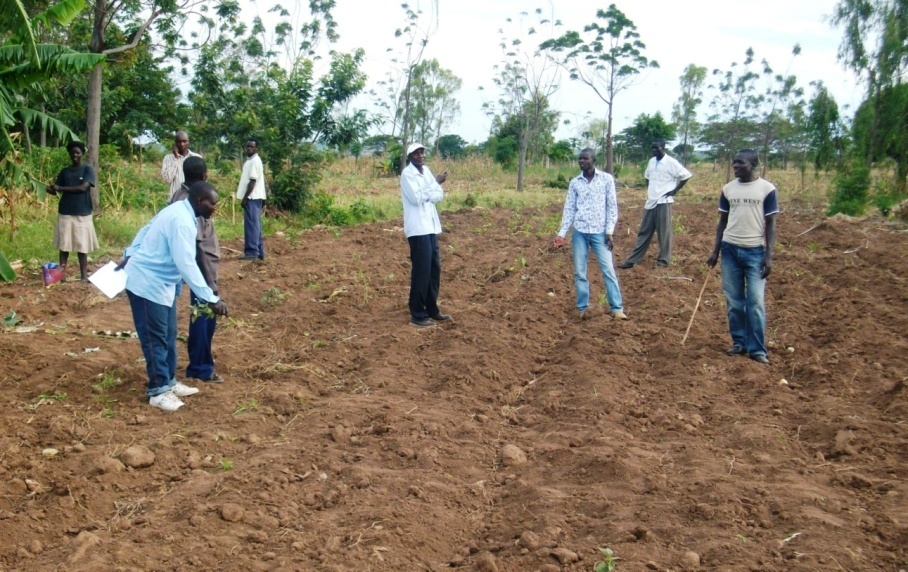
The Nyaruanda Youth group provides the manpower to till and maintain their local garden.

“The Nyaruanda Youth Development Group is a community based initiative started in March 2010 in south Kadem Location, Nyatike District in Kenya. It was started by a group of orphaned youths who were left behind as head of households in their families. When they were 10-12 years old, many of them lost their parents to HIV/AIDS. They have graduated to replace their deceased parents in roles of fending for their siblings. As they grew up together, they realized that they were facing the same challenges and started organizing themselves in small groups. They need to provide food, clothing, shelter, medical care and above all schooling for their families.

A first harvest of Tomatoes, Watermelons and Sukuma wiki (a staple African green rich in iron and vitamins) from the CanAssist-supported Nyarunda Youth Group garden.

In the beginning of 2012, Rieko Kenya had the opportunity to be visited by John Geddes, the Executive Director of CanAssist African Relief Trust (CAART). Rieko Kenya considered Nyaruanda Youth as one of the groups to be visited by John. John agreed to present an application to CAART to help support the group, through Rieko Kenya, with small scale irrigation equipment and materials. The support from CAART was realized with Rieko Kenya providing training and facilitating the purchase of the irrigation equipment and materials (Water pump and pipes) and presented to the group. After a period of a half a year and following this life saving and transforming support, the Nyaruanda group is very excited and happy to report a huge financial gain. They are now able to be self reliant and meet their financial obligations.”

CanAssist is delighted that these local agriculture projects are not only providing better nutrition to communities; they are helping to stimulate economic development.

A letter from Ivan – Kyabazaala, Uganda

My daughter recently pointed out to me that I was fortunate to be the recipient of most of the feedback from the communities in East Africa that we help through the CanAssist African Relief Trust. She’s right. How can I share that with other supporters of CanAssist?

I do consider myself lucky to have been able to visit the schools, clinics and communities that have been supported, in one way or another, by the CanAssist African Relief Trust…or rather by the donors who give to CanAssist to keep our activities afloat. One of the appeals to our donors is that we pay no Canadian salaries, travel at our own expense and therefore every donated dollar is spent by Africans in East Africa. The cost to us as volunteer travellers, however, is repaid ten times over in the wonderful experience of interacting with our friends in Africa.

Recently a group of Canadians who are supporters of CanAssist visited the B.L.K. Muwonge Secondary School in a remote, small Ugandan town called Kyabazaala. One of the students at the school sent back a letter of thanks to CanAssist supporters. I thought it only appropriate that I share this. I hope you find it as motivating as I do to keep doing what we are working toward to help communities in Kenya, Uganda and Tanzania with their infrastructure needs.

Students at the B.L.K. Muwonge Secondary School in Kyabazaala, Uganda write exams in a building that was constructed with funding from the CanAssist African Relief Trust.

(I don’t know if Ivan’s letter will reproduce well in the blog so I have also uploaded a pdf file of the letter here.)

Canada Day challenge met!

A huge THANK YOU is in order for everyone who responded to the Canada Day Challenge I wrote about in this blog on July 1. Through your generous donations and a bonus from the Sasamat Foundation in British Columbia, CanAssist has secured the money to build the two needed classrooms at Hope School in Mbita Kenya. Everyone is delighted. I will be sure to provide updates as the school classrooms rise from the dust.

Kennedy Onyango is our contact and the founder of the Hope School. I first encountered him in July 2010. He exemplifies the typical story of relatively ordinary Africans (but motivated ones) who see a need in their community and they dedicate their personal resources and time to finding ways to improve the plight of the people who live around them.

In Kennedy’s case this was to help vulnerable young children in his region – kids who lived in poverty or were orphaned – get a start at being educated. He founded a “school” which is divided into two locations. One is in two crammed classrooms behind a bank in the town of Mbita and another on a larger property in the hills beyond the town. There are 160 kids who come to these makeshift classrooms.

In addition to giving them education, the school also provides a mid-day meal for the children. Sometimes this is the only food that they get for the day.

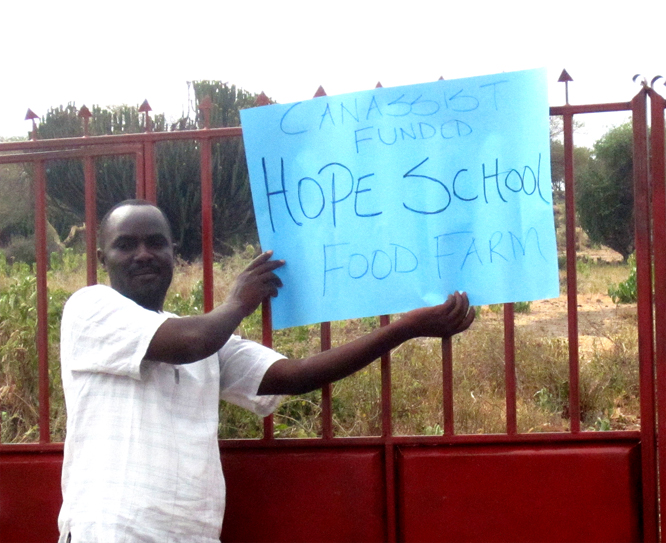
Kennedy Onango holds up a sign that marks the beginning of the CanAssist Oasis of Hope Garden for the Hope School at Mbita Kenya

Kennedy first asked CanAssist to help develop a small farm where they could raise vegetables and fruits to supplement the otherwise bland gruel diet provided to the kids. In early 2012, CanAssist gave the money to start this up and very soon Kennedy had created what he calls the “Oasis of Hope” on the rurual school property.

In mid July, I got this report from Kennedy. It surpassed my expectations for success in the early months of developing this garden. Kennedy writes:

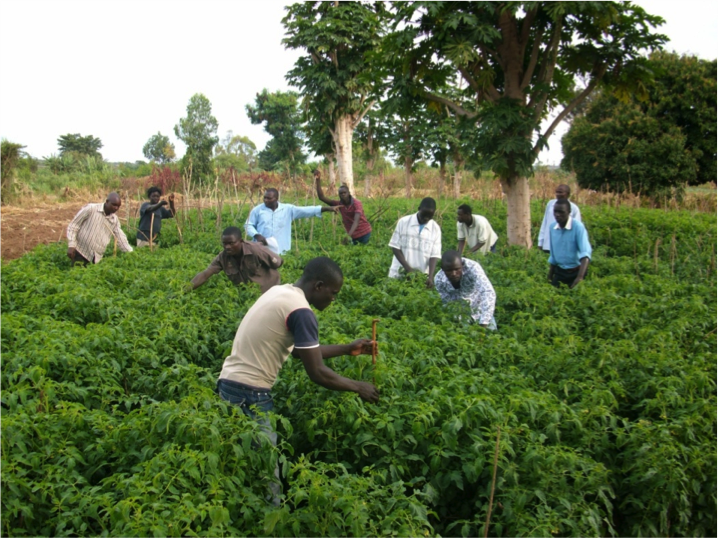
This month in CanAssist funded ‘Oasis of Hope Garden’, we take a deeper look at this farm, which is celebrating its first harvest. In a single 3 month production cycle, 480 kilograms of sourghum, 120 kgs of beans have been harvested so far from a 2 acre ploughed open farm. The same 3-month production cycle is also projected to yield a 120 kilogram of maize (corn). This has clearly reinforced our earlier thought of making the garden both food granary and source of funds to support key school operations. It’s true, a good income can be realized from the selling of sourghum.
Why is this important? 140+ children at Hope School have never had an opportunity to drink nutritious porridge from the initially barren school farm yard. Rural peasant families of Mbita don’t have the money to take a chance on unproven technologies. Demonstration farms like the CanAssist funded ‘Oasis of Hope Garden’ give families a firsthand look at the income increases they can achieve with an investment in appropriate technologies for improved on-farm yields
You can see how CanAssist’s approach of working with poor, marginalized rural communities of East Africa transforms lives on our first ever bumper harvest in this school farm.
We remain appreciative for CanAssist supporters and with special thanks to Sasamat Foundation for having donated funds towards classrooms construction at Hope School, besides nutritious meals, the children will now get conducive learning environment!”

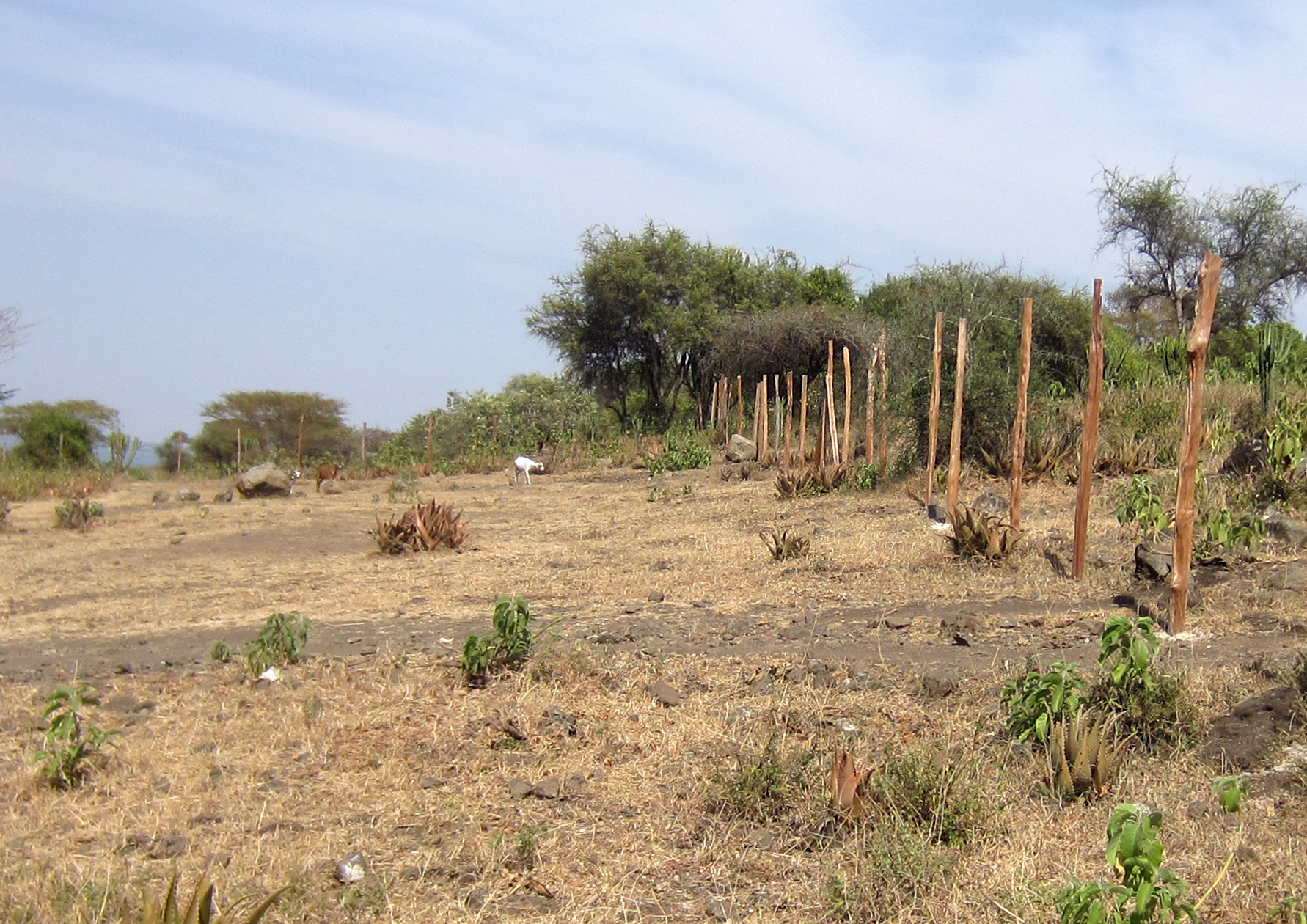
The first step in creating a garden was to fence the property to keep protect the garden from wandering neighbourhood goats. This dry corner is the same place where the banner picture of maize plants was taken three months later.

I hope that this enthusiastic endorsement of the work that we are doing through CanAssist makes our donors smile with satisfaction. With the support of Canadian donors, Kennedy and others in his community have been able to take a barren piece of land and turn it into a veritable Oasis of Hope for the children at Hope School and those who live around it. We are making a difference to individuals and communities in East Africa. Asante sana for your help in achieving this.

Sanitation – making progress

A month ago, I wrote in my blog about the need for latrines at an elementary school in Kenya – “Sanitation – or lack of it”.

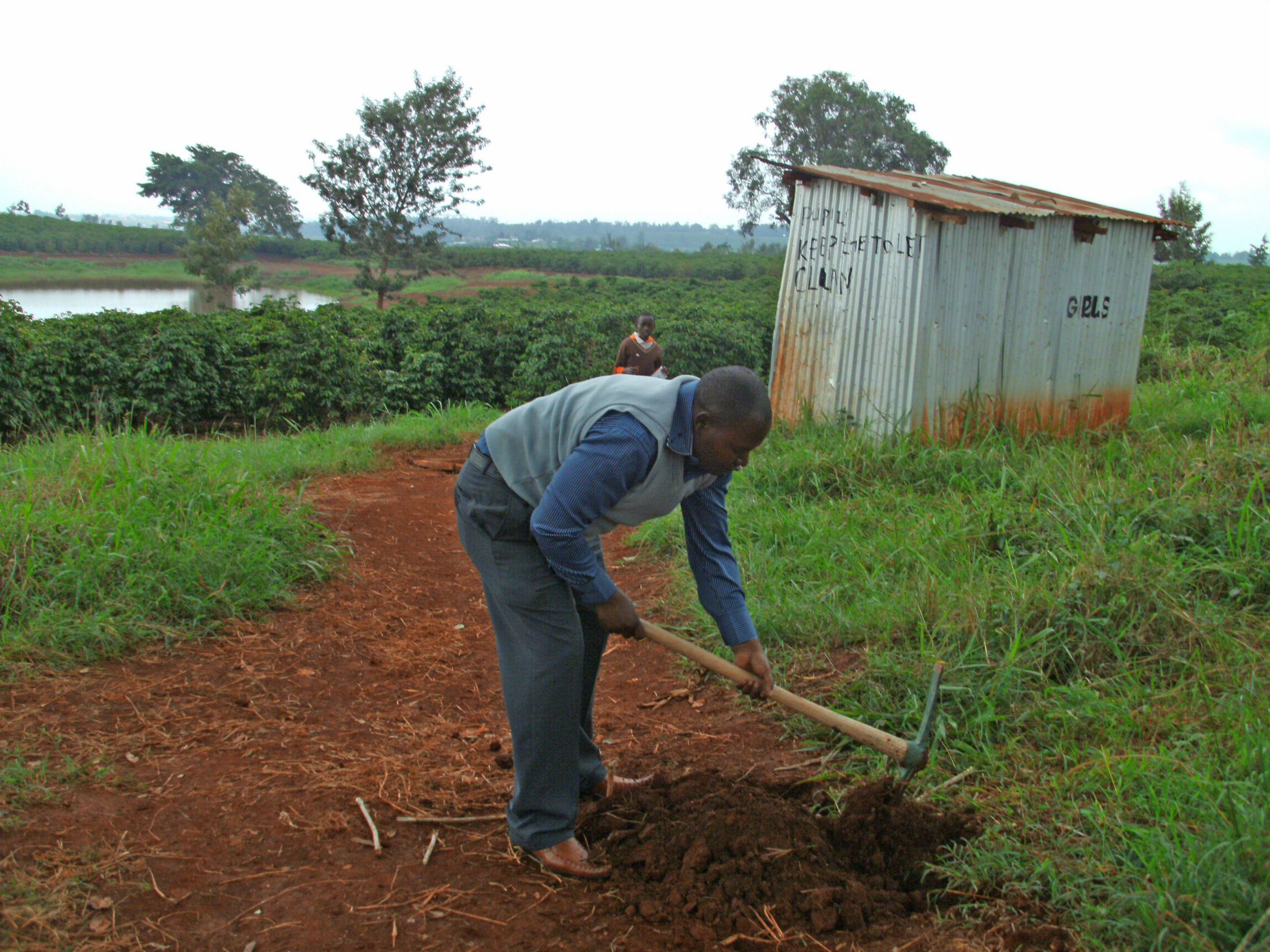
The CanAssist African Relief Trust board approved of this project and sent money (about $5200 Can) to the school last week to start construction of latrines for the school with 8 stances for girls, 8 for boys and 2 for staff. This will be a huge improvement in the sanitation for the school,

Today, I received photos from the community showing that their construction has already started. Once these people have the funding, they dig right in (literally) to get the job done.

It will be delightful to follow this project through to completion. Congratulations to the community for your enthusiastic initiation of this improvement to your school.

Thank you to Michael Gichia of the Murera Community Empowerment and Support Organization for the photo updates.

A Canada Day Challenge

Every year around July 1, I unfurl a big, red and white Canadian flag over my balcony with pride. I consider myself fortunate to live in a country where people value the notion of respect for one another.

Collectively, we respect our democratic government process, even if we don’t always agree with our politicians.

We respect and protect the rights all Canadians despite religious, cultural or ethnic differences. Diversity makes up the colourful fabric of our nation. On Canada Day, new citizens from around the globe are welcomed to Canada in ceremonies across the land. I remember attending one such occasion a few years ago when the family of one of my co-workers from Bosnia and Herzegovina officially became Canadian. At that ceremony, the Mayor of Kingston had been born in Scotland, the Governor General in China (both were women, by the way) and the Ontario MP was born in Holland. That tangible recognition of our varied backgrounds reminded me of what it is to be Canadian.

And we are generous to the rest of the world with our support – military, moral and financial.

This week I was reminded of this generosity when I received notice that the Sasamat Foundation in British Columbia will donate $10,000 to the CanAssist African Relief Trust to be put toward building two classrooms for the Hope School in Mbita, Kenya. This gift is being given with no strings other than the accountability of CanAssist and the recipient community to use the money for their school. It is independent of other obligations and given without cynicism or suspicion, cultural or religious bias, but with trust that the community in Africa will utilize it to benefit their children. I think this is a very “Canadian” gesture.


In addition to their generous $10,000 donation, the Sasamat Foundation has presented CanAssist with a challenge. They will donate another $5000 to the school, matching donations that CanAssist receives 2:1. But this has to happen within the month of July.

Are you be willing to support this initiative with a donation of $50 to CanAssist and the Hope School? You can make a secure, tax-receiptable donation online now with a credit card by following the Canada Helps link below. You can even select a small monthly donation option through the Canada Helps link. Indicate that your gift is to bolster the Hope School Fund.

Donate Now Through CanadaHelps.org!Faire un don maintenant par CanadaHelps.org!

CanAssist is always happy to receive a donation by mail.
CanAssist African Relief Trust, 562 Sycamore Street, Kingston, Ontario. K7M7L8

Happy Canada Day!

Check out out the CanAssist web page about Hope School at http://canassistafrica.ca/Mercy.html

Donate Now Through CanadaHelps.org!Faire un don maintenant par CanadaHelps.org!