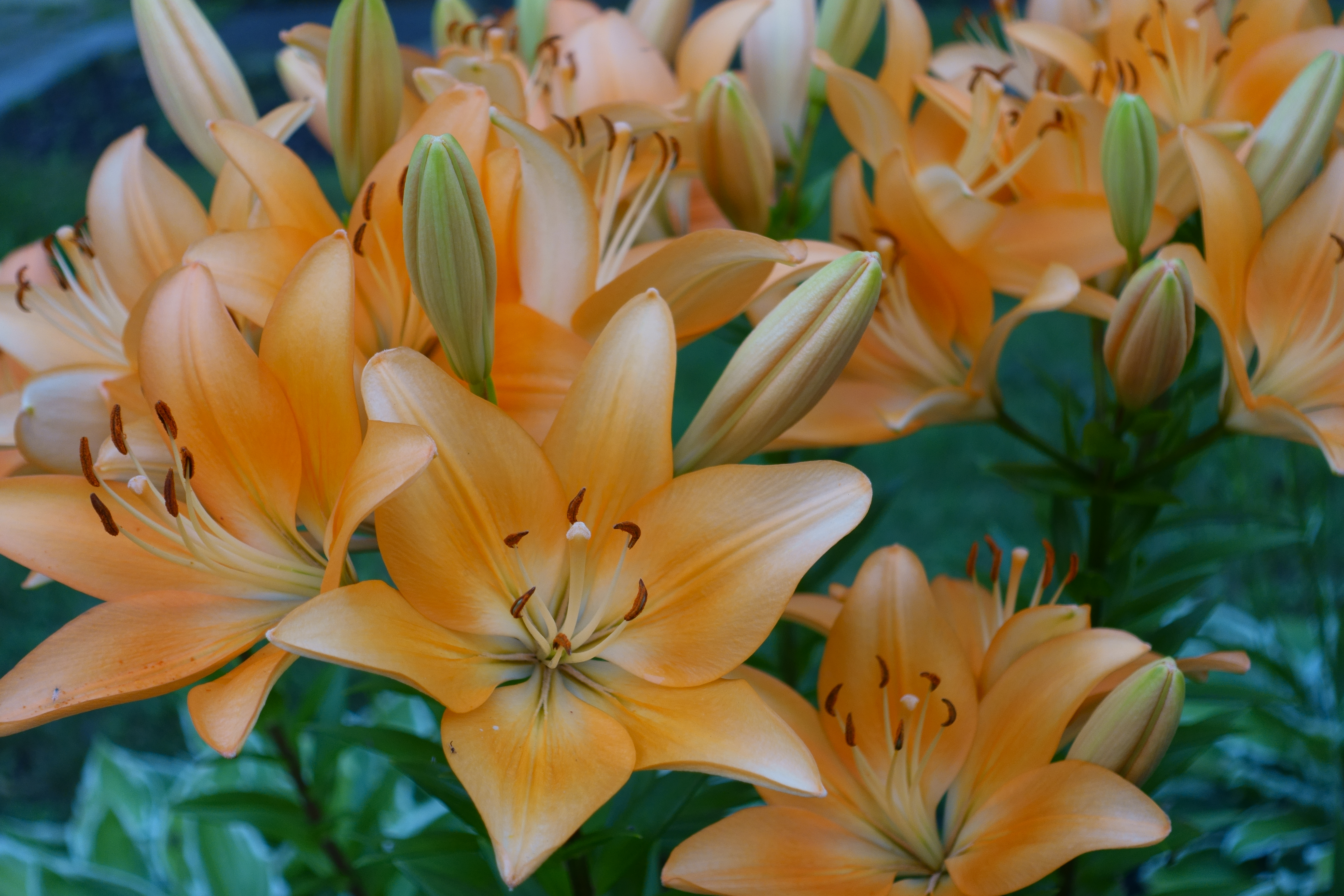
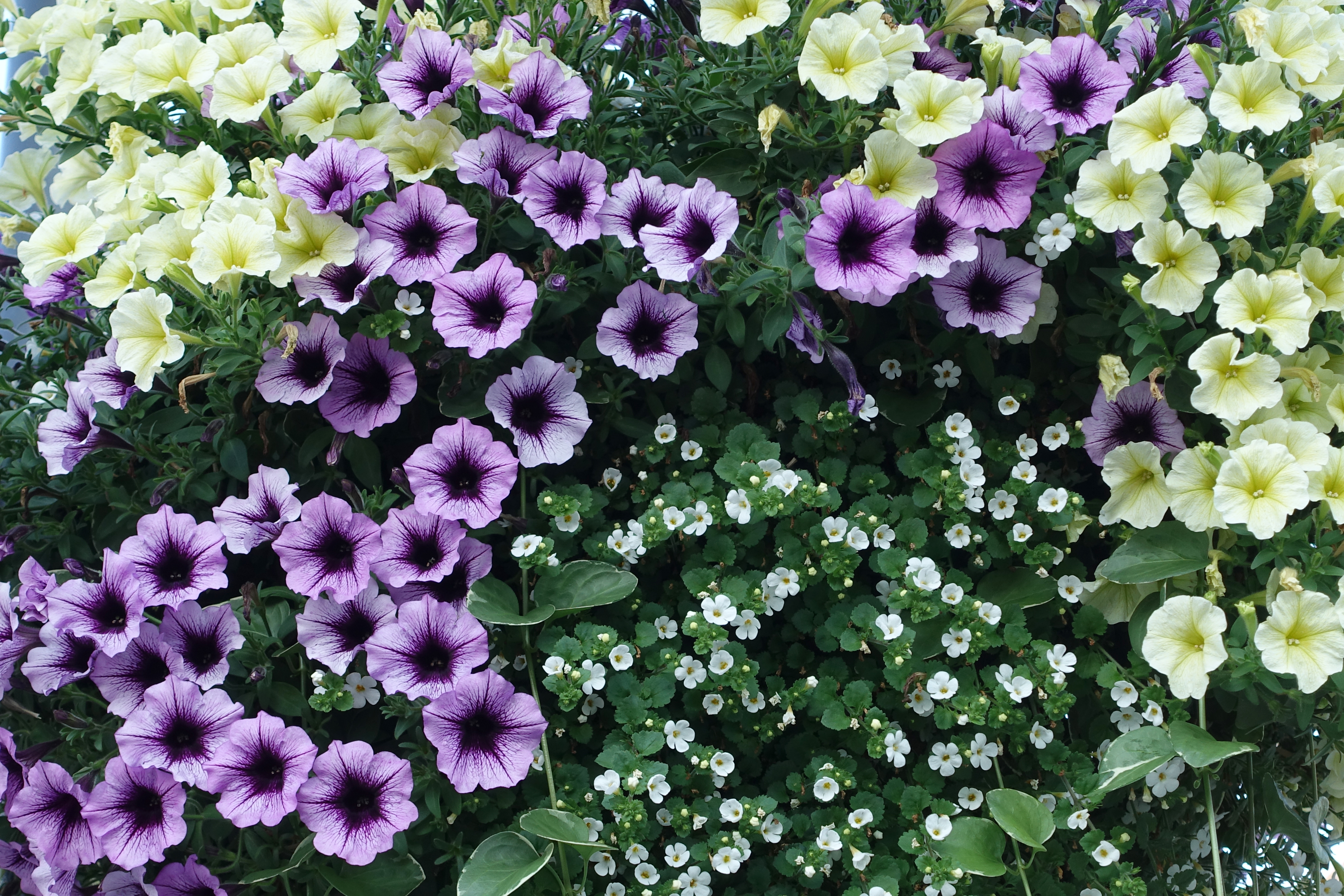
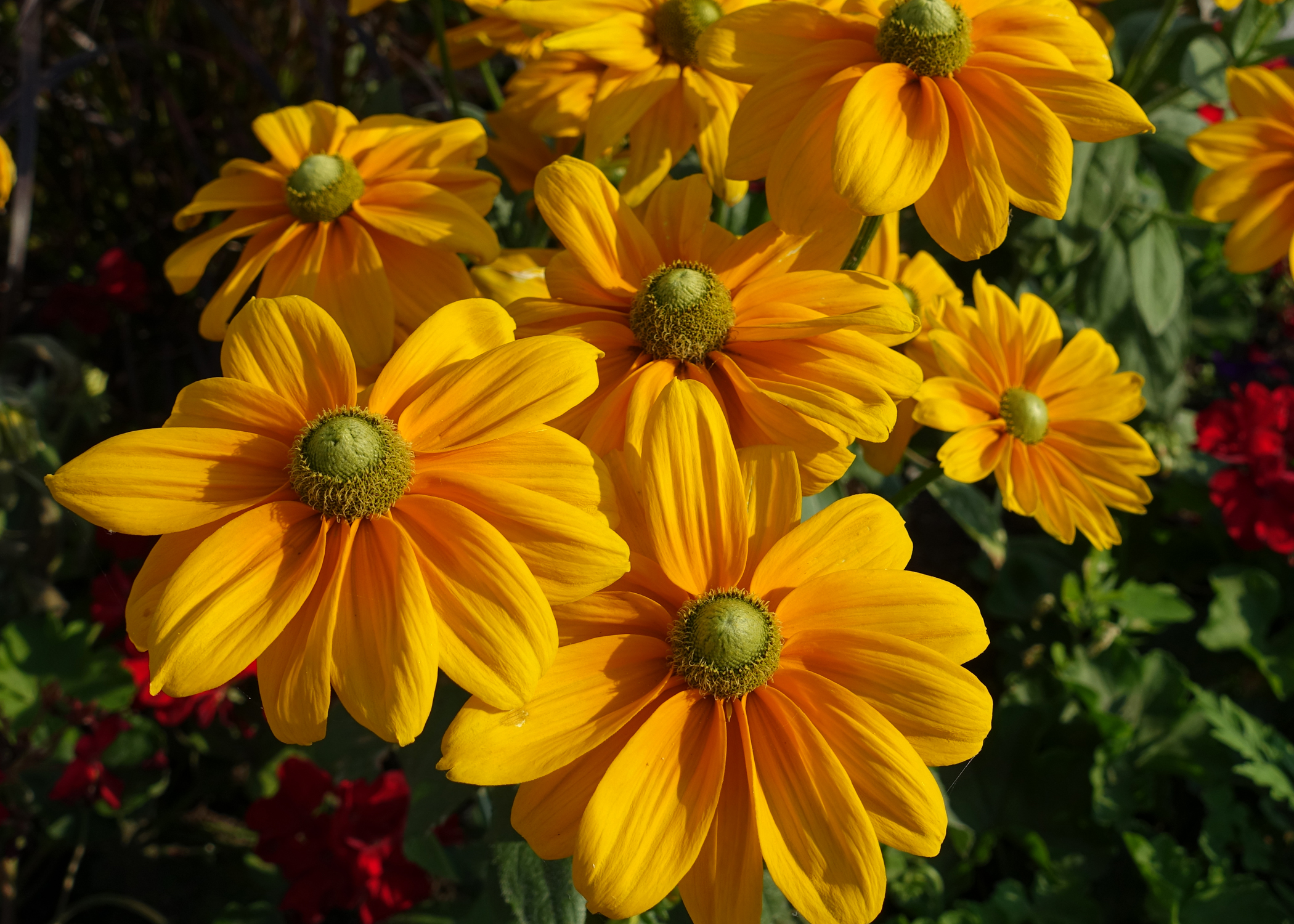
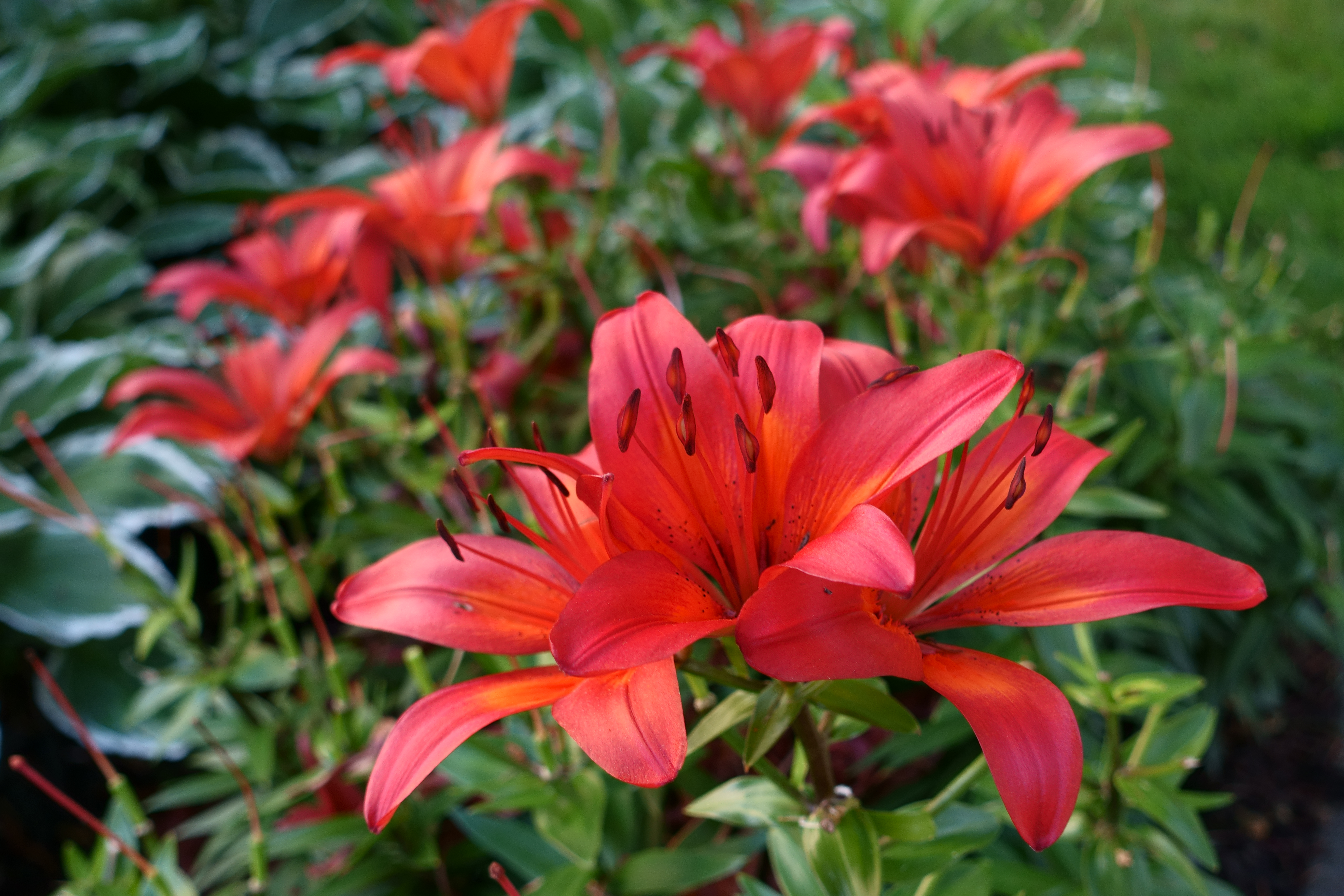
It has been a treat this week to walk to work in summer sunshine past gardens filled with brightly coloured flowers. Sure is different from winter! I want to share some of these beauties with you.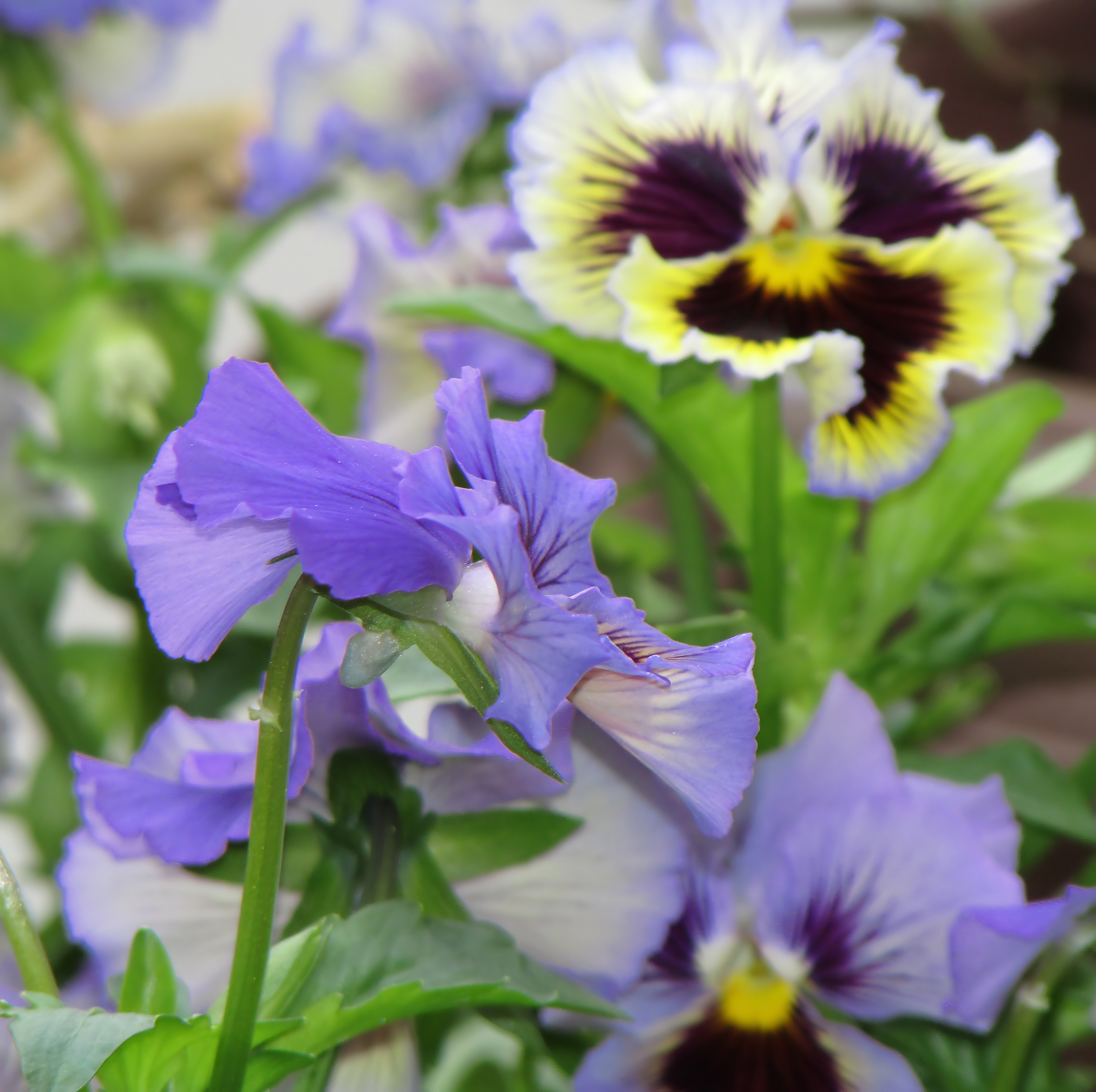

Ahhh, Summer
Reply
It has been a treat this week to walk to work in summer sunshine past gardens filled with brightly coloured flowers. Sure is different from winter! I want to share some of these beauties with you.
When I visited Bosnia in the spring the weather was particularly cool and damp. I wondered if my photos would be a bit dreary. I was looking through my pictures last night and realized that many of them held vibrant colour and they cried out to me for a poster treatment. So here are a few of my photos, posterized. I don’t usually tart my photos up this way but I kind of like these. Enjoy a brief visit to Bosnia and Herzegovina.
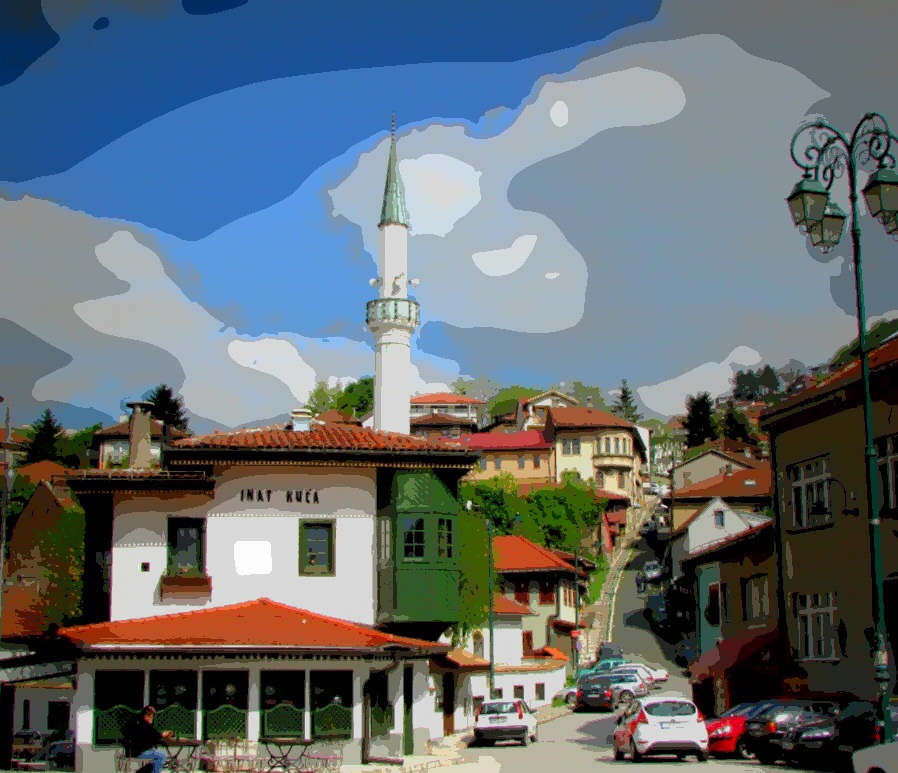
The hill behind Inat Kuča in Sarajevo.

The Mostar Bridge

Street in old Mostar.
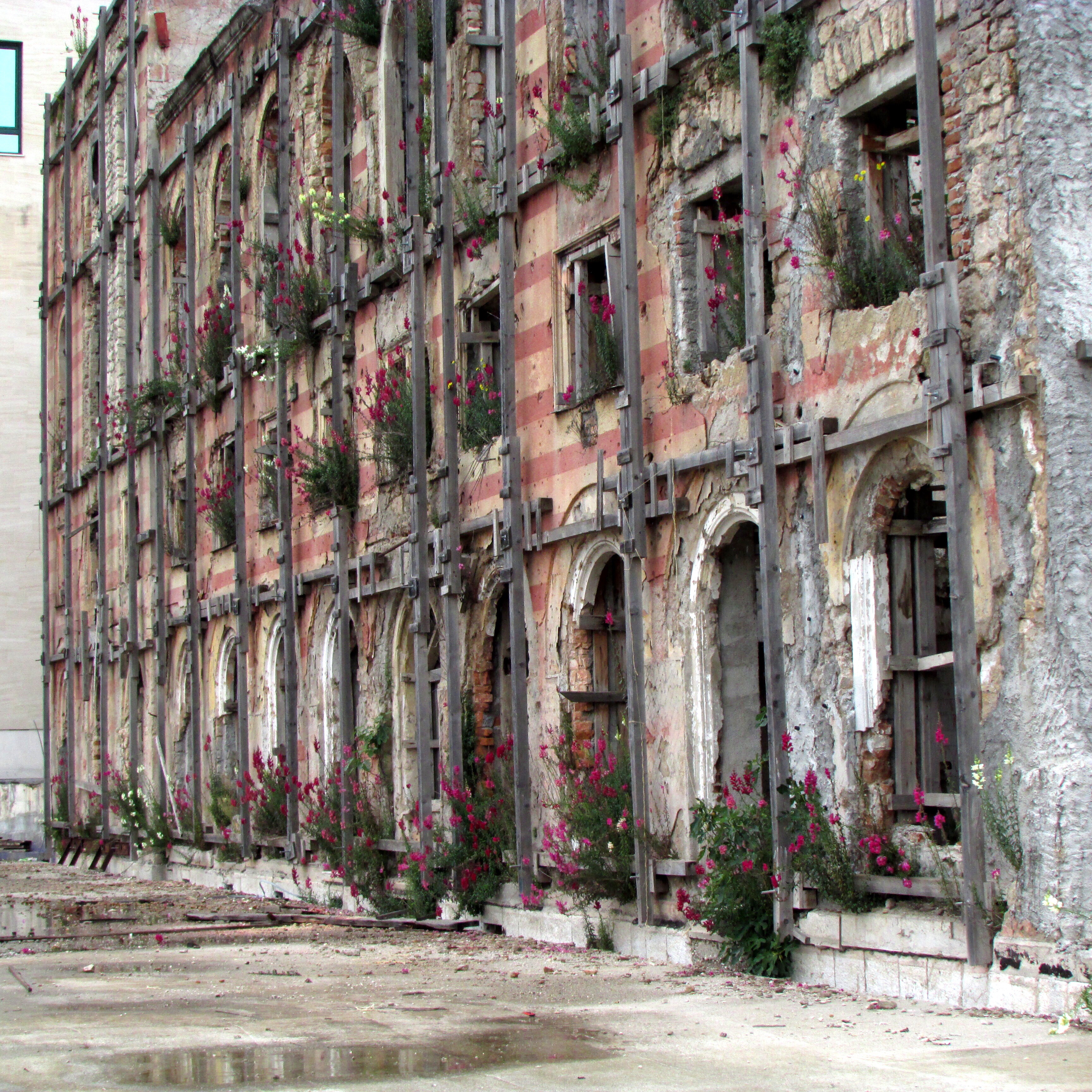
This building in Mostar near the river was heavily damaged during the war. It has been shored up with timbers. Snapdragons grow between the bricks on the window ledges. In fact, I didn’t alter this photo. This is how it looked. Dramatic.
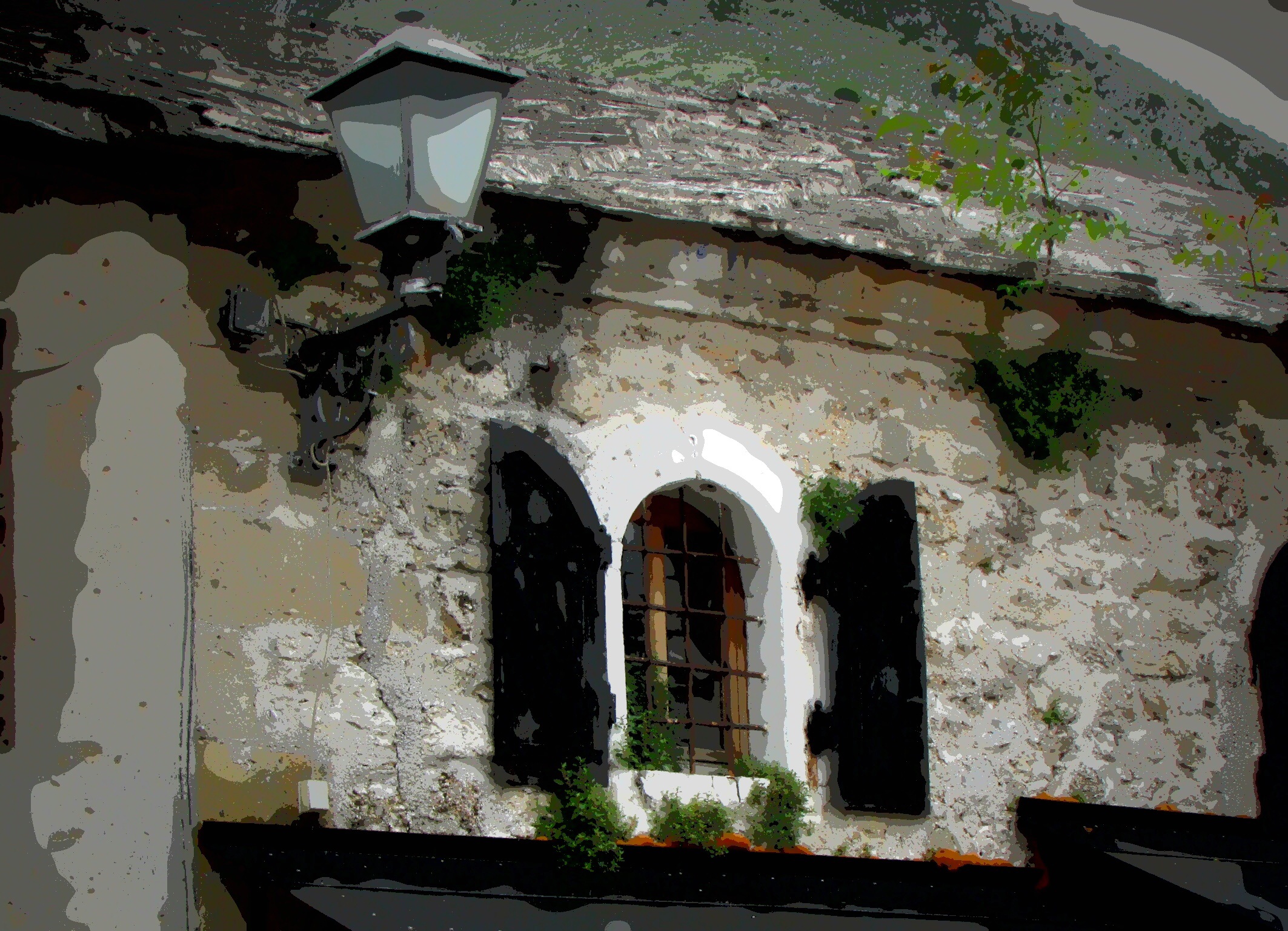
Mostar
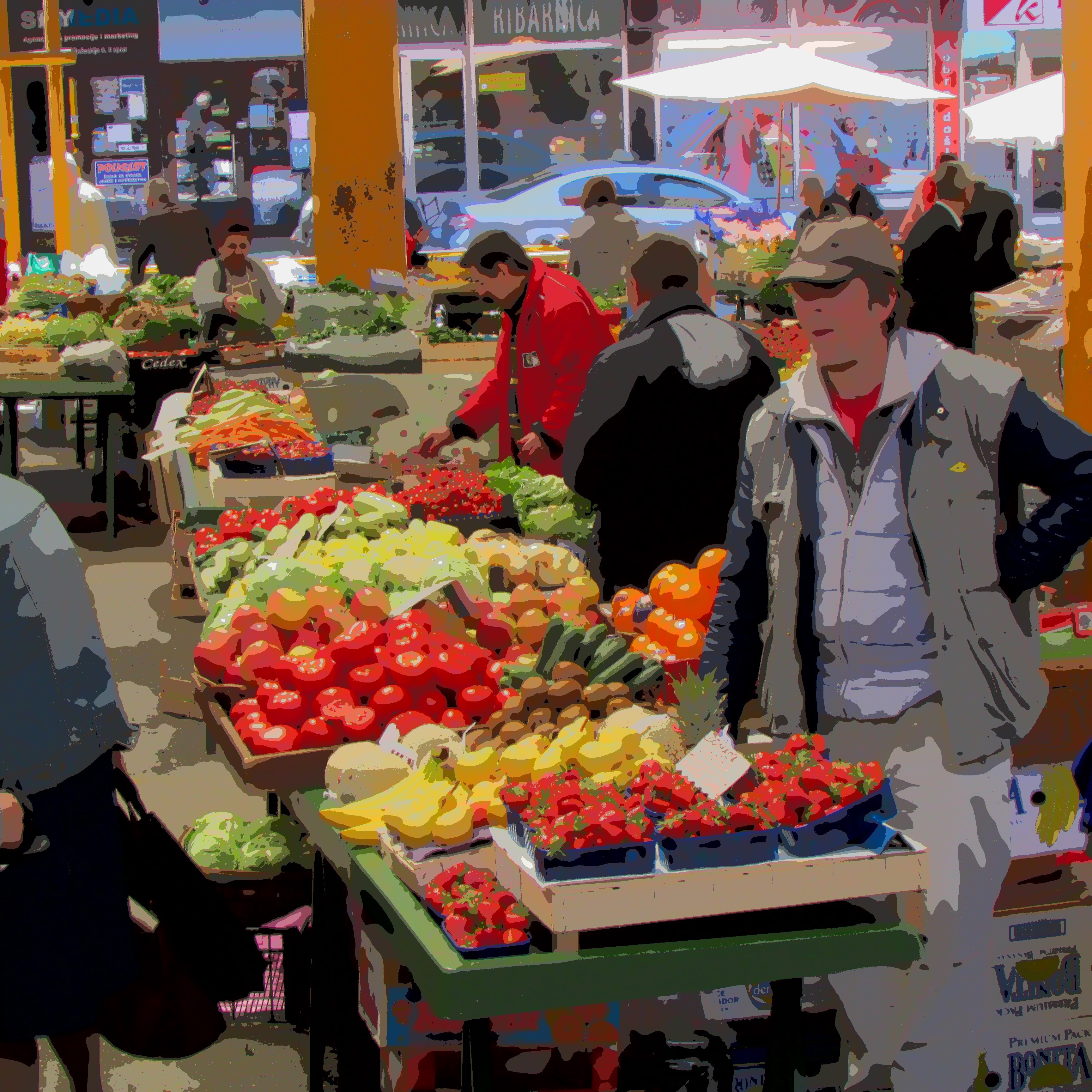
Sarajevo Market
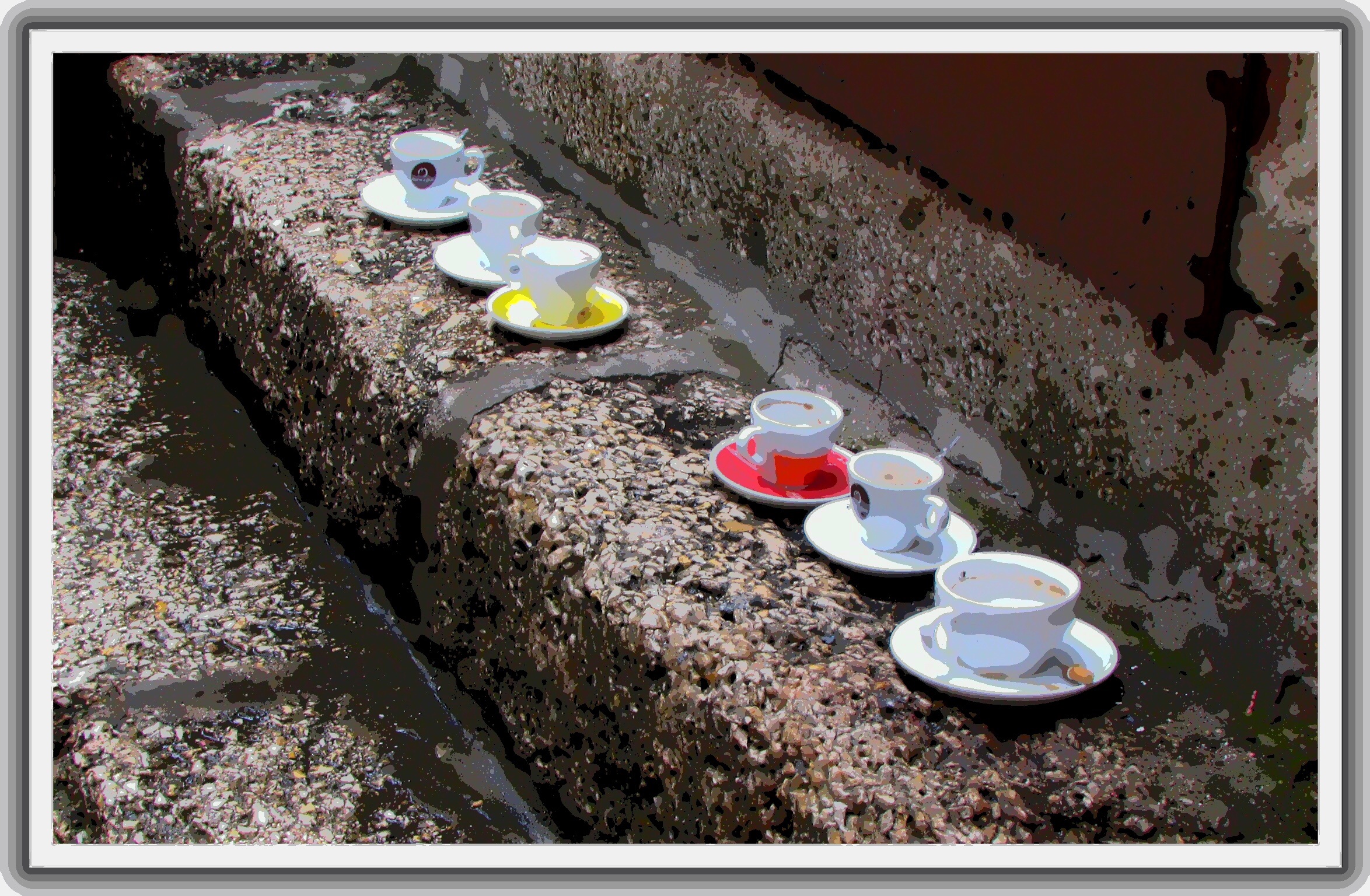
Coffee time.

The old bridge – Stari most – from which Mostar gets its name.
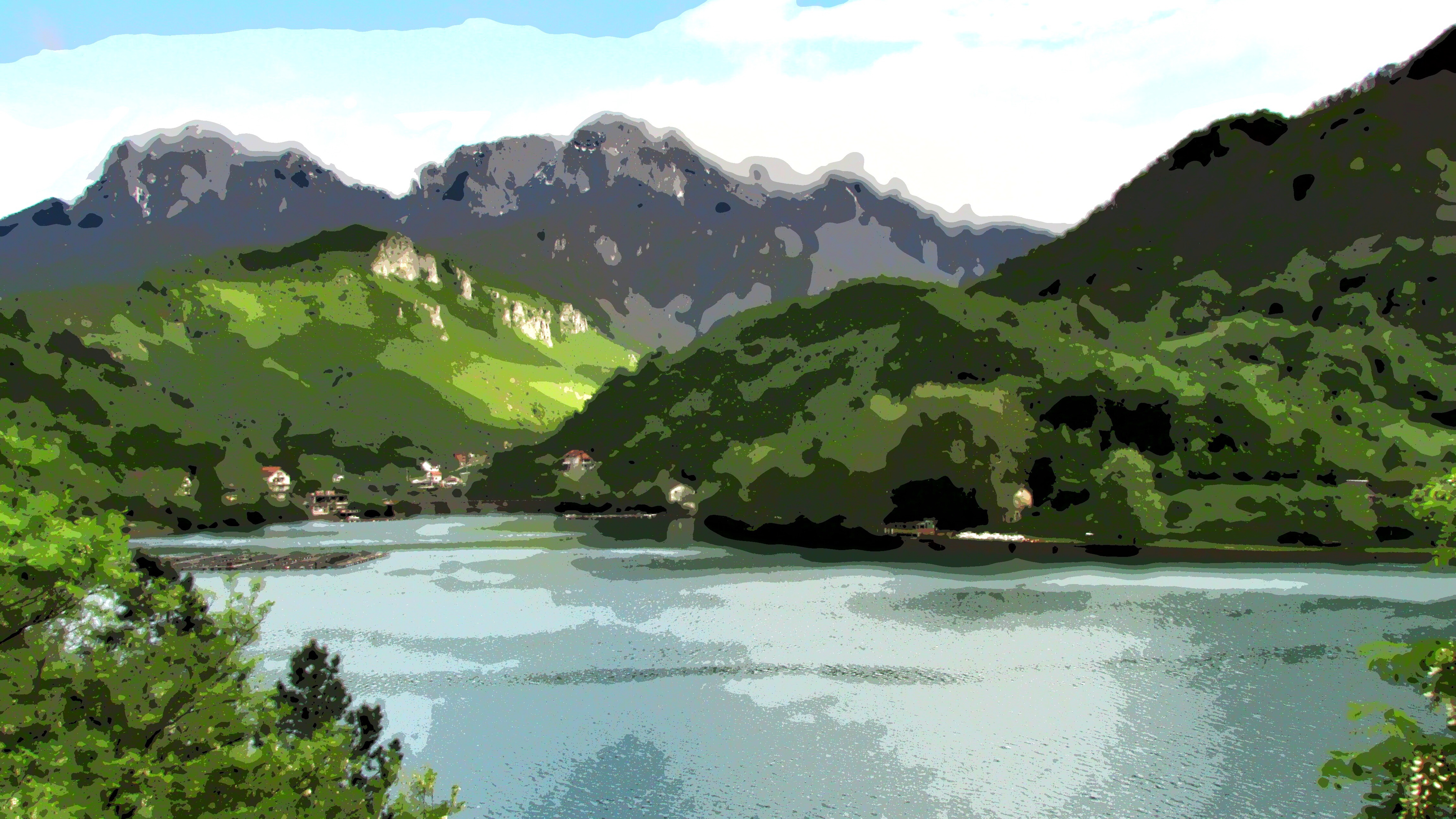
The Neretva River on the very scenic drive between Sarajevo and Mostaf.
I came across a couple of photos buried deep in my computer’s hard drive this week that were taken in 1953. I was six that year.

Halloween party 1953. I am on the chair by the TV.
I remember the circumstances of one of them. We lived in at 448 Mornington Ave in London, Ontario and this was a Halloween party for me and my friends in the neighborhood. It looks like we were all dressed as hobos. Hobo costumes may seem to be a bit unimaginative but they were not expensive to create.

A television was a new item in Canadian homes. The first CBC television stations opened just the year before, in 1952. The local station had only 4 hours of programming per day and the rest of the time it was a black and white test pattern.
 I am not sure if I had ever been to a movie. Play was in a sandbox in the back yard. My imagination would have been stimulated by picture books like Winnie the Pooh, Peter Pan and my favourite of all – Nursery Tales That Children Love. I still have that book. I smells a bit musty but I treasure it as something from my childhood. Inside the front cover is an inscription – “TO JOHN, FROM GRAMP.” And I did love those stories. The Gingerbread Boy, Peter Rabbit, The Three Little Pigs.
 My favourite was Little Black Sambo – probably now banned as being politically incorrect. But maybe it set me dreaming of Africa even then.
My mom (anyone who knew her will be able to image this) had decided that to liven up the Halloween party we would all go down into the basement in the dark and she would pass around little bowls of stuff that were supposed to represent body parts. Cold spaghetti was brains. Peeled grapes were suppose to be eyeballs. My Mom was not as creepy as this now sounds. In addition she had decide to make the basement dark and spooky by tying a piece of colored cloth around the bare light bulb that lit the basement stairs. Mid way through the ghost story, the cloth caught fire. We abandoned the bowls of body parts and scrambled upstairs and outside to safety. I don’t think Mom tried that trick again.

This photo of the newly crowned Queen Elizabeth II hung in every school classroom.
Earlier in 1953 Queen Elizabeth was crowned, her father, King George having died the previous year. I remember playing in the back yard on that June day and admiring the wooden nickel that we had been given at school to commemorate the occasion. I layed on the grass watching the clouds whiz by and knowing that something historical was happening that day but having no real sense of what if was.
I was the same age as Prince Charles. I used to think that maybe some day we could be friends. I did shake hands with him and chat ever so briefly when he and Diana visited Kingston in 1991. That was as chummy as we got. Charles probably doesn’t remember the moment as vividly as I do. His hand was not soft and princely but rough and more like that of a gardener. Mine was probably sweaty like so many others he had encountered.

The first stage of the Stratford Festival in 1953
The Stratford festival opened in 1953. My grandparents had friends in Stratford named Helen and Bob, who were somehow involved with the festival and they attended early performances that were done in a big tent. They went to parties with the likes of Tyrone Guthrie and Alec Guinness who starred in the first production of Richard III.
Although I was only six, I walked to school myself. It was about eight blocks away and over a level railway crossing for the main CP line. Today parents line up in the schoolyard to scoop up their kids as they emerge from school. Innocence (or at least the feeling of innocence) lost and replaced now by paranoia and suspicion.

Johnny and Bobby late summer 1953.
My cat was named Tippy. My brother was/is named Bob. Both were about 18 months old. My grandparents were ten years younger than I am now and I thought of them as old. I now have five grandchildren of my own.
I was probably having fun at that Halloween party and have had a lot more fun over the past 60 years.
Time flies when you’re having fun.
Last month I stood on a Sarajevo corner and tried to imagine the day 100 years ago when, on that very spot, an event changed the history of Europe and the whole world for the upcoming century.

Today this corner looks very much like it did 100 years ago. In May I stayed in a great little hotel (Old Town Hotel) that was just at the end of this historic little street.
Today, the intersection is unremarkable. People stand waiting for the next tram. Traffic pushes by. A small plaque in the wall of a building on the corner states “From this place on 28 June 1914, Gavrilo Princip assassinated the heir to the Austro-Hungarian throne Franz Ferdinand and his wife Sophia.”
That’s it. Nothing mentioned that within a month after this shooting, all of Europe was drawn into the war that became World War I, a global conflagration that apparently claimed over 16 million lives and wounded another 20 million — staggering statistics that have ranked this as one of the most deadly conflicts in human history.
Earlier that spring, while Austrian Archduke Ferdinand planned his trip to Sarajevo, proud to have his pregnant, commoner wife, Sophie accompany him, a group of Serbs who were disgruntled with the Austrian control over their region plotted to assassinate him. Knowing that Ferdinand would be exposed in his motorcade through Sarajevo streets and inflamed by recent Austrian military activity in Bosnia, the seven Black Hand conspirators hatched their plan.
They smuggled weapons, guns and grenades, into Sarajevo and seven of them traveled individually into Bosnia from Belgrade. Their plan would position them at several spots along the motor route to the town hall. Each would have a chance to kill the Archduke and all had vials of cyanide to kill themselves afterward if captured.
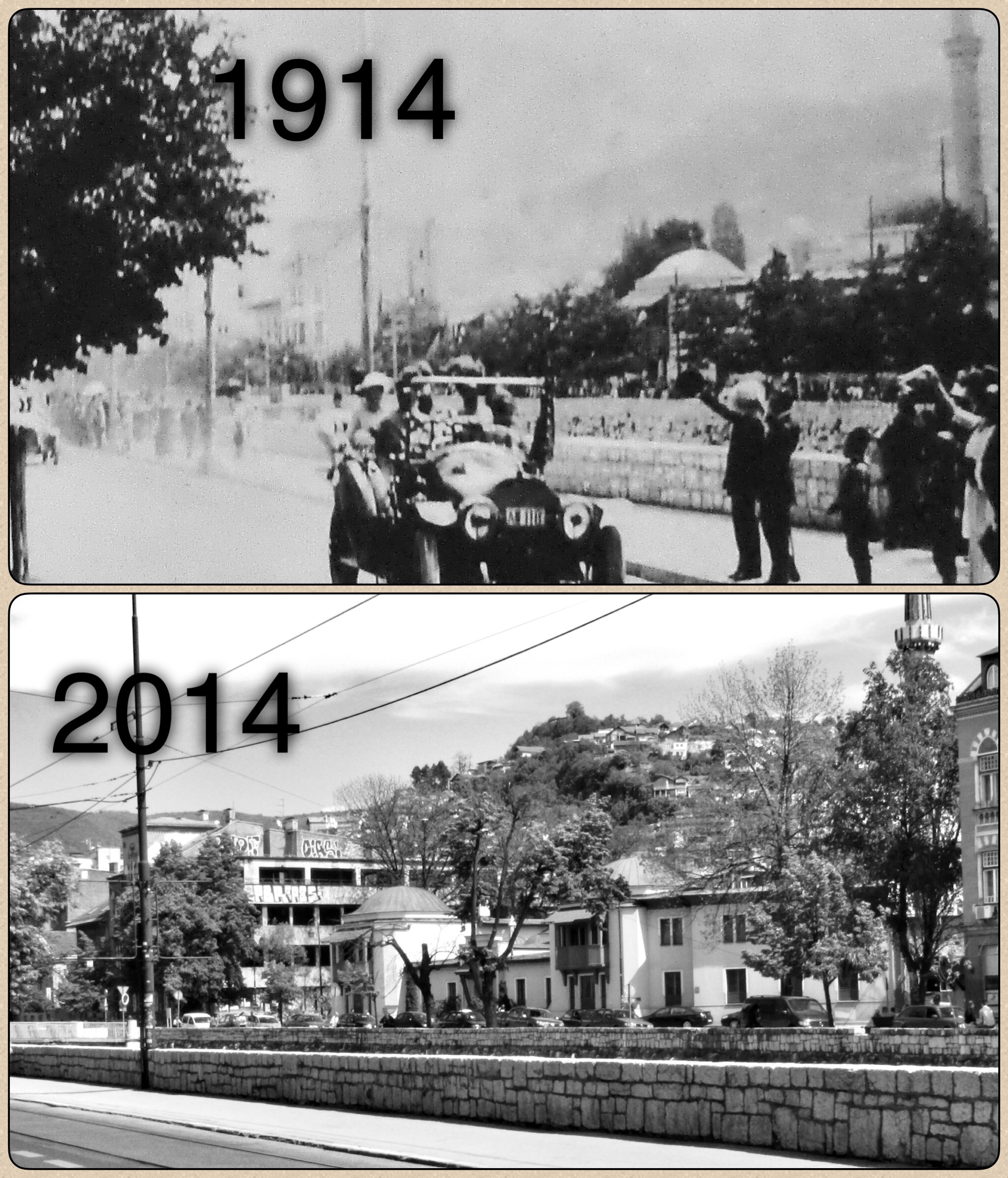 It was a bright sunny Sunday morning and crowds lined the streets to greet the Archduke and his wife, both decked out in regal finery and waving from the raised seat of their open car. Part way along the street that ran beside the river, Nedeljko Cabrinovic threw a grenade at the royal vehicle. It bounced and rolled under the Archduke’s the car and toward the car behind. It had a ten second delay on the fuse so when it exploded it damaged the vehicle that was behind Ferdinand’s, injuring the occupants. Ferdinand’s car sped up and proceeded to the city hall.
After the official function was done, local officials persuaded Ferdinand to make a speedy exit from the city due to the obvious danger to him and Sophie. Ferdinand agreed but first wanted to go to the hospital to check on the members of his entourage that had been injured earlier in the day. They got back into their car and set off down the street.
Here is how the story goes from there.
The driver is uncertain of the new route and makes a turn up a small street, not far from the city hall. The local governor, also in the car, shouts to the driver that he has taken a wrong turn off Apple Quay. The driver stops the car and tries to reverse onto the main thoroughfare. The car stalls.
Nineteen year-old Gavrilo Princip, one of the Black Hand seven, thinking that chances to carry out the assassination had passed has stopped for a something to eat at Moritz Schiller’s Shop near the corner of Franz Joseph Street and the main Appel Quay. He looks up to see Ferdinand and Sophie perched in the stalled car only a few feet from him. From his waistcoat he pulls his revolver and fires two shots, almost at point blank range. One hits Sophie and the second hits Ferdinand in the neck. Both stump forward, utter a few words to each other and die shortly thereafter.

Gavrilo Princip is arrested shortly after shooting Ferdinand and Sophie in Sarajevo on June 28, 1914.
Princip and Cabrinovic both took their cyanide but if was outdated and only made them vomit. Cabrinović also jumped into the river but it was only a few inches deep. Princip was quickly apprehended. Both were convicted and died in prison of tuberculosis before 1918.
For its day, this was a terrorist event that equates in political significance with the 9-11 attack in New York. It is deemed to be the spark that ignited wars that involved Europe and the globe for the 20th century and beyond. June 28 also happens to also be the date of the famous Battle of Kosovo in 1389 — one that was often mentioned by Slobodan Milosović in partial motivation for the conflict in Kosovo at the end of the century.
When I was a young student this assassination was the only thing that I knew about Sarajevo. I also knew that my grandfather went to war in Europe as an indirect consequence of this event. It always surprises me when I walk past this Sarajevo corner, how little official notice has been given to mark the spot where this world-altering event happened.
But the fact that so much about that fateful corner is unchanged, allows one to stop and just imagine how it unfolded and reflect on the consequences of the place where you are standing. A more striking remembrance than a huge cenotaph, perhaps.
*** Published in the Kingston Whig Standard – June 17, 2014.***

This is Edward. He is the oldest of three kids living with a father who is intermittently ill and absent from the family. For much of the past three years he and his siblings have had to manage on their own.

Christopher and his older brother, Edward at the Hope for Youth School in Uganda.
Edward and his brother, Christopher, are just finishing up their studies at the Hope for Youth School in Uganda – a school that has been supported in several ways by the CanAssist African Relief Trust. Fortunately the staff and administration at the Hope for Youth school have been there to offer an element of stability to the lives of these kids and a bowl of porridge mid-day when food was scarce.
I have visited the school three or four times and have watched Edward and Christopher grow up. They both are involved with the traditional dancing and drumming entertainment that the school.

Christopher serves up some posho for lunch to visitor, Dave Kay, at Hope for Youth School
When I visited the school in September I asked the boys if they planned to go on to Secondary School. Their response was downturned eyes and shrugged shoulders. Their family has no money for them to attend secondary school (it would take about $550 for each boy to provide tuition and books for a year).
Their final exams are happening in December. The teachers at the school imagine that both boys will qualify for secondary school entrance. (This little school is leading the pack in terms of grades for their district.)
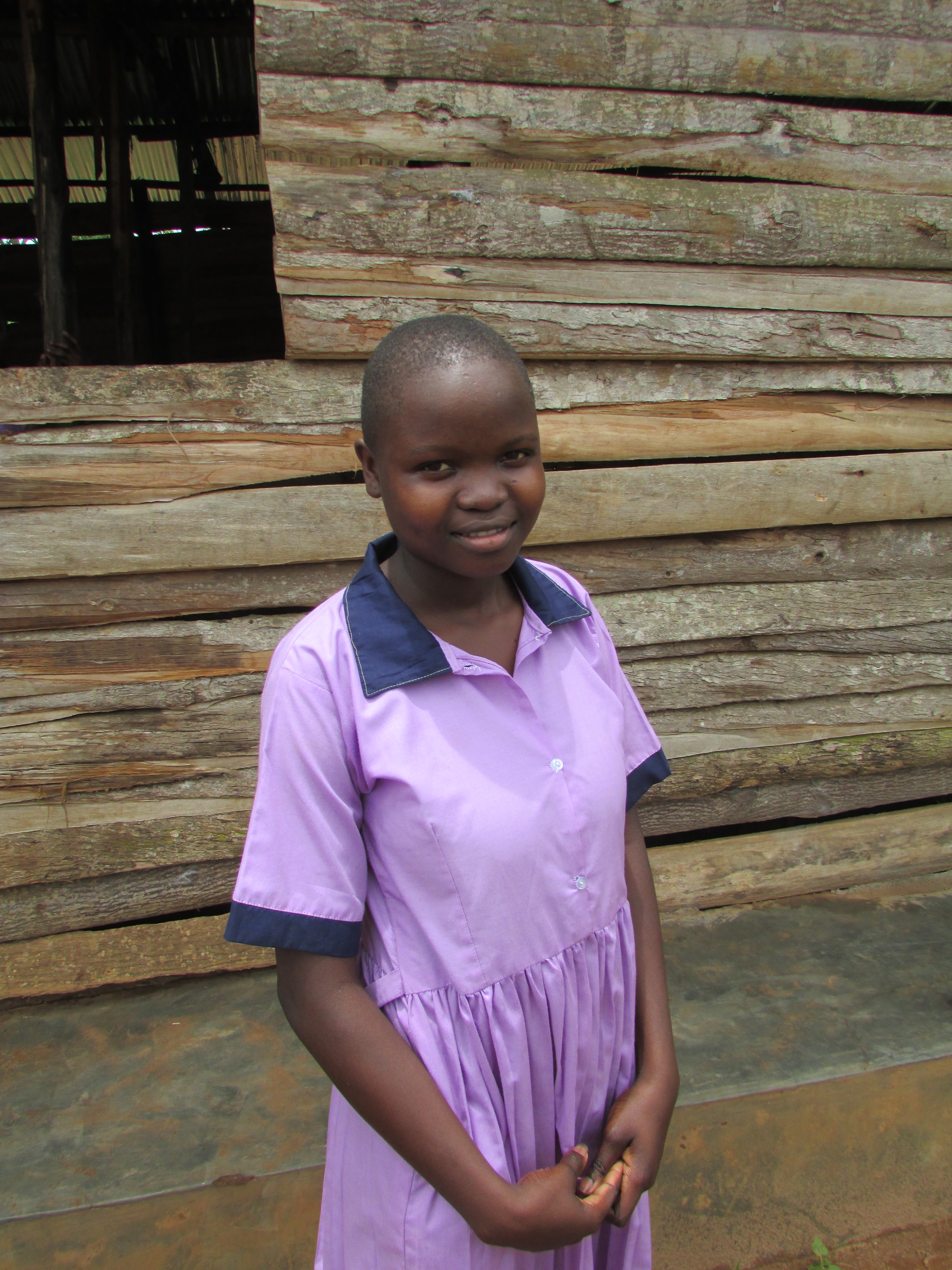
Prossy
I also met a girl named Prossy who has received top marks at the school but who has no money to continue her education. The teachers report that her academic performance has also been good but she lacks the resources to go on to secondary school.
What will become of these kids, I wonder.
This is a familiar story. African kids may get through elementary school but to go on requires some tuition, books and uniforms and this is often out of reach for a family living in poverty. Even fewer go on to post-secondary education. Most rely on outside support to continue their education. But there are so many pupils in this circumstance all desperate for some assistance.
Enjoy Christopher, Edward and some of their classmates as they do some Ugandan Traditional Dancing at the Hope for Youth School in Uganda. And realize how lucky we are that most of our students are able to complete secondary school with public funding regardless of their background or family situation.
Our July 2013 drive to fund two water projects in East Africa went over the top!
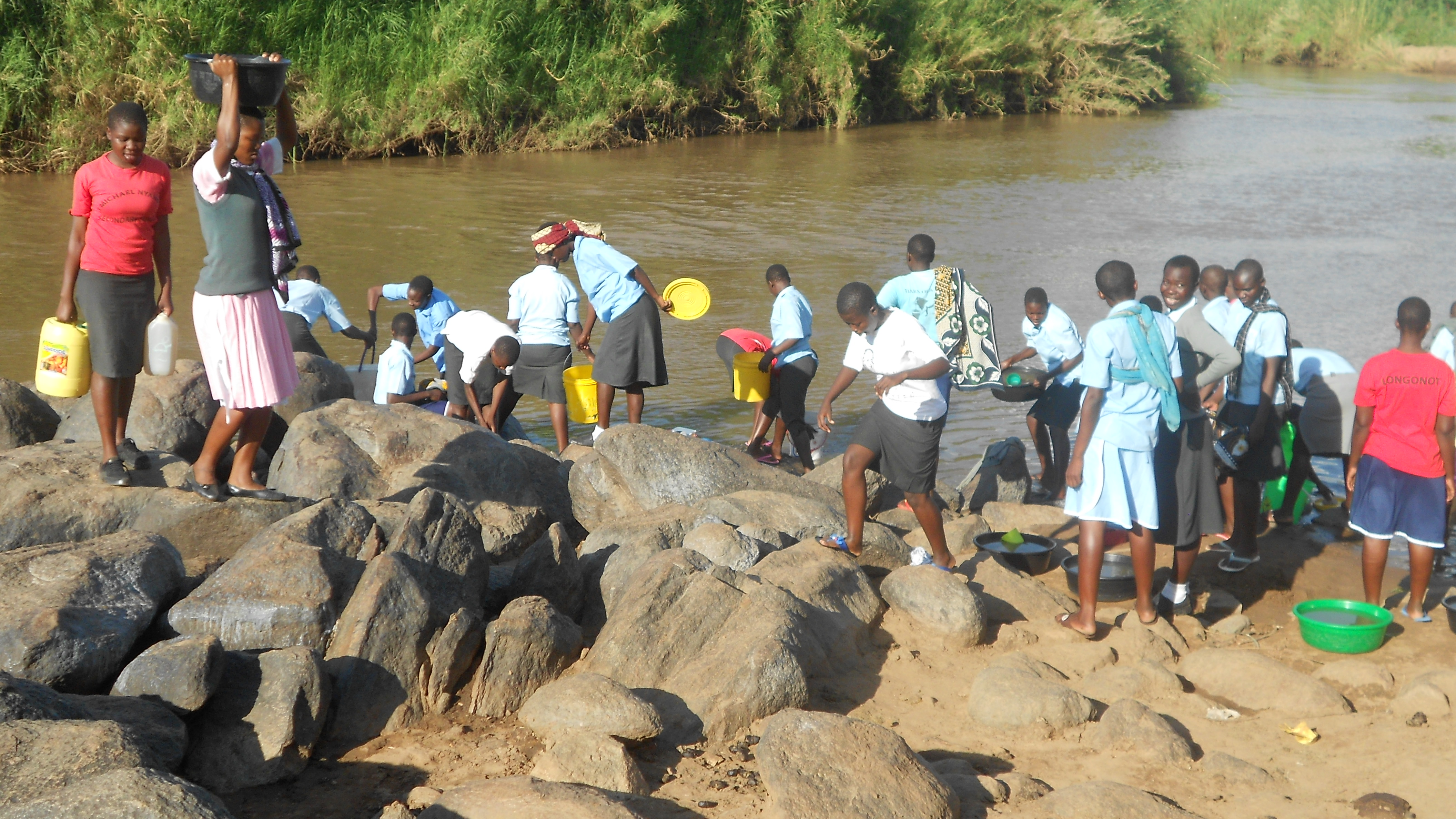
Students at the Nyandema Secondary School have to walk about 5 km every day to get water… and then it is from this muddy river. CanAssist will fund four rainwater catchment tanks at the school to provide a clean accessible water supply.
Earlier in the month, we were challenged by the Sasamat Foundation, a charitable organization in Vancouver B.C. with the offer that they would match donations received by CanAssist in July that were allocated to a rainwater collection projects at the Olimai Health Clinic and the Nyandema Secondary School in Nyatike District, Kenya.Well, our supporters rose to the occasion and as of July 31 we have collected $6708 in donations toward these projects through our 2013 Sasamat Challenge. Donors will be pleased that the first $5000 will be matched by Sasamat. Even better, Sasamat has offered another $10,000 toward these projects. Great news for CanAssist and the project partner communities in East Africa.

CanAssist will fund construction of guttering on this building and provide rainwater storage tanks to help the Nakiwaate community acquire clean water.
The good news doesn’t end there. With the money donated this month toward rainwater collection projects, we are able now to fund THREE of our approved 2013 water projects at the Olimai Clinic in rural Uganda, the Nyandema Secondary School in Nyatike District, Kenya and the T.A.Crusade Institute of Professional Studies in Nakiwaate Village, Uganda.
We are all excited.
We are in the process of signing the Memoranda of Understanding with the groups and will forward the money to them by mid-August so that the projects can be started as soon as possible (and before the anticipated rainy season in October and November).
CanAssist extends thanks to all who supported this effort and to the Sasamat Foundation for their generous funding and confidence in CanAssist to get this work done!
Here are some responses we have received from these groups when they were notified of this funding availability on August 1.
From Amuge Akol at Olimai Clinic : “I woke up to heart racing news. We are so hapi with the successful fund-raising drives. We shall write directly to supporters to express our our sincere grattitude. I will go to town tomorrow and
process the MOU and return it. Thx a million.”From Ronald Lutaaya in Nakiwaate Village, Uganda: “We are so happy to hear this great news! Thanks so much for your effort in making this dream project come true. You have saved life in this poor community. I have just passed on the news to our Staff Members and some of our beneficiaries. They are all thankful and happy about this news.”
From Hellen Omollo, Nyandema Secondary School: “We are very happy indeed to hear from you.Once againwe do say THANK YOU for considering the life and health of our
Nyandema students and the local community a priority.
Good luck, good health and Gods peace and Mercy be part of you in yourdeserving work to East Africa.”Canassist has had an ongoing relationship with the Olimai Clinic for the past three years. Here, some Canadian CanAssist supporters visit the clinic in 2012.
I started out yesterday morning in the White Mountains of New Hampshire at 2800 feet altitude and was, at times above the low-lying clouds, other times enveloped by them. By noon I was at sea level, enjoying scallops for lunch at Cape Elizabeth, Maine, overlooking the Atlantic Ocean.
The misty morning gave me some great opportunity for moody photographs.
Today I will head north along the coastline to end up at Vardon Point in New Brunswick.


I sit in Lincoln New Hamshire this morning having a McBreakfast. The truth is that MacDonalds seems to be the only place open at 7 am in this little town in the White Mountains of New Hampshire and they have coffee, a washroom and Wifi.
I am off on a trek to the East Coast to track down dead relatives who lived from Maine to New Brunswick in the 1700’s and to visit friends who are summering in Nova Scotia and Prince Edward Island.
I wakened this morning to the sound of birds but a grey sky and steady drizzling rain. So by 7, I was packed up and looking for a dry place to have some breakfast.
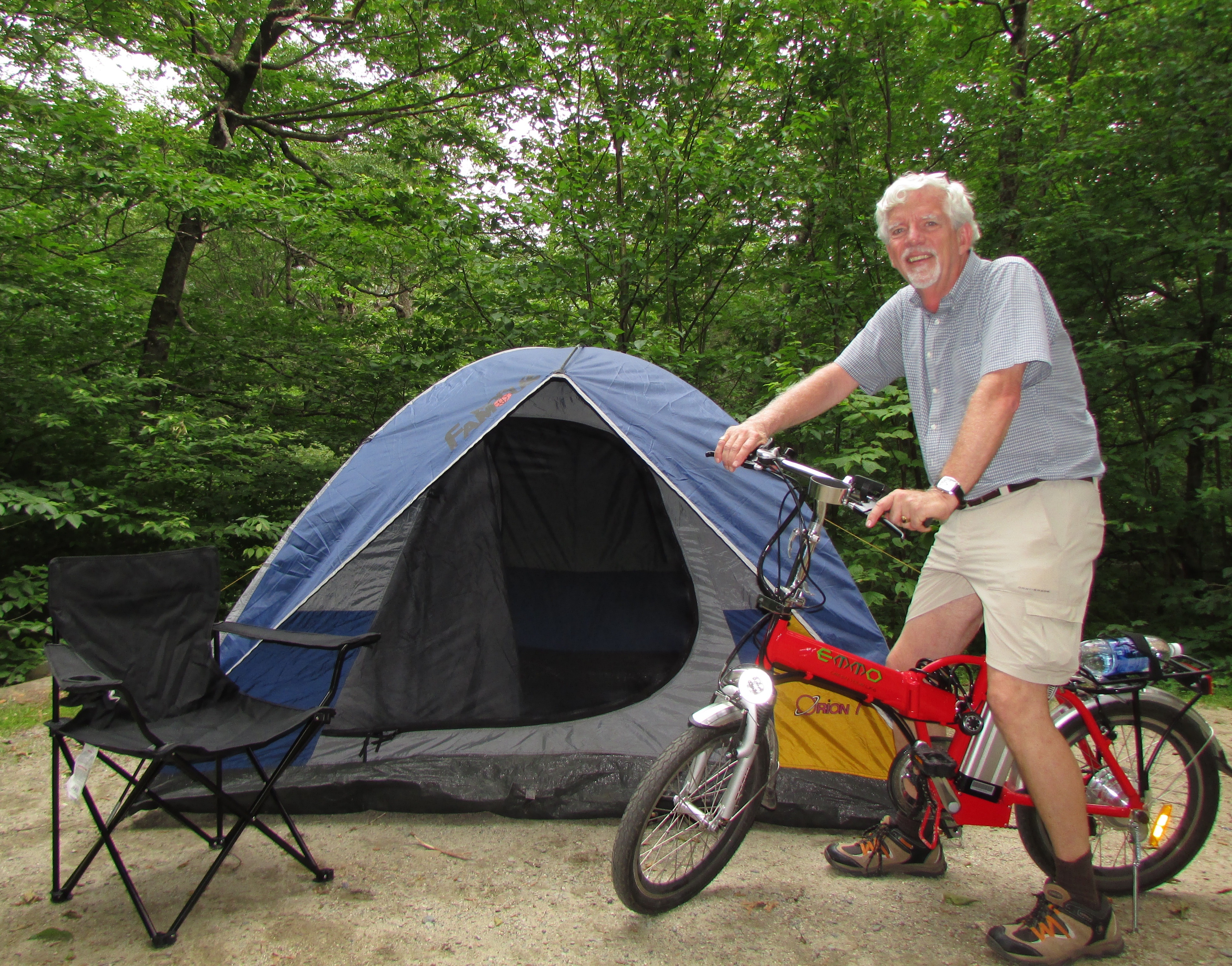
Lafayette Campground near Lincoln New Hampshire
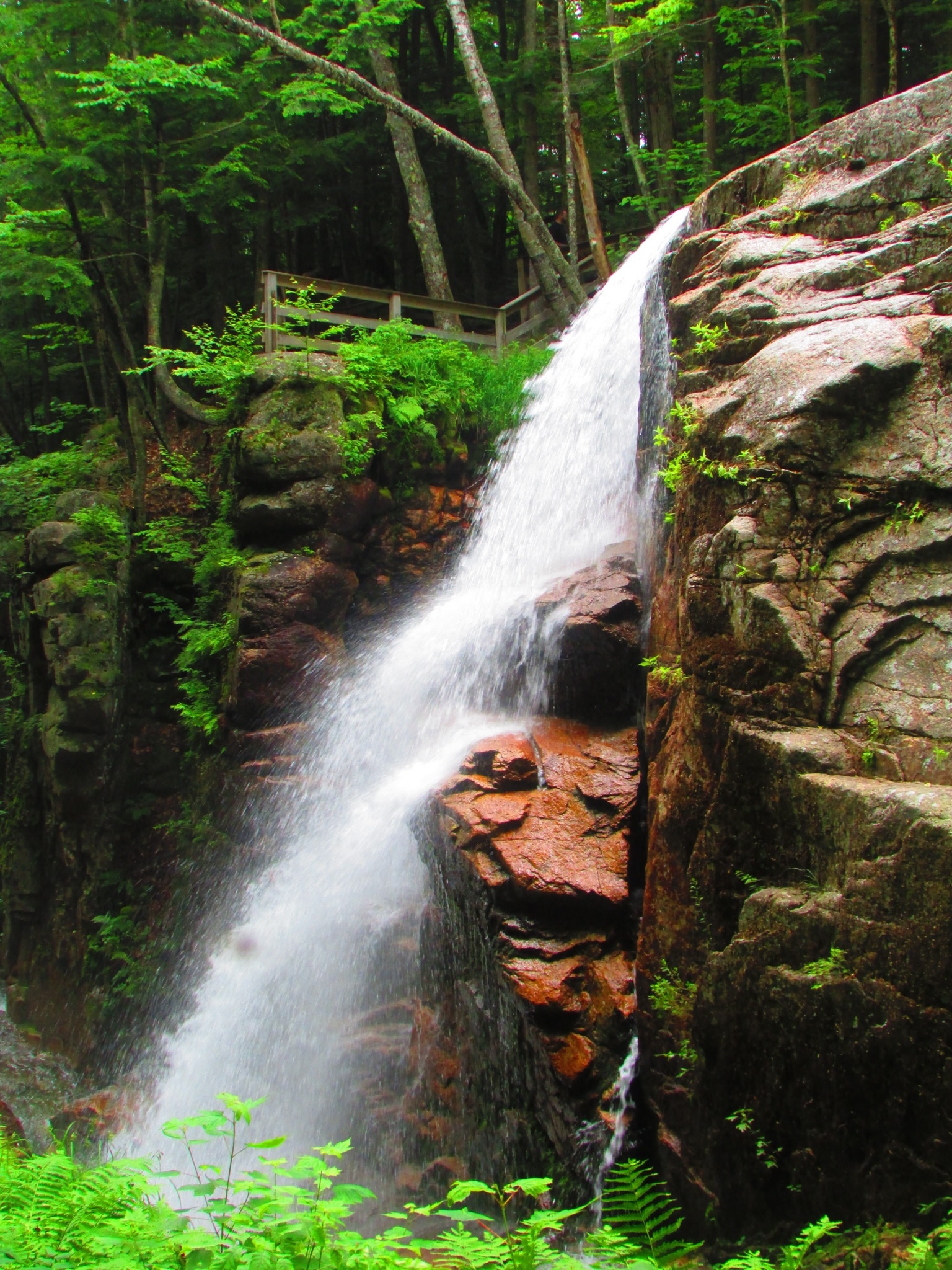
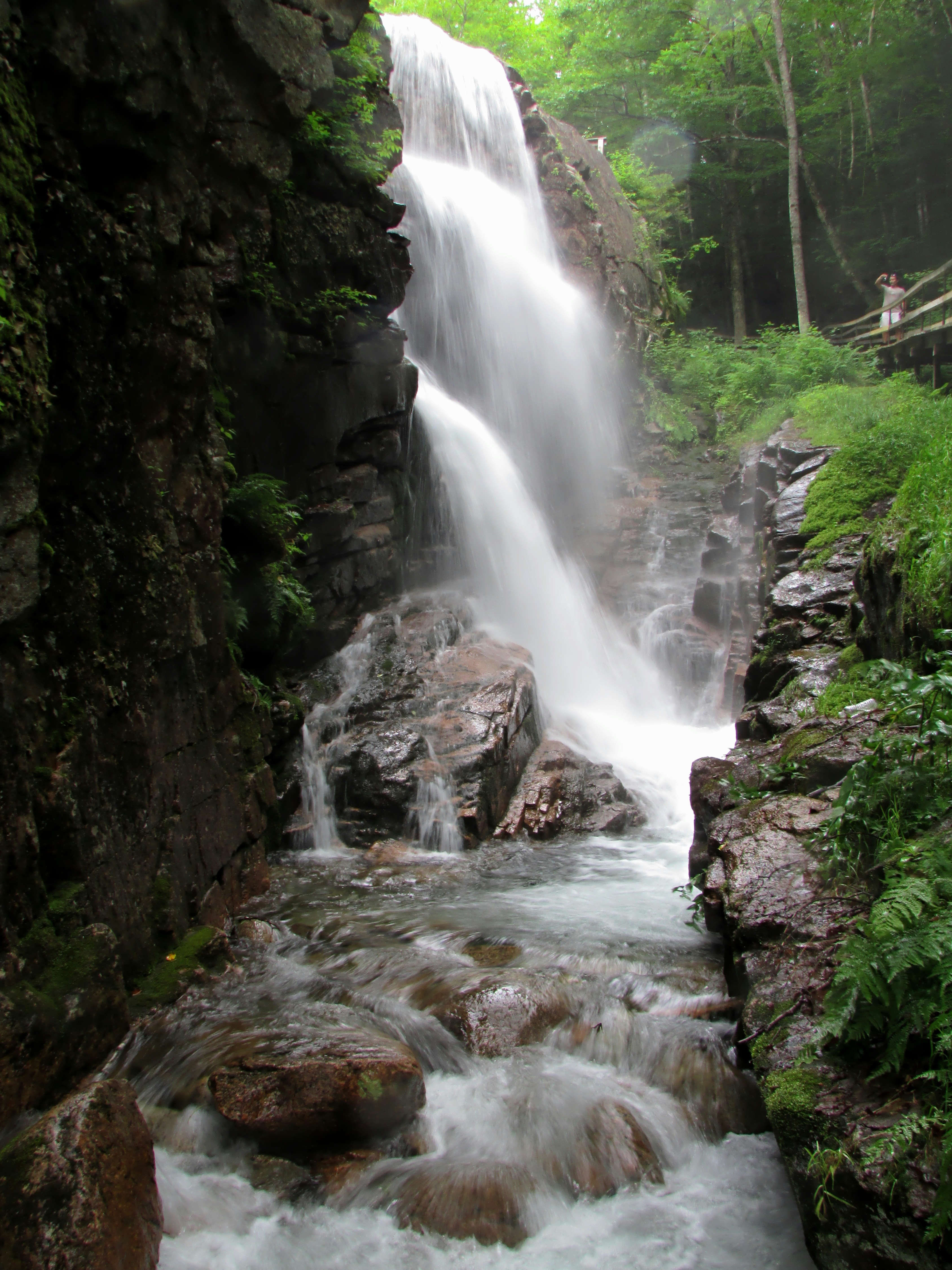
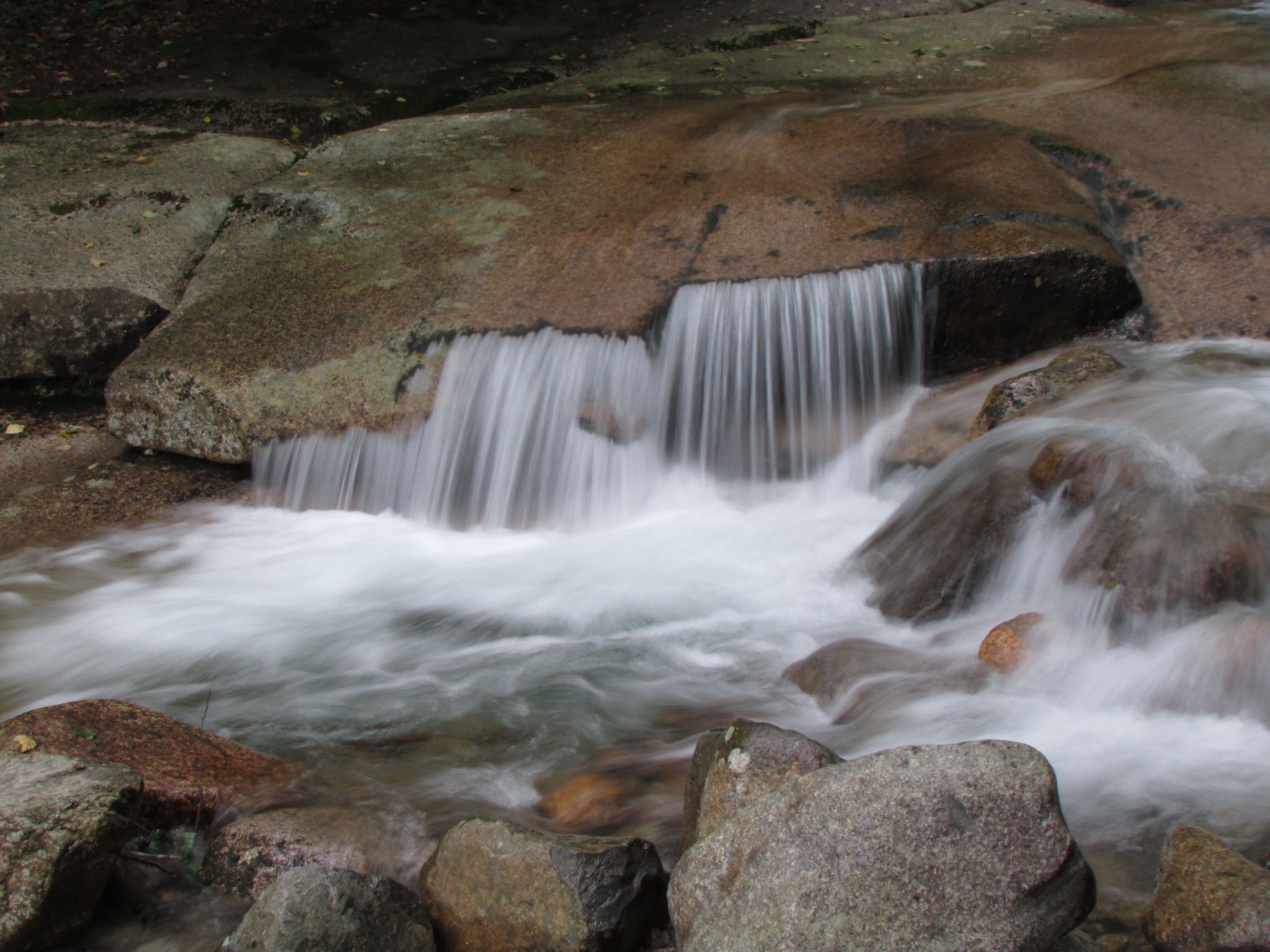
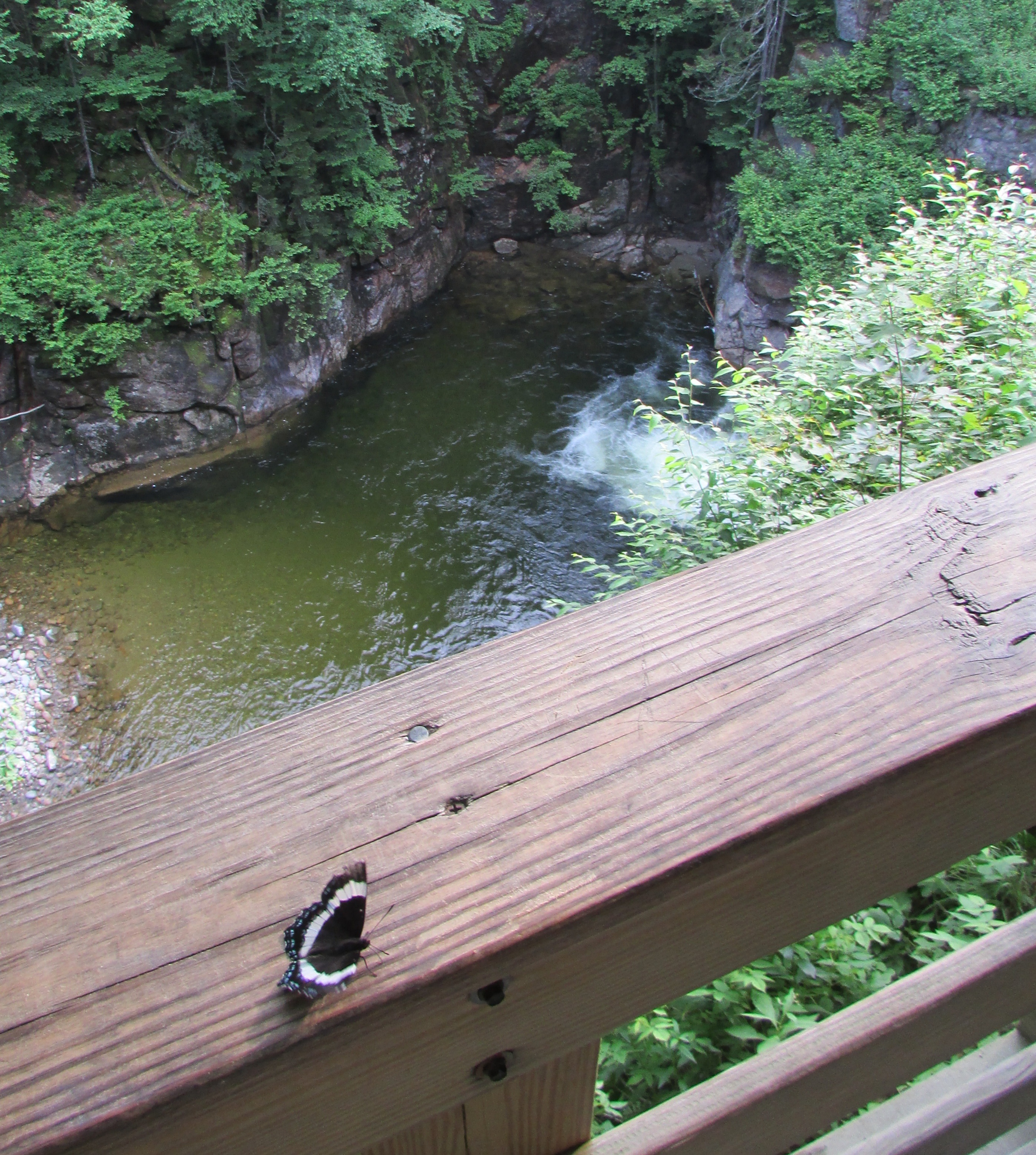
I have brought my tent and the Red Rider with me and yesterday camped at the Lafayette Campground in the White Mountain district of New Hampshire. After several hours in the car, we both enjoyed the bike path along the river and the trails to both The Basin and The Flume Gorge –good exercise and spectacular natural settings for photo ops.
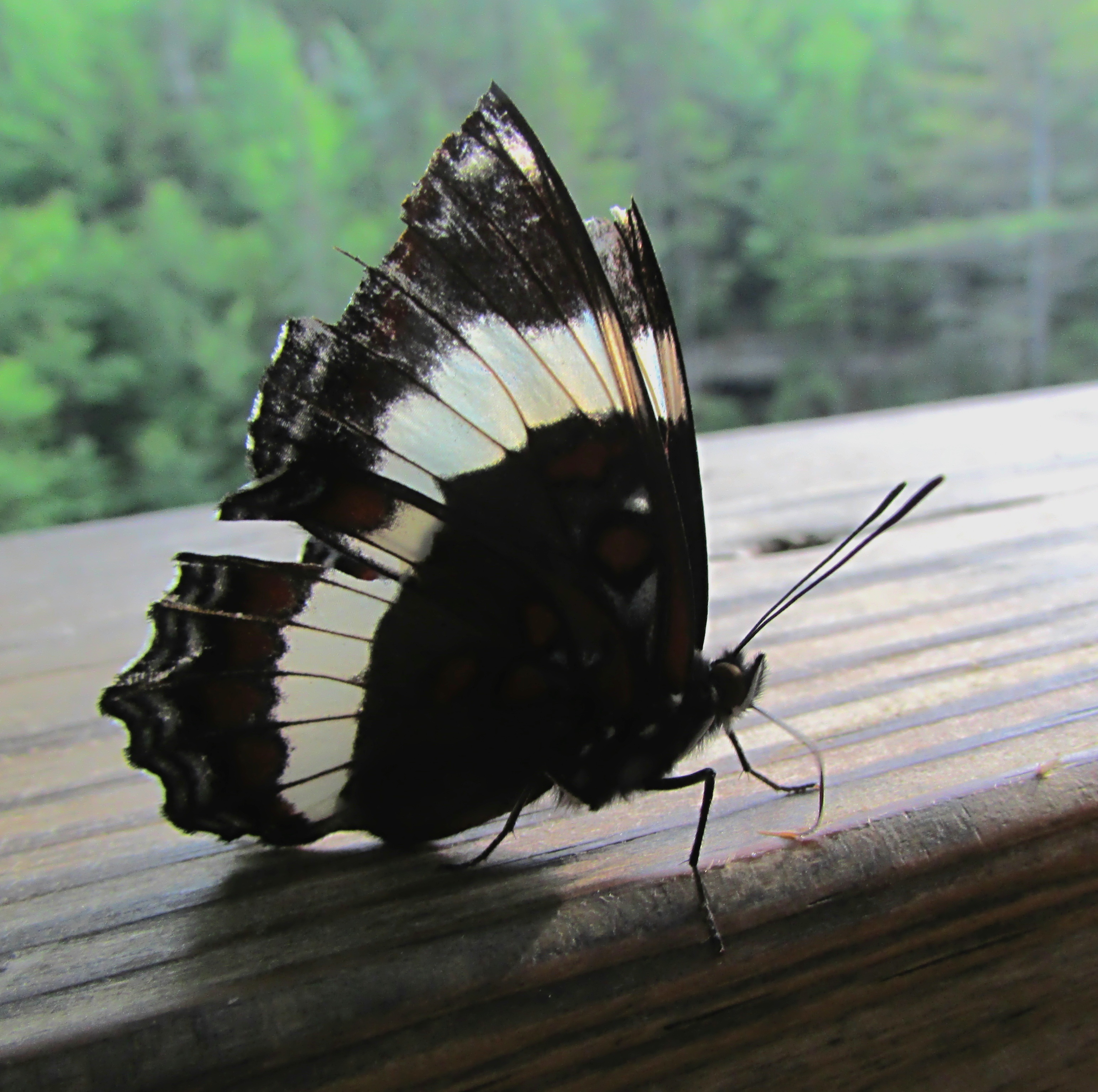
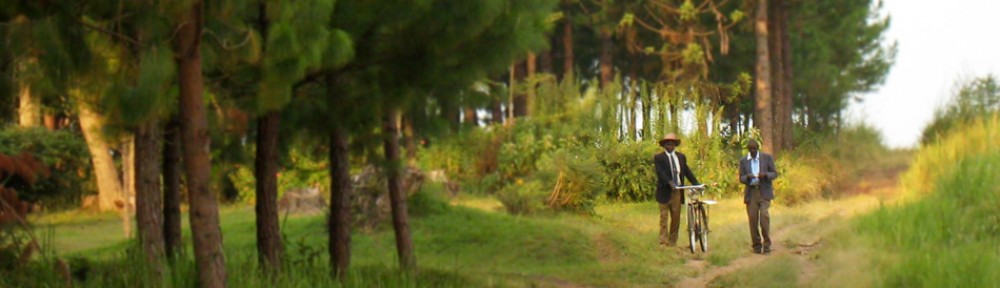
My 2009 safari in East Africa took me back to the edge of Kibale Forest, a high-altitude rain forest ( a jungle, in fact) in Western Uganda. The forest lived up to its name with rain pelting down in dramatic outbursts most days. When the clouds cleared it became humid and warm and felt quite tropical.
I had been there a few times before so it was quite wonderful to see the villagers who live nearby, people I had smiled and waved at in past visits. They seemed to remember this white-haired mzungu with a camera around his neck who wandered along the road taking pictures of birds and butterflies and kids. I have tentative plans to return to Kibale for a few days in September 2013 and am very much looking forward to it.
On my daily walks, as I followed the red dirt road into Kanyawara village, I was aware of being watched by several sets of eyes. An old baboon sits in the grass, scratching himself and looking like he’s a spectator for a parade. A big brown cow stops chewing for a moment to look up as I pass and children peek from behind curtain doorways. Some of the bolder ones run out to greet me with “How are you?” the only English phrase that they know. One little girl is dressed in a torn and dirty party dress and most of the children are barefoot.
 I stopped along the way to visit a young fellow named Mark who is a progressive entrepreneurial type. He had purchased a plot of land that sloped down into the valley. He grows all of the food needed to feed his four children and has some left over to sell. As we chat, he hands me a carrot pulled from his garden and I munch on it as we walk. He introduces me to his 9 year old son, Moses, as “Geddes, my friend from Canada”.
He and his wife have been digging sweet potatoes and pulling up plants that have peanut-like clusters on the roots. Ground nuts, or G-nuts, are a staple here. Mark also knows that they enrich the soil somehow so he intercrops them with other plants. We walked under the banana trees and he pointed out various other crops – greens, peppers, tomatoes, potatoes, cassava and arrowroot. Avocado trees form a border for his lot. He sells the fruits for less than ten cents each. He breaks off a fresh pineapple from a spiny bush and cuts it up for me to savour. There is no comparison in taste between a tender, sweet, fresh pineapple that is five minutes from the plant and the pale sinewy ones we often get in the super market.
I leave Mark with thanks for his hospitality and carry on. I’m on a bit of a mission. I have with me a photograph of Rose, a waif who I have seen by the side of the road every year for the past four.

When I first encountered Rose in 2006, she was a sad little waif on the side of the road.
When I get to her village, Rose is nowhere to be found. Knowing that many children in Uganda succumb to malaria or malnutrition before they reach the age of five, I worry that she is OK.
I show Rose’s picture to a woman who is sitting under a tree as she weaves a basket from coarse grass. She shakes her head then points vaguely across the road but I can tell from the look in her eyes and absence of a smile that I won’t find Rose there.

Rose in 2007. I knew she remembered me from the year before.
A man sitting in a doorway looks at the photo and tells me that this little girl is not here any more. Both her parents died within the past few months, her mother on Christmas Day. She has gone to live with grandparents in another village – the stereotypical African orphan story. He says he will try to pass the picture on to them.
Disappointed, but glad to know that Rose is alive, I start to head back to the research station. Soon I am joined by four young kids who have been following me around the village. The youngest, about four years old is dressed in a one-piece red pajama outfit, the dome fasteners up the legs and around the crotch all undone. She grabs my hand as we walk.
I think of how trusting and open these kids are with me, a white foreigner from the other side of the world.. In North America, we have scared our children so much with warnings about strangers that they have become fearful and suspicious. There must be a happy medium.
As we walk, the kids want me to go up a side road. I don’t understand their Rutoro language nor do they understand my English, but it is clear that they want me to follow them, perhaps to their home. So, also in a very non-North American way, I let these kids drag me half a kilometre up a narrow roadway lined with tall grass and banana trees.
We come to a driveway that leads to a small house. Outside a mother is sitting with a baby on her lap. Beans boil on an open fire in a mud kitchen hut. Three other kids are playing in the yard.
One of them is Rose.

Rose in 2009. A happier chid living with grandparents and brothers after both parents had died, likely of AIDS.
She looked happy and healthier than when I saw her the year before. Shyly she came to greet me. She remembered me for sure and once again, I checked out the scar on her leg that reminded us both of our first meeting when I treated an open sore there. We were all smiles and I take a few more photos with promises to send them back or maybe bring them myself one day.
After a brief visit, I headed out, feeling relieved that Rose was still there – still alive – struggling, no doubt, to get day to day but looking like she will survive. Rose will never know and would never understand the influence her being has had on motivating me to help in Africa where I can. I have trouble, sometimes, really understanding it myself.
I will travel to Kibale Forest again this September. Will our paths cross again in this little town near the Ugandan jungle? Stay tuned.

Rose in 2010. Look at those eyes. She will be a teenager now. Will I find her again? I am on a mission.
As I headed home for lunch yesterday I had a carpe diem moment.
 I am lucky to live a five minute walk to work through an old neighbourhood in Kingston. As spring has (gradually) unfolded I have enjoyed seeing bushes and trees and flower beds burst to life. It is really incredible that these same streets can be icy and cold and devoid of life in the winter months and then lush and green and fragrant in the spring.
I was startled by a cluster of great orange Oriental Poppies that were hanging over the edge of the sidewalk on Earl Street. I glanced at them as I walked by but continued on my way. They summoned up fond memories of similar flowers in my parents’ back garden 40 years ago. Twenty metres past the poppies I suddenly stopped. I realized that their beauty would be short-lived. Rain is forecast for the weekend. These stunning, delicate blossoms will likely lose many of their petals in the winds or rain or just with the passage of time. Their brilliance will be fleeting.
I returned to the flowers and stood for a moment to absorb their beauty and fragility and to recognize that this was one of those many delicious life moments that has to be savoured before it quickly passes, never to be relived like it was just then.
As I finished my walk home, I reminded myself to take notice of those moments more often.

Carpe diem is a phrase from a Latin poem by Quintus Horatius Flaccus (65 BC – 8 BC), more widely known as Horace, that has become an aphorism. It is popularly translated as “seize the day”. Carpe is the second-person singular present active imperative of the Latin verb carpō, which literally means “You pick, pluck, pluck off, cull, crop, gather, to eat food, to serve, to want”, but Ovid used the word in the sense of, “enjoy, seize, use, make use of”.[1] It is related to the Greek verb (carpoomae) καρπόομαι, (I grab the fruit, profits, opportunity), (carpos) καρπός=fruit of tree, of effort, etc. Diem refers to “day”. Thus, a more accurate translation of “Carpe diem” would be “enjoy the day” or “pluck the day [when it is ripe]” Wikepedia
 johnageddes