What little people can do …

This is an article that I wrote which was published in the Kingston Whig Standard on Saturday June 22, 2013.

The pupils in Mrs. Pare’s class at Glenburnie Public School are ending the year on a high note and children in a rural Kenyan school are also celebrating, thanks to the generosity of their Canadian peers.

IMG_0485In May, I visited the Glenburnie School class to talk about Africa.  They had been reading a book called Alexandria in Africa by Eric Walters. In the book, Alexandria, a young teen from a privileged background ends up in Kenya and sees the challenges of people who live with much less. The Canadian students became both curious about the way people live in Kenya and also motivated to do something to help children living in communities that are not as fortunate as we are.

I showed the Glenburnie kids pictures of my many Maasai friends, told them how traditional Maasai people live, showed them Maasai beadwork and ornaments and photos of my goat, Veronica, whose family is ever growing in fields near the Rift Valley.

We also talked about schools in other regions of  Kenya and, in particular, about the S.P. Geddes Early Childhood Development school in a little fishing village on the shore of Lake Victoria.

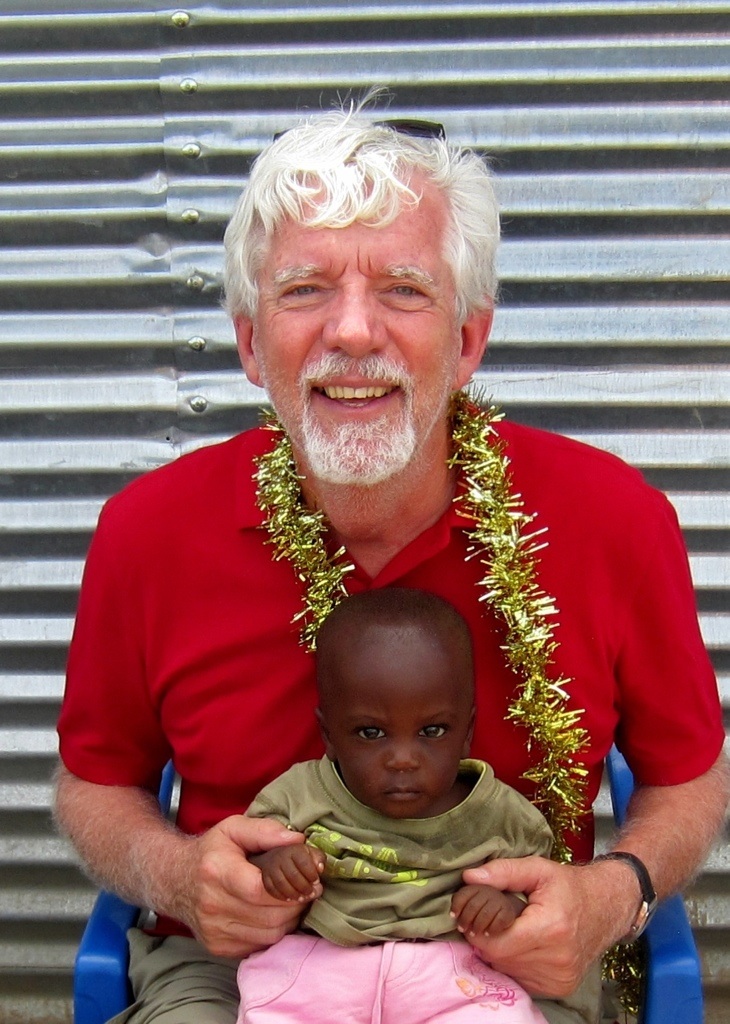
Through donations to CanAssist from my 93 year-old Dad and some of his friends and family, we have been able to fence a schoolyard, put in latrines and build a couple of new classrooms at this rural lakeside village.  In appreciation, the community named the school after my father and when I visited them last February they even plunked a six-month old boy in my lap and said “Meet little Stewart Geddes.” You can imagine how wide my smile was and how excited I was to share this news of this Kenyan namesake with my father when I got home.

Although the village school has two classroom buildings, the older one needs repair and they have absolutely no furnishings.  The children learn sitting on mats on the floor – a dirt floor in the older building. CanAssist hopes to remedy that soon.

When the Glenburnie students heard about this they decided that they would like to help out.  They started a “Dimes 4 Desks” campaign at the school, set up a table at the school Fun Fair, took tin cans and jars around to other classes to collect dimes and told their neighbours about their project to help African children.  One of the students made a video/powerpoint presentation (which can be seen on the CanAssist website).

Last week I went back to the school and they made me guess how much they had raised.  I was astounded when the figure reached $1100.  I wondered, “If 24 grade four students could come up with $1100 in a month collecting dimes, how much could the same number of adults raise collecting toonies?” Does anybody out there want to try?

Thank you from AfricaI relayed the good news that the Kenyan school will soon be able to purchase desks and chairs  and soon received a photo of the kids at the school preparing a thank-you sign for their friends in Glenburnie.  I can only imagine the excitement of the children in her class when Mrs. Pare shows them this personal thank you from Africa.

The children at Glenburnie School told me that they had learned a lot about Africa in the last month. And I learned too.  These kids proved that with teamwork and enthusiasm goals can be met.  They proved that small financial contributions can mount to accomplish something significant if everyone contributes a bit and shares the load.  The smiles on their faces and their delight at being able to help others has buoyed me up for the ongoing work that CanAssist is doing in East Africa.

As Gavroche in Les Misérables says “This only goes to show what little people can do!”

Dimes 4 desks

Kids!  Their enthusiasm is infectious.

Last month I visited the Grade 4 class at Glenburnie School to tell them a bit about Africa.

Here is a “campaign” that resulted from my visit. This short video presentation, created by Ashley, one of the students in the class,  speaks for itself.

Ashley had originally had “With a Little Help from my Friends” as her background music but YouTube is picky about copyright so we changed it to some original African sounds. I recorded the music in the video when I was visiting a CanAssist project site in the village of Olimai, Uganda in 2011.  The thumb piano band had welcomed me to the community in the afternoon and serenaded me again after dark. What a delightful treat for a visitor.

The money raised by the class will go to the S.P. Geddes Early Childhood Development Centre to provide furnishings (they have none at the moment).

CanAssist announces its upcoming project season…

In an effort to simplify the process whereby CanAssist selects new projects to fund, we set up a six-week application period this spring during which we received 81 very worthy applications for infrastructure funding in communities in Kenya, Uganda and Tanzania.

Our resources are limited. We could only promise to fund 14 of these projects in the upcoming year. Nevertheless we chose a variety of projects throughout East Africa ranging from rainwater catchment to latrines to classrooms to hospital beds. Here is the list of projects CanAssist will implement in the next several months. (*Canadian dollar estimates may vary slightly depending on International exchange and bank rates)

  •  Twekembe Association Centre for Rural Systems and Development, Nakiwaate Village, Uganda. Rainwater collection tanks for a community school. $4600
  •  Action for Research and Development (AFORD), Rambira Community, Kenya. School furnishings for three schools. 535,200 KSh ($6500).
  •  Rieko Kenya, St Gorety School, Mikei, Kenya. Completion of a computer training building. 800,000 KSh ($9200)
  •   Tom Mboya Peer Support Group, Rusinga Island, Kenya. Irriga6on of an agriculture plot. 506,000 KSh ($6000)
  •  Stewart Geddes Kamin Oningo Early Childhood Development Centre. Osiri Village, Kenya. Repair of classrooms and school furnishings. 378,288 KSh ($4500)
  •  Nyandema Water and Sanitation project, Nyandema Village, Kenya. 4x 10,000 litre rainwater catchment tanks. 400,000 KSh ($4800)
  •   Gombe District Hospital., Butambala District, Uganda. Repair of Hospital Beds, replacement of matresses and bedding. 12,030,000 USh ($5000)
  •   Kamin Oningo Beach Management Unit, Osiri, Kenya. Community Latrine. 140,789 KSh ($1800)
  •   Olimai Clinic, Olimai, Uganda. Hospital beds and rainwater catchment . (6,685,000 USh and 24,289,456 USh) ($9500 and $2650)
  •  Oltaraja School, Nguruman, Kenya. Permanent Classroom for school. 813,450 KSh ($9800)
  •  TESO Children Chris.an Development Org. Soroti, Uganda. Tailoring equipment for community income generation. $1200
  •   Murera Community Empowerment and Support Organiza.on. Ruriru, Kenya. Sanitation for TWIGA Primary School. 466,700 KSH ($5700)
  •  Badilisha Ecovillage Founda.on, Kaswanga Beach, Kenya. Sanitation. 277,810KSh ($3400)
  •  Kanyala Little Stars Organization. Rusinga Island, Kenya. Conversion of two temporary classrooms to permanent. 357,200 KSh ($4400)

Luckily, we do have some regular supporters who are eager to help. This week we received a donation from one Kingston family that will look after two of our proposed projects. One of these is to supply sanitation facilities to a wonderful little beach community on the shore of Lake Victoria in Kenya.

Over the next few months, I will provide updates and challenges and successes as CanAssist looks ever forward to help communities in East Africa. Stay tuned.

This short video outlines the need at the Kamin Oningo fishing village … one we are now ready to move ahead with, thanks to generous and caring supporters.

Every day a school day…

Earlier in the month I posted a blog about the dilemma faces by African girls who attempt to cope with the monthly need for sanitary pads with no money to purchase them.

Here is a video of Mama Benta Odhiambo of Kanyala Little Stars on Rusinga Island, Kenya outlining that need.

I have also written a complementary article for the Kingston Whig Standard published on April 4, 2013. If you are interested, here is a link to that article.

Everyone is a winner…

I am always happy to be part of a win-win situation. Last year I enjoyed one that was win-win-win. If I think about it I could add more win’s but you get the point, I am sure.

The St Gorety School is a secondary school in a small village called Mikei, Kenya. It is pretty rurual, about 20 km inland from Lake Victoria and in Nyanza Province, one of the least advantaged districts of Kenya.

Through CanAssist, and with my Canadian friends, Virginia and Suzanne I met Edward Kabaka a couple of years ago. Edward is a founder of a local support group called Rieko Kenya. Well, to make a rather long story shorter, Edward brought the needs of St Gorety School to our attention. Basically the school, serving secondary students from the surrounding region, was overcrowded and needed more classroom space.

St G classroom 2013So in 2012, CanAssist agreed to construct one classroom and complete another which had been partially built with Kenyan government funds which dried up before the roof could be put on the building.

Virginia and Suzanne, secondary school teachers themselves in Kingston, promoted this project to some of their students who responded with fundraising to help with this building.

At the same time, the Queen’s Health Outreach group, university students whose mandate is to promote Health education to students and youth in various parts of the developing world, were looking for a new district in Kenya to work. I have been an ad hoc mentor to this group for the past several years and it seemed natural to put them in touch with Edward and the St. Gorety School.

QHO students visited several schools and community groups in the Nyatike region in 2012.

QHO students visited several schools and community groups in the Nyatike region in 2012.

Last year the QHO group spent several weeks in the Mikei/Nyatike community, living in a house overlooking the rolling Kenyan hills and interacting with schools and women’s groups in the region to educate and promote healthy living practices. Another group of six QHO students are excited to be returning to the community in May/June this year.

When I visited the St Gorety School and other groups in the region in February, they all lit up with smiles at the mention of the QHO students and were ecstatic to hear that there would be a group returning this year.

So where do all the “win’s” come in?

  • CanAssist has been delighted to be able to provide infrastructure support to the school (and three other community groups as well…more about those in later posts).
  • The QHO group has found a welcoming community where they are able to do their outreach work to promote education about health to young Africans.
  • The community which was actually quite neglected and off the beaten track for development has been excited to welcome visitors from Canada who are eager to help them improve their living circumstances. Kenyans love visitors.
  • Edward Kabaka has found support for his dream of improving well-being in the community.
  • Some of the students at KCVI and LCVI in Kingston have established pen-pal relationships with students in Kenya and have the satisfaction of having been able to help their peers in Africa.

And I sit back and smile. It’s all so good.

Treat yourself to the joyous music from the St. Gorety school choir in the Youtube video below.

A delicate matter …

Imagine being a 14 year old girl heading off to school with your menstrual period and not having a clean place to tend to your sanitary needs – or any money to buy sanitary towels for protection. This is the dilemma faced by young African women have no money for the luxury of sanitary pads.

Young African women have enough to contend with but when I visit African schools, the female students are quite vocal about this disadvantage. Schools recognize that girls miss a few days each month because they have no means of dealing with the problems caused by menstruation. This slows their ability to achieve at school and causes them to fall behind the boys.

Sanitary pads are expensive. Particularly if you are barely getting by with other school expenses or even food. In some communities there are initiatives for producing reusable, washable sanitary towels but even this requires a private place to look after your needs which is often not available.

The women at St Mark’s Church in Barriefield, Ontario heard about this problem at one of the schools that has been supported by the CanAssist African Relief Trust for the past few years. Provision of ongoing supplies and consumables is not within the mandate of CanAssist so we approached this Anglican Church Women’s Group for help. And they responded.

The ACW at St Mark’s have been providing funds to purchase sanitary towels and undergarments for the young girls at Kanyala Little Stars School for the past 18 months. And the reward has been better attendance from the girls who now can match the boys in academics. One young woman even got top marks for the region in the last set of standardized exams before secondary school.

Another Kingston couple came forward with a donation to CanAssist to build construct improved latrines and washing areas for the girls. What an improvement!

This problem is huge. But I commend the women at St Mark’s who have determined that they will help the young girls at Kanyala Little Stars with this somewhat delicate problem.

The school is running low on supplies and the St Mark’s ACW will be looking to send another $450 to help for the next few months. In order to keep this ongoing, I’m sure they would welcome a $10 from other Canadian women (or men) who would like to contribute.

Next time you see me, pass me $10 and I will be glad to send it on to the St Mark’s ACW and thence to the Kenyan young women. Evelyn Bowering (ebowering@cogeco.ca)would also be happy to be the intermediary to help bolster the ACW funds to keep this program going.

ACW friends
To quote Mama Benta “I have to congratulate those Anglican girls. They are good ladies!”

Congratulations are in order …

The CanAssist African Relief Trust has been a supporter of the Kanyala Little Stars School on Rusinga Island for the past few years. We have become good friends, visited often and shared the friendship with other Canadians who, like me, love to visit Mama Benta and the kids at the school.

Since we first met the school in 2007, it has grown. When I first visited them there were four classrooms with students up to about Grade 3. There are now 300 students at the school. It is bursting at the seams. Despite this crowding, they are not compromising on academics.

LS WP banner

Last year they graduated their first Class 8 students and when I was there earlier this month they proudly showed me the results of the standardized country-wide exams that students write to gain entrance to Secondary School.

They had 19 candidates and all of them passed. In addition, one of the “Little Stars” was first on Rusinga Island and second in the much larger Suba District. They also proudly reported that the second standing at the school was a girl, Phelistus Ogola.

This week I also learned that Elisha Onyando has been “awarded a full comprehensive scholarship from Equity Bank Kenya based on his superb academic performance.”

I am so proud of the students, teachers and directors of the Kanyala Little Stars organization. They are all working to build a better Kenya.

Congratulations to Elisha Onyando on his academic successes and the scholarship to help him pursue his Secondary School education.

Congratulations to Elisha Onyando on his academic successes and the scholarship to help him pursue his Secondary School education.

A letter to my grandson, Noah …

Dear Noah

This week I visited the Kanyala Little Stars school on Rusinga Island in Kenya. I have come to this school every year for the past nine years. The school is quite small in size but there are now 306 students registered at it from nursery class to grade 8. Last year they graduated their first Grade 8 students who are now eligible to go on to secondary school. Unfortunately many of these kids don’t have parents who can afford to send them on to high school. Their academic performance in the standard exams was very good – one of their students was second amongst hundreds in the district.

imageWhen I went into one classroom their first quesion to me was “How is Noah Budd?” They remembered that last year on your birthday you told your friends not to bring presents to your party but to bring some money to buy supplies for these students in Kenya. When I visited the school last February,I took them school supplies and a soccer ball and
a picture of you that they have hanging in the school office. The students in grade 3 wanted me to say hello to you. I though it was better if they do this themselves so I took this short video to bring their greetings back to you and a song for you as well. I hope that you enjoy it and that you are glad to know that your kindness to these students who you don’t know and who live far away in Africa is something that they know is special and they are grateful for your caring.

In one class they were studying mathematics, doing algebra equations. I told them that you, too, like math and that some day I hope that you can come and visit these kids in person.

In the schoolyard is a tree that I planted in July 2011 when I brought some CanAssist supporters to Kenya and we visited the school on what they called “The Big Day”. The tree is growing just like the students and hopefully will soon be providing some shade in the small play area.

image

Noah, I want you to know that the kindness you showed to these fellow students by giving up a few birthday presents last year to send school supplies to Little Stars School was a generous and thoughtful act which they remember with thanks. And I, too, am proud of you for your kindness in sharing with others.

Love,

Dedo

A surprise at the Stewart Geddes School

My father, Stewart Geddes, has been generously supporting the development of a small rural school in Kenya for the past couple of years through the CanAssist African Relief Trust. Today I headed back across to the mainland on the ferry to visit the community and the school which has about 75 students from age 3 to 8. Without this small school these little kids would have to walk several kilometers every day to receive education … or not get any at all. Girls, in particular were at a disadvantage and only two girls in the community of 500 people, have gotten beyond grade 4 until now.

I was enthusiastically welcomed and treated to demonstrations of counting and identifying animals in English (remember this is a seoond or maybe third language for these young pupils.) The name S P GEDDES EARLY CHILDHOOD DEVELOPMENT CENTRE is emblazoned on the school gate and the children were happy to chant a Thank you message that they wanted me to take back to my Dad.

Me and little  Stewart Geddes at Osiri Village, Kenya.

Me and little Stewart Geddes at Osiri Village, Kenya.

But the big surprise for me was when the head teacher showed me her six month old Grandson. “We have named him Stewart Geddes”, she said. “At home he goes by Geddes.” I found this both amusing and touching. When I got back to Mbita, I called Dad to share with him the deep appreciation that this community has for his gift to them. I plan to visit a few CanAssist project sites in the next several days and I know that this is just the beginning of the wonderful expressions of gratitude to Canadian Donors through CanAssist that I will receive. I wish that this was something that I could bottle and send back to share with all of you who have supported what we do through CanAssist. Perhaps this little video clip will give you a taste.

image

Getting the jump on jiggers

A couple of years ago, while I was traveling in Uganda, I thought that I had a blister or a plantar wart on the end of my little toe. I even bought new running shoes to try to remedy the situation.

Little did I know.

When I was sitting on a patio in sandals, one of my African friends looked at my foot. “You have a jigger.” he said. I pooh-poohed this suggestion but he insisted. ” I know jiggers. When I was a kid I had so many of them. Sometimes when I was going to fetch water, I would sit down and cry because my feet hurt so much.”

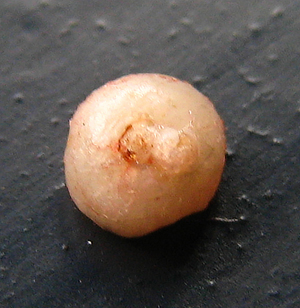
I was surprised when my friend “delivered” this cyst full of jigger eggs out of the tip of my right pinkie toe.

“I can cut it out for you.” he offered.

He could have started that sentence with “I’m no doctor, but …”

So as he whittled away at my toe, extracting a lump that was the size of a small kernel of corn from the tip, I learned about jiggers.

Jiggers (quite different from chiggers) are little fleas that live in the soil. They are a common plight in East Africa. The female finds some flesh into which she can burrow and produce hundreds of eggs which are encased in a cyst-like structure that gradually grows within the flesh of the host. Eventually the cyst bursts and the eggs scattered back into the dirt where the cycle starts again.

These fleas live in tropical environments where people are often barefoot or wearing minimal footwear. In addition, traditional homes and even schools and churches often have dirt floors, the perfect environment for the jiggers to flourish. Children’s feet in crowded, dirt-floored classrooms are particularly vulnerable to infestation.

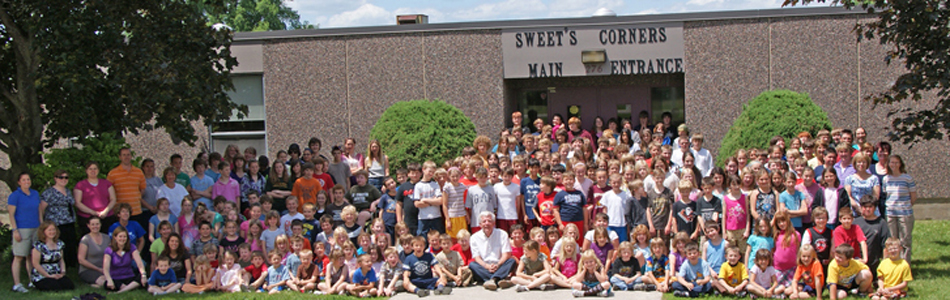
The CanAssist African Relief Trust learned of this plight for children in the Hope for Youth School near Mukono Kenya. The teachers insisted that cementing the floors of the classrooms would help eliminate this scourge. So, with money raised by the children at Sweet’s Corners School near Lyndhurst, Ontario, CanAssist set about cementing the floors of the Hope for Youth School.

The children of Sweet’s Corners Elementary School helped their African counterparts by funding the cementing of school floors to prevent jiggers.

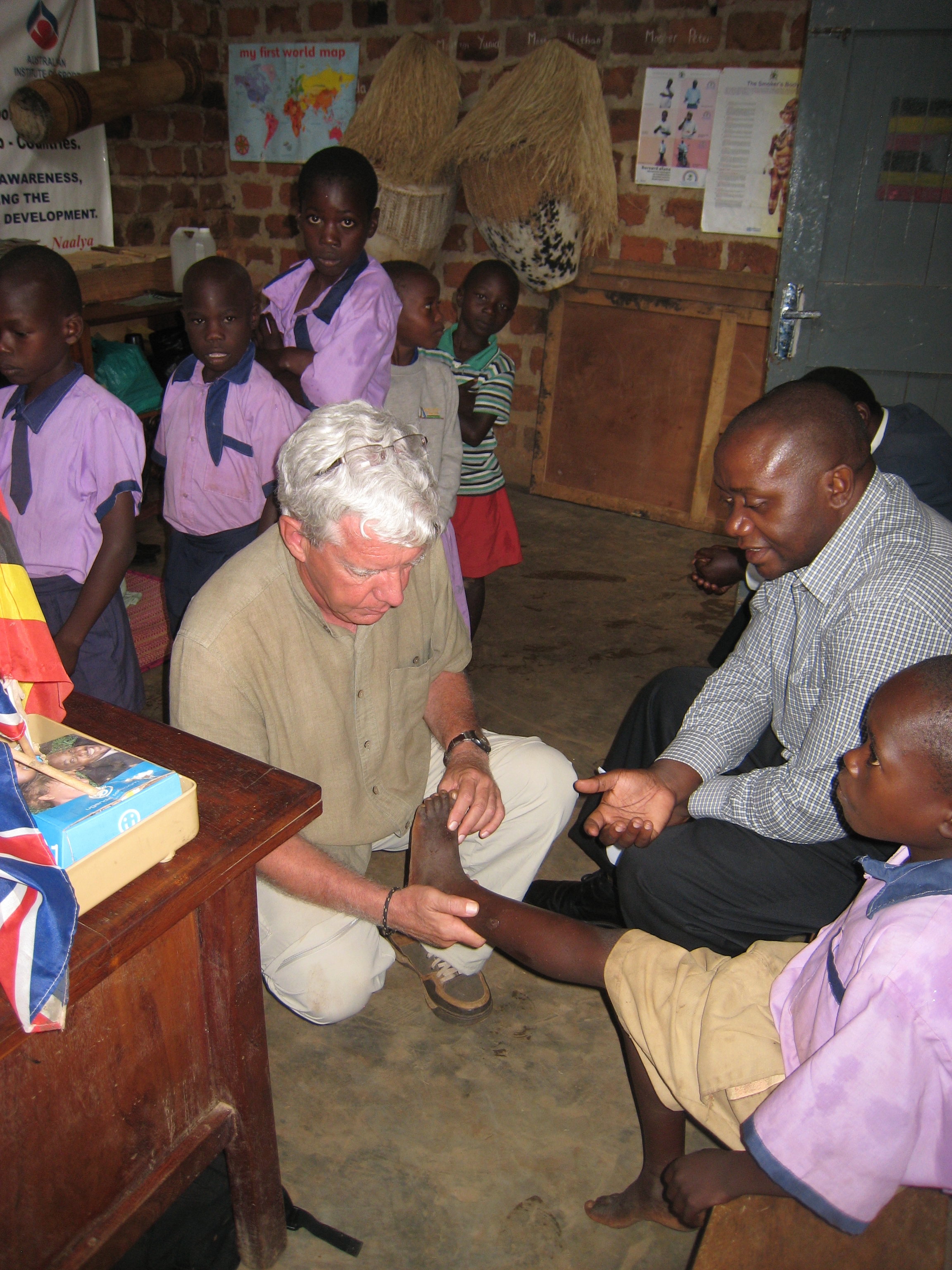
The children at Hope for Youth school were happy to show me their healthy feet after the classroom floors had been cemented to prevent jiggers.

With development projects it is often difficult to evaluate outcomes. But for this one it seemed relatively simple.

I had the school check the feet of all 107 children in the classrooms before the flooring was installed. 74% of the kids had jiggers and more than half of these had more than three in their feet. A few months after the floors were cemented, I was in the school and personally checked the feet of all the same children. The prevalence of jiggers went from 74% to 7%. The children were delighted.

The cost of this project was in the range of $1500  It brought relief to over 100 children and also demonstrated that cement floors that can be washed and swept can stop a jigger infestation.