100 Years Ago Today

Last month I stood on a Sarajevo corner and tried to imagine the day 100 years ago when, on that very spot, an event changed the history of Europe and the whole world for the upcoming century.

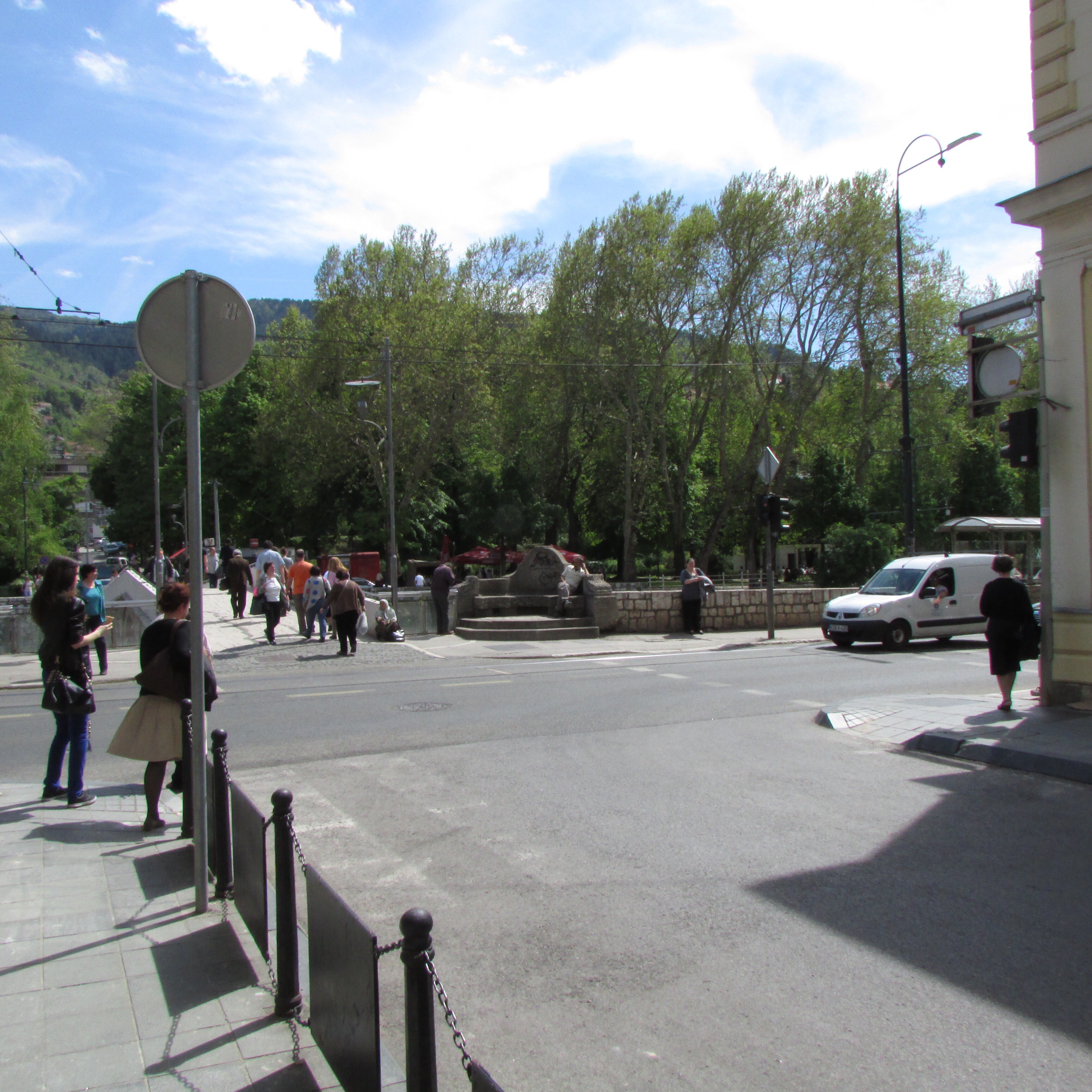
Today this corner looks very much like it did 100 years ago. In May I stayed in a hotel that was just at the end of this historic little street.

Today this corner looks very much like it did 100 years ago. In May I stayed in a great little hotel  (Old Town Hotel) that was just at the end of this historic little street.

Today, the intersection is unremarkable. People stand waiting for the next tram. Traffic pushes by.  A small plaque in the wall of a building on the corner states “From this place on 28 June 1914, Gavrilo Princip assassinated the heir to the Austro-Hungarian throne Franz Ferdinand and his wife Sophia.”  

That’s it.  Nothing mentioned that within a month after this shooting, all of Europe was drawn into the war that became World War I, a global conflagration that apparently claimed over 16 million lives and wounded another 20 million — staggering statistics that have ranked this as one of the most deadly conflicts in human history.

Earlier that spring, while Austrian Archduke Ferdinand planned his trip to Sarajevo, proud to have his pregnant, commoner wife, Sophie accompany him, a group of Serbs who were disgruntled with the Austrian control over their region plotted to assassinate him.  Knowing that Ferdinand would be exposed in his motorcade through Sarajevo streets and inflamed by recent Austrian military activity in Bosnia, the seven Black Hand conspirators hatched their plan.

They smuggled weapons, guns and grenades, into Sarajevo and seven of them traveled individually into Bosnia from Belgrade.  Their plan would position them at several spots along the motor route to the town hall.  Each would have a chance to kill the Archduke and all had vials of cyanide to kill themselves afterward if captured.
imageIt was a bright sunny Sunday morning and crowds lined the streets to greet the Archduke and his wife, both decked out in regal finery and waving from the raised seat of their open car.  Part way along the street that ran beside the river, Nedeljko Cabrinovic threw a grenade at the royal vehicle.  It bounced and rolled under the Archduke’s the car and toward the car behind.  It had a ten second delay on the fuse so when it exploded it damaged the vehicle that was behind Ferdinand’s, injuring the occupants.  Ferdinand’s car sped up and proceeded to the city hall.

After the official function was done, local officials persuaded Ferdinand to make a speedy exit from the city due to the obvious danger to him and Sophie.  Ferdinand agreed but first wanted to go to the hospital to check on the members of his entourage that had been injured earlier in the day.  They got back into their car and set off down the street.

Here is how the story goes from there.

The driver is uncertain of the new route and makes a turn up a small street, not far from the city hall. The local governor, also in the car, shouts to the driver that he has taken a wrong turn off Apple Quay.  The driver stops the car and tries to reverse onto the main thoroughfare.   The car stalls.

Nineteen year-old Gavrilo Princip, one of the Black Hand seven, thinking that chances to carry out the assassination had passed has stopped for a something to eat at Moritz Schiller’s Shop near the corner of Franz Joseph Street and the main Appel Quay.  He looks up to see Ferdinand and Sophie perched in the stalled car only a few feet from him.  From his waistcoat he pulls his revolver and fires two shots, almost at point blank range.  One hits Sophie and the second hits Ferdinand in the neck.  Both stump forward, utter a few words to each other and die shortly thereafter.

Gavrilo Princip is arrested shortly after shooting Ferdinand and Sophie in Sarajevo on June 28, 1914.

Gavrilo Princip is arrested shortly after shooting Ferdinand and Sophie in Sarajevo on June 28, 1914.

Princip and Cabrinovic both took their cyanide but if was outdated and only made them vomit.  Cabrinović also jumped into the river but it was only a few inches deep. Princip was quickly apprehended.  Both were convicted and died in prison of tuberculosis before 1918.

For its day, this was a terrorist event that equates in political significance with the 9-11 attack in New York.  It is deemed to be the spark that ignited wars that involved Europe and the globe for the 20th century and beyond.  June 28 also happens to also be the date of the famous Battle of Kosovo in 1389  — one that was often mentioned by Slobodan Milosović in partial motivation for the conflict in Kosovo at the end of the century.

When I was a young student this assassination was the only thing that I knew about Sarajevo.  I also knew that my grandfather went to war in Europe as an indirect consequence of this event. It always surprises me when I walk past this Sarajevo corner, how little official notice has been given to mark the spot where this world-altering event happened.

But the fact that so much about that fateful corner is unchanged, allows one to stop and just imagine how it unfolded and reflect on the consequences of the place where you are standing. A more striking remembrance than a huge cenotaph, perhaps.


*** Published in the Kingston Whig Standard – June 17, 2014.***


15,000 and counting

Just like actors learn lines and rehearse to eventually share their creativity with others,  writers write both to stimulate themselves but also to share their thoughts with readers.

Remarkably, since starting my blog about two years ago, there have been 15,000 views.  This isn’t 15,000 people but 15,000 pages read over that time – and in 114 countries.

Thanks to everyone who has taken interest in what I write. I hope you have been both amused and also learned some new tidbit along the way perhaps about the places that I have visited, people I have met or about the charity that consumes a lot of my energy – the CanAssist African Relief Trust.

Your comments are always welcome. Do keep them coming!

Stick with me.  Lots more to come.

Here are the countries where at least one person has read a page on my blog. If only I had someone from Greenland!!  Maybe I will tag Greenland in one of my posts and see if that draws a reader! :-)

Here are the countries where at least one person has read a page on my blog. If only I had someone from Greenland!! Maybe I will tag Greenland in one of my posts and see if that draws a reader! 🙂


Would you want your kids using these school toilets?

Imagine this. You are a single mother of three children living in Kenya.  You desperately want your children to get an education, hoping that will boost their chances of living more comfortably than you do now.  You can barely afford food.  The local school is about three kilometres away and has crowded classrooms.

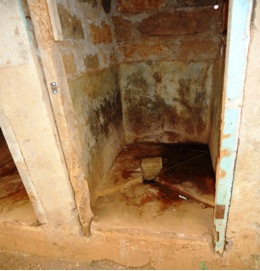
The toilets at the school look like this.Twiga Girls Latrine

Twiga Boys Latrine 3

Your kids are often sick with diarrhea and vomiting. Your thirteen year old daughter is in class seven. She as just stared menstruating.  These toilets, with broken doors, are the only place she can tend to her monthly needs.  So she stays home from school four or five days a month and subsequently gets behind with her studies.

At CanAssist we hear stories like this all the time.  We see these deplorable sanitation facilities at schools. It startles us  to find that in busy village markets there are no sanitation facilities at all. Adjacent fields and gutters turn into raw sewage minefields.

With the support of our donors, we try to help.

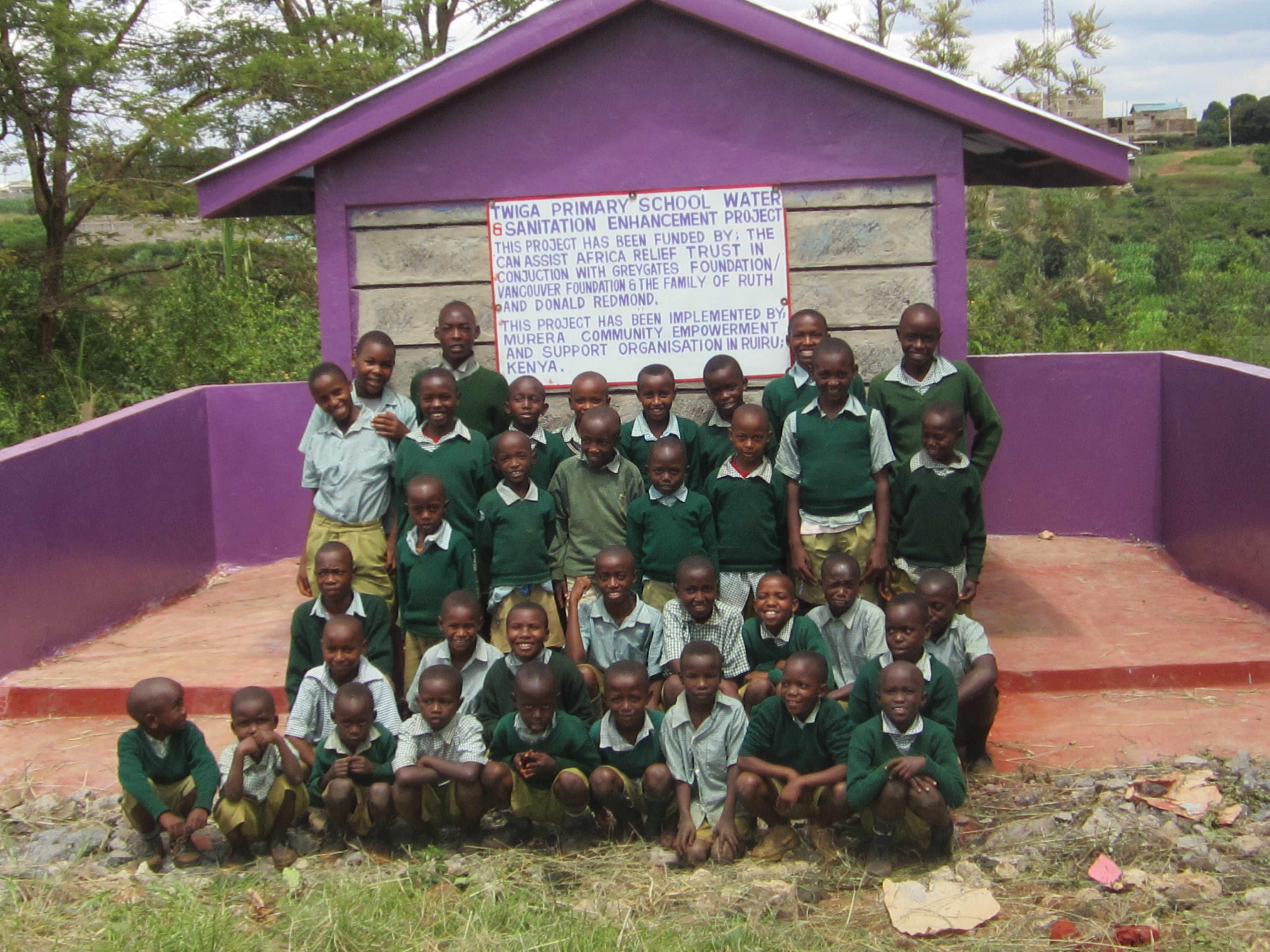
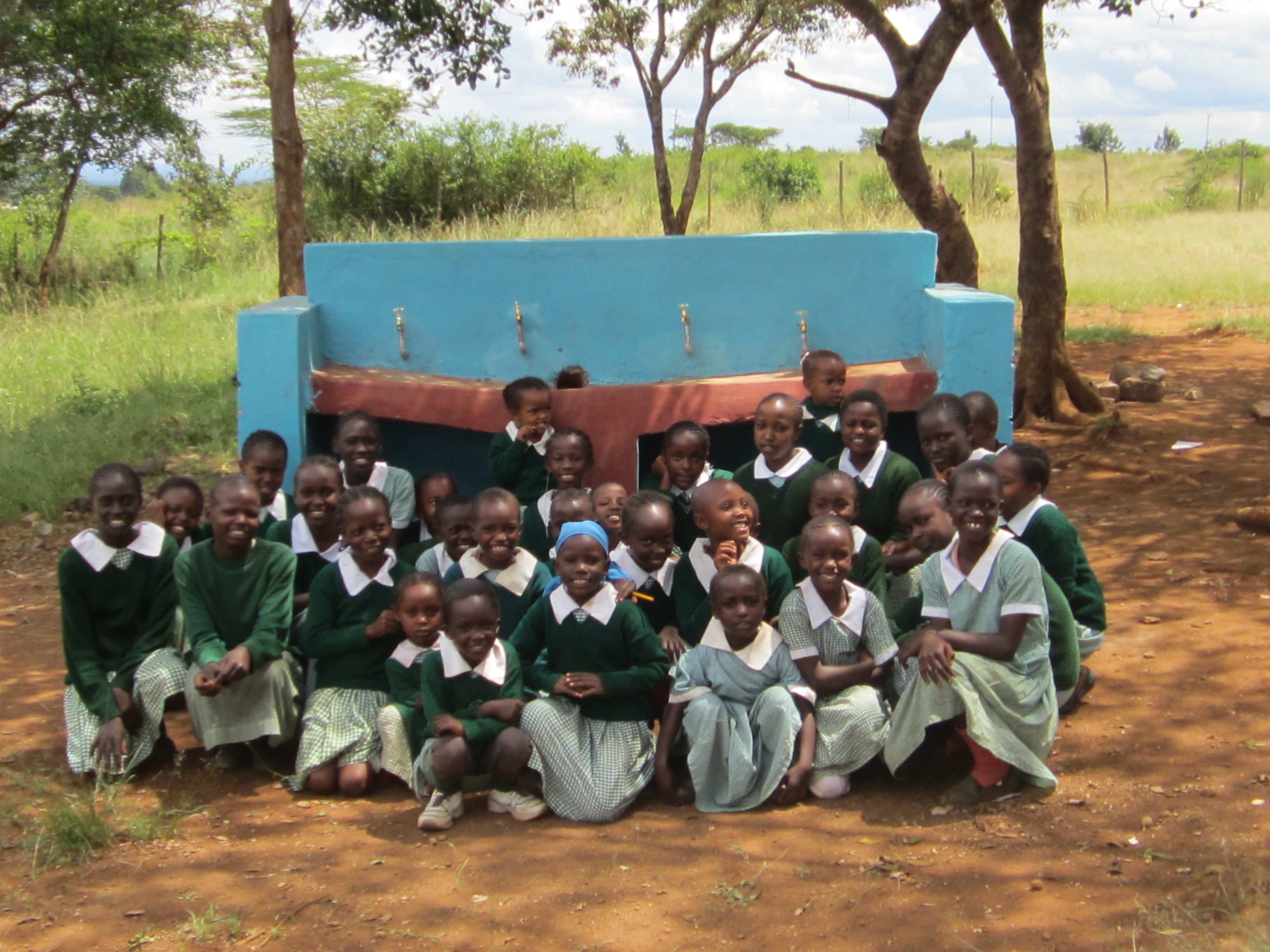
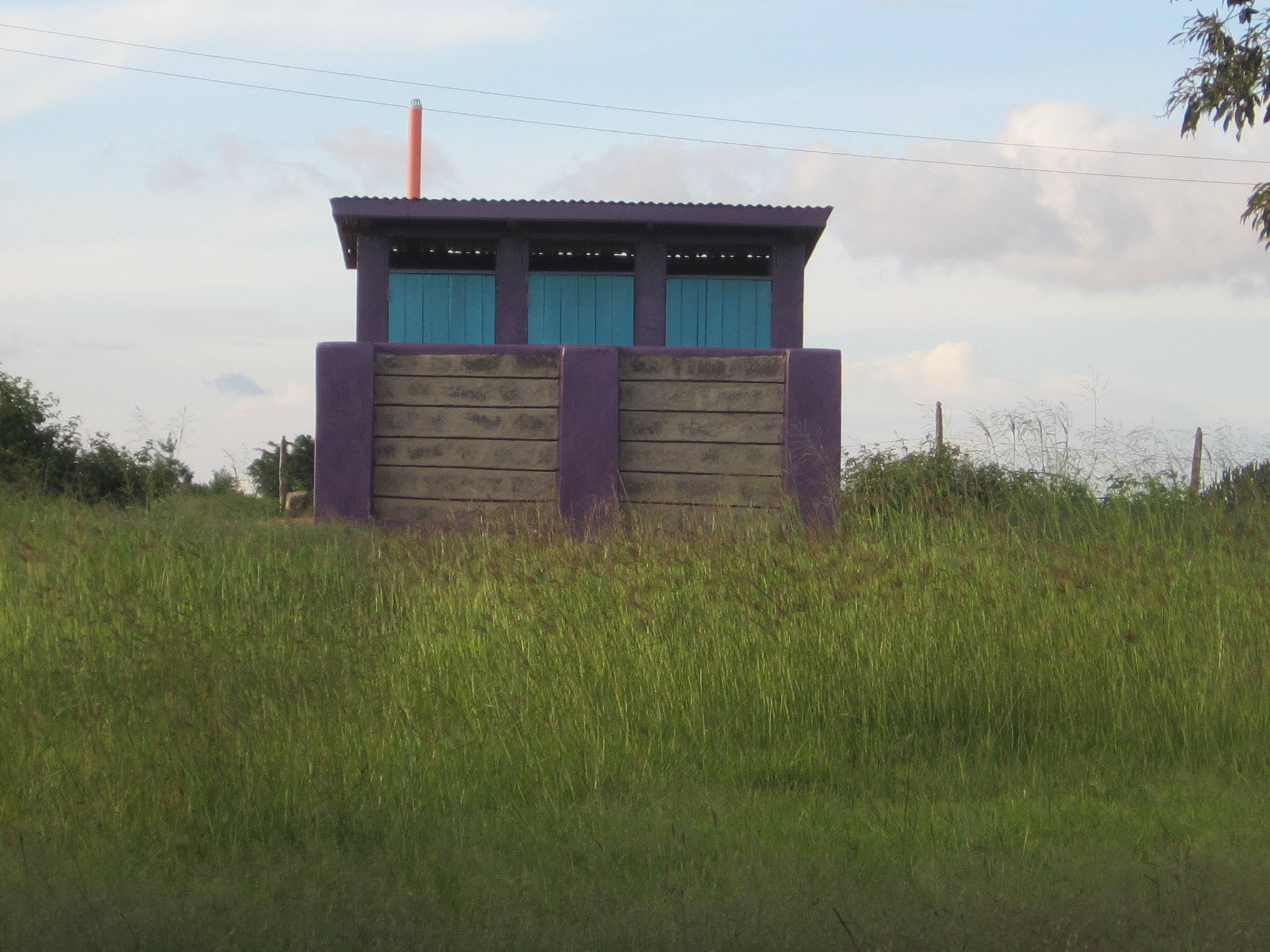
In the past couple of months we have been gratified to follow the construction of latrines at the Twiga school in Ruriru district of Kenya.  For a cost of about $7500 we have been able to provide rainwater catchment, new latrines for students and teachers and hand-washing stations for the school.  Hand washing has been shown to reduce the spread of many diseases but without the proper facilities this becomes impossible.

This week we received this report from Michael Gichia who works with the Murera Community Empowerment and Support Organization (MCESO) . It reads, in part:

Benefits realised from the project.

Inscription on the latrine wall reads " Twiga Primary School water & Sanitation enhancement project. This project has been funded by CanAssist African Relief Trust in conjunction with the Grey Gates Foundation /Vancouver and the family of Ruth and Donald Redmond."

Inscription on the latrine wall reads ” Twiga Primary School water & Sanitation enhancement project. This project has been funded by CanAssist African Relief Trust in conjunction with the Grey Gates Foundation /Vancouver and the family of Ruth and Donald Redmond.”

“The project has brought about the following benefits to the school children in TWIGA PRIMARY SCHOOL;

o 555 school children and 15 teachers at TWIGA PRIMARY SCHOOL in Ruiru district have
safe sanitation and drinking water facilities.
o The school enrolment ahs gone up by 20 more children by the beginning of second term
thanks to the water and sanitation enhancement project
Hand washing station

Hand washing station

o The project has improved access to water supply at TWIGA PRIMARY SCHOOL in Ruiru District

o The project has brought positive perception among the school children on sanitation and personal hygiene e.g. hand washing practices, proper disposal of wastes and economical use of water as well as improved knowledge about hygiene and environmental sanitation;

New CanAssist-funded teachers' latrine at Twiga School.

New CanAssist-funded teachers’ latrine at Twiga School.

o The project has brought about reduction in water shortages at TWIGA PRIMARY SCHOOL
and therefore more time for learning for the children.
o The project has reduced diseases associated with drinking dirty water and observing unclean hygienic behaviour among the school children.
o The school has functional hand wash facilities for the promotion of health and hygiene
o Preliminary training on sanitation and cleanliness has been conducted.”

Now, imagine again, as that poor African mother, how pleased you would be that your children had decent sanitation facilities at their school.

CanAssist has been happy to be able to improve the sanitation facilities for these 550 Kenyan pupils.  We have had specific support for much if the cost of this project from the Grey Gates Foundation in Vancouver and from friends and family of Ruth and Don Redmond in celebration of their 65th wedding anniversary last year.

CanAssist has just taken on similar projects in other schools in Kenya and Uganda.  If you or your family would like to help to bring smiles to the faces of African students and their teachers, you can give a tax-deductible donation to CanAssist by mail or online. Details about how to support a project like this a re available on our website www.canassistafrica.ca


Bosnia is struggling.

Since I have returned from my visit to Bosnia and Herzegovina, my first in five years, I have been asked many times “What has changed since you were there last?”  I have been surprised to have to say, “Not much.”

image I worked in Bosnia on and off from 1998 to 2009. I came to be very familiar with much of the country but was usually based in Sarajevo, a second home for me for a few years.  It was in the relatively immediate post-war period so there were a lot of international dollars being spent in recovery in one way or another. Every time I returned, there would be some obvious changes – new roofs on buildings that were damaged during the conflict, people moving back into neighborhoods that had been demolished by war. Many of the locals were being employed or supported in some way by the recovery efforts.  Recovery was the industry but many of those programs had a ten year lifespan. Ours went for about 15 years, but like the others, the money to maintain it was doled out over a fixed term and once that was done, we withdrew and our local associates needed to find other sources of income.

Ready for the tourist dollar.

Ready for the tourist dollar.

So now, five years later, it seems like the country is once again stalled.  The one area where there has been more development is in the tourism sector. Of course, during the post war period, tourists, except for very curious and courageous ones, were not coming to Bosnia. Now it seems that industry is stuck or even declined and tourism is the only sector that is in some way flourishing.  This is true of the Croatian coast as well.

Hotels have been fixed up and are quite presentable, comfortable and not expensive. When I first went to Bosnia in 1998, there was no internet or banks or computers.  imageNow the coffee shops and hotels all have WiFi, there are ATM’s on all city streets and credit cards are accepted widely.

The people are a bit frustrated. In fact, there have been some demonstrations throughout the country protesting lack of economic security.

To add to the economic woes, in the last week the region has received record rainfall – three months worth of rain in three days – with resulting catastrophic flooding and landslides causing havoc, destruction and loss of life. It has been estimated that 40% of the country has been affected by flooding and damage exceeds 2 billion dollars, money that Bosnia doesn’t have.  The flooding has uncovered or exposed buried land mines left over from the war, adding to the disaster and many are without safe drinking water. Thousands have again been made homeless.

An election scheduled for the fall but there is skepticism that anything significant will (or can) change.  In the next few months there will be a lot of mopping up to do.  Bosnians are, once again, facing the challenges of coping with recovery – financial, infrastructure and political. They will need some help.


A place in history


The hotel in Sarajevo where I am staying this week (Hotel Old Town) is about 50 metres from one of the most historic sites of the 20th century.  But you would never know it.

In June 1914, Gavrilo Princip assassinated Archduke Franz Ferdinand of Austria as his motorcade stalled at a corner on a Sarajevo street.  This event is seen as the trigger that set the path to World War 1 in 1914 and shaped political events in Europe for most of June 20th century.

Taken from near the spot where Princip stood as he fired the two shots that led to the First World War.

Taken from near the spot where Princip stood as he fired the two shots that led to the First World War.

The corner is unremarkable.  There is a small museum, now covered with scaffolding, in the building that was once Schiller’s store where Princip ostensibly had just purchased a sandwich, thinking that his chance at assassination had passed, when the Archduke and his wife, Sophie rounded the corner in an open car.  The driver had made a wrong turn and when he stalled the car in an attempt to back out of the little street, Princip seized the moment to draw out his pistol and shoot both Ferdinand and Sophie dead.

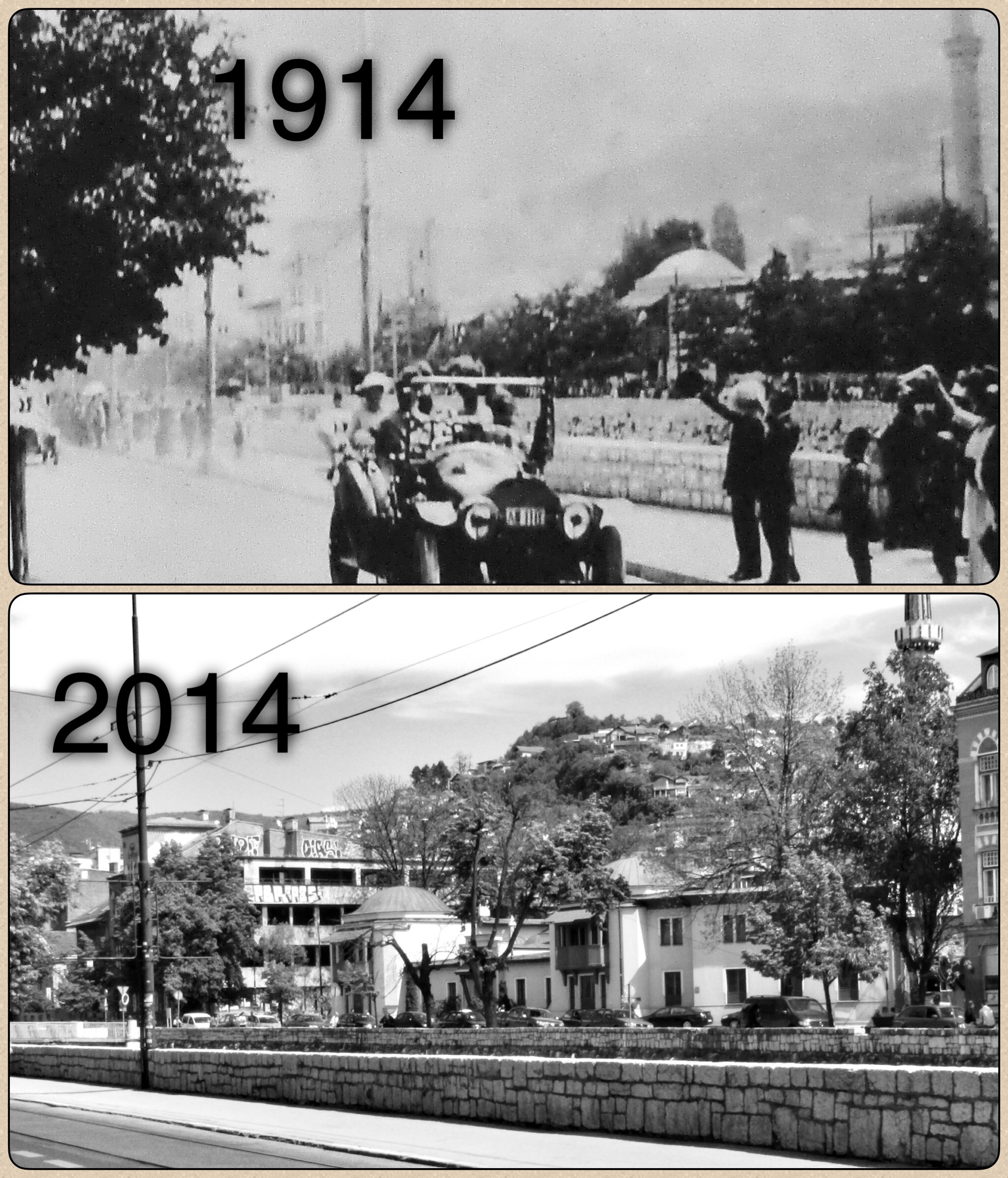
This June will mark the 100th anniversary of that event and the start of the war. I am sure that you will be reading more about this event as the anniversary approaches. It is interesting to be so close to the spot where this event occurred.  I took a photo of the street and matched it with one taken on that fateful day in 1914 moments before the assassination as the motorcade reached the corner.  You can still see some of the landmarks today that were in that 1914 photo.

Photo of Ferdinand and Sophie in their motorcade as they approached the corner in Sarajevo where they were assassinated in June 2014

Photo of Ferdinand and Sophie in their motorcade as they approached the corner in Sarajevo where they were assassinated in June 2014

I have written more about this here … http://wp.me/p2wvIq-16T


Dubrovnik – Orange roofs

Dubrovnik is famous for the Roman wall that is almost 2km long and surrounds the old city.  From the wall, you can look down into the city and over the orange tile roofs that make it a spectacular view. Lots of laundry hanging out in the little alleyways. Churches and homes and restaurants and people.  A fascinating way to spend the afternoon.

i have put together a little 2 minute Youtube video of photos of the roofs of Dubrovnik. I hope you like orange.

Gathering rosebuds

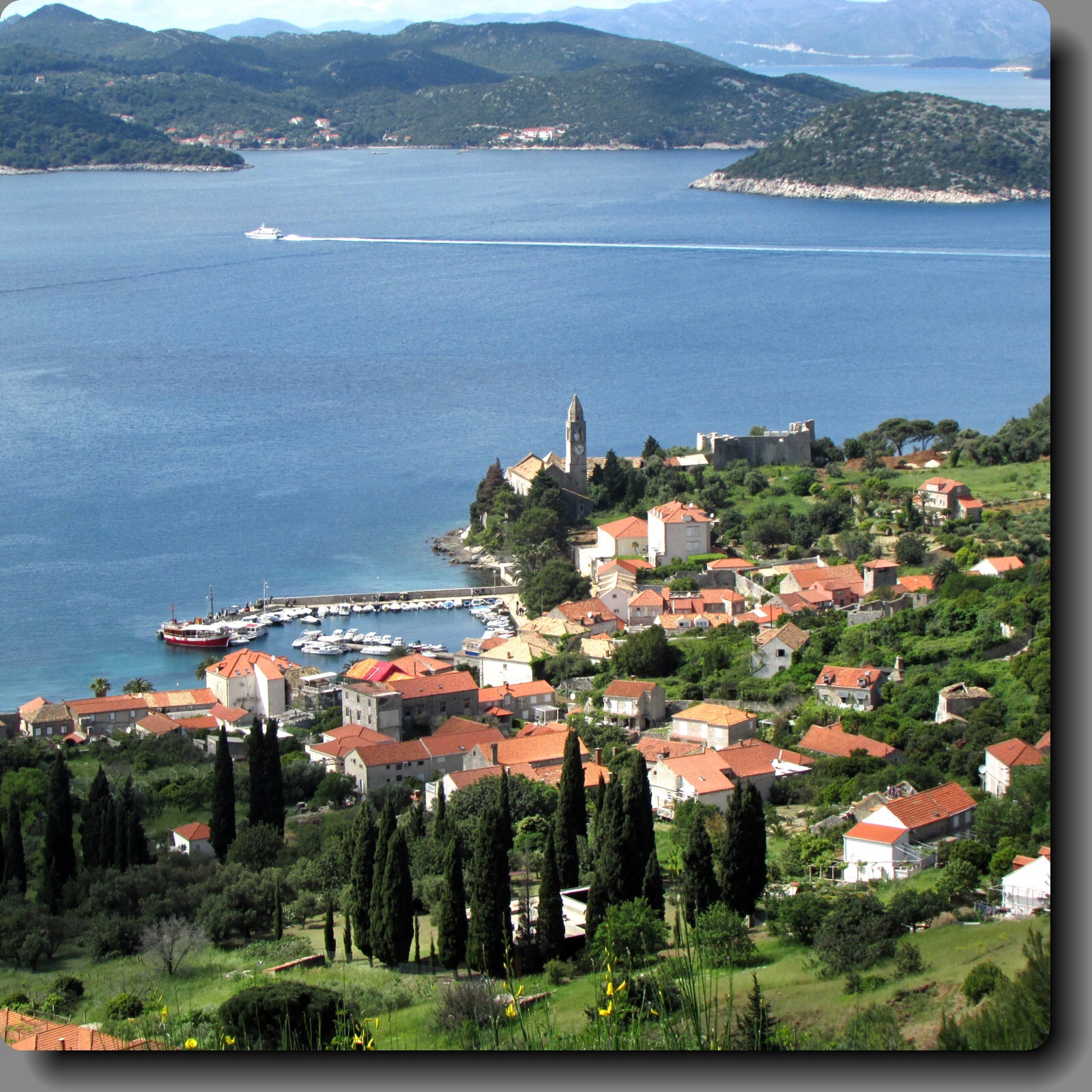
In some ways, my visit to the island of Lopud, a 50 minute ferry ride from the Dubrovnik port, was a bit of a pilgrimage.

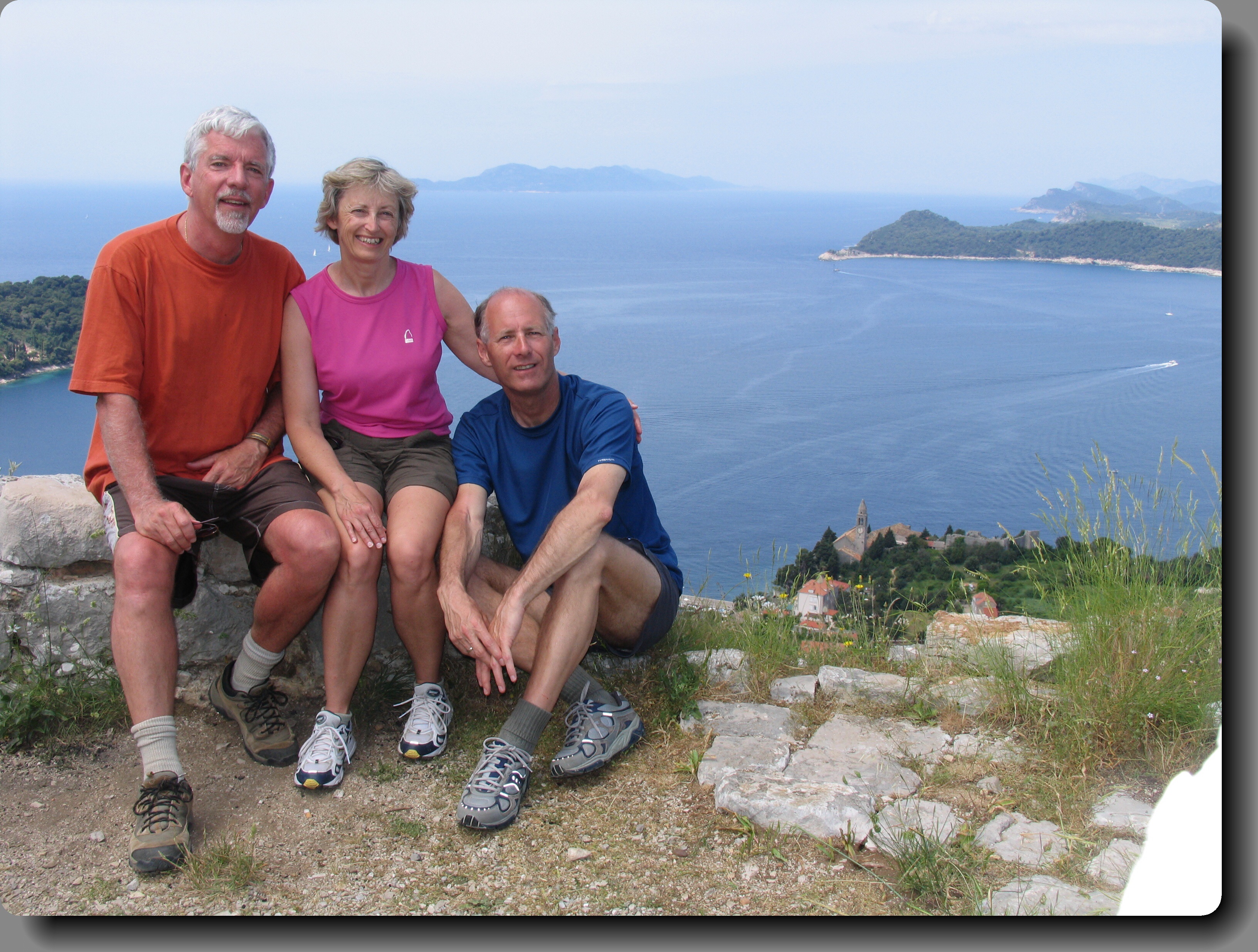
With Sue and Jim on Lopud, May 2005

With Sue and Jim on Lopud, May 2005

I was last there nine years ago with my friends Sue and Jim.  We walked a lot, drank a lot of cheap red wine, ate seafood and laughed.  I was younger and Jim was healthy.

Today when I visited the island it seemed not to have changed much. But I was aware that I was nine years older and ten pounds heavier and Jim …well, Jim is gone.

Pretty much the same spot, May 2014

Pretty much the same spot, May 2014. I was likely standing on the rocks we were sitting on in 2005 to get this photo in 2014.


I spent six hours walking around the island, on familiar paths up hills, to the beach and past the ruins of centuries-old churches. I took lots of photos but probably didn’t need to since not much has changed and I suspect I have all the same photos from previous trips to the island.

All along the pathways were wildflowers of different colours but the most prominent ones were wild roses.  As I walked, I kept thinking “Gather ye rosebuds while ye may.”

The 1909 John Williams Waterhouse painting, "Gather ye rosebuds while ye may"

The 1909 John Williams Waterhouse painting, “Gather ye rosebuds while ye may”


Gather ye rosebuds while ye may,
Old Time is still a-flying;
And this same flower that smiles today,
Tomorrow will be dying.

I wondered as I left on the ferry if I will ever come back to Lopud.  I have visited the island several times, always with friends.  Good times past. The island is the same but time has rushed on and those good times are now fond memories.

I also know that there is still time to create some new ones – but on some other island.


Note to self, and to everyone else as well  – Get out the shears and keep gathering those memories.

image


Feeling bloody ridiculous

The host where I am staying near Dubrovnik suggested a restaurant for me to have my dinner last night. Konoba Rozario is a nice little trattoria on a narrow alley just up from the main square in the old city.

I plunked myself at a table that was quite near the street. They are all quite near the street that is actually an alleyway with crooks and curves and stone floor.

As I ate, there were lots of people wandering by and some were stopping to look at the menu that was posted near me, occasionally booking a table for later in the evening or snapping a photo of the cat that was curled up on on of the chairs of an adjacent table. One group was looking over at my food to get a glimpse of the fare. I gave them a big smile and thumbs up on the food but they glanced at each other and moved on. I wondered why my enthusiastic recommendation had almost the opposite effect.

I felt that I may have some dinner stuck in my mustache so I took the white linen napkin and politely blotted my lips and mustache. I was horrified to see that what I blotted off was blood. This week I have had a sinus infection following a cold and occasionally am getting bloody mucous from my nose when I blow. But I did not realize that I had been sitting there smiling like an idiot and recommending the food to passers-by with blood trickling from my right nostril into my white mustache. I hope that I didn’t scare too many away.

imageThe food, by the way, was indeed excellent. I had a delicious olive spread on crustini followed by pork medallions with gnocchi in a tartuffo sauce. Local red wine. Ice cream with hot chocolate sauce for dessert.

The scenic route into Montenegro

We took the scenic route from Mostar in the Herzegovina part of Bosnia  to Kotor, Montenegro over very winding roads, up and down. Over (and in some cases, though) mountains and into valleys, eventually ending up at sea level.

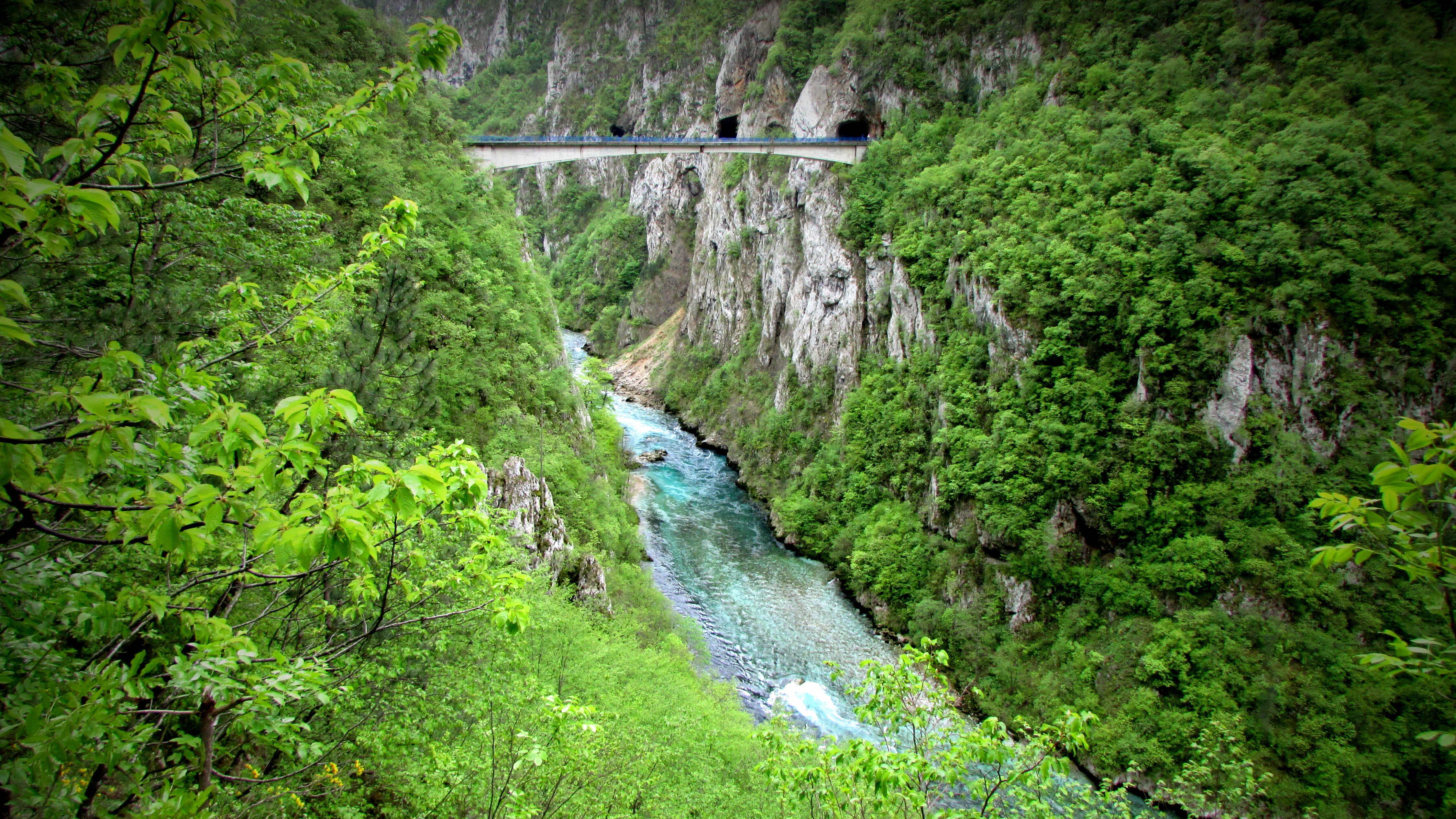
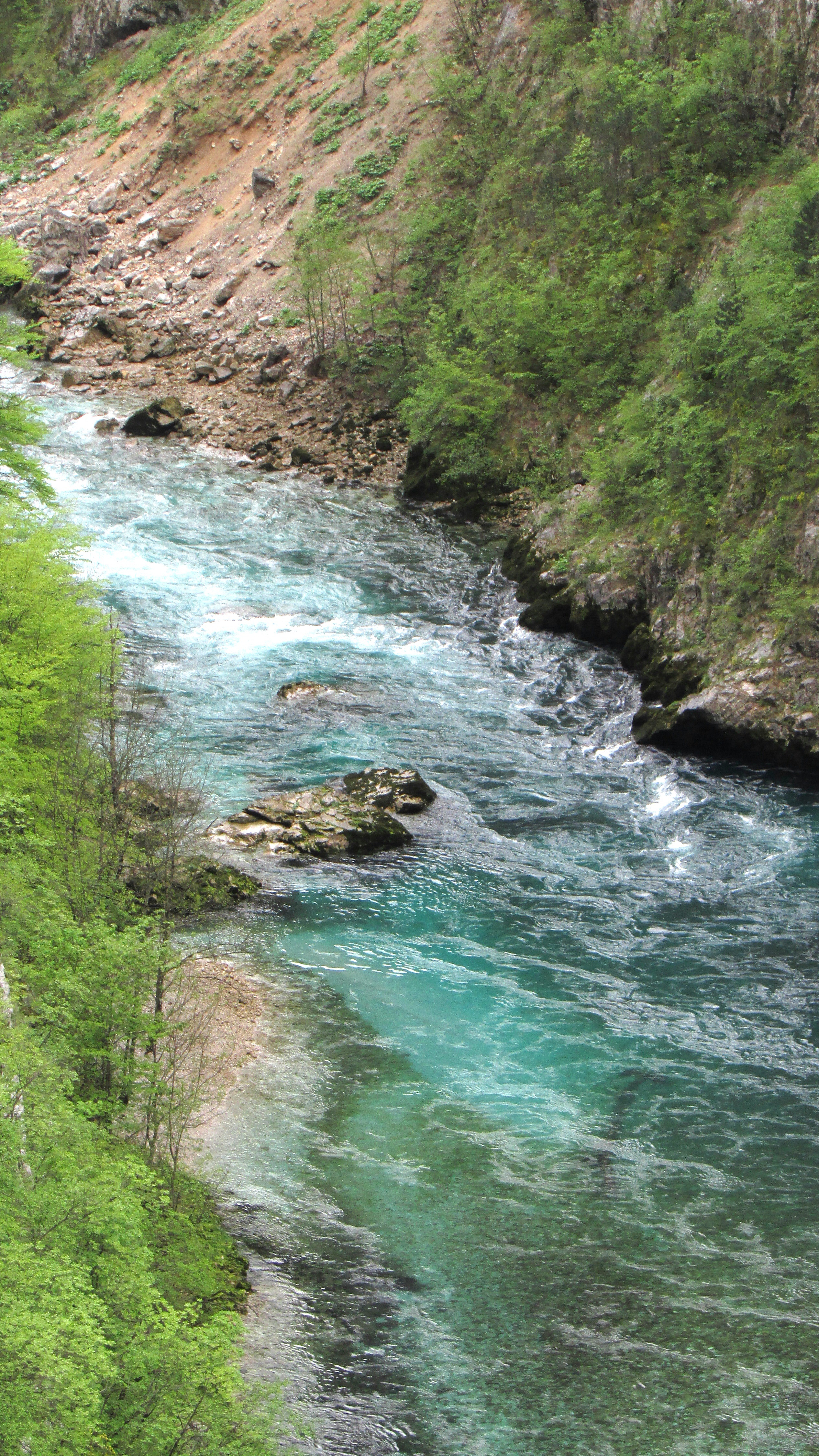
Sometimes we were in sunshine, other times pouring rain or more accurately in the middle if a rain cloud, high in the mountains.  We passed through the spectacular Piva canyon and over a series of narrow hairpin curves on the mountain above Kotor.  I took advantage of any moment of clarity or light to get some photos, which were probably made even moodier by the unpredictable visibility.

A beautiful day’s drive that ended us in the old town of Kotor, snuggled into a fiord that fingers in from the Adriatic.

imageimageimageimage

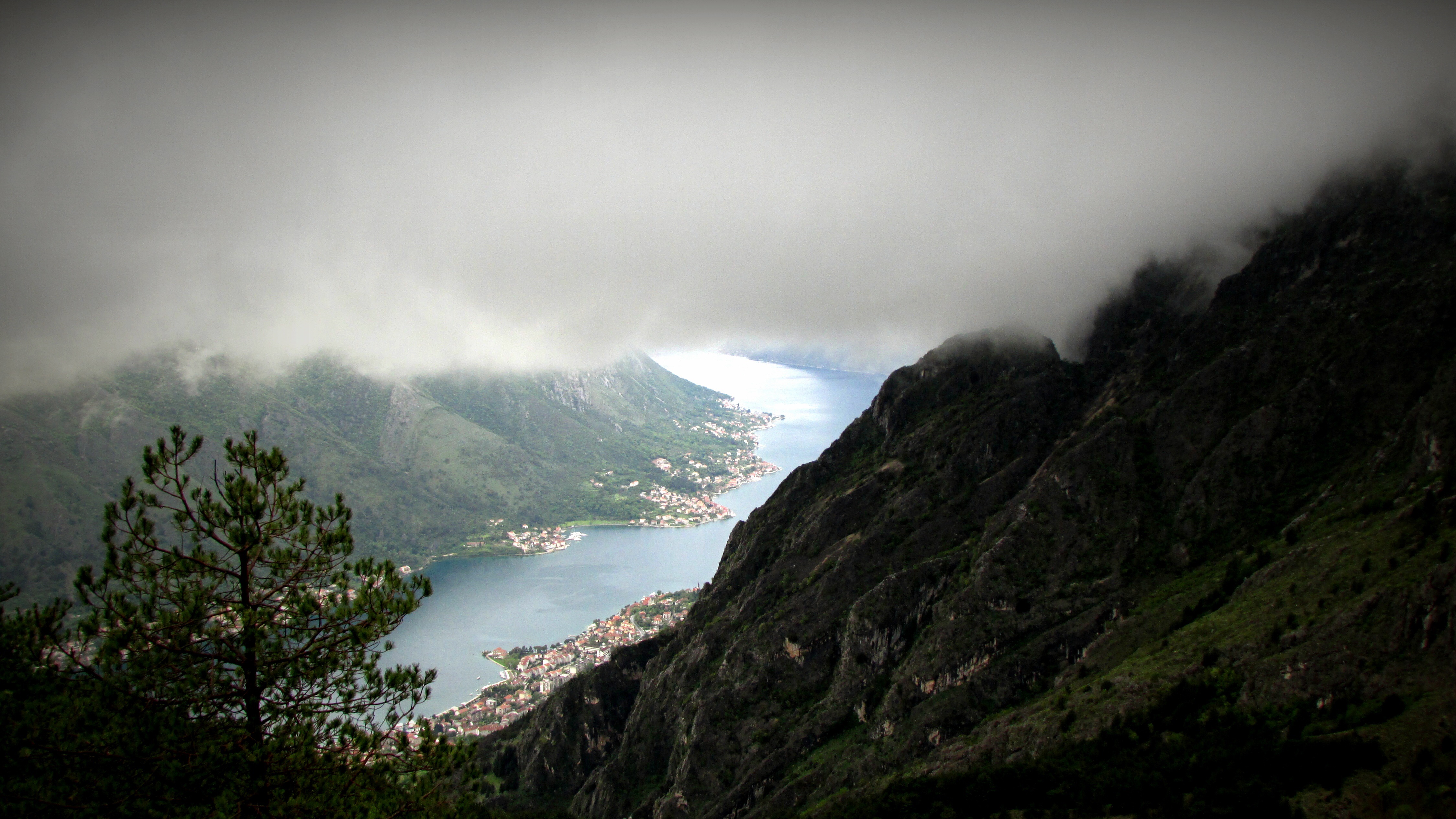
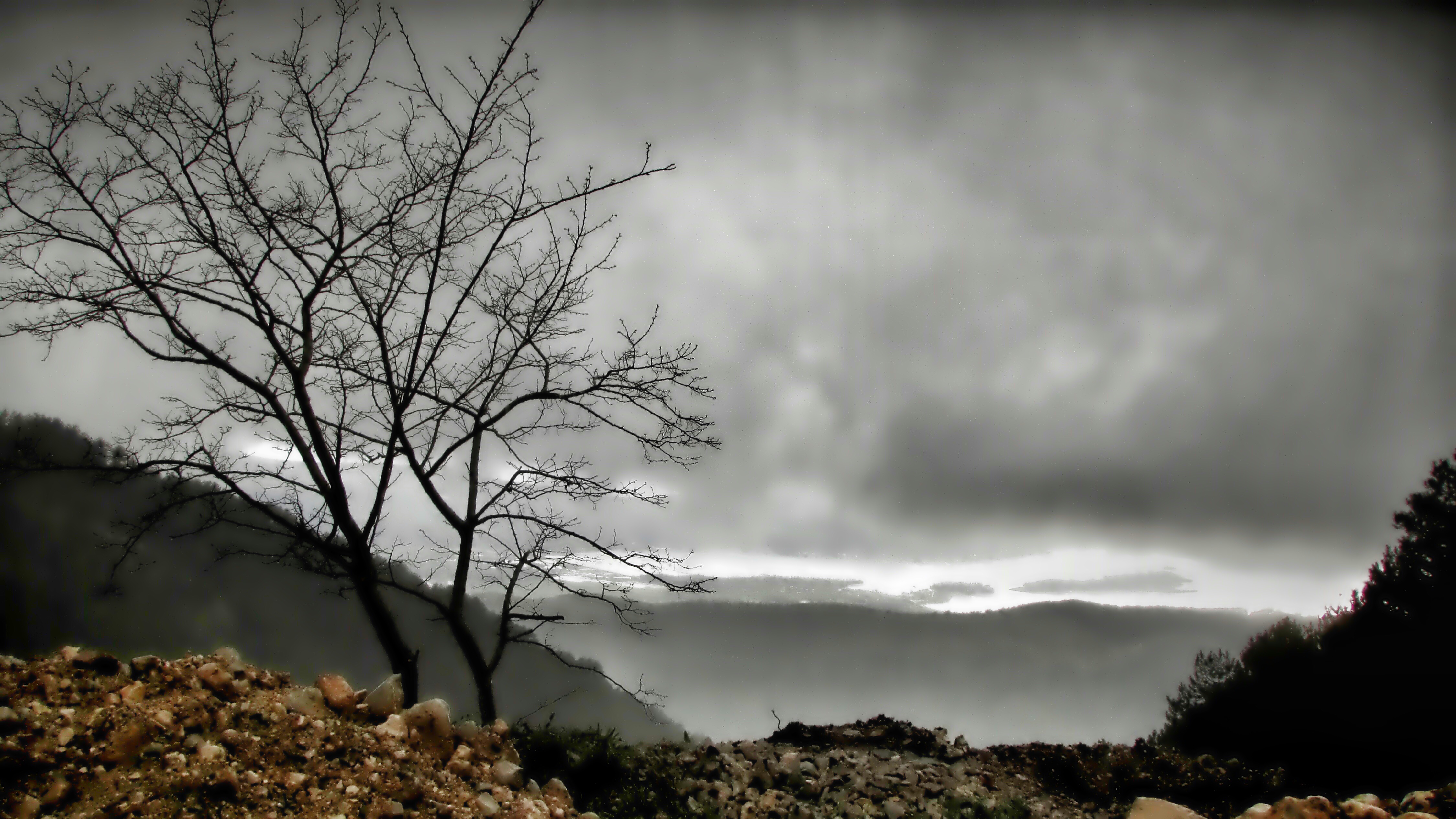
We emerged momentarily from a cloud and pouring rain to catch a glimpse of sunlight reflecting from water in the fiord below us like a mirror.  I thought the prospects of getting any photo were slim but life is full of surprises. This turned out to be one of my favourites of the day.

We emerged momentarily from a cloud and pouring rain to catch a glimpse of sunlight reflecting from water in the fiord below us like a mirror. I thought the prospects of getting any photo were slim but life is full of surprises. This turned out to be one of my favourites of the day.