You can

Sometimes it is easier to turn a blind eye to poverty and suffering than to do something about it.

In Canada, because we have social assistance programmes  funded by our various levels of government, we tend to let others provide the help rather than deal directly with the people in need.

Do you know that a single person receiving social assistance (we used to call this welfare) only gets about $650 a month to sustain them? Could you find accommodation, food, clothing, and transportation for that? How could you find a job if you have no phone, or a computer connection to communicate with prospective employers, or transportation to go to an interview? If the social assistance recipient finds even a part-time job to supplement his/her income, that money is deducted from the social assistance check. This must remove incentive to find low-paying work, often the only jobs available.

Now … imagine what it is like in much of sub-Saharan Africa. There is no government social assistance, or employment insurance, or social security, or pension plan. Unemployment rates approach 40% in Kenya (in Canada is is 6.8%) and the food inflation rate in Kenya in 2014 was 8% compared to ours at 3.9%. Although primary school education in Kenya is claimed to be “free”, many families can not afford the required school uniforms, or additional payments needed to support poorly-payed teachers. Classrooms may have sixty or more pupils per teacher, no desks, and no books.

The burden of illness in much of Africa from infectious diseases like tuberculosis, malaria, AIDS and ebola far outweighs ours. In Kenya, one  child in fourteen dies before the age of five and the chances of a woman dying of a complication from pregnancy is 1:250 compared to 1:9000 here.

Despite their poverty, patients are required to pay a small user fee for health services and medications are often not available or too expensive.

Those of us who have visited communities where this is the situation come home wondering what we can do to help. This is poverty beyond what we, in Canada, can comprehend.

When faced with these overwhelming statistics, it might be natural to feel sorry but give in to the thought that the problems are just too great and vague for individuals like ourselves to do anything about it.

Let me tell you about one Kingston family that decided to help.

Thomas and friends enjoying a filling lunch thanks to Canadian friends.

Thomas and friends enjoying a filling lunch thanks to Canadian friends.

Last year, Marcia O’Brien, her two young sons and her mom, Gabriella Zamojski traveled to Kenya. During their trip, they visited some rural community schools supported by the CanAssist African Relief Trust.

While visiting the S.P. Geddes Early Childhood Development Centre in Osiri village, they were impressed by how the community was attempting to provide early education to the young children at the school. They also saw that many of the pupils (and teachers too) come to school hungry. One young fellow named Thomas caught their attention and represented the rest. His father is deaf and mute and his mother had died the day prior to their visit to the school.  Yet, the child was at school, is best opportunity to receive some caring and support. He was, like many of the other children, hungry.

The image of this child haunted Marcia and Gabriella for months after they returned home. They decided to do what they could to help Thomas and the other children at the school.

In February, I took money from this Canadian family to the school in Kenya to start a weekly lunch programme. CanAssist bought plates and spoons, the children will bring sticks of firewood, parent volunteers will help stir the pots and serve the food and their Kingstonian friends will provide $100 a month, money that will allow the school to feed 120 kids a nutritious lunch once a week.

Although it may be tempting and more appealing to our hearts to provide individual help to one needy child, at the CanAssist African Relief Trust we believe that by helping the community with infrastructure like classrooms, clinics, latrines and water tanks, we are contributing to the well-being of many rather than just a few. Marcia and Gabriella have also adopted this stance with their direct donation to the Kenyan school to feed the whole group, even though their hearts were particularly touched by one student.

What can you do to help? Realize that your support, however meagre it may seem in the big picture, does make a difference to the people in need who live in our own community, or to those who are even more impoverished in developing nations.  Every individual effort helps. Combined small contributions add up.  Believe it. You can assist.

Little S.P. hands out spoons to the children lined up to get their lunch.

Little S.P. hands out spoons to the children lined up to get their lunch.

Portions of this  article was printed in the Kingston Whig Standard on Thursday April 9, 2015.

A heartwarming letter and ongoing need …

It is always gratifying to feel that the work that we do through the CanAssist African Relief Trust is helping kids (and adults too) acquire education, health care and improved water and sanitation facilities.

Kya Elem SchoolThere are about 300 children at the Kyabazaala Elementary School in Uganda.  CanAssist has had an ongoing association with that school, helping them in many ways.   I have visited the school a few times and can vouch that they do need help. The classrooms are somewhat dilapidated and they have few resources. The teachers are paid a meagre salary by the government and often have to find places to live as their homes are not close by.  When we first went to the school, they were getting water from a dirty pond shared with animals, to make the one cup of maize gruel served to the kids at noon, often their only meal of the day.  Their toilets were abysmal.

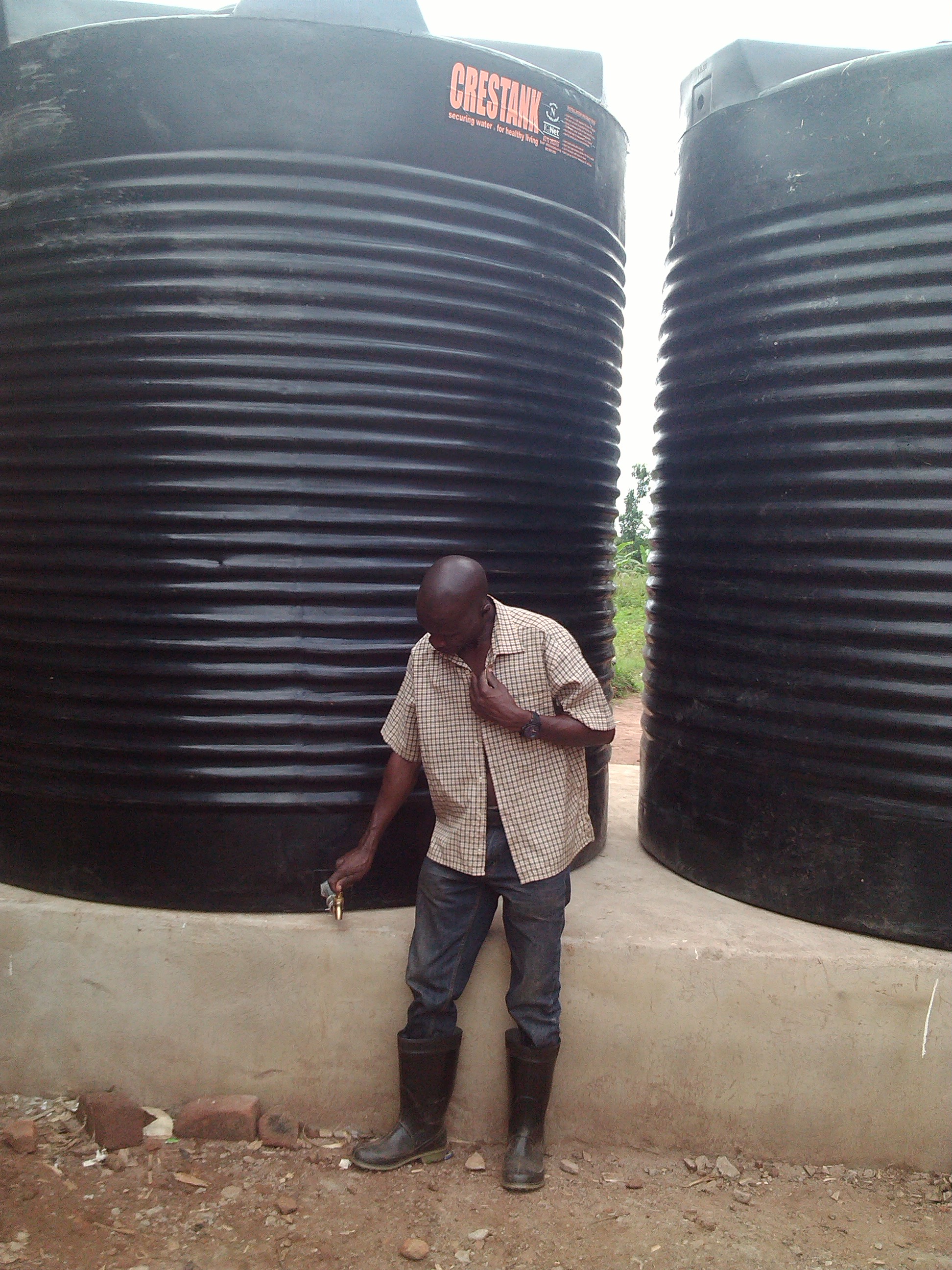
IMG_20140912_134515CanAssist helped by repairing their one water tank that had been damaged and installing new toilets.  Other Canadian well-wishers visiting the school (including Hugh Langley, Ann Marie Van Raay and Elizabeth Muwonge) provided funding for cementing floors of some classrooms and between us all, we got electrical supply to the school.
Last year, the Mayer Institute in Hamilton, through CanAssist, funded installation of two water tanks at the School.  This will be a grand improvement to their access to water.

This week, I received an email with a scanned letter of appreciation for the various ways we have helped.  It was, indeed, heartwarming, to get this acknowledgement of our support and I want to share it with those who have, through donations to CanAssist, contributed to all the work we have done at the school.1

Our next project at the Kyabazaala Elementary School is to help them construct teachers’ quarters on the school property.  This will help them to acquire and retain qualified teachers since the school will be able to offer some modest accommodation to the teachers whose salaries are woefully low. The community has already been accumulating locally-made bricks for this venture. The total cost for this six-room teachers’ quarters will be approximately $7000 CAN.  CanAssist (and the school) will welcome any support dedicated to this project so we can start it soon.

 
Donate Now Through CanadaHelps.org!

Where is this heading?

I am worried about Ebola. It is rapidly spinning out of control.

Photo from internet

Photo from internet

I can’t imagine what it would be like to be a four-year old African child whose mother is dying of Ebola and I can not hug her or comfort her as she is dragged off by people looking like space travellers. I can not imagine what it is like to be a health care worker in a facility where there is no clean water supply, limited resources and few beds and knowing that just touching someone who is infected to provide care for them or make them more comfortable is risking my own life.

It annoys me somewhat when I see the panicked response of the U.S. or Spain when they get one case that is treated in health care systems that have funding many, many times that of the West African countries that are struggling to manage it. When the outbreak affects thousands in Liberia, far away, the response is muted. When one person in North America is treated with it, the response is a cascade of protective efforts, likely costing billions in the long run. I am not saying this is wrong, just imbalanced and so self-absorbed.

It frustrates me to know that the international community has dragged their feet in responding to this outbreak … until it becomes obvious that, with international travel, it is only a matter of time that the disease reaches us. It worries me that other African countries will soon be at risk and that their health care systems will do their best, but are woefully inadequate to cope with the anticipated exponential spread of this virus.   It troubles me to know that economies in many African countries, already struggling with poverty, will be decimated. Tourism is a major source of income. What traveller is going to pick an African vacation for their family with all this negative press and uncertainty?

When I graduated from medical school in 1974 there was no AIDS. Well, there were a few cases, scattered somewhere, but we didn’t know about it. Now millions have been infected and died of AIDS and although we have medications to manage it, we do not have a cure, nor effective immunization against it. Will Ebola be the next AIDS? Or worse?

What can we do about it? What can I do about it? So far the Canadian government has allocated about 5-6 million dollars to this crisis. They have also just approved an air bombing campaign in Iraq of undetermined cost but with estimates of 100 million dollars or more.   It costs close to $17,000 per hour to operate a CF-18 and each JDAM-equipped bomb that is dropped costs about $25,000. Can we get our priorities straight? Or at least balance them? How do we influence these decisions?

I have worked for the past five years to help to provide infrastructure improvements for schools, clinics and communities in East Africa through the CanAssist African Relief Trust. Will this be at all helpful if Ebola spreads eastward in Africa? I would like to think it will help. Education about spread of the disease and protection from it is essential to avoid infection and schools are a resource to help with that. CanAssist has supported clinics in several communities and has provided improved water and sanitation to communities and schools. Hopefully this will help if the need arises. Without adequate sanitation or access to clean water, how can anyone avoid contamination? CanAssist’s work involves only a few communities – we have limited resources despite a never-ending need. But hopefully, by preparing some communities a bit with infrastructure to help manage any possible outbreak (of Ebola or any other health threat) we can, in fact, save a few lives.

I plan to return to East Africa early in 2015. In addition to continuing to monitor and support new and existing projects through CanAssist (at no cost to our donors, by the way) I will be thinking about helping to provide some medical information about Ebola to the communities that I visit in preparation for what I fervently hope does not happen there. I have often felt that if Africa was educated about HIV/AIDS early on that this scourge would not have taken hold the way it did. Maybe with some warning and information, countries neighbouring those currently affected by Ebola can prepare to prevent it from engulfing in their communities. Not a panicked, emergency response but a practical preparation for a possible threat. It is worth a try.

“If I am only for myself, then what am I? And, if not now, when?” Rabbi Hillel, 50 BC

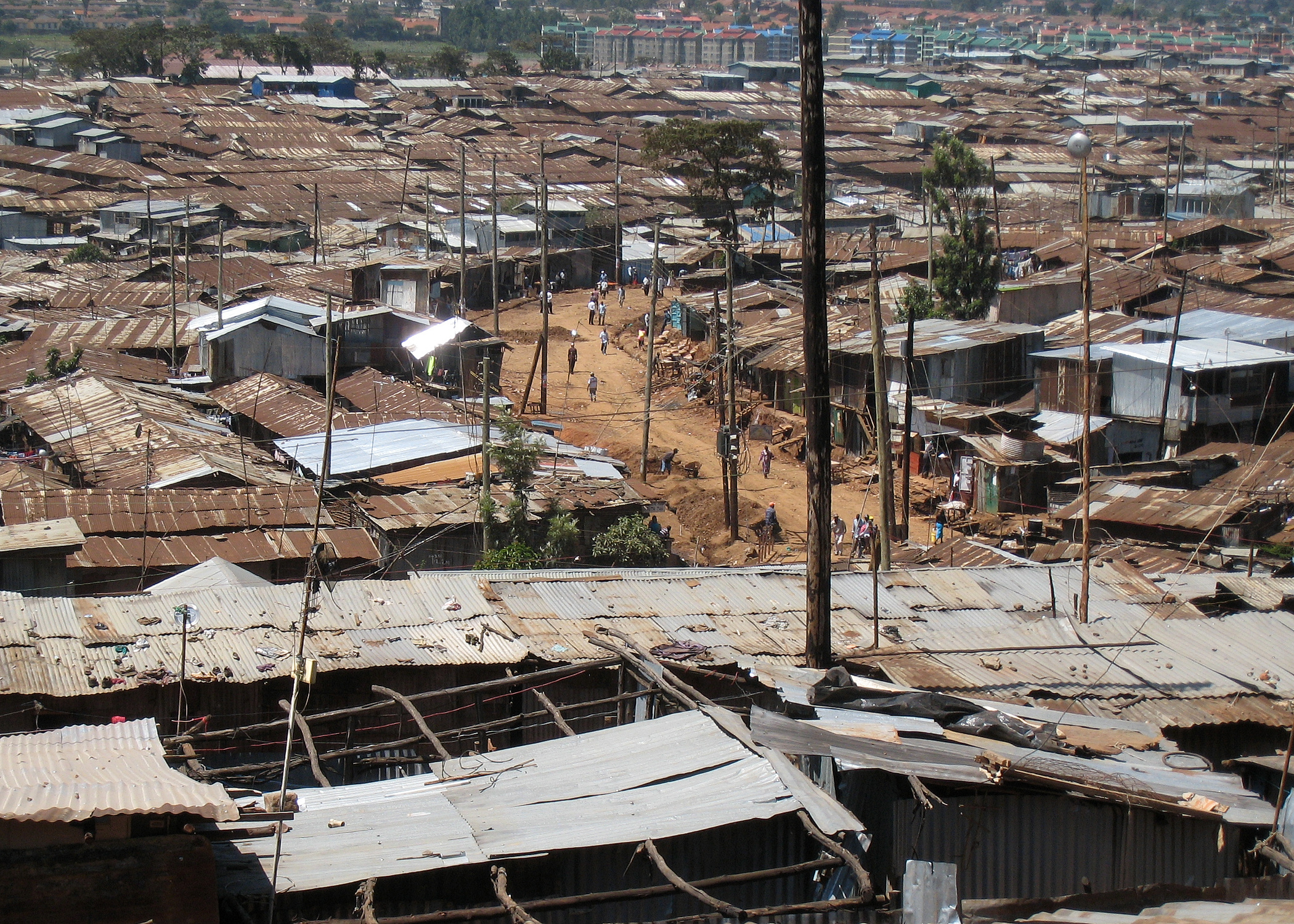
Slums in Africa house millions of people with little access to health facilities, clean water or sanitation. How would you contain it if an Ebola strikes here?

Slums in Africa house millions of people with little access to health facilities, clean water or sanitation. How would you contain it if  Ebola strikes here?

The Jim Owen Computer Classroom in Kenya

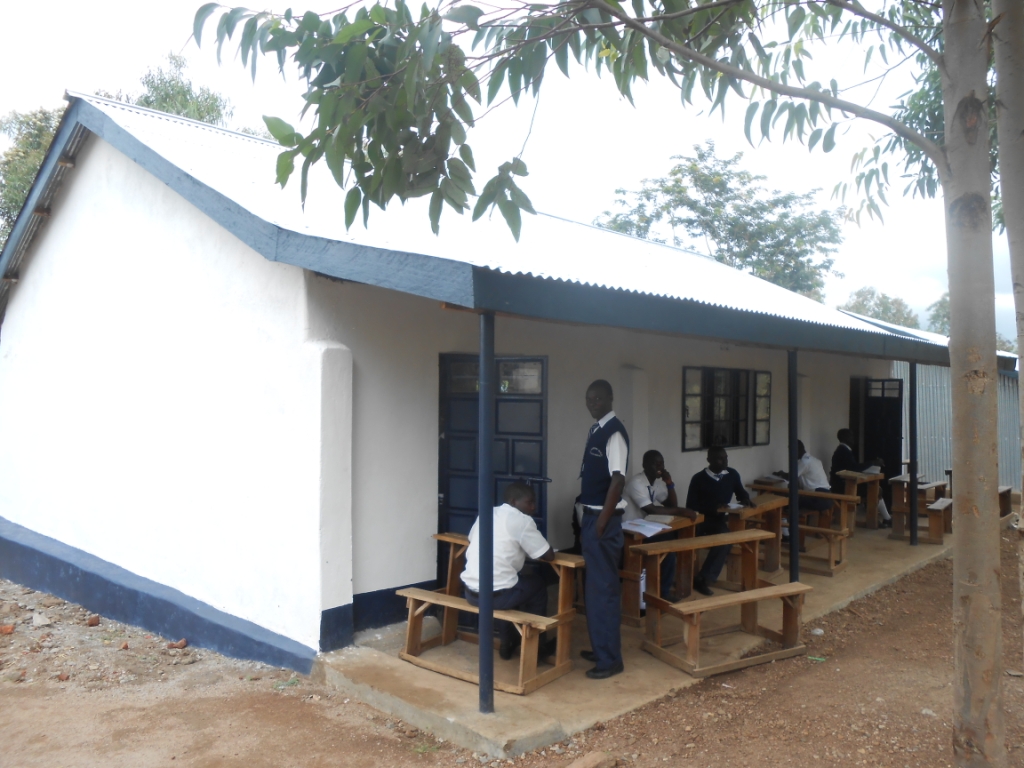
It is an absolute delight to report that the Jim Owen Computer Classroom at the St Gorety Secondary School in Nyatike District of Kenya is built.

DSCN2576 Friends and family of Jim Owen, who passed away early in November, wanted to remember him with something lasting. Jim was always interested in computers and things electronic. He could spend hours just wandering the aisles of the Canada Computers store and if you had a problem with your laptop or anything else electronic he was happy to spend hours tinkering to get it fixed.

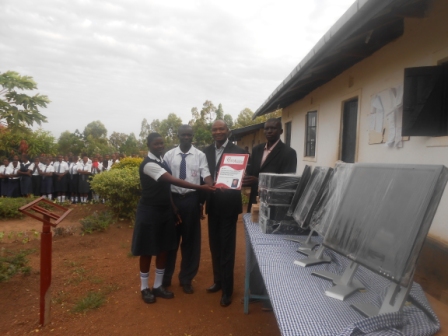
It was appropriate that a memorial to Jim be directed toward a planned computer classroom that the CanAssist African Relief Trust was about to fund. Donations flooded in – he was well-loved – and I am happy to report that the building has been constructed and four complete computers purchased and installed.

DSCN3127

The school is delighted. Students realize that they are in a much better place to acquire post secondary employment if they have some computer familiarity. In rural areas like Nyatike this is to easy to achieve. Most of the students at the school may not have electricity at their homes let alone a computer.

CanAssist is happy to report this progress and thank all who donated to this memorial. The school has mounted a plaque with Jim’s photo on it in the classroom.

Asante sana.

image


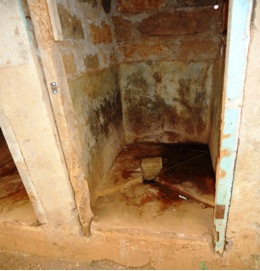
Would you want your kids using these school toilets?

Imagine this. You are a single mother of three children living in Kenya.  You desperately want your children to get an education, hoping that will boost their chances of living more comfortably than you do now.  You can barely afford food.  The local school is about three kilometres away and has crowded classrooms.

The toilets at the school look like this.Twiga Girls Latrine

Twiga Boys Latrine 3

Your kids are often sick with diarrhea and vomiting. Your thirteen year old daughter is in class seven. She as just stared menstruating.  These toilets, with broken doors, are the only place she can tend to her monthly needs.  So she stays home from school four or five days a month and subsequently gets behind with her studies.

At CanAssist we hear stories like this all the time.  We see these deplorable sanitation facilities at schools. It startles us  to find that in busy village markets there are no sanitation facilities at all. Adjacent fields and gutters turn into raw sewage minefields.

With the support of our donors, we try to help.

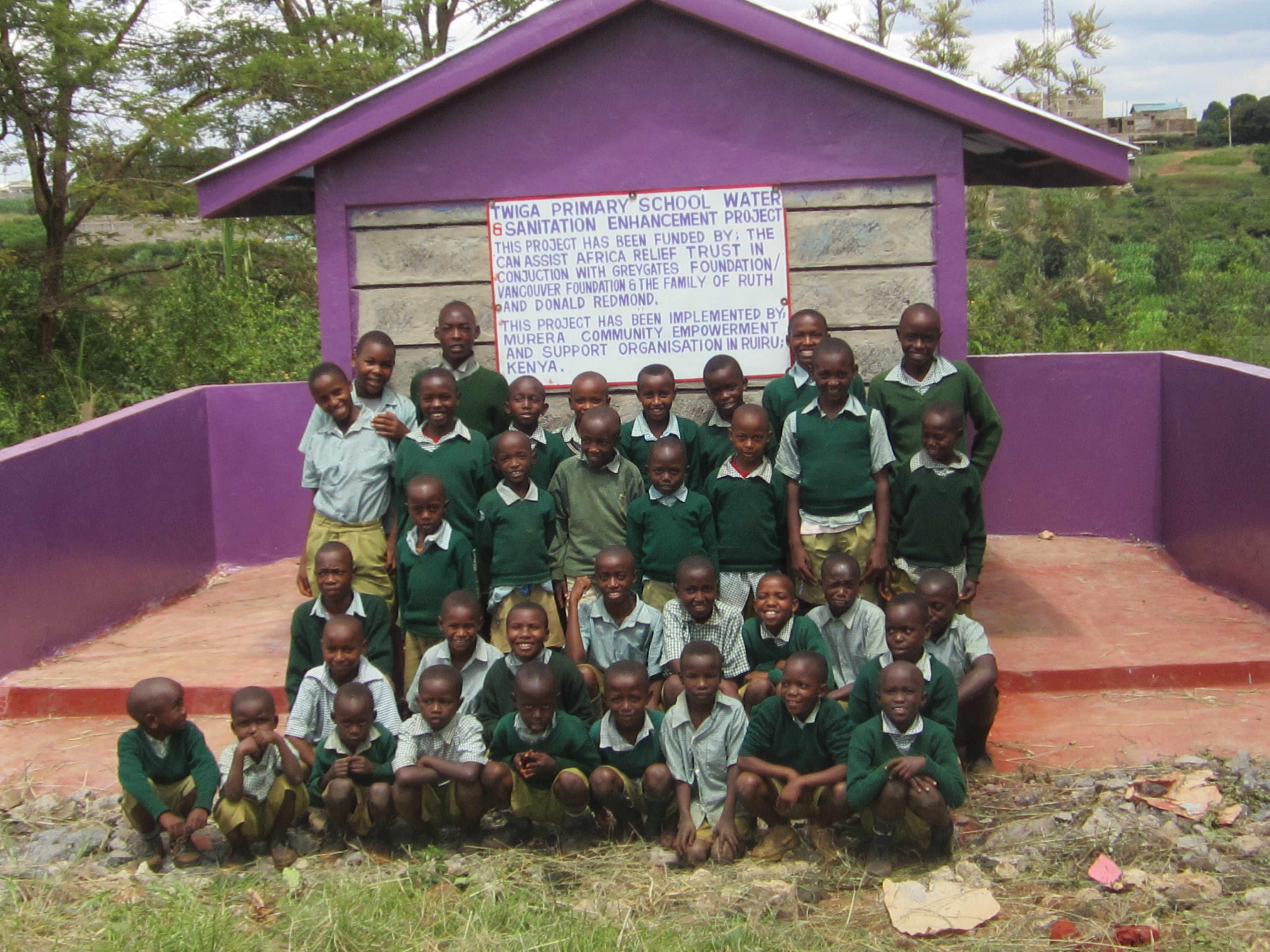
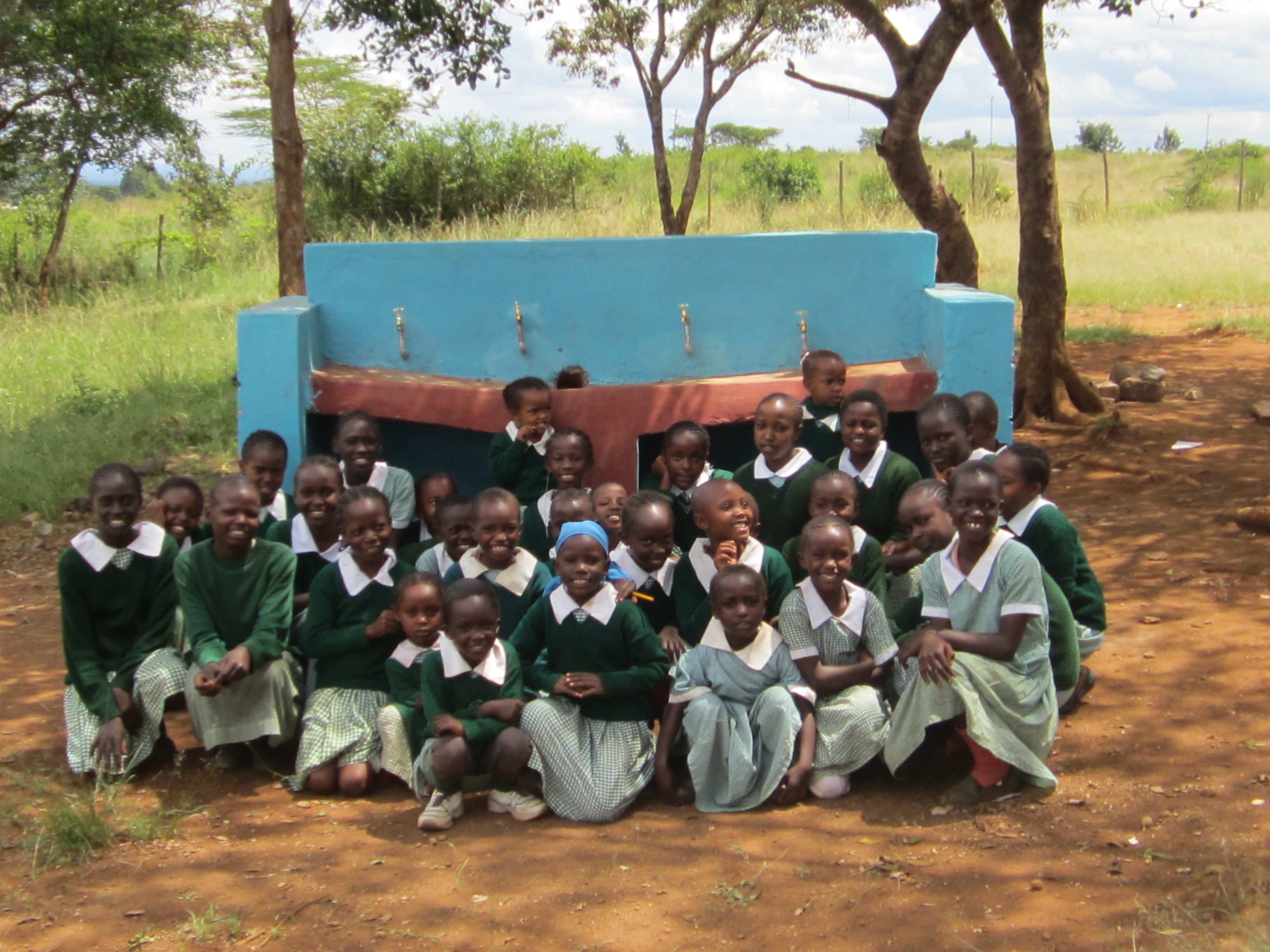
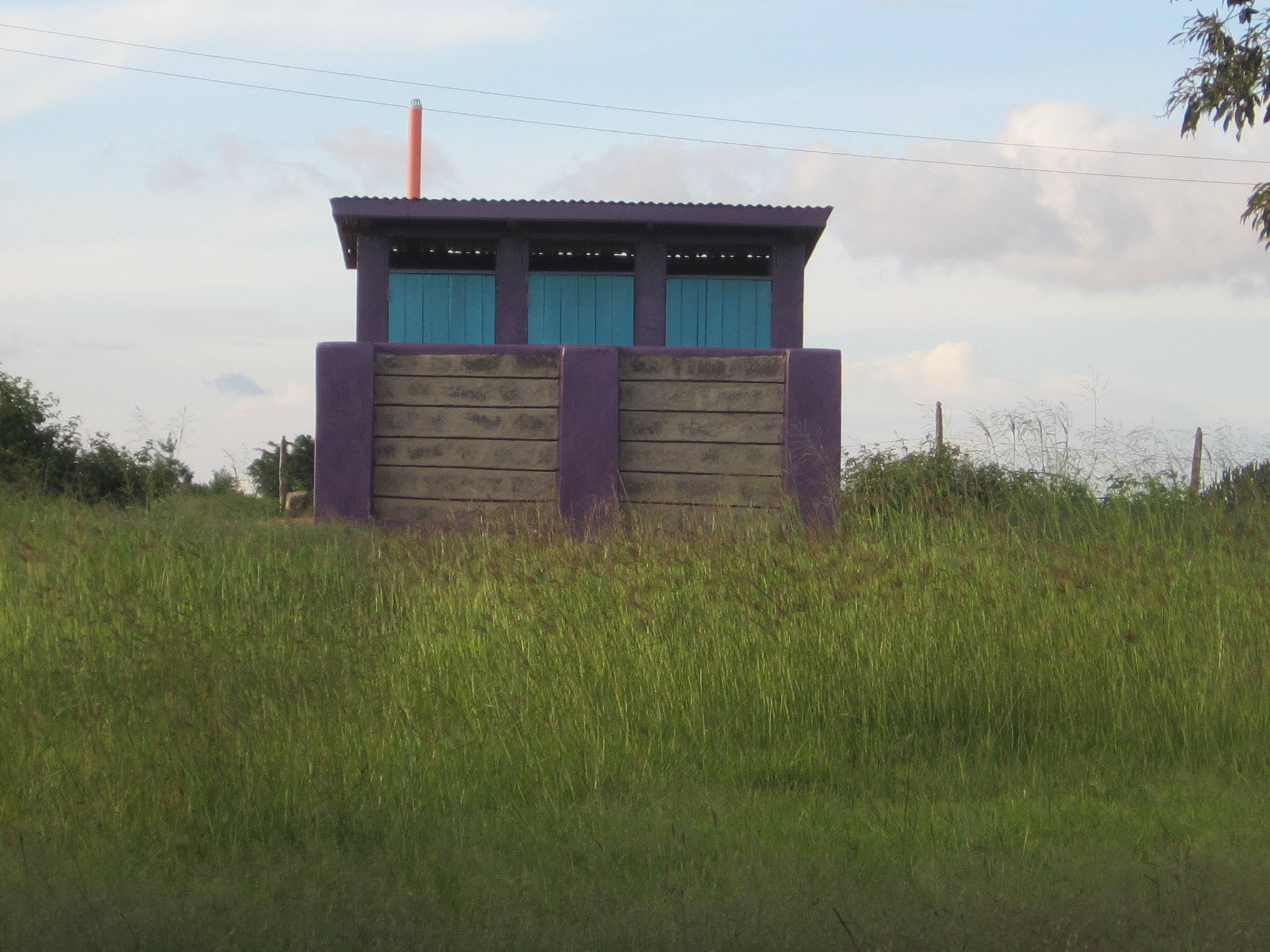
In the past couple of months we have been gratified to follow the construction of latrines at the Twiga school in Ruriru district of Kenya.  For a cost of about $7500 we have been able to provide rainwater catchment, new latrines for students and teachers and hand-washing stations for the school.  Hand washing has been shown to reduce the spread of many diseases but without the proper facilities this becomes impossible.

This week we received this report from Michael Gichia who works with the Murera Community Empowerment and Support Organization (MCESO) . It reads, in part:

Benefits realised from the project.

Inscription on the latrine wall reads " Twiga Primary School water & Sanitation enhancement project. This project has been funded by CanAssist African Relief Trust in conjunction with the Grey Gates Foundation /Vancouver and the family of Ruth and Donald Redmond."

Inscription on the latrine wall reads ” Twiga Primary School water & Sanitation enhancement project. This project has been funded by CanAssist African Relief Trust in conjunction with the Grey Gates Foundation /Vancouver and the family of Ruth and Donald Redmond.”

“The project has brought about the following benefits to the school children in TWIGA PRIMARY SCHOOL;

o 555 school children and 15 teachers at TWIGA PRIMARY SCHOOL in Ruiru district have
safe sanitation and drinking water facilities.
o The school enrolment ahs gone up by 20 more children by the beginning of second term
thanks to the water and sanitation enhancement project
Hand washing station

Hand washing station

o The project has improved access to water supply at TWIGA PRIMARY SCHOOL in Ruiru District

o The project has brought positive perception among the school children on sanitation and personal hygiene e.g. hand washing practices, proper disposal of wastes and economical use of water as well as improved knowledge about hygiene and environmental sanitation;

New CanAssist-funded teachers' latrine at Twiga School.

New CanAssist-funded teachers’ latrine at Twiga School.

o The project has brought about reduction in water shortages at TWIGA PRIMARY SCHOOL
and therefore more time for learning for the children.
o The project has reduced diseases associated with drinking dirty water and observing unclean hygienic behaviour among the school children.
o The school has functional hand wash facilities for the promotion of health and hygiene
o Preliminary training on sanitation and cleanliness has been conducted.”

Now, imagine again, as that poor African mother, how pleased you would be that your children had decent sanitation facilities at their school.

CanAssist has been happy to be able to improve the sanitation facilities for these 550 Kenyan pupils.  We have had specific support for much if the cost of this project from the Grey Gates Foundation in Vancouver and from friends and family of Ruth and Don Redmond in celebration of their 65th wedding anniversary last year.

CanAssist has just taken on similar projects in other schools in Kenya and Uganda.  If you or your family would like to help to bring smiles to the faces of African students and their teachers, you can give a tax-deductible donation to CanAssist by mail or online. Details about how to support a project like this a re available on our website www.canassistafrica.ca


Desks to schools in Kenya…

I put many hours a week into the CanAssist African Relief Trust. Sometimes I wonder why I do it.  Today I received an email that reminded me.

Last year CanAssist received an application from a development group in Kenya asking for support in providing desks for three schools in Rachuonyo District near Homa Bay.  We did not know the schools or the AFORD development organization but thought that they presented an organized appeal and, in the past, we have found provision of school desks to be satisfying.  Not only do the children of the schools receive furnishings to help them learn better, the desks are locally made which gives carpenters and suppliers some income.

In December, I visited some elementary schools in Canada and they have donated about $1000 toward the $5000 needed to build 170 desks that will serve 450 students.

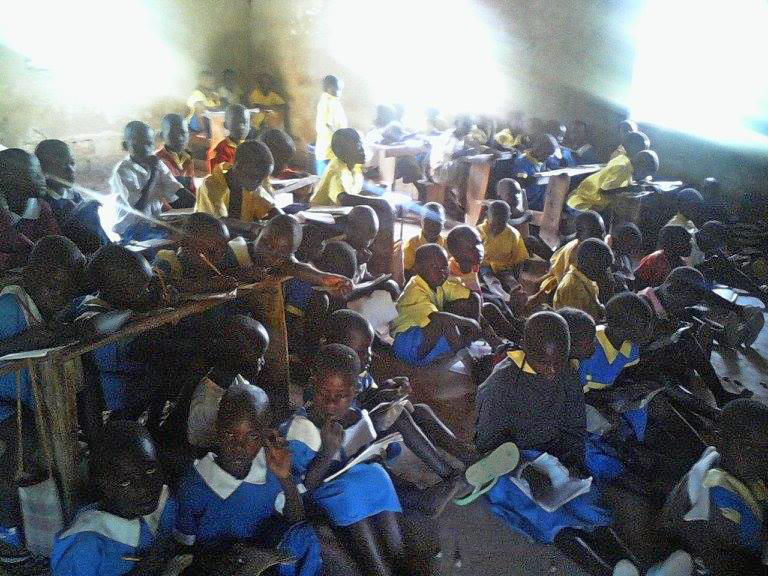
Last month I asked the school for some photos of the school so we could help promote this project.  Today I received these grainy photos taken recently at two of the schools. I will let them speak for themselves.  I think you will agree that they are heartbreaking.  Although the Kenyan Ministry of Education does offer “free” education to elementary school students, this is the quality in some of the remote districts.

The Kamser Elementary School.  Crowded conditions not conducive to learning. There are 450 students at two schools like this one and they are requesting 150 bench desks to accommodate the students, many of whom sit on the floor.

The Kamser Elementary School. Crowded conditions not conducive to learning. There are 450 students at two schools like this one and they are requesting 150 bench desks to accommodate the students, many of whom sit on the floor.

Photo3_Kamser primary 2

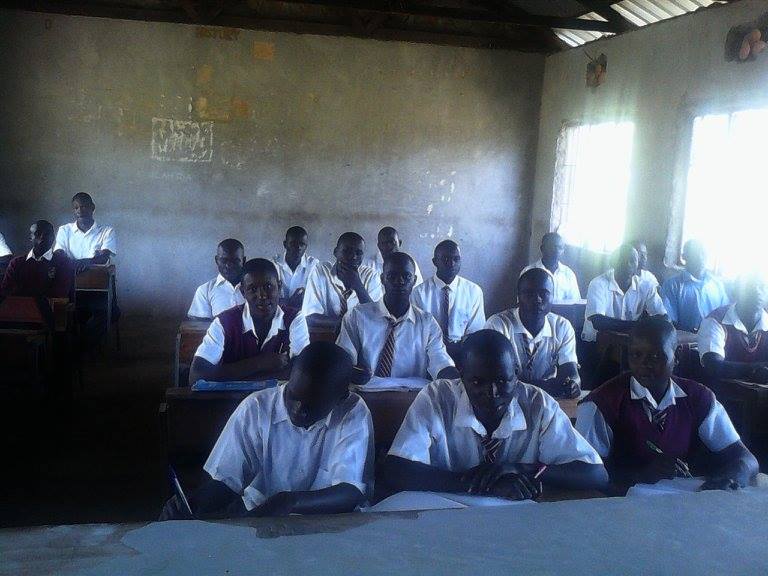
Students at the Kamser Secondary School.  This school requests 20 individual desks.

Students at the Kamser Secondary School. This school requests 20 individual desks.

Our Kenyan field representative, Dan Otieno, will visit the schools sometime in the next month and we hope we can to move ahead with the funding and construction of new desks very soon.  If you would like to help with this, CanAssist appreciates gifts of any size. The average cost per bench desk will be about $40. Can you afford to donate one? (or two would be nice.)

donateNow2b1

Graduation Day photos from Kenya

My day was brightened considerably yesterday morning when I received a sheaf of photos from Kenya showing the children at the SP Geddes Early Childhood Development Centre celebrating graduation of some of their students. I am not sure who is more proud, the kids or their parents. In the past month I have had greetings and announcements from a few of our CanAssist-supported schools in Kenya as they celebrate the end of their school year both with standard exams and graduation gatherings.

The  Canadian Flag flies proudly in the SP Geddes School compound.

The Canadian Flag flies along side the Kenyan one in the SP Geddes School compound.

The photos remind me of 64 years ago when I graduated from the nursery class at the New St James Church in London, Ontario. Always the organizer, I was the first one through the little white gate at the front of the choir loft and held it for the other “graduates”.

In the past two years, this little school has had many improvements funded by the CanAssist African Relief Trust and particularly by my father whose name is now both in the school and a little fellow in the community who, I see from the photos, is growing.

imageThis community has felt very isolated in terms of “development”. They are proud that their young kids are now able to get some early education which will make them more ready to enter the public school system when they are old enough to walk the several kilometers to the government school. Marking their graduation allows the children to feel pride and accomplishment as well and encourages them to continue.

I thank Meshack Andiwo for sending these delightful photos and send the congratulations of Stewart Geddes, CanAssist and all our Canadian supporters to the beaming graduates, not only of this school but also from Hope School in Mbita and Kanyala Little Stars on Rusinga Island who have held similar celebrations in the pars few weeks.

Little Stewart Geddes is growing.

Little Stewart Geddes is growing.

Improving access to Health Care in East Africa

Sometimes in East Africa, health care is not readily available due to the distance to a Clinic or Hospital.  People lack means of transport Ambulances are few or non-existent. Very few people have cars and “roads” are often bumpy overgrown pathways.  This results in people waiting until they are very ill before they look for competent care and by that time it is even more difficult to transport the sick person to a clinic. Many die en route to finding a qualified health care provider.

CanAssist has helped with construction of clinic buildings and provision of hospital equipment, sanitation and water for clinics in

  • Olimai, Uganda,
  • Mbita, Kenya,
  • Gembe East, Kenya
  • and Nyatike District, Kenya.

One of CanAssist’s first projects in 2008 was to complete a laundry facility for a hospital in Tanzania.

In 2012/2013, CanAssist has helped the Kared Fod Women’s Group in Nyatike District of Kenya to build a clinic/dispensary.  A nurse and two community health workers have been supported by grants from the Stephen Lewis Foundation but they had no building from which to work.  CanAssist constructed a clinic building with examining rooms, a small lab and pharmacy in 2012. In 2013 CanAssist put rainwater catchment and latrines in the clinic which opened to serve the public late in October.

An opportunity for better nutrition …

In addition to providing desks and chairs and hospital equipment and classrooms in East Africa, the CanAssist African Relief Trust has also helped establish gardens like this one at the Kanyala Little Stars School in Mbita, Kenya.  The garden’s help to provide a steady source of nutritious food and a modest income-generating activity which helps other expenses.

CanAssist has most recently funded development of a garden like the Little Stars one for a patient support group a the Tom Mboya Hospital in Rusinga Island, Kenya.

Mama Benta of Kanyala Little Stars explains the benefits of this support to African families and groups.

Helping educate African children…

One of the mandates for the CanAssist African Relief Trust is to improve education opportunities for children in East Africa by providing infrastructure that will achieve this.

One of the schools funded by CanAssist is the Oltaraja Elementary School in a remote Maasai community in the Rift Valley, Kenya.   CanAssist has built one classroom there and in 2014 will build another.  Children who would otherwise have had to walk several kilometres to a school (or not go at all) will have the opportunity to get some Primary education closer to home.