You can

Sometimes it is easier to turn a blind eye to poverty and suffering than to do something about it.

In Canada, because we have social assistance programmes  funded by our various levels of government, we tend to let others provide the help rather than deal directly with the people in need.

Do you know that a single person receiving social assistance (we used to call this welfare) only gets about $650 a month to sustain them? Could you find accommodation, food, clothing, and transportation for that? How could you find a job if you have no phone, or a computer connection to communicate with prospective employers, or transportation to go to an interview? If the social assistance recipient finds even a part-time job to supplement his/her income, that money is deducted from the social assistance check. This must remove incentive to find low-paying work, often the only jobs available.

Now … imagine what it is like in much of sub-Saharan Africa. There is no government social assistance, or employment insurance, or social security, or pension plan. Unemployment rates approach 40% in Kenya (in Canada is is 6.8%) and the food inflation rate in Kenya in 2014 was 8% compared to ours at 3.9%. Although primary school education in Kenya is claimed to be “free”, many families can not afford the required school uniforms, or additional payments needed to support poorly-payed teachers. Classrooms may have sixty or more pupils per teacher, no desks, and no books.

The burden of illness in much of Africa from infectious diseases like tuberculosis, malaria, AIDS and ebola far outweighs ours. In Kenya, one  child in fourteen dies before the age of five and the chances of a woman dying of a complication from pregnancy is 1:250 compared to 1:9000 here.

Despite their poverty, patients are required to pay a small user fee for health services and medications are often not available or too expensive.

Those of us who have visited communities where this is the situation come home wondering what we can do to help. This is poverty beyond what we, in Canada, can comprehend.

When faced with these overwhelming statistics, it might be natural to feel sorry but give in to the thought that the problems are just too great and vague for individuals like ourselves to do anything about it.

Let me tell you about one Kingston family that decided to help.

Thomas and friends enjoying a filling lunch thanks to Canadian friends.

Thomas and friends enjoying a filling lunch thanks to Canadian friends.

Last year, Marcia O’Brien, her two young sons and her mom, Gabriella Zamojski traveled to Kenya. During their trip, they visited some rural community schools supported by the CanAssist African Relief Trust.

While visiting the S.P. Geddes Early Childhood Development Centre in Osiri village, they were impressed by how the community was attempting to provide early education to the young children at the school. They also saw that many of the pupils (and teachers too) come to school hungry. One young fellow named Thomas caught their attention and represented the rest. His father is deaf and mute and his mother had died the day prior to their visit to the school.  Yet, the child was at school, is best opportunity to receive some caring and support. He was, like many of the other children, hungry.

The image of this child haunted Marcia and Gabriella for months after they returned home. They decided to do what they could to help Thomas and the other children at the school.

In February, I took money from this Canadian family to the school in Kenya to start a weekly lunch programme. CanAssist bought plates and spoons, the children will bring sticks of firewood, parent volunteers will help stir the pots and serve the food and their Kingstonian friends will provide $100 a month, money that will allow the school to feed 120 kids a nutritious lunch once a week.

Although it may be tempting and more appealing to our hearts to provide individual help to one needy child, at the CanAssist African Relief Trust we believe that by helping the community with infrastructure like classrooms, clinics, latrines and water tanks, we are contributing to the well-being of many rather than just a few. Marcia and Gabriella have also adopted this stance with their direct donation to the Kenyan school to feed the whole group, even though their hearts were particularly touched by one student.

What can you do to help? Realize that your support, however meagre it may seem in the big picture, does make a difference to the people in need who live in our own community, or to those who are even more impoverished in developing nations.  Every individual effort helps. Combined small contributions add up.  Believe it. You can assist.

Little S.P. hands out spoons to the children lined up to get their lunch.

Little S.P. hands out spoons to the children lined up to get their lunch.

Portions of this  article was printed in the Kingston Whig Standard on Thursday April 9, 2015.

A heartwarming letter and ongoing need …

It is always gratifying to feel that the work that we do through the CanAssist African Relief Trust is helping kids (and adults too) acquire education, health care and improved water and sanitation facilities.

Kya Elem SchoolThere are about 300 children at the Kyabazaala Elementary School in Uganda.  CanAssist has had an ongoing association with that school, helping them in many ways.   I have visited the school a few times and can vouch that they do need help. The classrooms are somewhat dilapidated and they have few resources. The teachers are paid a meagre salary by the government and often have to find places to live as their homes are not close by.  When we first went to the school, they were getting water from a dirty pond shared with animals, to make the one cup of maize gruel served to the kids at noon, often their only meal of the day.  Their toilets were abysmal.

IMG_20140912_134515CanAssist helped by repairing their one water tank that had been damaged and installing new toilets.  Other Canadian well-wishers visiting the school (including Hugh Langley, Ann Marie Van Raay and Elizabeth Muwonge) provided funding for cementing floors of some classrooms and between us all, we got electrical supply to the school.
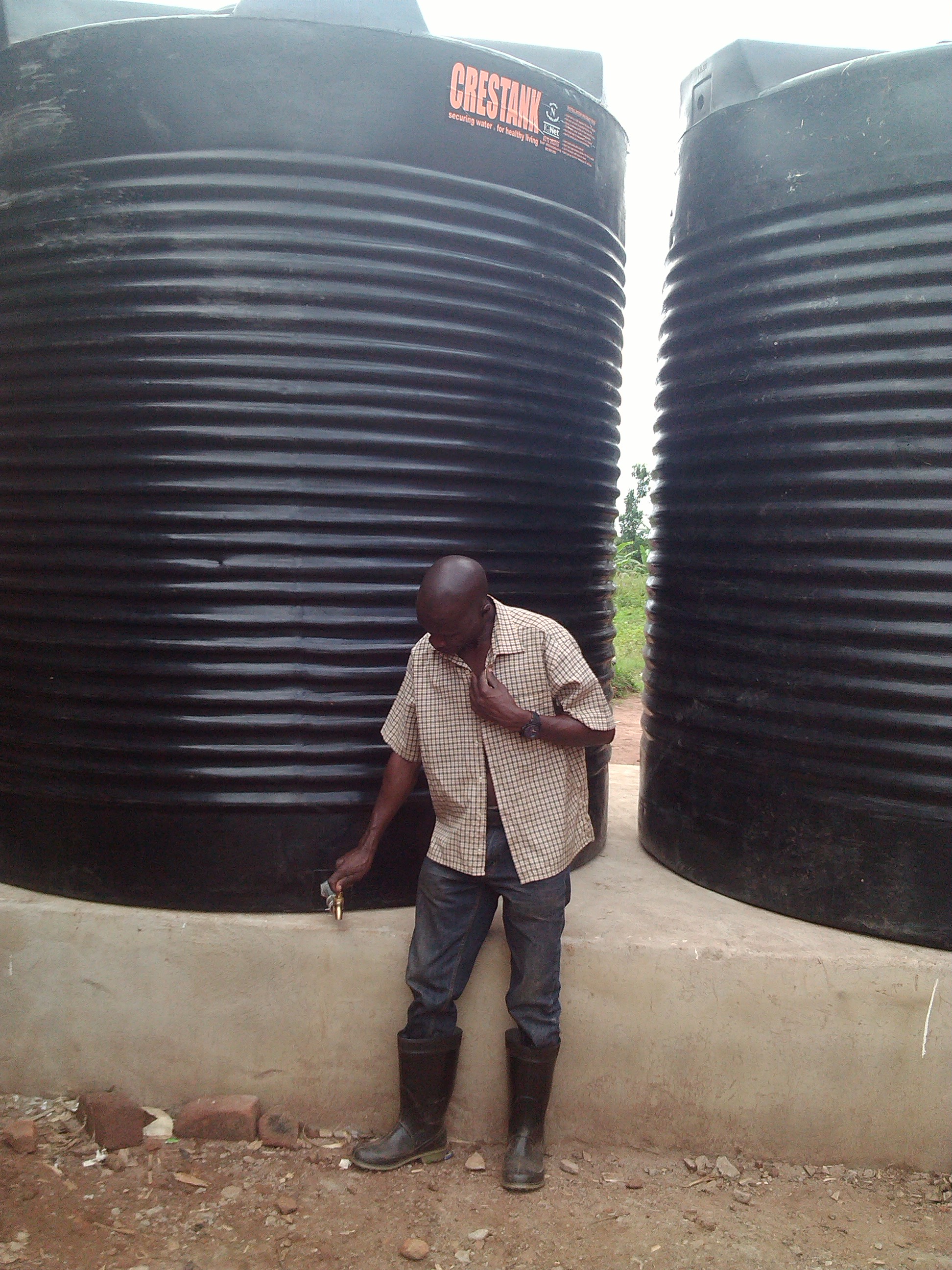
Last year, the Mayer Institute in Hamilton, through CanAssist, funded installation of two water tanks at the School.  This will be a grand improvement to their access to water.

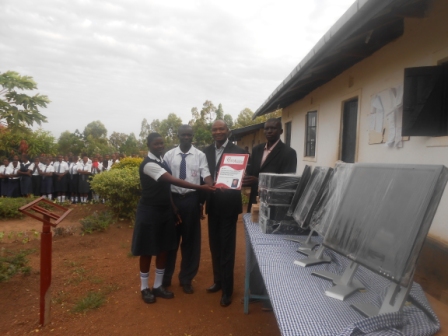
This week, I received an email with a scanned letter of appreciation for the various ways we have helped.  It was, indeed, heartwarming, to get this acknowledgement of our support and I want to share it with those who have, through donations to CanAssist, contributed to all the work we have done at the school.1

Our next project at the Kyabazaala Elementary School is to help them construct teachers’ quarters on the school property.  This will help them to acquire and retain qualified teachers since the school will be able to offer some modest accommodation to the teachers whose salaries are woefully low. The community has already been accumulating locally-made bricks for this venture. The total cost for this six-room teachers’ quarters will be approximately $7000 CAN.  CanAssist (and the school) will welcome any support dedicated to this project so we can start it soon.

 
Donate Now Through CanadaHelps.org!

The Jim Owen Computer Classroom in Kenya

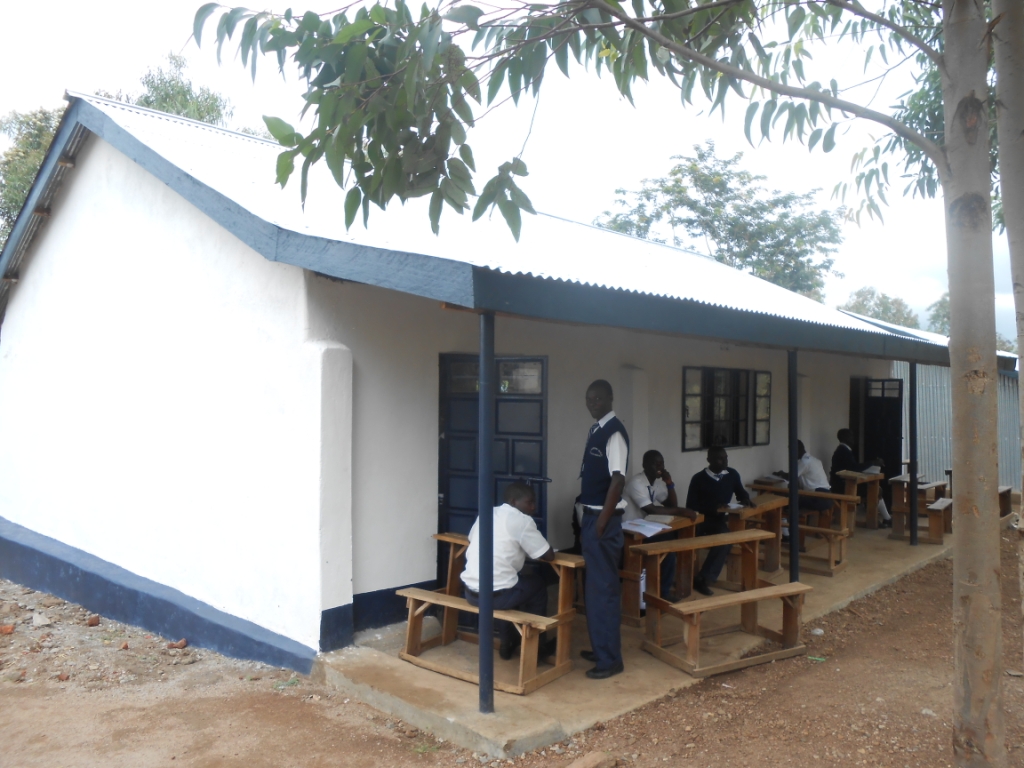
It is an absolute delight to report that the Jim Owen Computer Classroom at the St Gorety Secondary School in Nyatike District of Kenya is built.

DSCN2576 Friends and family of Jim Owen, who passed away early in November, wanted to remember him with something lasting. Jim was always interested in computers and things electronic. He could spend hours just wandering the aisles of the Canada Computers store and if you had a problem with your laptop or anything else electronic he was happy to spend hours tinkering to get it fixed.

It was appropriate that a memorial to Jim be directed toward a planned computer classroom that the CanAssist African Relief Trust was about to fund. Donations flooded in – he was well-loved – and I am happy to report that the building has been constructed and four complete computers purchased and installed.

DSCN3127

The school is delighted. Students realize that they are in a much better place to acquire post secondary employment if they have some computer familiarity. In rural areas like Nyatike this is to easy to achieve. Most of the students at the school may not have electricity at their homes let alone a computer.

CanAssist is happy to report this progress and thank all who donated to this memorial. The school has mounted a plaque with Jim’s photo on it in the classroom.

Asante sana.

image


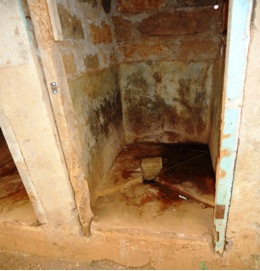
Would you want your kids using these school toilets?

Imagine this. You are a single mother of three children living in Kenya.  You desperately want your children to get an education, hoping that will boost their chances of living more comfortably than you do now.  You can barely afford food.  The local school is about three kilometres away and has crowded classrooms.

The toilets at the school look like this.Twiga Girls Latrine

Twiga Boys Latrine 3

Your kids are often sick with diarrhea and vomiting. Your thirteen year old daughter is in class seven. She as just stared menstruating.  These toilets, with broken doors, are the only place she can tend to her monthly needs.  So she stays home from school four or five days a month and subsequently gets behind with her studies.

At CanAssist we hear stories like this all the time.  We see these deplorable sanitation facilities at schools. It startles us  to find that in busy village markets there are no sanitation facilities at all. Adjacent fields and gutters turn into raw sewage minefields.

With the support of our donors, we try to help.

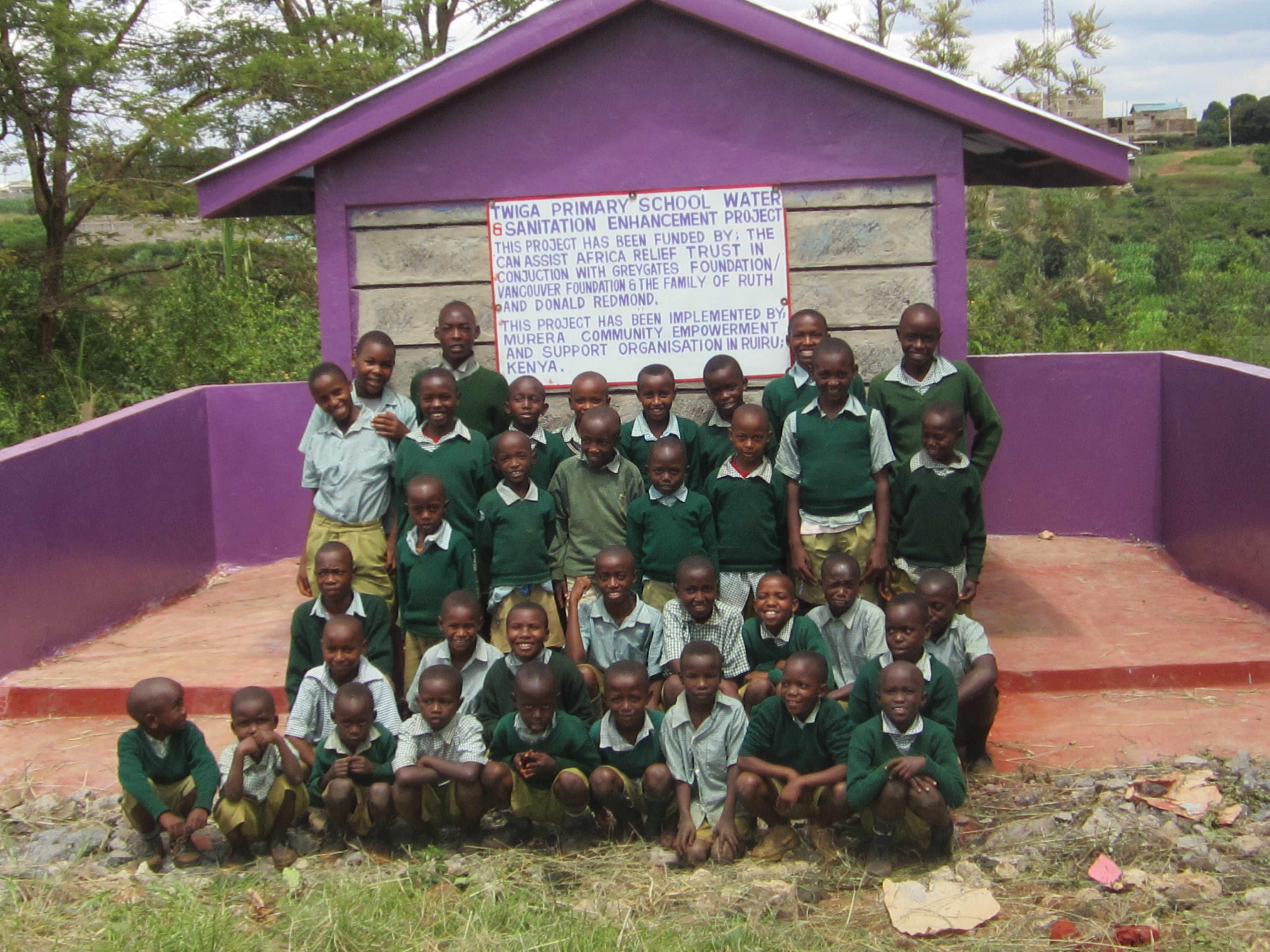
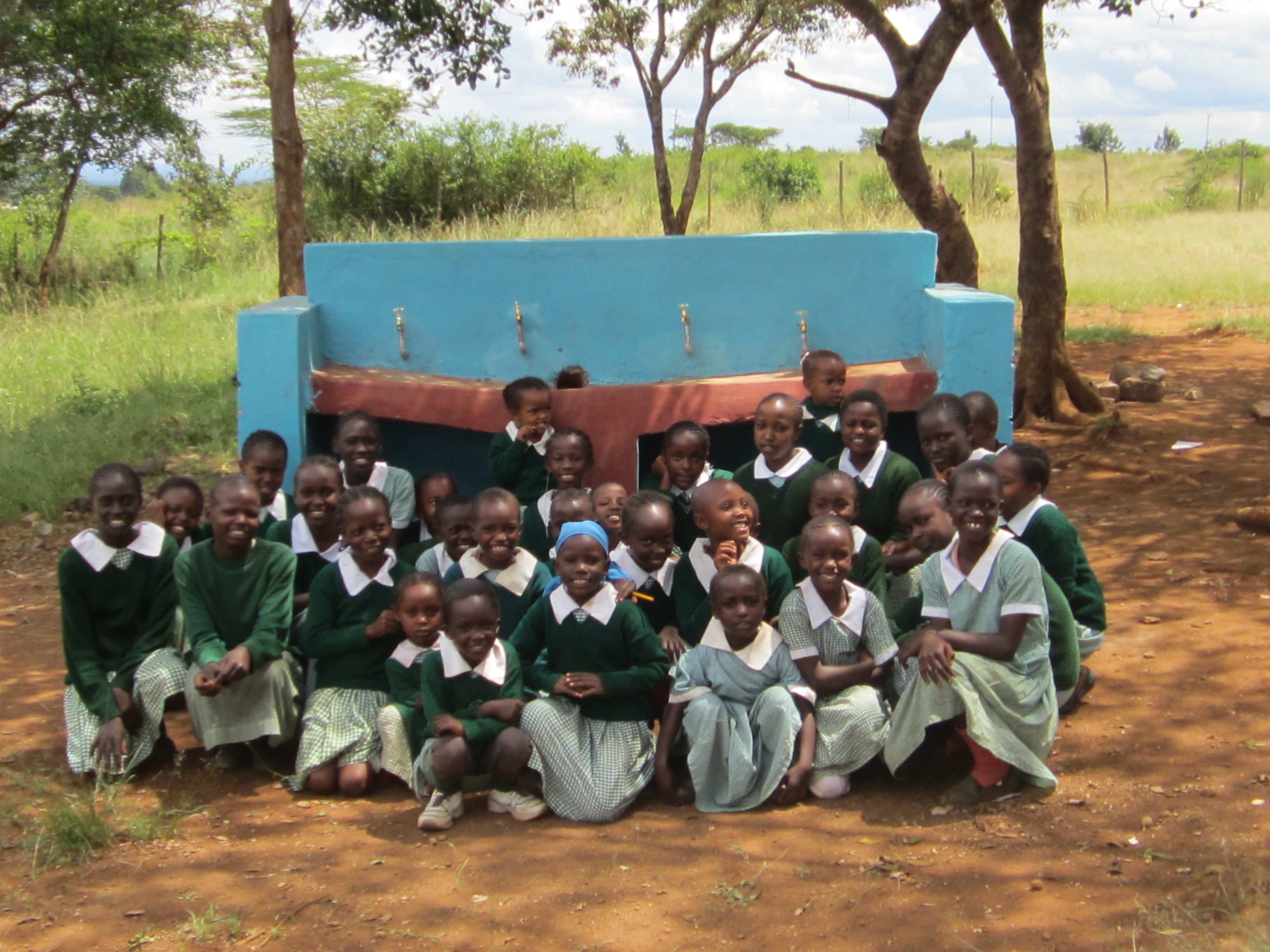
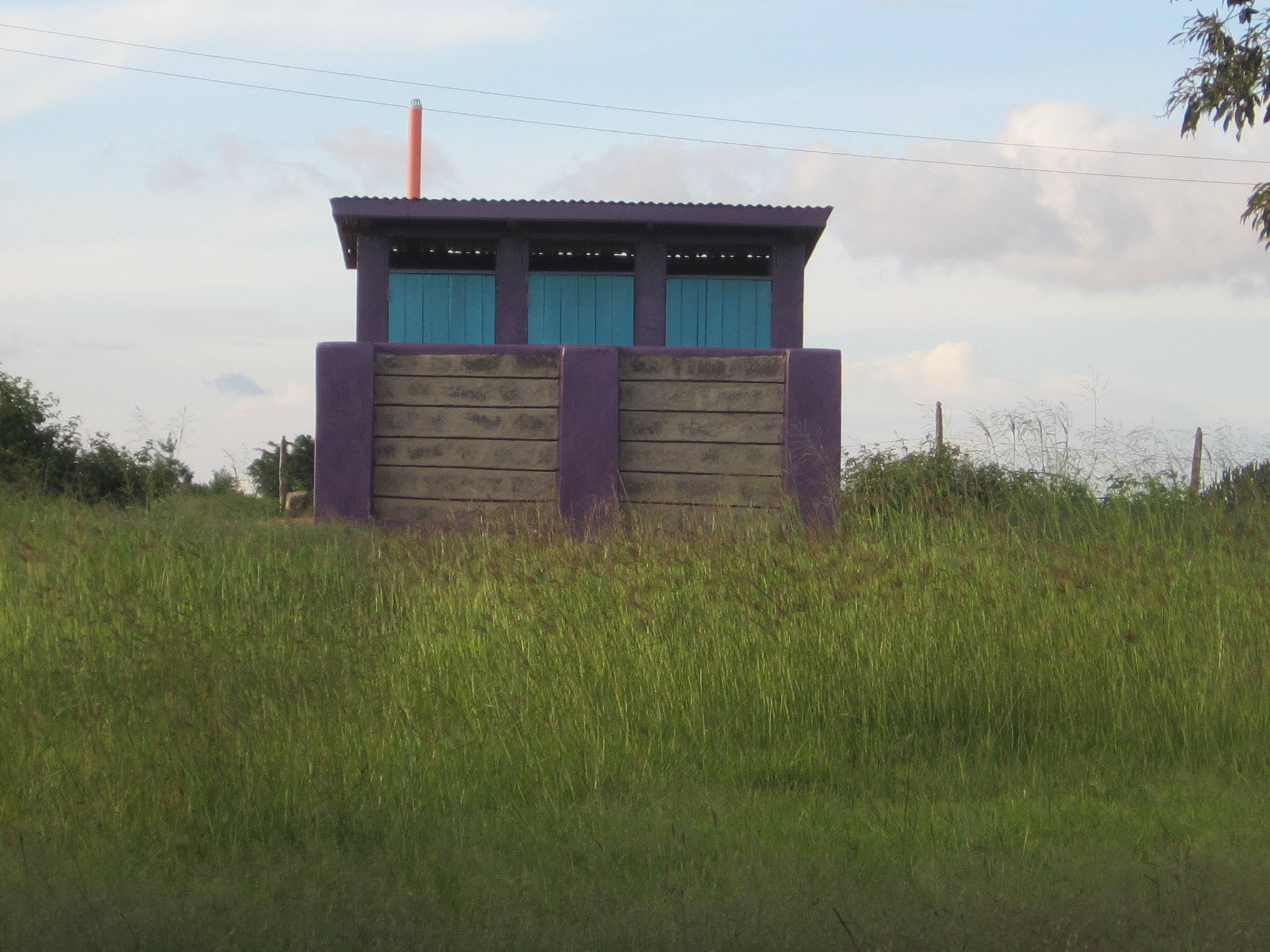
In the past couple of months we have been gratified to follow the construction of latrines at the Twiga school in Ruriru district of Kenya.  For a cost of about $7500 we have been able to provide rainwater catchment, new latrines for students and teachers and hand-washing stations for the school.  Hand washing has been shown to reduce the spread of many diseases but without the proper facilities this becomes impossible.

This week we received this report from Michael Gichia who works with the Murera Community Empowerment and Support Organization (MCESO) . It reads, in part:

Benefits realised from the project.

Inscription on the latrine wall reads " Twiga Primary School water & Sanitation enhancement project. This project has been funded by CanAssist African Relief Trust in conjunction with the Grey Gates Foundation /Vancouver and the family of Ruth and Donald Redmond."

Inscription on the latrine wall reads ” Twiga Primary School water & Sanitation enhancement project. This project has been funded by CanAssist African Relief Trust in conjunction with the Grey Gates Foundation /Vancouver and the family of Ruth and Donald Redmond.”

“The project has brought about the following benefits to the school children in TWIGA PRIMARY SCHOOL;

o 555 school children and 15 teachers at TWIGA PRIMARY SCHOOL in Ruiru district have
safe sanitation and drinking water facilities.
o The school enrolment ahs gone up by 20 more children by the beginning of second term
thanks to the water and sanitation enhancement project
Hand washing station

Hand washing station

o The project has improved access to water supply at TWIGA PRIMARY SCHOOL in Ruiru District

o The project has brought positive perception among the school children on sanitation and personal hygiene e.g. hand washing practices, proper disposal of wastes and economical use of water as well as improved knowledge about hygiene and environmental sanitation;

New CanAssist-funded teachers' latrine at Twiga School.

New CanAssist-funded teachers’ latrine at Twiga School.

o The project has brought about reduction in water shortages at TWIGA PRIMARY SCHOOL
and therefore more time for learning for the children.
o The project has reduced diseases associated with drinking dirty water and observing unclean hygienic behaviour among the school children.
o The school has functional hand wash facilities for the promotion of health and hygiene
o Preliminary training on sanitation and cleanliness has been conducted.”

Now, imagine again, as that poor African mother, how pleased you would be that your children had decent sanitation facilities at their school.

CanAssist has been happy to be able to improve the sanitation facilities for these 550 Kenyan pupils.  We have had specific support for much if the cost of this project from the Grey Gates Foundation in Vancouver and from friends and family of Ruth and Don Redmond in celebration of their 65th wedding anniversary last year.

CanAssist has just taken on similar projects in other schools in Kenya and Uganda.  If you or your family would like to help to bring smiles to the faces of African students and their teachers, you can give a tax-deductible donation to CanAssist by mail or online. Details about how to support a project like this a re available on our website www.canassistafrica.ca


Desks to schools in Kenya…

I put many hours a week into the CanAssist African Relief Trust. Sometimes I wonder why I do it.  Today I received an email that reminded me.

Last year CanAssist received an application from a development group in Kenya asking for support in providing desks for three schools in Rachuonyo District near Homa Bay.  We did not know the schools or the AFORD development organization but thought that they presented an organized appeal and, in the past, we have found provision of school desks to be satisfying.  Not only do the children of the schools receive furnishings to help them learn better, the desks are locally made which gives carpenters and suppliers some income.

In December, I visited some elementary schools in Canada and they have donated about $1000 toward the $5000 needed to build 170 desks that will serve 450 students.

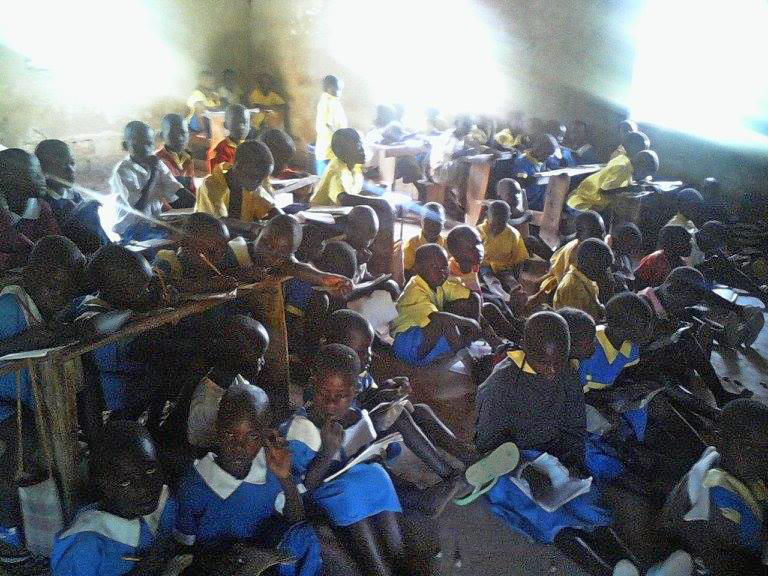
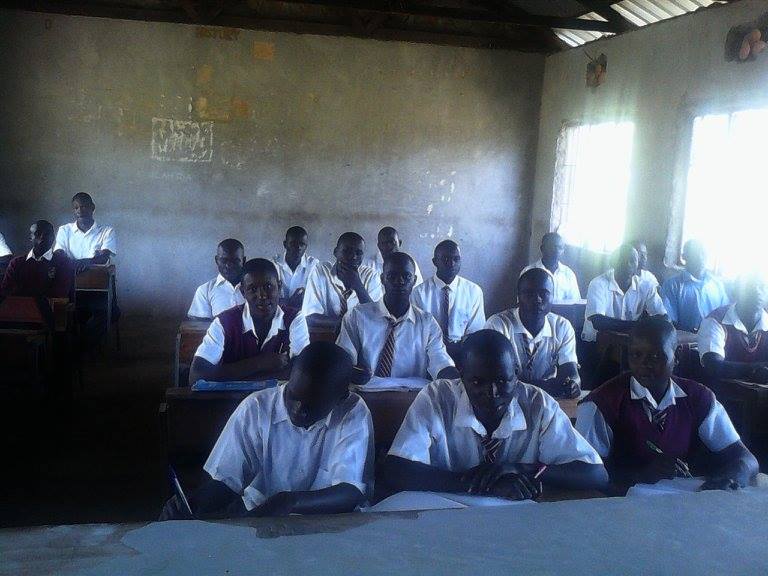
Last month I asked the school for some photos of the school so we could help promote this project.  Today I received these grainy photos taken recently at two of the schools. I will let them speak for themselves.  I think you will agree that they are heartbreaking.  Although the Kenyan Ministry of Education does offer “free” education to elementary school students, this is the quality in some of the remote districts.

The Kamser Elementary School.  Crowded conditions not conducive to learning. There are 450 students at two schools like this one and they are requesting 150 bench desks to accommodate the students, many of whom sit on the floor.

The Kamser Elementary School. Crowded conditions not conducive to learning. There are 450 students at two schools like this one and they are requesting 150 bench desks to accommodate the students, many of whom sit on the floor.

Photo3_Kamser primary 2

Students at the Kamser Secondary School.  This school requests 20 individual desks.

Students at the Kamser Secondary School. This school requests 20 individual desks.

Our Kenyan field representative, Dan Otieno, will visit the schools sometime in the next month and we hope we can to move ahead with the funding and construction of new desks very soon.  If you would like to help with this, CanAssist appreciates gifts of any size. The average cost per bench desk will be about $40. Can you afford to donate one? (or two would be nice.)

donateNow2b1

Helping educate African children…

One of the mandates for the CanAssist African Relief Trust is to improve education opportunities for children in East Africa by providing infrastructure that will achieve this.

One of the schools funded by CanAssist is the Oltaraja Elementary School in a remote Maasai community in the Rift Valley, Kenya.   CanAssist has built one classroom there and in 2014 will build another.  Children who would otherwise have had to walk several kilometres to a school (or not go at all) will have the opportunity to get some Primary education closer to home.

It’s about giving …

For several years I worked in Bosnia and spent a lot of early Decembers in Sarajevo, a multicultural city that was still predominantly Muslim, before returning home for Christmas.  The country was also in a post-war period and struggling to rebuild.  I was always struck by the contrast between their society as it prepared for the winter solstice and year-end and mark varied religious celebrations and the onslaught I got when I came home the week before Christmas where I was bombarded with the pre-Christmas hype and commercialism that we endure in North America.

In the past few years, retailers have developed special shopping days to encourage people to buy, buy, buy – Black Friday and Cyber Monday.  The aim seems to be to offer bargains for people buying Christmas gifts and help the retailer get everyone in the spending mode.

This year, for the first time, Canada will mark Giving Tuesday.  Instead of focusing on getting, on December 3 there will be a country-wide effort to think about giving back – either through donations or volunteering.

africaleaf 2The CanAssist African Relief Trust depends on donations from people across Canada to do the infrastructure support work in East Africa that we know helps communities to improve their well-being.  We fund school classrooms and desks, hospital equipment and beds, rainwater catchment equipment in schools, clinics and communities, latrines for vulnerable children and adults at schools and in villages where no facilities have existed.

Each year CanAssist attempts to fund about $100,000 work.  We rely on the generosity of donors to do this.

donateNow2b1

This Giving Tuesday we hope you will consider the CanAssist African Relief Trust in your charitable activities. And a bonus is that a donor has agreed to match the first $3000 in donations to CanAssist on December 3.  So the value your donations (which already can buy about 4 times as much in East Africa as it would in Canada) will be doubled. Your donation will also be tax-deductible.

A study in the U.S. last year showed that the majority of people would prefer to have money donated to a charity than receive a gift that they could not use or did not really want. In this Holiday Season, please put CanAssist on your Giving list.  Donations can be made with a credit card on the Canada Helps link below or by searching for CanAssist on the Giving Tuesday website.  Or you can mail a check to 582 Sycamore Street, Kingston, Canada K7M7L8.

In the next few days, I will post some videos that highlight some of the work that CanAssist has already done in Kenya, Uganda and Tanzania.  We plan to continue to do similar work next year with your support.

Listen to members of various CanAssist partner communities as they express their appreciation for the generosity of Canadians that is making a difference for them and their families.

donateNow2b1

Giving Tuesday 2013 50

Dimes 4 desks

Kids!  Their enthusiasm is infectious.

Last month I visited the Grade 4 class at Glenburnie School to tell them a bit about Africa.

Here is a “campaign” that resulted from my visit. This short video presentation, created by Ashley, one of the students in the class,  speaks for itself.

Ashley had originally had “With a Little Help from my Friends” as her background music but YouTube is picky about copyright so we changed it to some original African sounds. I recorded the music in the video when I was visiting a CanAssist project site in the village of Olimai, Uganda in 2011.  The thumb piano band had welcomed me to the community in the afternoon and serenaded me again after dark. What a delightful treat for a visitor.

The money raised by the class will go to the S.P. Geddes Early Childhood Development Centre to provide furnishings (they have none at the moment).

What would you do?

Peter Singer starts a recent TED talk with a dramatic video of a small child in China being knocked down by a car on the street. As she lies there, injured, three passers-by totally ignore her. The incident is reminiscent of the Good Samaritan story from the Bible, where a priest and a Levite ignore the plight of the injured traveler on the road before the Samaritan stops to help.

Singer asks the audience – “How many of you would have stopped to help?” Not surprisingly, most of the hands go up.

African Child - can you overlook her needs?

African Child – can you overlook her needs?

Singer then says something like “Well, there are children all around the world who live in poverty, vulnerable to preventable violence and disease – millions of them. Are you paying any attention to them?”

“Unicef reports that in 2011 over 6.5 million children under age 5 died of preventable poverty-related diseases.”

Singer is an Australian philosopher and humanist who writes and speaks out about many ethical issues including poverty and animal rights. In 2009, he wrote a book called “The Life You Can Save”. In the book he encourages readers to commit to helping developing communities with a small portion of their income. If you can afford to pay $2.00 for a bottle of water that is free from the tap, do you not have money to spare – to share, in fact, with others who are living without many of the necessities of life that we take for granted?

His message is not a guilt trip. He encourages us to enjoy the fruits of our labours and our good fortune at living in a community where there is law and order, fresh water, social responsibility and enough food but to share a portion of that with others who must live without those amenities.

We are constantly bombarded in the media with photos of children in North America who have perished in the natural (or unnatural) disasters like the recent tornado in Oklahoma City or the bombing at the Boston Marathon. Our hearts go out to the families of these children and we feel sad and that these deaths seem unfair. These are a very few children whose stories touch us because they are in communities like ours.

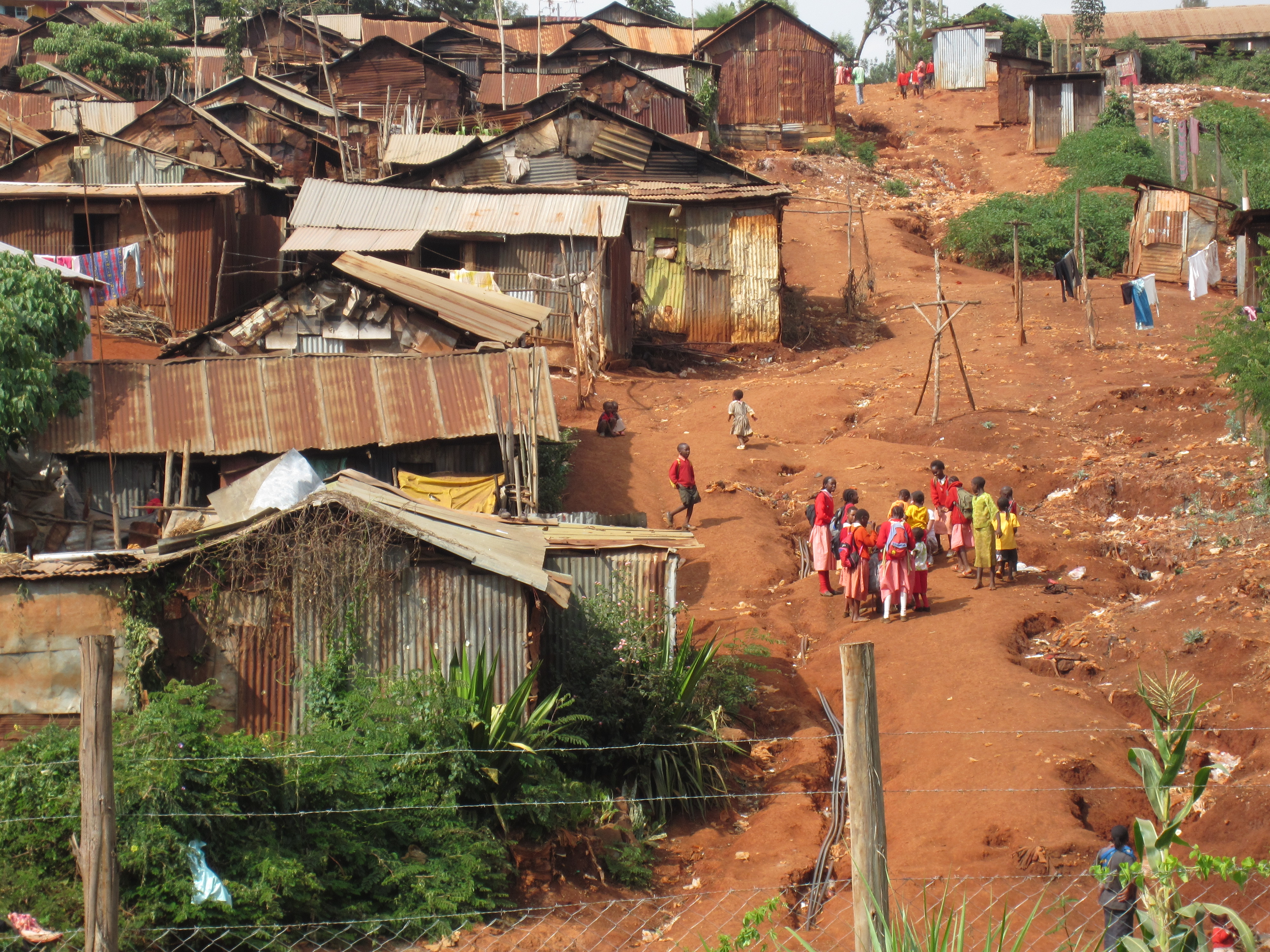
Nairobi slum

Nairobi slum

But what about the mothers of the 19,000 children who die in the developing world every day from preventable poverty-related problems? Do we give them much thought? Do we pour money into the developing world to help these 19,000 like we do to help families of the few North American families touched by tragedy?

Think about this for a minute. It is sobering. 19,000 per day.

The CanAssist African Relief Trust is attempting to so something, however small to help these families in East Africa. Rather than pick a few children for special attention, CanAssist funds community infrastructure projects like school classrooms, water and sanitation improvements, food security through local agriculture and health care facilities. We have funded around $300,000 in projects since 2008. Our Canadian community helping communities in Africa.

If you are interested in what we do, please look at our website http://canassistafrica.ca We are always happy to receive support, moral or financial, for the work we are committed to do to lessen the effects of poverty for vulnerable East African families.

(If you would like to participate in what CanAssist is doing to help communities in East Africa you can donate using the Canada Helps link below.)

donateNow2b1

Here is a link to the Peter Singer TED talk. If you have 15 minutes please listen to what he has to say.

Everyone is a winner…

I am always happy to be part of a win-win situation. Last year I enjoyed one that was win-win-win. If I think about it I could add more win’s but you get the point, I am sure.

The St Gorety School is a secondary school in a small village called Mikei, Kenya. It is pretty rurual, about 20 km inland from Lake Victoria and in Nyanza Province, one of the least advantaged districts of Kenya.

Through CanAssist, and with my Canadian friends, Virginia and Suzanne I met Edward Kabaka a couple of years ago. Edward is a founder of a local support group called Rieko Kenya. Well, to make a rather long story shorter, Edward brought the needs of St Gorety School to our attention. Basically the school, serving secondary students from the surrounding region, was overcrowded and needed more classroom space.

St G classroom 2013So in 2012, CanAssist agreed to construct one classroom and complete another which had been partially built with Kenyan government funds which dried up before the roof could be put on the building.

Virginia and Suzanne, secondary school teachers themselves in Kingston, promoted this project to some of their students who responded with fundraising to help with this building.

At the same time, the Queen’s Health Outreach group, university students whose mandate is to promote Health education to students and youth in various parts of the developing world, were looking for a new district in Kenya to work. I have been an ad hoc mentor to this group for the past several years and it seemed natural to put them in touch with Edward and the St. Gorety School.

QHO students visited several schools and community groups in the Nyatike region in 2012.

QHO students visited several schools and community groups in the Nyatike region in 2012.

Last year the QHO group spent several weeks in the Mikei/Nyatike community, living in a house overlooking the rolling Kenyan hills and interacting with schools and women’s groups in the region to educate and promote healthy living practices. Another group of six QHO students are excited to be returning to the community in May/June this year.

When I visited the St Gorety School and other groups in the region in February, they all lit up with smiles at the mention of the QHO students and were ecstatic to hear that there would be a group returning this year.

So where do all the “win’s” come in?

  • CanAssist has been delighted to be able to provide infrastructure support to the school (and three other community groups as well…more about those in later posts).
  • The QHO group has found a welcoming community where they are able to do their outreach work to promote education about health to young Africans.
  • The community which was actually quite neglected and off the beaten track for development has been excited to welcome visitors from Canada who are eager to help them improve their living circumstances. Kenyans love visitors.
  • Edward Kabaka has found support for his dream of improving well-being in the community.
  • Some of the students at KCVI and LCVI in Kingston have established pen-pal relationships with students in Kenya and have the satisfaction of having been able to help their peers in Africa.

And I sit back and smile. It’s all so good.

Treat yourself to the joyous music from the St. Gorety school choir in the Youtube video below.