A girl named Rose…

This is the text of an article that I wrote for the Kingston Whig Standard – November 29, 2013.

First encounter with Rose in 2006

First encounter with Rose in 2006

Over the past several years, I have documented my travels in East Africa in the Kingston Whig Standard. Those who have followed this journalistic safari will know that it has led me to be actively involved with the CanAssist African Relief Trust, a Kingston-based registered charity that funds infrastructure projects in Kenya, Uganda and Tanzania.

You may also recall me telling about a little girl named Rose that really started this all for me. Let me recap.
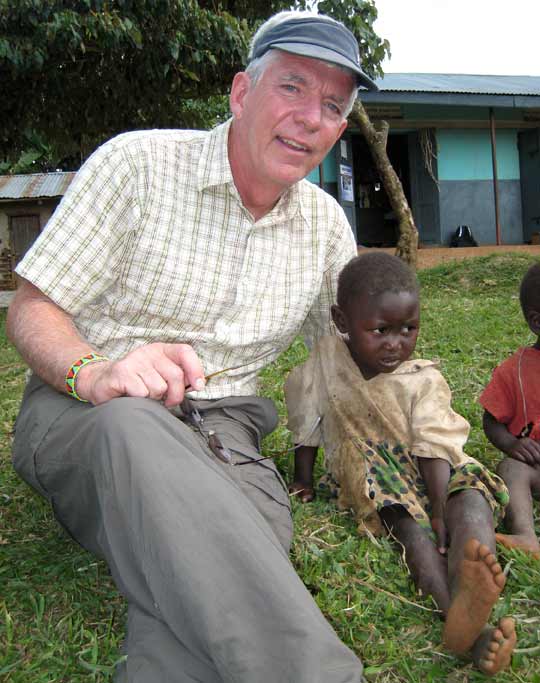
Sitting by the roadside with Rose in  2007In 2006, I was traveling with some McGill students in Uganda and we chanced upon a little waif sitting by the side of the road in a small rural trading centre called Ibura. The child looked sad and unkempt and she had a large open sore that was swarming with flies on her left leg.

The students were dismayed and wondered “What can we do for this child?” In short, there was not much that we could do. I dressed the wound on her leg and we assured ourselves that there was, indeed, some family that were in the village. But we felt uncomfortable heading back to our field station for lunch, knowing that this child and many others like her, were struggling to survive.
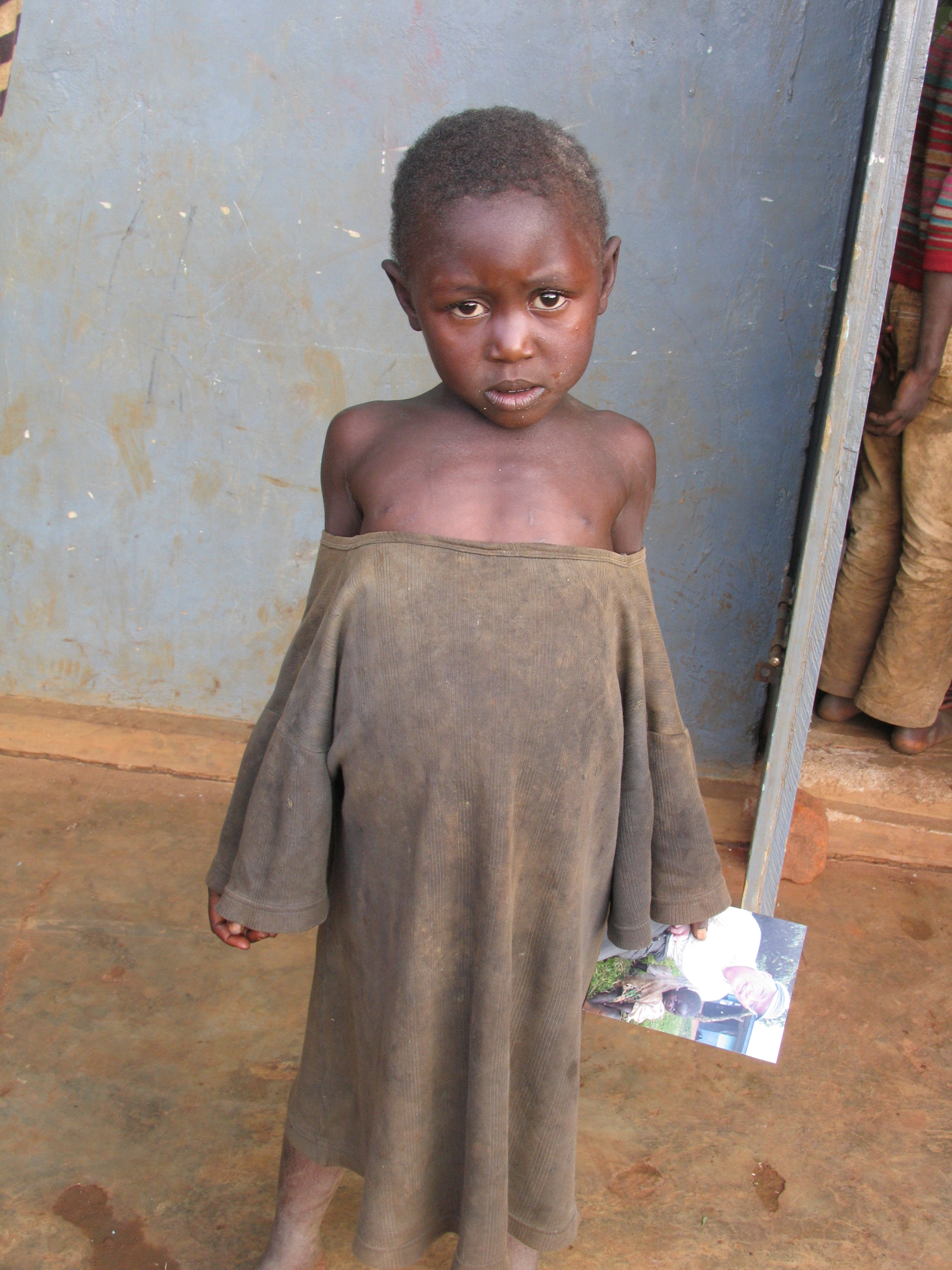
In 2008, Rose did not look well.  I had brought her a photo from the year before. She needed care, not photos.  In April 2008 we started the CanAssist African Relief Trust.

In 2008, Rose did not look well. I had brought her a photo from the year before. She needed care, not photos. In April 2008 we started the CanAssist African Relief Trust.

Unicef statistics in 2006 indicated that more than 11% of children born in Uganda would die before their fifth birthday. Would this child, obviously unwell and having minimal care be one of them?

The reality is that there are thousands, if not millions, of children in Sub Saharan Africa who live in vulnerable situations. Poverty and the scourge of HIV that overwhelmed the continent at the end of the last century left many children orphaned and bereft.

It would be relatively simple to pick one of these children to support with money for school, food and security. But which one do you pick? When you are in a town like Ibura, you need only look around to realize that there are many, many children who could use your assistance.

My solution was to establish the CanAssist African Relief Trust. CanAssist funds sustainable, tangible infrastructure projects in vulnerable communities. We respond to requests for support from community leaders of all sorts and since our inception in 2008 we have provided over $300,000 directly to East Africa to fund construction of wells, latrines, classrooms, community gardens, income generating supplies, school desks and solar systems. As a registered charity we are able to provide income tax receipts for donations and we have received support from Canadians in Kingston and across Canada to help us do this work.

Now what does this have to do with little Rose? Well, in addition to helping other communities, CanAssist has helped to equip a health facility near her village and provided a motorbike for the community nurse to do outreach health education, treatment and immunization. Just last month CanAssist supporters provided money to repair a well in Ibura that will now provide clean water to the community and particularly to the elementary school close by.

And what became of Rose?

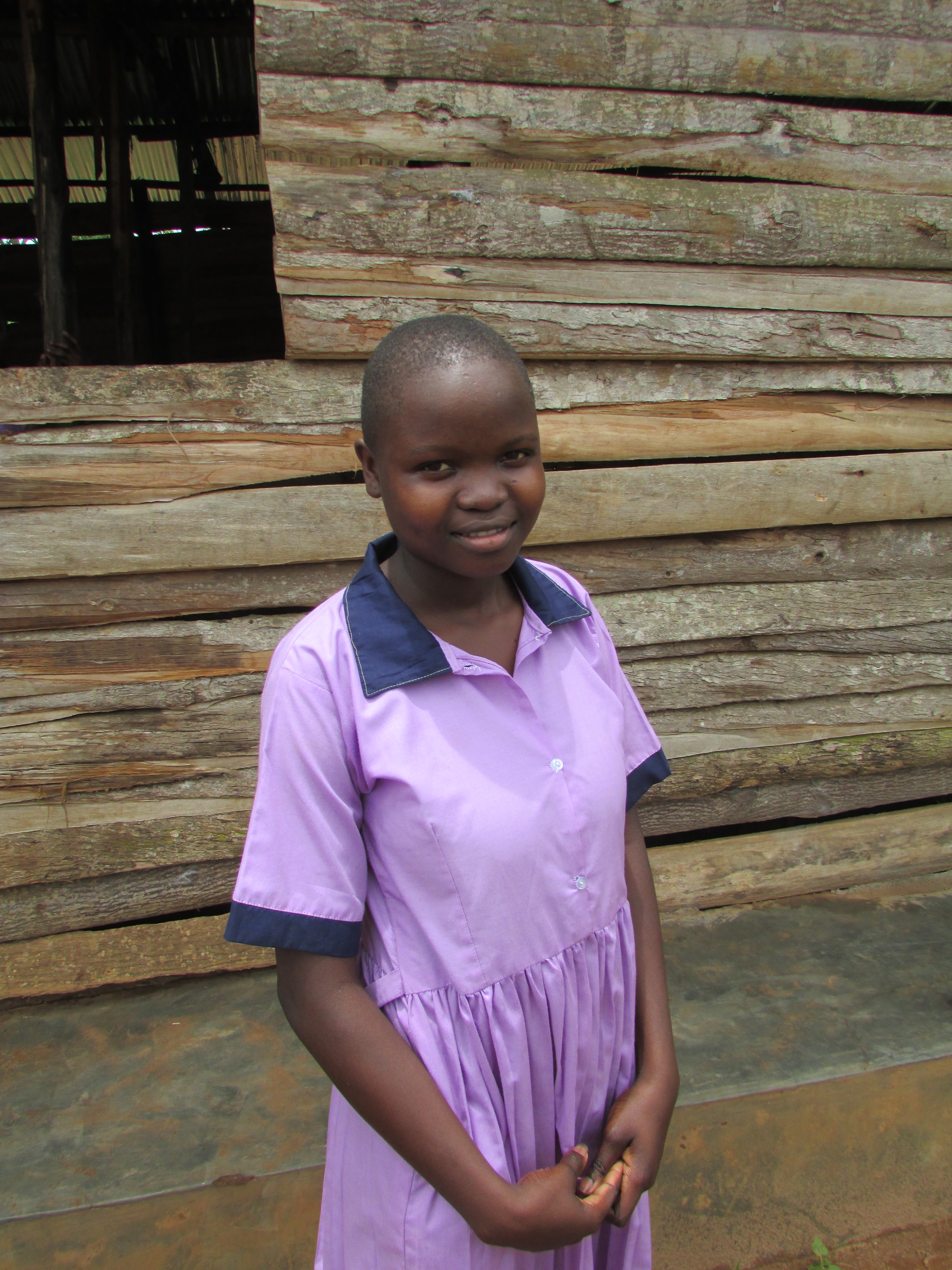
Rose in 2013. A survivor.

Rose in 2013. A survivor.

I have returned to this community five times since that initial visit and each time I don’t rest until I have found this child. Sometimes it has been a challenge but eventually with some help from other community children I locate her. In 2009, both her parents died of AIDS. This likely explained why she and her siblings always seemed so unkempt and neglected. She eventually has become under the care of grandparents – the frequent story that grandmothers are being left to care for their many grandchildren as the middle generation has been decimated by HIV/ AIDS.

Eventually, each time, I have found her. The most recent “visit” – which is only a few moments each time – was in September. She is now 11 years old and attending the school where CanAssist has just repaired the well.

Rose would likely be surprised to know how much that chance meeting on the road several years ago has influenced my life since then. I am glad to know that she now looks healthy, receives some care from the local clinic if necessary, attends school and now has access to clean water. But I am also happy to know that, through the gifts from CanAssist donors to her village, other children and adults benefit as well – our Canadian community helping a vulnerable community in Africa.

There are promising predictions that Africa will start to grow economically and eventually become self-sufficient and productive. In the last ten years as I have visited East Africa I have seen encouraging growth and improvements and been impressed by the capability of community leaders to work to solve problems. In the meantime, however, there are millions who still need some help to get to this first step on the ladder of wellness.
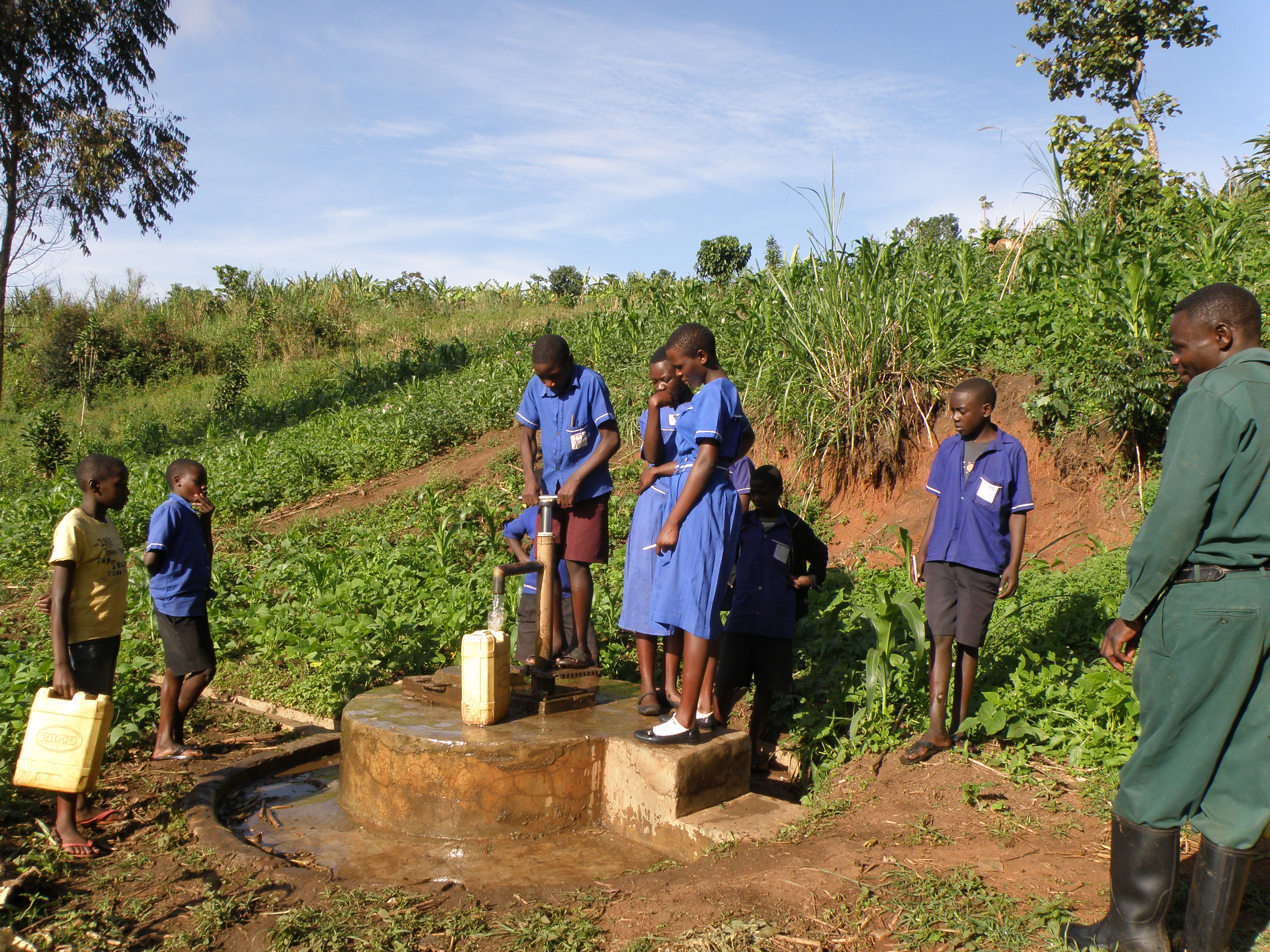
The CanAssist-refurbished wel in Ibura now supplies clean water to Rose' school.

The CanAssist-refurbished well in Ibura now supplies clean water to Rose’ school.

An opportunity for better nutrition …

In addition to providing desks and chairs and hospital equipment and classrooms in East Africa, the CanAssist African Relief Trust has also helped establish gardens like this one at the Kanyala Little Stars School in Mbita, Kenya.  The garden’s help to provide a steady source of nutritious food and a modest income-generating activity which helps other expenses.

CanAssist has most recently funded development of a garden like the Little Stars one for a patient support group a the Tom Mboya Hospital in Rusinga Island, Kenya.

Mama Benta of Kanyala Little Stars explains the benefits of this support to African families and groups.

Helping educate African children…

One of the mandates for the CanAssist African Relief Trust is to improve education opportunities for children in East Africa by providing infrastructure that will achieve this.

One of the schools funded by CanAssist is the Oltaraja Elementary School in a remote Maasai community in the Rift Valley, Kenya.   CanAssist has built one classroom there and in 2014 will build another.  Children who would otherwise have had to walk several kilometres to a school (or not go at all) will have the opportunity to get some Primary education closer to home.

Helping Women in Kenya

In the week leading up to Giving Tuesday, CanAssist is happy to show some examples of infrastructure support work done by the CanAssist African Relief Trust in East Africa in the past several months with some short YouTube videos.  Please share them with your Facebook friends.  And on Giving Tuesday, December 3 (or any time, for that matter) please keep the CanAssist African Relief Trust in mind. Your support keeps us moving ahead and helping communities in Africa.

Today we highlight work that CanAssist has done in Nyatike District to help women and girls in that community be safer and more productive.

donateNow2b1

It’s about giving …

For several years I worked in Bosnia and spent a lot of early Decembers in Sarajevo, a multicultural city that was still predominantly Muslim, before returning home for Christmas.  The country was also in a post-war period and struggling to rebuild.  I was always struck by the contrast between their society as it prepared for the winter solstice and year-end and mark varied religious celebrations and the onslaught I got when I came home the week before Christmas where I was bombarded with the pre-Christmas hype and commercialism that we endure in North America.

In the past few years, retailers have developed special shopping days to encourage people to buy, buy, buy – Black Friday and Cyber Monday.  The aim seems to be to offer bargains for people buying Christmas gifts and help the retailer get everyone in the spending mode.

This year, for the first time, Canada will mark Giving Tuesday.  Instead of focusing on getting, on December 3 there will be a country-wide effort to think about giving back – either through donations or volunteering.

africaleaf 2The CanAssist African Relief Trust depends on donations from people across Canada to do the infrastructure support work in East Africa that we know helps communities to improve their well-being.  We fund school classrooms and desks, hospital equipment and beds, rainwater catchment equipment in schools, clinics and communities, latrines for vulnerable children and adults at schools and in villages where no facilities have existed.

Each year CanAssist attempts to fund about $100,000 work.  We rely on the generosity of donors to do this.

donateNow2b1

This Giving Tuesday we hope you will consider the CanAssist African Relief Trust in your charitable activities. And a bonus is that a donor has agreed to match the first $3000 in donations to CanAssist on December 3.  So the value your donations (which already can buy about 4 times as much in East Africa as it would in Canada) will be doubled. Your donation will also be tax-deductible.

A study in the U.S. last year showed that the majority of people would prefer to have money donated to a charity than receive a gift that they could not use or did not really want. In this Holiday Season, please put CanAssist on your Giving list.  Donations can be made with a credit card on the Canada Helps link below or by searching for CanAssist on the Giving Tuesday website.  Or you can mail a check to 582 Sycamore Street, Kingston, Canada K7M7L8.

In the next few days, I will post some videos that highlight some of the work that CanAssist has already done in Kenya, Uganda and Tanzania.  We plan to continue to do similar work next year with your support.

Listen to members of various CanAssist partner communities as they express their appreciation for the generosity of Canadians that is making a difference for them and their families.

donateNow2b1

Giving Tuesday 2013 50

It’s World Toilet Day!

Are you celebrating World Toilet Day?  Do you ever stop to  realize that billions of people around the world do not have access to sanitation facilities like we do in the “developed” world.

According to the World Bank data, only 32% of Kenyans have access to “Improved Sanitation” facilities  – either a toilet or a Ventilated Pit (V.I.P.) Latrine, The latter is basically an outhouse with a decent base, ventilation and a hole on the floor and would be far from what we might call the V.I.P. treatment.

There are many efforts to provide clean water to communities (another luxury for some)  but somehow, latrines are not very sexy to promote for NGO’s doing work in Africa.

Through the CanAssist African Relief Trust we are trying to help.  CanAssist has done several projects involving latrine construction at schools, clinics and in communities.

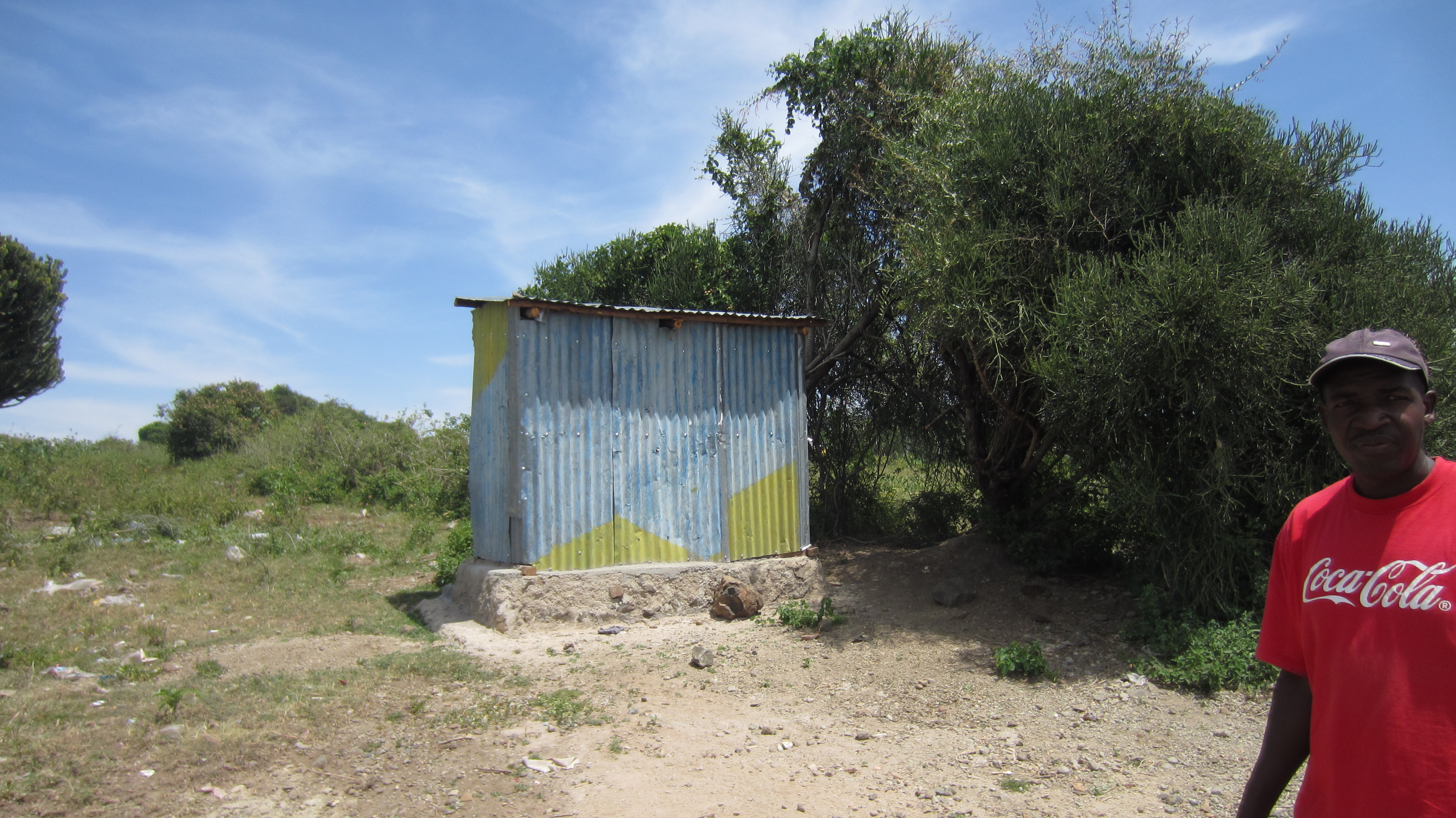
Over 200 people in the village used this small latrine with no ventilation and a full pit!

Over 200 people in the village used this small latrine with no ventilation and a full pit!

One such community is Osiri Village on Lake Victoria where over 200 people used one small toilet which was run-down and full.  Or, more commonly they used the fields and bush around the village for defecation. Not only is this humiliating and degrading, it fosters spread of bowel infections like Cholera and Typhoid.

New Latrines at Osiri Village - August 2013

New Latrines at Osiri Village – August 2013

CanAssist donors helped provide the community with new latrines in August this year.  Still not enough to serve this many people but better than what was there before.

So today, on World Toilet Day, as you flush that toilet, think of the many, many people around the world who live without that luxury.

“On behalf of  the beach management unit i would like to thank you, the entire board of the trust and also the family whom we learnt donated funds through the trust of CanAssist to put up the 4 doors pit latrine in our beach . Thanks.”  Tobias Katete  b.m.u chairman

Mixed emotions

My cherished friend, Jim Owen, died last night. His tired heart just stopped. Although it was not entirely unexpected – he has been struggling to stay alive long enough to get a heart transplant – his passing is sobering. Death is so final.

I will miss Jim. His steady, calm, rational approach to problem-solving has been a beacon to me over the past several years. I am grateful for having him in my life.

Today I feel sadness at losing this friend. But I have also reflected with smiles and inner happiness at the times that Jim and Sue and I have spent together.

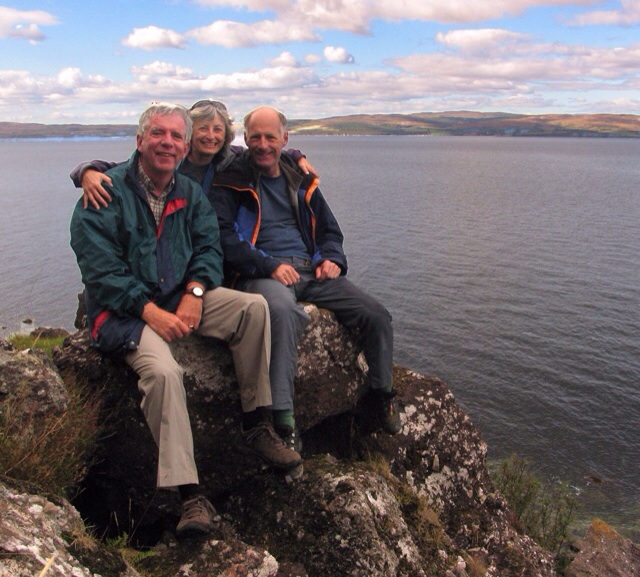
Pictures are worth a thousand words. Here are a few thousand words worth of photos that help me remember Jim. He and Sue and I have shared many happy times together.

imageimageimage

image

image

In 2011 Jim and Sue and I spent Christmas together on Longboat Key, Florida.  Tomorrow I will walk on the beach and think of good times with Jim and Sue.

Already I miss him … he would have been able to help me get around this video being blocked in some places because of copyright restrictions.  😦

Meet Edward and Christopher

Edward 500

This is Edward. He is the oldest of three kids living with a father who is intermittently ill and absent from the family. For much of the past three years he and his siblings have had to manage on their own.

Christopher and his older brother, Edward at the Hope for Youth School in Uganda.

Christopher and his older brother, Edward at the Hope for Youth School in Uganda.

Edward and his brother, Christopher, are just finishing up their studies at the Hope for Youth School in Uganda – a school that has been supported in several ways by the CanAssist African Relief Trust. Fortunately the staff and administration at the Hope for Youth school have been there to offer an element of stability to the lives of these kids and a bowl of porridge mid-day when food was scarce.

I have visited the school three or four times and have watched Edward and Christopher grow up. They both are involved with the traditional dancing and drumming entertainment that the school.

Christopher serves up some posho for lunch to visitor, Dave Kay, at Hope for Youth School

Christopher serves up some posho for lunch to visitor, Dave Kay, at Hope for Youth School

When I visited the school in September I asked the boys if they planned to go on to Secondary School. Their response was downturned eyes and shrugged shoulders. Their family has no money for them to attend secondary school (it would take about $550 for each boy to provide tuition and books for a year).

Their final exams are happening in December. The teachers at the school imagine that both boys will qualify for secondary school entrance.  (This little school is leading the pack in terms of grades for their district.)

Prossy

Prossy

I also met a girl named Prossy who has received top marks at the school but who has no money to continue her education. The teachers report that her academic performance has also been good but she lacks the resources to go on to secondary school.

What will become of these kids, I wonder.

This is a familiar story. African kids may get through elementary school but to go on requires some tuition, books and uniforms and this is often out of reach for a family living in poverty. Even fewer go on to post-secondary education. Most rely on outside support to continue their education. But there are so many pupils in this circumstance all desperate for some assistance.

Enjoy Christopher, Edward and some of their classmates as they do some Ugandan Traditional Dancing at the Hope for Youth School in Uganda. And realize how lucky we are that most of our students are able to complete secondary school with public funding regardless of their background or family situation.

No Phubbing please…

In the last week I have learned three new words. All of them sound like they are close to an obscenity. In some respects they are.

rs_560x415-130830150852-1024..miley-cyrus-twerk-vma.ls.83013Last month we were bombarded on internet news sites with Miley Cyrus doing a sexually provocative dance that I later learned is called twerking. Not being into Hannah Montana,  I didn’t exactly know who Miley Cyrus was before all this twerk hit the fan. At least I am not admitting to knowing who she was.  In my day the twist was sexually provocative.  And Elvis Presley’s hip gyrations were deemed unsuitable for the Ed Sullivan show so they only screened him from the waist up.  elvis-pelvisIt seems that the dance form is prone to pelvic thrusts and rotations as some sort of warm up to something else.  The twerk is just the latest name for something that has been around for quite a while. And Miley appears only to lack subtlety and talent rather than be doing anything new.

Today in the news it was an anti-fracking protest in New Brunswick that gained attention.  I was caught pondering WTF (what the frack) was all about.  Turns out it is some process whereby pressurized liquid is injected into rock, fracturing it and opening up small veins in the rock along which hydrocarbons and gasses can be extracted.  At least that is what I think it is.

If life hands you lemons, make lemonade. If you get salt...why not a salt lake?

If life hands you lemons, make lemonade. If you get salt…why not a salt lake?

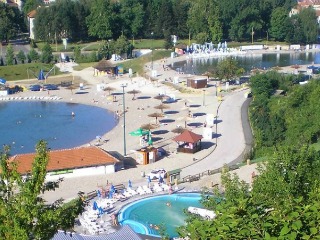
It kind of reminds me of what I learned happened mining salt in Tuzla, Bosnia. This region had a lot of salt under the ground (Tuz, I think, is an arabic word for salt) and they had been extracting it by putting water down underground, dissolving the salt and withdrawing it.  Buildings that  had sunk right into the ground, the dissolved salt forming a kind of crater.   Whoops. The town, ever resourceful, turned the area into a salt lake for swimming and as a tourist attraction.

I don't think George W is actually phubbing. He is trying to figure it out.

I don’t think George W is actually phubbing. He is trying to figure it out.

And then there was a CBC show this week on The Current on Phubbing.  I hope I never become a  phubber.  It refers to snubbing someone in a social circumstance by paying more attention to your phone.  You know the people – the ones who take their phones out and put them down on the table beside their plate when you go out for dinner with them.  The people who suddenly are talking to someone else when you are strolling beside them.  The people who interrupt your conversation to read and answer a text from someone obviously more important than you.  I didn’t know that this  ignorant behaviour had a name to it. But now I know. And so do you.

stop phubbing - wedding card - V1There is even an anti-phubbing website (stopphubbing.com) and Facebook page (Stop.Phubbing) dedicated to pointing out and decreasing this antisocial behaviour. It has downloads for posters for restaurants or table cards you can put  out at a wedding to discourage phubbing. Something that Sage Flowers could offer, perhaps, along with the beautiful bouquets.

If I EVER Phub you, please cut me to shreds over it.  And if you EVER do it to me, you can expect the same.  I will tolerate you Fracking me and even twerking me from time to time but thumbs down on Phubbing.

1094811_353491768117704_1692682165_n

1375655_371773686289512_1844721408_n-2

Wondering where the lions are…

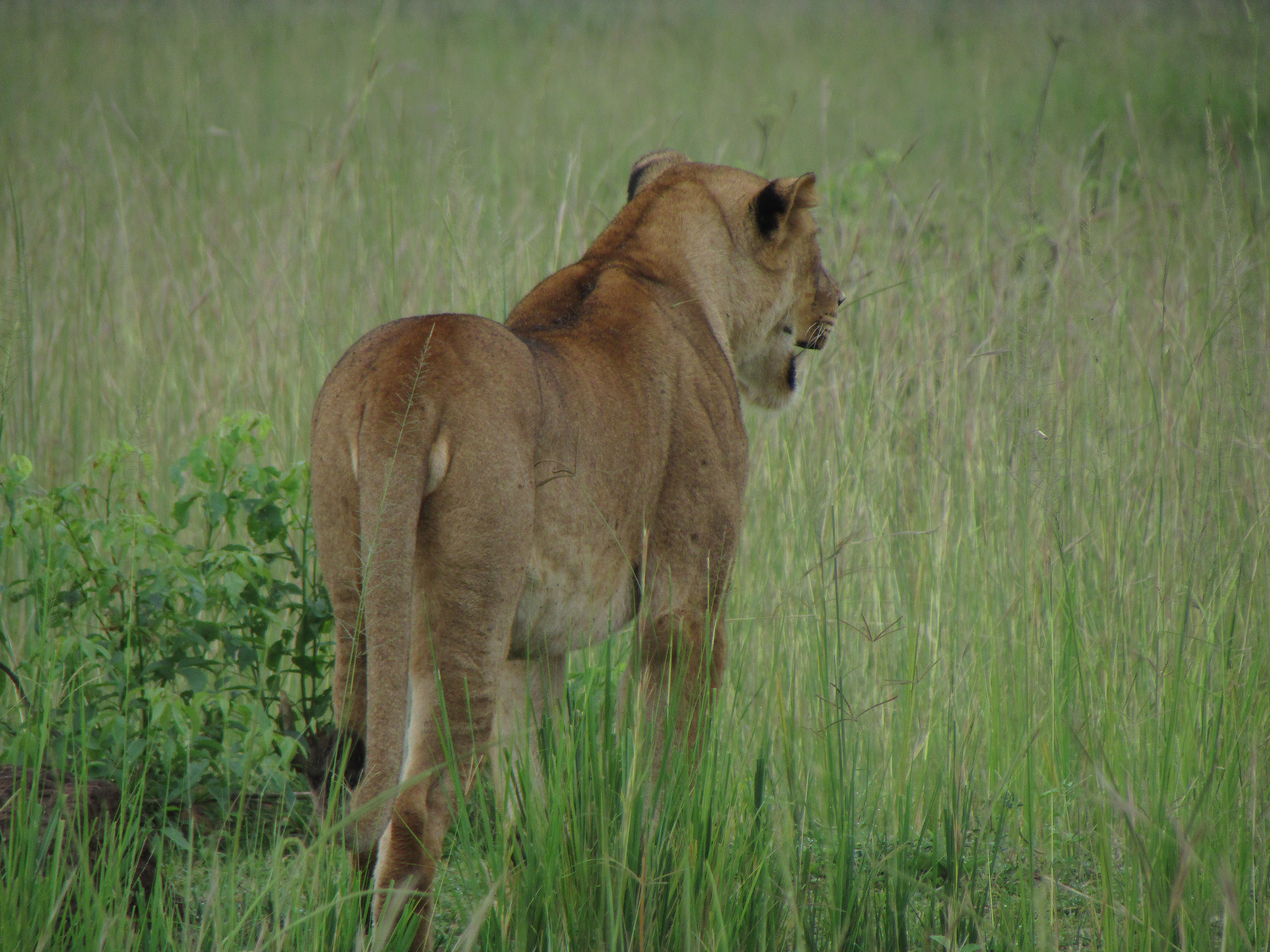
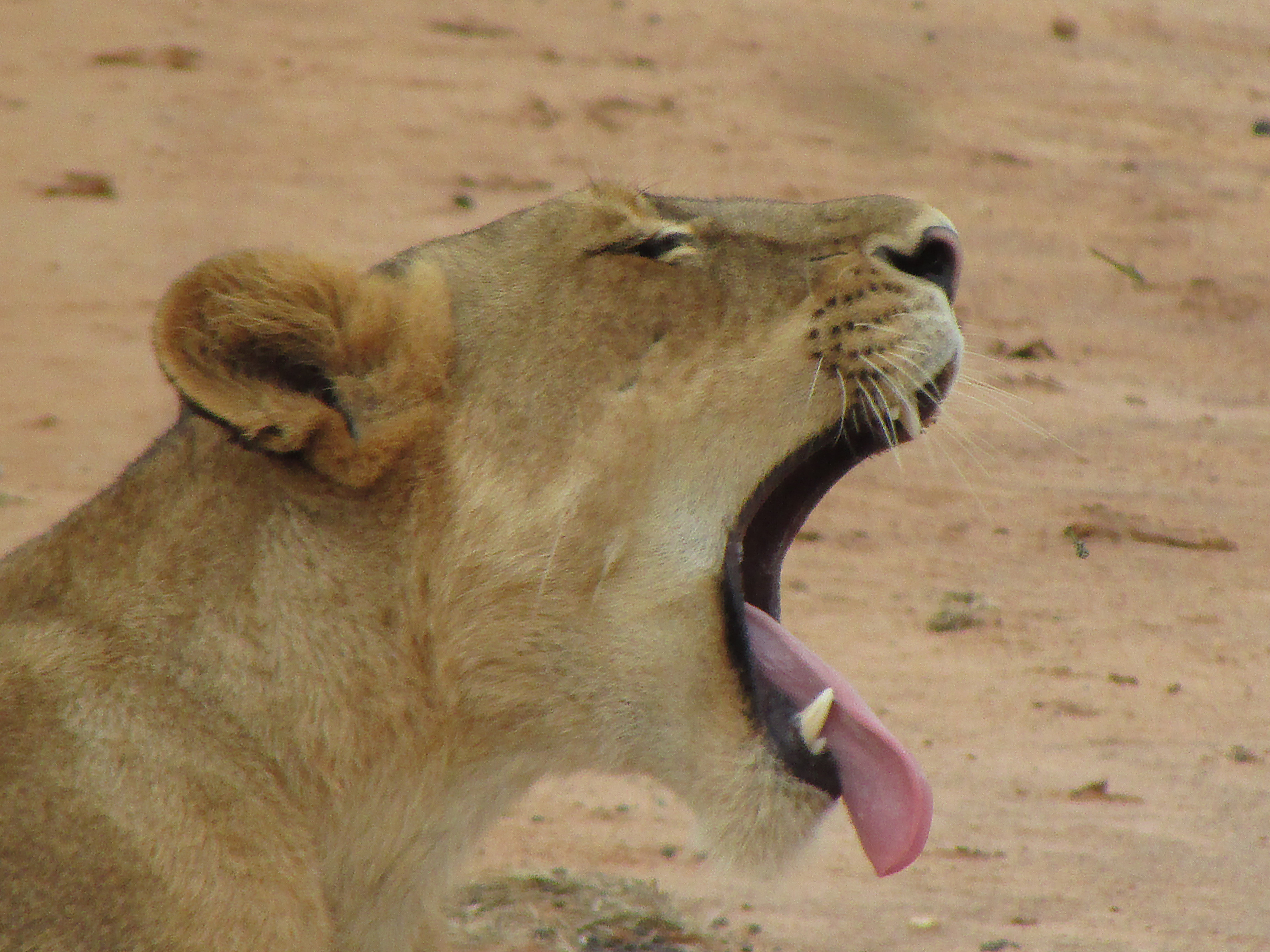
When one goes on a game drive in Africa, there is always the hope to come across lions.  Sometimes they are not that easy to find, particularly during mid day when they tend to lay under the bushes and nap.  I really didn’t expect to see lions on our morning drive in Murchison Park, Uganda but within half an hour we came upon two young female lions right out on the road in front of our vehicle.

We stopped and watched them for a while – always a pleasure.

lioness

lion 1

Lion 2_filtered

lioness 2