Photo oops …

I enjoy photography and time that I spent a couple of years ago in the Kibale Forest region of Western Uganda was perfect for taking pictures. It was a delight to wander along the forest road and wait patiently for a butterfly to light on a nearby leaf or flower. While waiting for them to stay still enough for me to focus and get the exposure correctly set, I ended up looking in the grass or bushes and discovered dragonflies and grasshoppers and dung beetles and iridescent flies. On two occasions, by the roadside, I also chanced upon a couple of bright green snakes about half a metre long. Snakes are not my favourites and they are generally feared and killed on sight by the locals. I suspect that these were just harmless grass snakes but it makes a better story if they were poisonous mambas. Some of the research assistants at the Makerere University Biological Field Station told me they hadn’t seen a snake in over a year. I saw two in one day. Luck? Or just the time to stand quietly and wait and watch?

baboon3649 A couple of big baboons would sneak around the corner of my cottage late in the afternoon as I sat on the porch reading. If I stayed very still, they didn’t notice me. One wandered over to a tree a few metres away from me and sat down in the shade, leaning up against the trunk. After a few moments, he looked my way and our eyes met. Well, his eyes and mine through the viewfinder of my camera. He thought for minute, then gave a brief baboon bark and got up to wander off, followed by his pink-rumped companion.

Red colobus 3182One afternoon, I stood for about 20 minutes waiting for a couple of Red Colobus monkeys to follow the rest of their troop in a rather precarious jump across the road. The jump involved climbing high in one tree, rocking the branch to get some spring, then virtually flying through the air spread-eagled to catch the lower branch of a tree across the road and scramble up to safety.

This pair was particularly cautious. They took turns heading to the takeoff spot, rocked a bit, peered over the road to their intended destination then hesitated and sat back down. Second thoughts. They looked at each then traded places, only to agree that this would be a perilous jump. jumpThey reminded me of two of my friends who carried out the same exchange while preparing to jump off a rock cliff into Georgian Bay one summer. I wondered if the monkeys sat around a campfire drinking Bailey’s at night. Not likely.
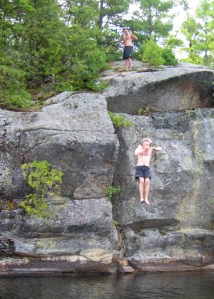
Eventually one of the monkeys braved the jump. Her success gave new courage to her friend. But the end of this adventure came so fast that I missed the shot. I had framed the photo, set the focus and waited so many times that when the final leap actually occurred, I had written it off as another false alarm. By the time I snapped the shutter, the deed was done. (I did catch my friends in mid air on their way into Georgian Bay, however.)

I also enjoyed taking pictures of the beautiful children in the nearby village of Kanyawara – children that I had met on other visits to the community – Fiona and Moses and the ragamuffin, Rose.

The kids are always happy to pose, and then squeal with excitement when I show them their photo on my digital camera screen.

kan]yawara kids3501One young fellow also decided to give me something good to photograph. I had motioned to some kids to get a bit closer to the cattle they were tending in a field near the village, They chased the animals around a bit then stopped for me to take a couple of pictures. Initially I didn’t notice that one of the boys was leaning up against a bull and massaging the bull’s scrotum. The bull didn’t seem to mind – at first. But suddenly the bull decided that this interaction had become altogether too personal and he determined that it was enough. He grunted and turned on the kid, head down like in a Spanish bullfight. He chased the boy around the field while the other children squealed in delight. Once again the action was too quick to catch and when it stopped, I was too embarrassed for the frustrated and aroused bull to take his photo.

Another group wanted to perform acrobatics for me. As one fellow stood on his head, the pinkish soles of his feet waving in the breeze, another group decided that they would jump over a rolling automobile tire like Russian dancers. I was never quite able to catch the jump as they didn’t understand my instructions to wait until I was ready before they started to roll the tire.
handstandOne little girl stood behind the older boys and raised her leg high into the air to kick it over the tire as it passed. She was wearing a vivid blue dress that set off her smooth brown skin and I caught, quite by accident, her jump behind the boys. I thought, as I reviewed the picture on my camera that this was actually the best moment and a little cropping would make it my picture of the day. But when I looked a little more closely, I realized that this wouldn’t do. The girl had no underwear on and my shot had caught her like Sharon Stone in Basic Instinct. No amount of Photoshop manipulation could fix this up.

Another opportunity lost, but what I lost in photos, I remember as great stories.

The butterfly in me …

A few weeks ago I went to the IMAX theatre at the Museum of Civilization in Hull to see the movie “Flight of the Butterflies”.  In addition to being a visually spectacular film in 3D it told another amazing story.

Monarch butterfies weighing only a few grams migrate from our back yards in Ontario to one particular spot in Mexico where they spend the “winter” months.  They then fly back to the southern US where they lay eggs and a new generation is formed which makes the second migratory loop to the northern parts of North America.  The generation that goes through the egg/caterpillar/pupa/butterfly phase here in Canada is the one that goes back to Mexico.  This journey is incredible enough, given the size of the delicate butterfly and the distance traveled.  But even more unbelievable is that the butterfly that migrates back to Mexico has never been there. It was her grandmother that spent the previous winter at the same location.

What could be the explanation for this?  There must be something inate that leads the butterfly to Mexico – something in its DNA that acted as a homeing GPS.

I have often found it remarkable that caucasian visitors from the northern hemisphere (including me) who visit East Africa are drawn to return there.  I have this unusual inner voice drawing me back repeatedly.  I have often wondered what this is all about.

Now I know.  Or think I do.

I imagine that there is some little piece of my DNA that knows where I came from – not last year but hundreds of thousands of years ago.  I think that some of us have some tiny piece of genetic material that recognizes East Africa as the place of our origin and, although we are not a migrating species, there is some biological inner voice that draws us there.  If it can happen to a Monarch Buttefly or Pacific Salmon, why not us.

Homo Habilis Maxilla

This is an actual 1.5 million year old maxilla and teeth from Homo habilis – one of my extended family members?

I am fortunate to have had the opportunity to wander in the Rift Valley where humanity originated.  In a little museum in Arusha Tanzania, I have seen part of a 1.5 million-year-old skull of Homo habilis – one of my great, great, great, great, great, …x many greats ……..  grandparents, perhaps.

Science supports the idea that all humanity originated in East Africa.   It makes me wonder – does my DNA remember this in some primitive way and that is why, like the butterfly that returns to the place of its ancestors without a map, I am drawn to return to the Rift Valley of Kenya?

It is, I am sure,  my ancestral home.

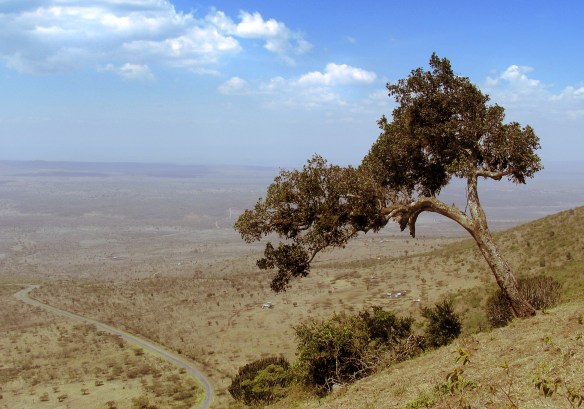
The Rift Valley of Kenya - I am drawn to this place like a magnet is pulling me there.

The Rift Valley of Kenya – I am drawn to this place like a magnet is pulling me there.

African Butterflies

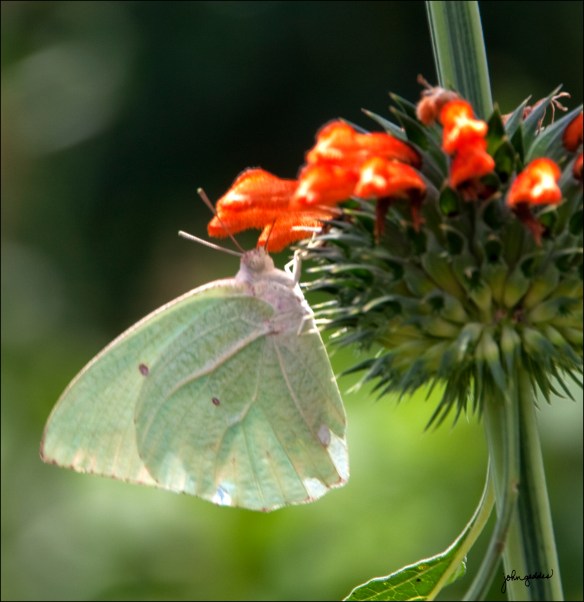
Red butterflyMy last blog about the Monarch Butterfly and Africa got me looking through photos I have taken of Butterflies in Africa.  Good segue into this one which will only be butterfly photos – give you a reading break.  I have enjoyed chasing butterflies all over Kenya and Uganda to get their pictures – more challenging than photographing giraffes. Butterflies don’t stay still for long.

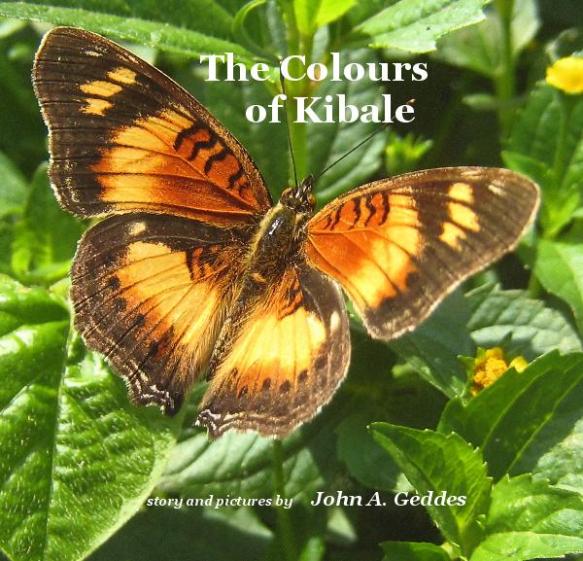
I even wrote a children’s book for my grandchildren based on butterflies in Kibale Forest, Uganda. Some of these photos were taken on Poinsettia bushes in Kenya, others on the forest floor in Western Uganda. The one against the bricks is called a Christmas butterfly.  I hope you enjoy them.  Happy New Year.

butterfly 3

blue butterfly 2

christmas butterfly2butterfly 4

bflies 4458 art

Colours of Kibale Book cover

My very extended global family

Although I am Canadian to the core, since 1998 I have spent many scattered weeks and months working elsewhere in the world and, to my surprise, have come to think of myself as a global citizen.

One of the great pleasures I have had is developing enduring friendships with people in many communities where I have visited or worked.

In Bosnia I enjoyed the hospitality of several families, and developed ongoing friendships with co-workers during the 11 years that I worked there. My closest associates were Bosniak Muslims, Orthodox Serbs and Croat Catholics. We were all able to get along and work together despite the preceding years of war based on “ethnic” differences.

With my Italian “family”. We chat regularly by Skype and get together every year or two either in Europe or North America.

In Italy, I have friends who have a bedroom in their house that they call “John’s room”. I have enjoyed making pasta with Aunt Bruna, babysat young Enrico when he was a baby and enjoyed special pizza made for me by their friend, Antonio.

In East Africa I have been blessed with cultural nicknames. In Maasai, I am John Ole Moiko Geddes and am a part of the Maasai Oseuri age set. In Uganda I also have been given traditional names of endearment. In western Uganda I have been given the empaako name Amooti. In another part of Uganda I am known as Otim. Emails that I get from there are addressed to Dr. Otim.

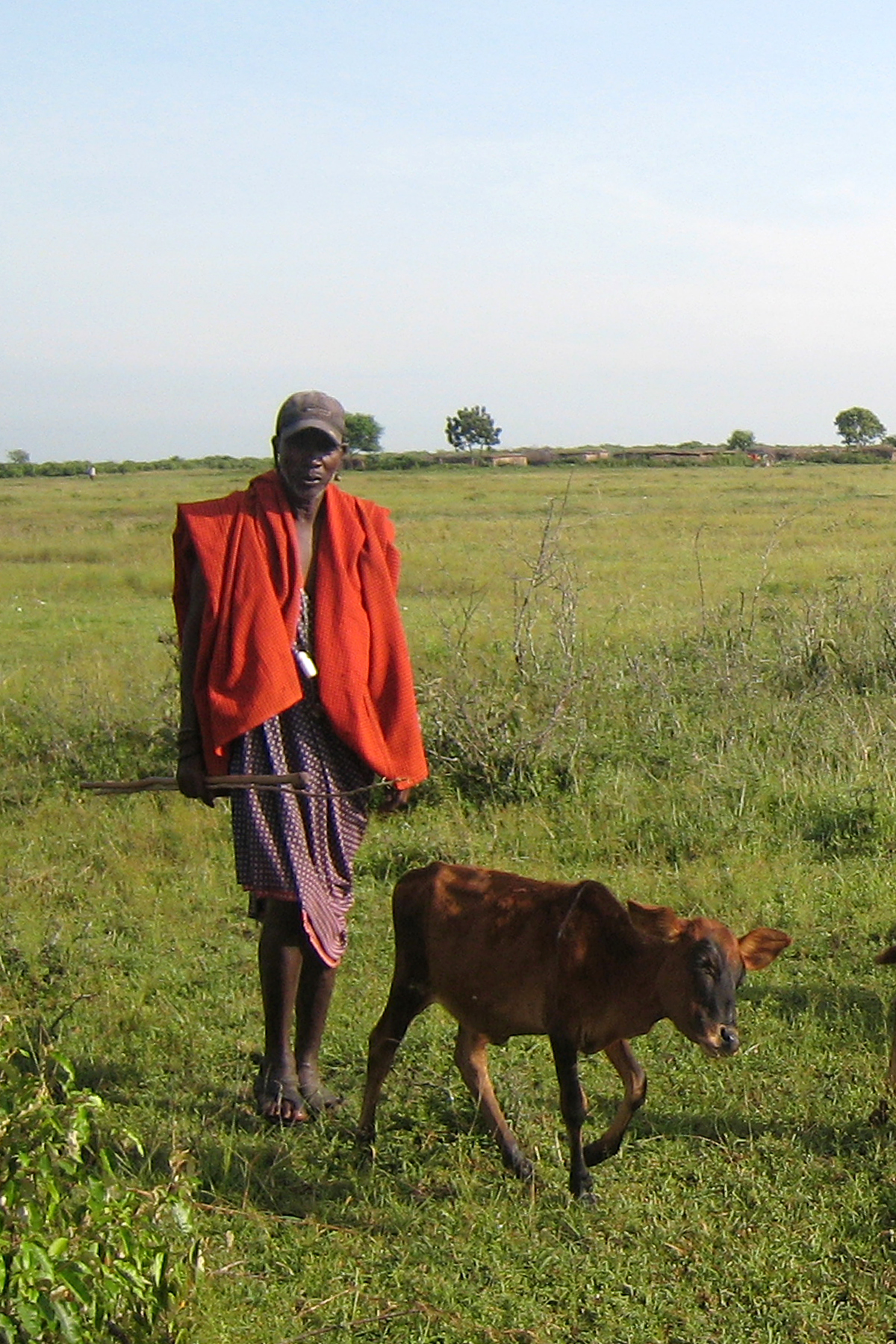
My non-conformist calf.

I have my own goat in Kenya (her name is Veronica) and have actually developed a little herd of her offspring. When I visit there, my Moiko family can find my goat(s) in their herd and point them out to me. The goats, however, don’t remember me.

I also had a calf given to me a few years ago. The Maasai fellow who did this said he picked this particular animal because it was “weird”. It was a real non-conformist liking to ramble with the other animals, goats and sheep. I took this as a compliment. Culture, colour, race or religion make no difference to me as to who my friends and family are.

Dan learned early on that if he wanted to be part of my family, he had to sport the right T-Shirt.

In Kenya there is a fellow who calls me “Dad”. I hear from him every week (more often sometimes than my kids here in Canada!) and he is Facebook friends with my family, has chatted on Skype with my 93 year old father and has pictures of my grandchildren stuck on the door of his refrigerator.

Having the chance to actually live with families in different communities has definitely given me opportunities to develop close friendships not usually available to “tourists”. These relationships have enriched my life immeasurably.

Getting the jump on jiggers

A couple of years ago, while I was traveling in Uganda, I thought that I had a blister or a plantar wart on the end of my little toe. I even bought new running shoes to try to remedy the situation.

Little did I know.

When I was sitting on a patio in sandals, one of my African friends looked at my foot. “You have a jigger.” he said. I pooh-poohed this suggestion but he insisted. ” I know jiggers. When I was a kid I had so many of them. Sometimes when I was going to fetch water, I would sit down and cry because my feet hurt so much.”

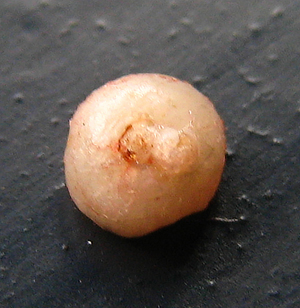
I was surprised when my friend “delivered” this cyst full of jigger eggs out of the tip of my right pinkie toe.

“I can cut it out for you.” he offered.

He could have started that sentence with “I’m no doctor, but …”

So as he whittled away at my toe, extracting a lump that was the size of a small kernel of corn from the tip, I learned about jiggers.

Jiggers (quite different from chiggers) are little fleas that live in the soil. They are a common plight in East Africa. The female finds some flesh into which she can burrow and produce hundreds of eggs which are encased in a cyst-like structure that gradually grows within the flesh of the host. Eventually the cyst bursts and the eggs scattered back into the dirt where the cycle starts again.

These fleas live in tropical environments where people are often barefoot or wearing minimal footwear. In addition, traditional homes and even schools and churches often have dirt floors, the perfect environment for the jiggers to flourish. Children’s feet in crowded, dirt-floored classrooms are particularly vulnerable to infestation.

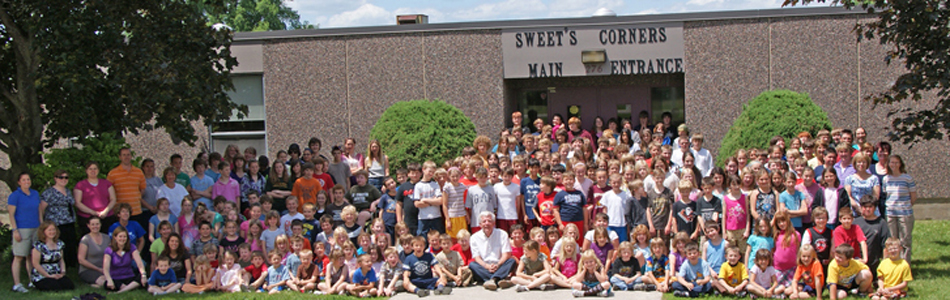
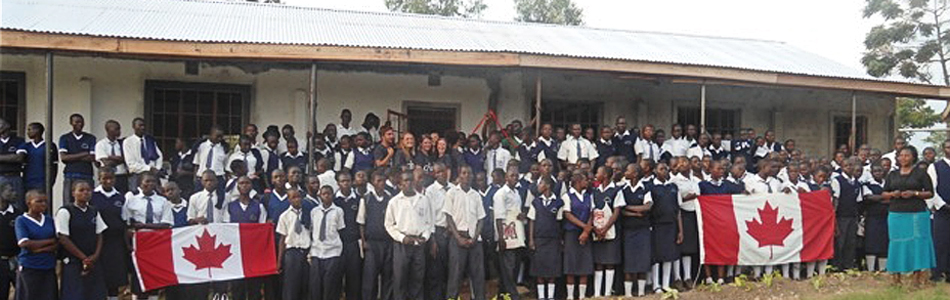
The CanAssist African Relief Trust learned of this plight for children in the Hope for Youth School near Mukono Kenya. The teachers insisted that cementing the floors of the classrooms would help eliminate this scourge. So, with money raised by the children at Sweet’s Corners School near Lyndhurst, Ontario, CanAssist set about cementing the floors of the Hope for Youth School.

The children of Sweet’s Corners Elementary School helped their African counterparts by funding the cementing of school floors to prevent jiggers.

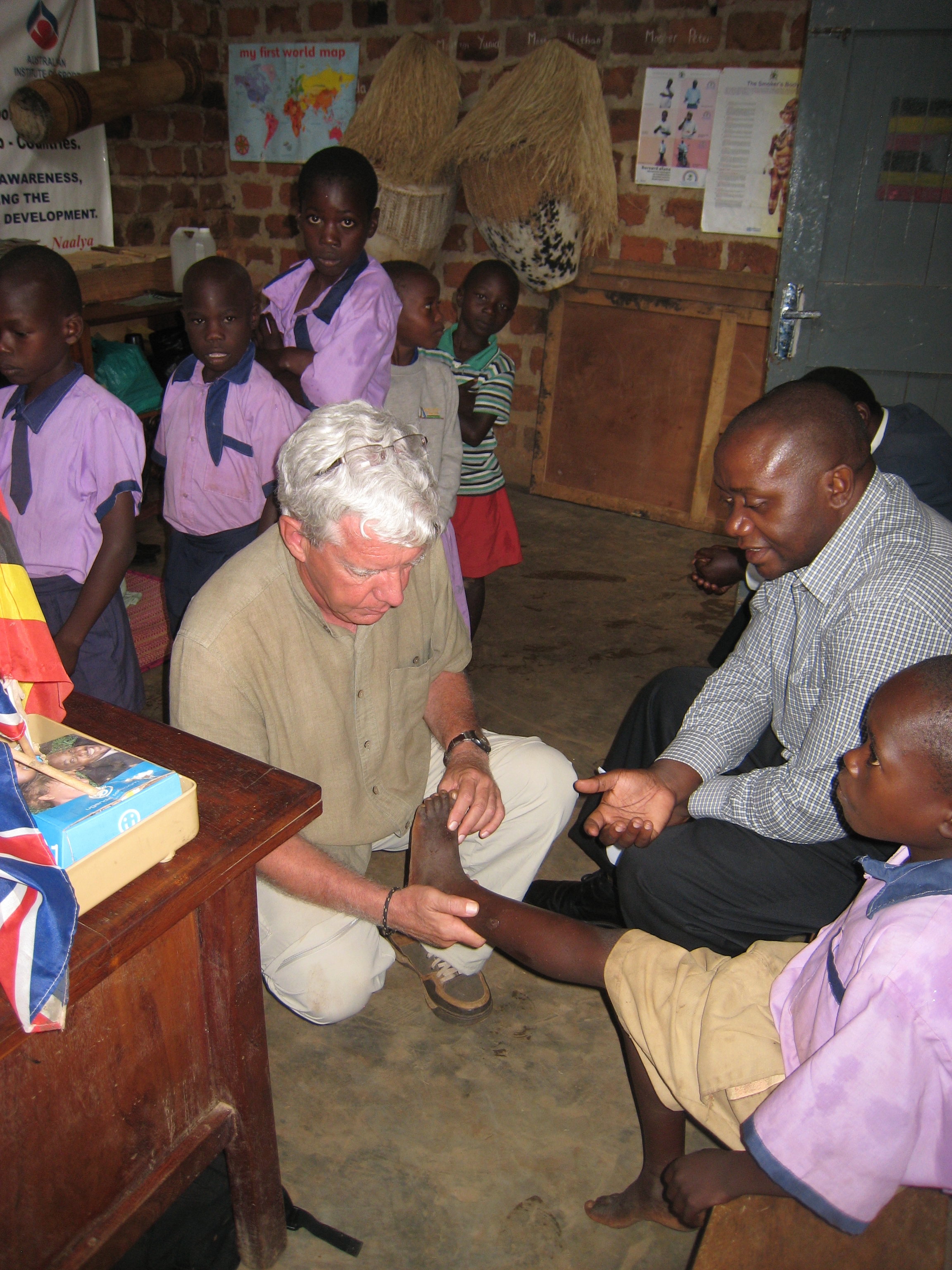
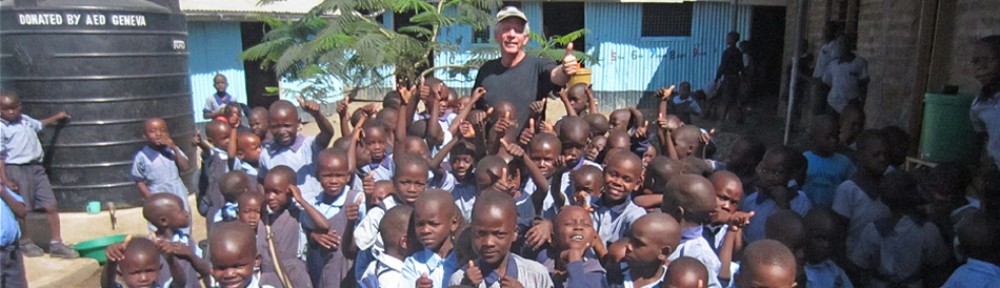
The children at Hope for Youth school were happy to show me their healthy feet after the classroom floors had been cemented to prevent jiggers.

With development projects it is often difficult to evaluate outcomes. But for this one it seemed relatively simple.

I had the school check the feet of all 107 children in the classrooms before the flooring was installed. 74% of the kids had jiggers and more than half of these had more than three in their feet. A few months after the floors were cemented, I was in the school and personally checked the feet of all the same children. The prevalence of jiggers went from 74% to 7%. The children were delighted.

The cost of this project was in the range of $1500  It brought relief to over 100 children and also demonstrated that cement floors that can be washed and swept can stop a jigger infestation.

Not just new latrines

I’m delighted to have received further updates about the sanitation improvements that CanAssist is funding at the Mutundu Primary School in Kenya.

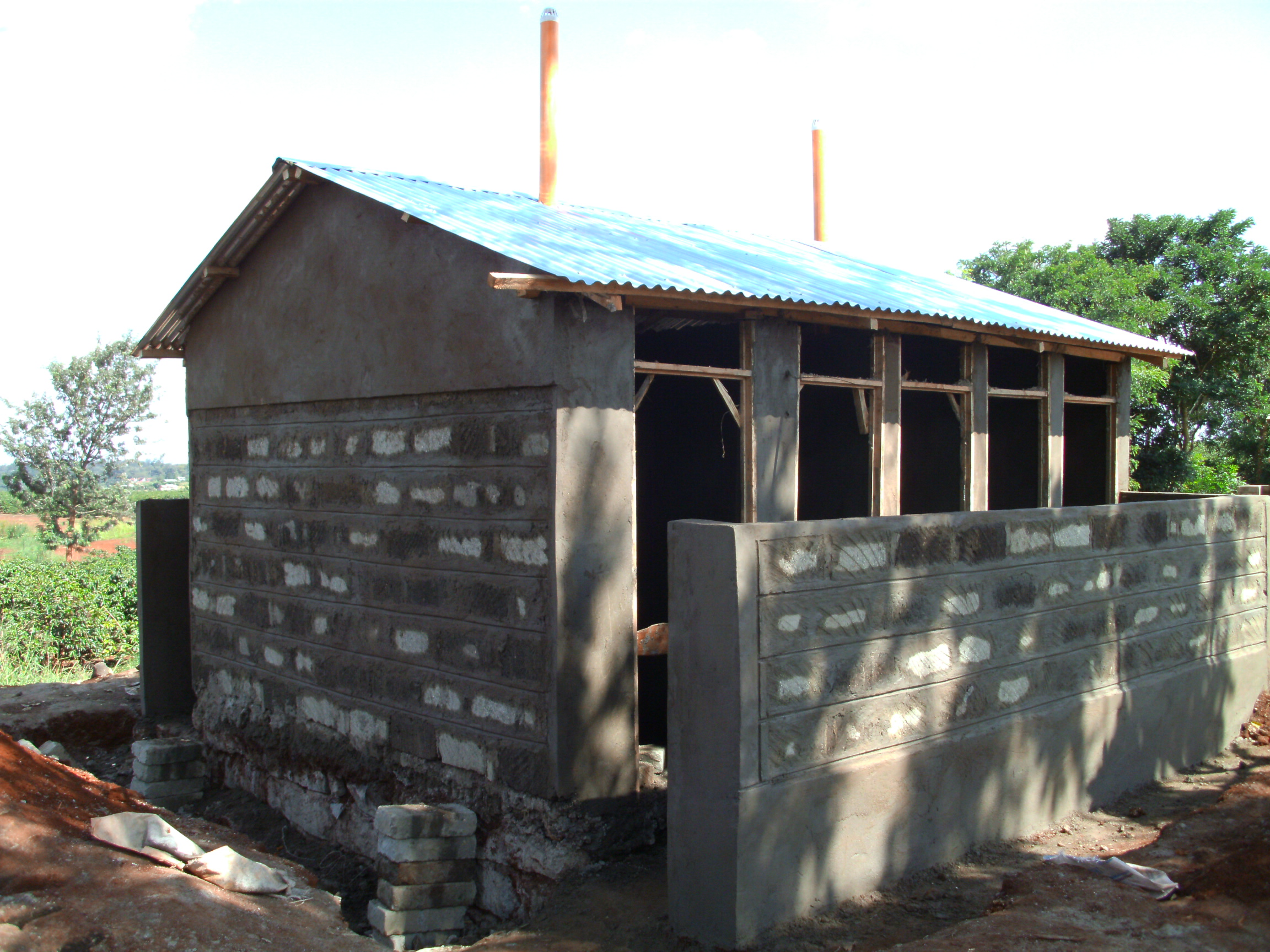
Toilet for girls at the Mutundu School – Spring 2012

I first wrote about this in a blog article in June (Sanitation – or lack of it) and subsequently updated it last month (Sanitation – Making progress) As you can see from the photos, the state of the toilets for staff and students at the school when our Kenyan assistant, Dan Otieno, assessed them was nothing short of disgusting.

Last week I received more pictures of the new latrines at the Mutundu School I would like to share along with some hidden advantages to the community from the kind of development work we are doing through the CanAssist African Relief Trust.

New CanAssist-funded girls toilet at Mutundu School. August 2012

I have come to realize that often the stimulus to a community provided by the funding of an infrastructure project such as this one has other less obvious benefits. The materials for construction are all locally purchased and the skilled (and unskilled) labourers to construct the projects are local tradesmen, often without much work. So we are not only providing the structure or item that will be part of the community and improve well-being there, we are also giving some employment to the locals, albeit temporary.

CanAssist recently sent money to another school in Uganda – Hope for Youth School near Mukono – to purchase 70 desks and chairs for the school. The cost comes to just over $5000 to do this. The bonus is that the desks and chairs will all be made locally by carpenters who will therefore benefit as well. This is a Win-Win situation. The school gets the needed furnishings and the local carpenters (and suppliers) benefit from the business.

It makes me happy to see this work at the Mutundu school progressing, knowing that the sanitation (and thereby health) conditions at the school will be greatly improved. I am also glad that the community are having some opportunity to participate in the construction and even earn a bit of money as they contribute to achieving these goals.

When money for infrastructure projects like the latrines at Mutundu School becomes available, it creates lots of interest in the community, a sense of ownership of the project and employment for tradesmen in the region.

BIG and little

Sometimes we are drawn to BIG.

BIG tends to get a lot of attention.

I have been awed by the expansive views over the Rift Valley in Africa and can never capture that image in a photograph, no matter how hard I try.

I went on the whale watch, hoping to get the photo of a humpback fluke dripping water as the whale started to dive.

Elephants and hippos are hard to ignore and have an appeal that is unmistakable.

Last month I was visiting friends in Nova Scotia. One of my missions was to go whale-watching on the Bay of Fundy. The Humpbacks there are plentiful in July, having come over 2000 km from the Carribean to feed on the plankton and krill that populates the Bay during our summer months. You would think that a 40-ton mammal that is longer than a fishing boat would not be that hard to miss. But in the Ocean, this huge creature is small and takes some searching to find. BIG and little – it is all relative. And what sustains these huge mammals? Some of the tiniest organisms in the sea.

Watching several humming birds flit among the flowers and feeders at sunset was a treat.

Well, I did see the whales and, yes, they were impressive. But that same evening I got as much thrill photographing six hummingbirds that were feeding in the warm, waning sunlight. Standing in silence by the feeder and flowers, I was able to marvel at these little birds, peeping and whirring from flower to flower, their delicate wings cycling so fast I could not see them.

An African Elephant along the shore of Lake George in Uganda.

In Africa, as well, I have taken to watching tiny birds or insects. The challenge of catching a photo of a butterfly sometimes provides more satisfaction than one of an elephant. (Don’t get me wrong, the elephants still amaze me.)

A photographic challenge
Hobart’s Red Glider
(Cymothoe hobarti)

While staying near the Kibale Forest in Uganda, I spent a couple of days chasing down a red butterfly that was skimming up and down the forest path, ever elusive. It was more of a challenge to get a good photo of this little creature than it is of larger African animals.

BIG things tend to inspire awe and attract attention. Contemplating the vastness of the universe can be overwhelming but the recent discovery of the sub-atomic Higgs boson particle also drew a lot of notice. The little things in life sometimes need to be sought out but, once found, can be just as amazing as the BIG ones.

A letter from Ivan – Kyabazaala, Uganda

My daughter recently pointed out to me that I was fortunate to be the recipient of most of the feedback from the communities in East Africa that we help through the CanAssist African Relief Trust. She’s right. How can I share that with other supporters of CanAssist?

I do consider myself lucky to have been able to visit the schools, clinics and communities that have been supported, in one way or another, by the CanAssist African Relief Trust…or rather by the donors who give to CanAssist to keep our activities afloat. One of the appeals to our donors is that we pay no Canadian salaries, travel at our own expense and therefore every donated dollar is spent by Africans in East Africa. The cost to us as volunteer travellers, however, is repaid ten times over in the wonderful experience of interacting with our friends in Africa.

Recently a group of Canadians who are supporters of CanAssist visited the B.L.K. Muwonge Secondary School in a remote, small Ugandan town called Kyabazaala. One of the students at the school sent back a letter of thanks to CanAssist supporters. I thought it only appropriate that I share this. I hope you find it as motivating as I do to keep doing what we are working toward to help communities in Kenya, Uganda and Tanzania with their infrastructure needs.

Students at the B.L.K. Muwonge Secondary School in Kyabazaala, Uganda write exams in a building that was constructed with funding from the CanAssist African Relief Trust.

(I don’t know if Ivan’s letter will reproduce well in the blog so I have also uploaded a pdf file of the letter here.)

Roofs or Rooves?

No wonder English as a second language is challenging. Sometimes I have trouble with it myself.

I wanted to write a blog item about two projects that CanAssist has funded recently in Kenya and Uganda. Both were to construct a roof on a building. So there are two roofs. Does that seem right? When I say the word, it sounds like “rooves” – but then that doesn’t look right either. The plural of hoof is hooves; thief, thieves; half, halves; but rooves? My word processor spell checker rejects this spelling. So I looked it up. It turns out that either spelling is correct, but that “rooves” is the archaic form. I’m not sure whether to take that as a complement on my historical knowledge or an insult that I am getting to be…archaic.

Regardless, it seems that the roofing business has been stimulated by two projects in Africa, thanks to CanAssist.

The first was for St Gorety Secondary School in Nyatike District of Kenya. As often happens in Africa, this community received some funding for a needed classroom at their school from a local governmental initiative. CanAssist was already building one classroom so they thought that they would add the second at the same time to save costs. Unfortunately the grant only covered the cost of the floor and walls. The second classroom was left without a roof and the community did not have access to the $3500 needed to put one on.

They became worried. Bricks that are used to make these buildings are all locally made and if not protected with a roof when the rains come, the structure may become damaged. Students at Loyalist Collegiate and Vocational Institute (LCVI) and Kingston Collegiate and Vocational Institute (KCVI) heard about the plight of fellow students in Kenya and took up the cause. Through their fundraising efforts, CanAssist has received donations that will cover the costs…and cover the building. It didn’t take long for the Kenyan school to get moving with this once they knew the funds would be available. This week I received notice that the roofing is completed and the classrooms are able to be used. The Kingston secondary school students, through their Quarters for Classrooms campaign were able to raise the roof!

Volunteers from Queen’s Health Outreach celebrate the completion of CanAssist funded classrooms at the St Gorety School in Nyatike District, Kenya. Students from LCVI and KCVI in Kingston raised the money to “raise the roof” on this building.

In addition, in early June, a group of CanAssist supporters from Kingston and Whitehorse Yukon (yes we have supporters across Canada) headed to Eastern Uganda to visit two communities there where CanAssist has funded projects at schools and a clinic. These travellers managed to raise about $9000 in donations which were spread between a secondary school in Kyabazaala, Uganda and the Olimai Health Centre. The clinic needed equipment but the priority was to put a roof on a new building for the facility. Like the St Gorety School, walls had been constructed but the money to roof the building was not there and the concern was that the structure would become degraded by rain and weather the longer it was left uncovered. In early June, I sent the money for the project. The Olmai Clinic in Uganda was quick to put CanAssist money to use to roof their new building. Last week photos arrived of the roofing completed. When these folks get to work, things happen quickly. The new structure, along with other improvements that have come through CanAssist, will raise the status of this facility from a Level 2 to a Level 3 clinic – thereby qualifying it for increased programming for the community.

The Olmai Clinic in Uganda was quick to put CanAssist money to use to roof their new building.

So, the work has been done. The school and the clinic have new buildings completed thanks to the generosity of Canadian supporters of the CanAssist African Relief Trust. Now all that is left is for me to decide – roofs or rooves in the report. Since my spelling checker rejects the latter, I will go with roofs. And bring myself into the 21st century.

As a reward for making it to the end of this post, here is a CanAssist Youtube video about the St Gorety School roof project with music by the St Gorety choir. Mission Accomplished.

My night of terror in an African forest

As I entered Kibale Forest in Western Uganda with a group of students from McGill, I was warned against the hazards I might encounter. Kibale is a protected mid-elevation moist forest – the jungle of Tarzan stories – that is home to many species of monkeys and chimpanzees. The rustle of leaves in the tree canopy high above the trails as monkeys bounced from branch to drooping branch drew my eyes upward. But I was warned to keep my eyes on the ground so as not to inadvertently step on a snake, or into an area of swamp. I was sure to wear protective footwear and although it was warm I wore long sleeves and trousers to avoid malaria-carrying mosquitoes or to avoid contact with stinging nettles or biting insects. There was also the possibility of running into a troop of baboons or even a forest elephant that could plough through the dense underbrush more quickly than I could if he decided to chase me. I saw bees and wasps and huge, fat earthworms that were over a foot long. The trails were muddy and sometimes slippery. The forest was a lush green and exotic birds flitted from branch to branch, often making jungle sounds.

The hike deep into the forest filled me with a sense of romantic African adventure. (Do I sound like J. Peterman from Seinfeld?) I had been adequately warned of the possible looming danger.

A Black and White colobus monkey in the trees of Kibale Forest, Uganda.

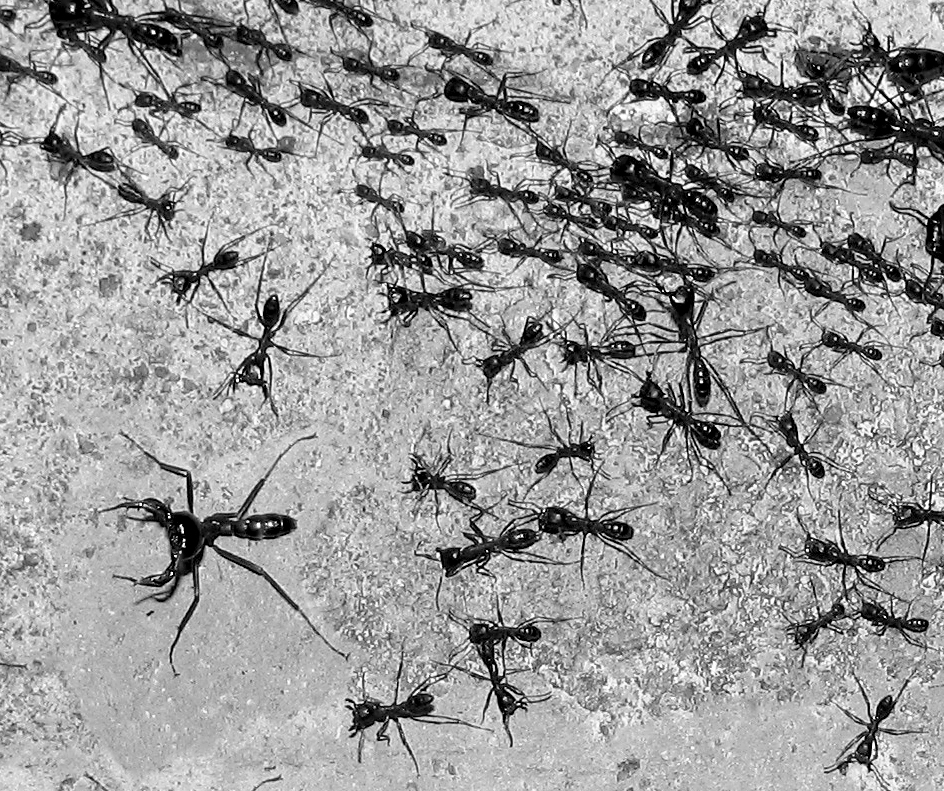
Our guide, however, had neglected to tell me about the Army Ants, little critters that mass into legions to scour the ground looking for food. If one accidentally disrupts them by standing in their path, they scatter; then they race up the nearest pant leg in search of tender flesh where they grab hold in a hot sting. The females are not very big but they move quickly and once buried deep in clothing creases, seem to all decide to bite at once. The larger males appear more threatening, tend to act as guardians and have menacing pincers that grip like a stapler. Rumour has it that these are even strong enough to be used to hold skin wounds together like sutures.

Whenever we encountered these ants in the woods we were respectful, jumped quickly past them and spent the next five minutes swatting at any little tingle we felt in our pants.

A couple of weeks later, I was staying alone in a small cabin near the edge of the forest. At night my closest neighbour was about half a kilometer away down a dark path. It was wonderful to sleep at night with the window open, the sounds of the birds and bugs and baboons in the forest occasionally punctuating the silence.

You can imagine my surprise when I woke up at 3 am one night to find my bedroom being invaded by Army Ants.

I was sleeping under my mosquito net when I became aware that I was not alone in the room. At first I thought perhaps there was a moth fluttering around or perhaps it was a gecko on the wall catching flies. The electricity was out so I used my flashlight to get up, wander into another room and eventually outside to admire the brilliant stars sparkling in the clear, black Ugandan sky and listen to the occasional croaking call of a Colobus monkey.

A few moments after I crawled back into bed, I felt a tickle on my arm, then my back, then my leg. I brushed aside something crawling on me, grabbed my flashlight and quickly found that there were a dozen or more ants roaming the bed sheets and looking for me. Army ants. Where were the rest?

I swung my flashlight beam onto the floor. Thousands – yes thousands – of ants were parading around the door jamb and the perimeter of the room. A two inch wide swath that flowed like a black stream stretched from the back door of the house and now encircled my bed. I was under attack.

I grabbed my shoes and anything lying on the floor and threw them on a nearby table. For the next hour I perched on a wooden chair in the middle of the room my bare feet up off the floor on the chair rungs and my flashlight beam scanning the invading army like a prison beacon looking for escapees. Would they crawl up the furniture? Would I be found in the morning, covered in ants in a heap in the middle of the room?

Eventually, despite my uncomfortable position, I dozed back to sleep. When I jerked awake an hour later they were gone. Totally gone. All of them.

I actually started to wonder if I had been hallucinating – a common side-effect of some of the malaria prevention drugs. So, in the morning, I quietly told a friend who works in the forest regularly about my invaders. “Oh, yes,” she said, “The Army ants clean up our house occasionally. They get all the crumbs on the floor and even catch the odd small rodent!” I wasn’t crazy after all.

Travel in Africa conjures up images of being attacked by a lion or trampled by an elephant. I’m embarrassed to relate that it was ants that terrorized me one muggy, sleepless January night in the Uganda forest.