Safari 2016 in photos.  Part 2 Ngong Hills

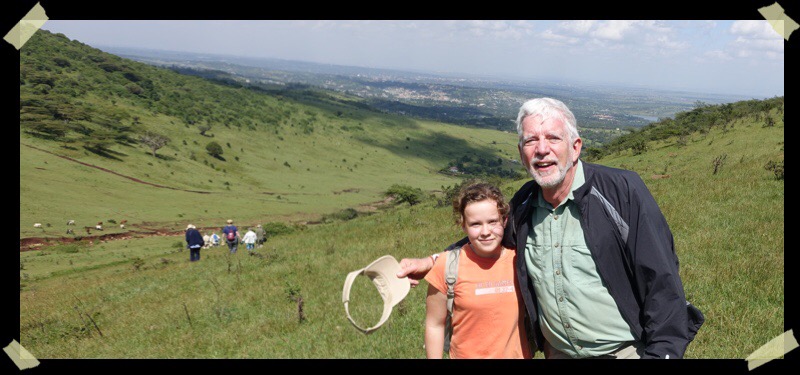
On our second day , some of the group went to a giraffe park and the Karen Blitzen museum while others went explored The Ngong Hills, including w Women’s Empowerment Centre CanAssist is constructing in association with Nancy Stevens, a hike along the ridge overlooking the Rift Valley and a visit to our longstanding friends, the extended Moiko family.

These women will benefit from the CanAssist/Kenya Help building that will house vocational training programmes to help them become more self sufficient.


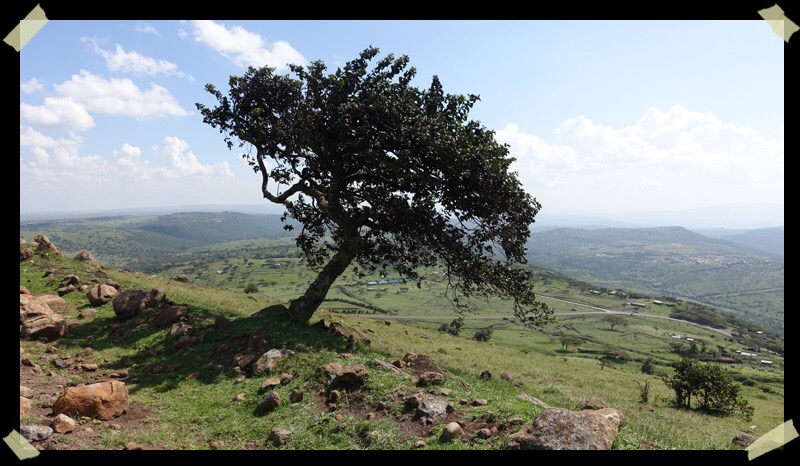
No visit is complete without a trip to Baridi Corner and this tree in particular. One of my favourite places in the world.


Young people are similar all over the world. a Moiko boy selfie on our hike down the hill.


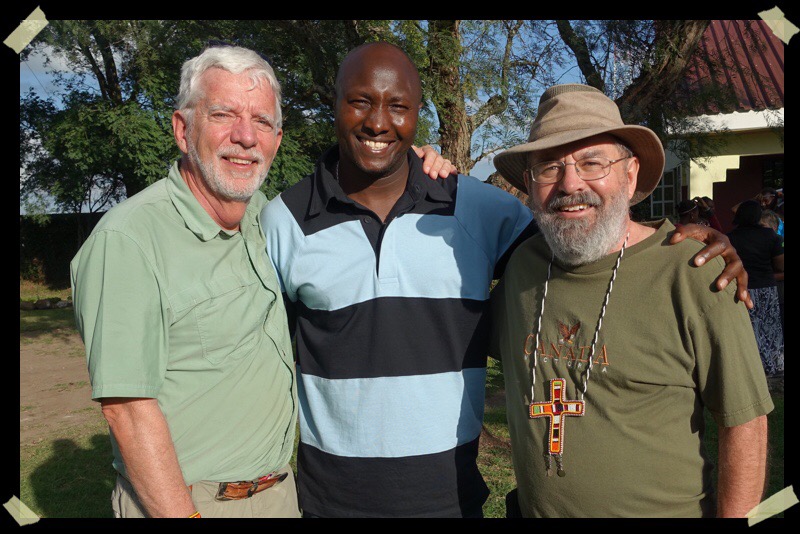
Happy to introduce my friends and family, including my brother, Bob, to the Moiko family and vice versa.


2016 East Africa Safari in photos.  Part 1. Nkuyan School.

I am presently on Safari in East Africa with a group of Canadian supporters of the CanAssist African Relief Trust. During our 18 days in Kenya and Uganda we will visit many communities and schools that have benefited from the funding of infrastructure projects through CanAssist and review plans for some that are upcoming in the next year.

One of our group, Nancy Grew, is also blogging as we go along.  If you would like to follow is as we travel her blogspot blog is at Grew’s News 3. You can access it here.

I will post some photos with brief captions as we move along. Karibuni.
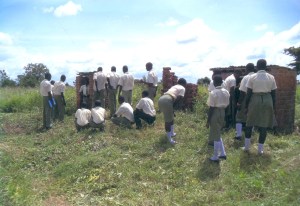
Our first day out was a long one to the very rural Adam Nkuyan School.  This was one of our first CanAssist projects and the existence of the school where there was barren land before has bought life to the community and is providing a chance for education for the students who live there.  Next year they will graduate their first class 8 students.  A real achievement.


The long bumpy trip to Nkuyan School was made that much longer by a blowout!


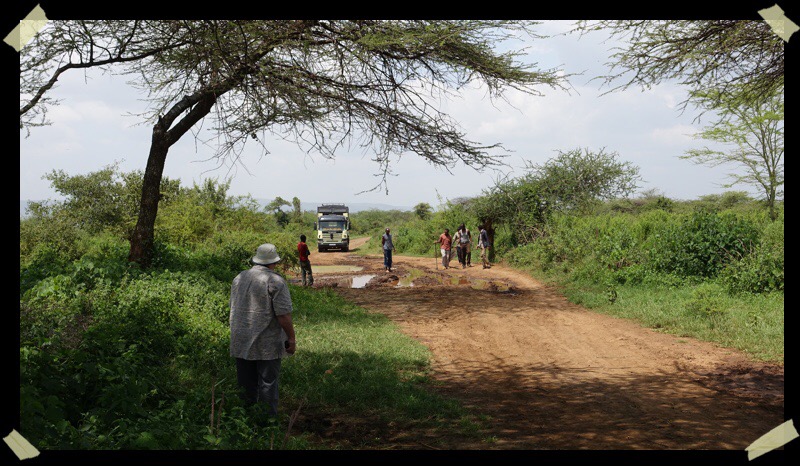
Recent rains made some of the roads a challenge for the truck.


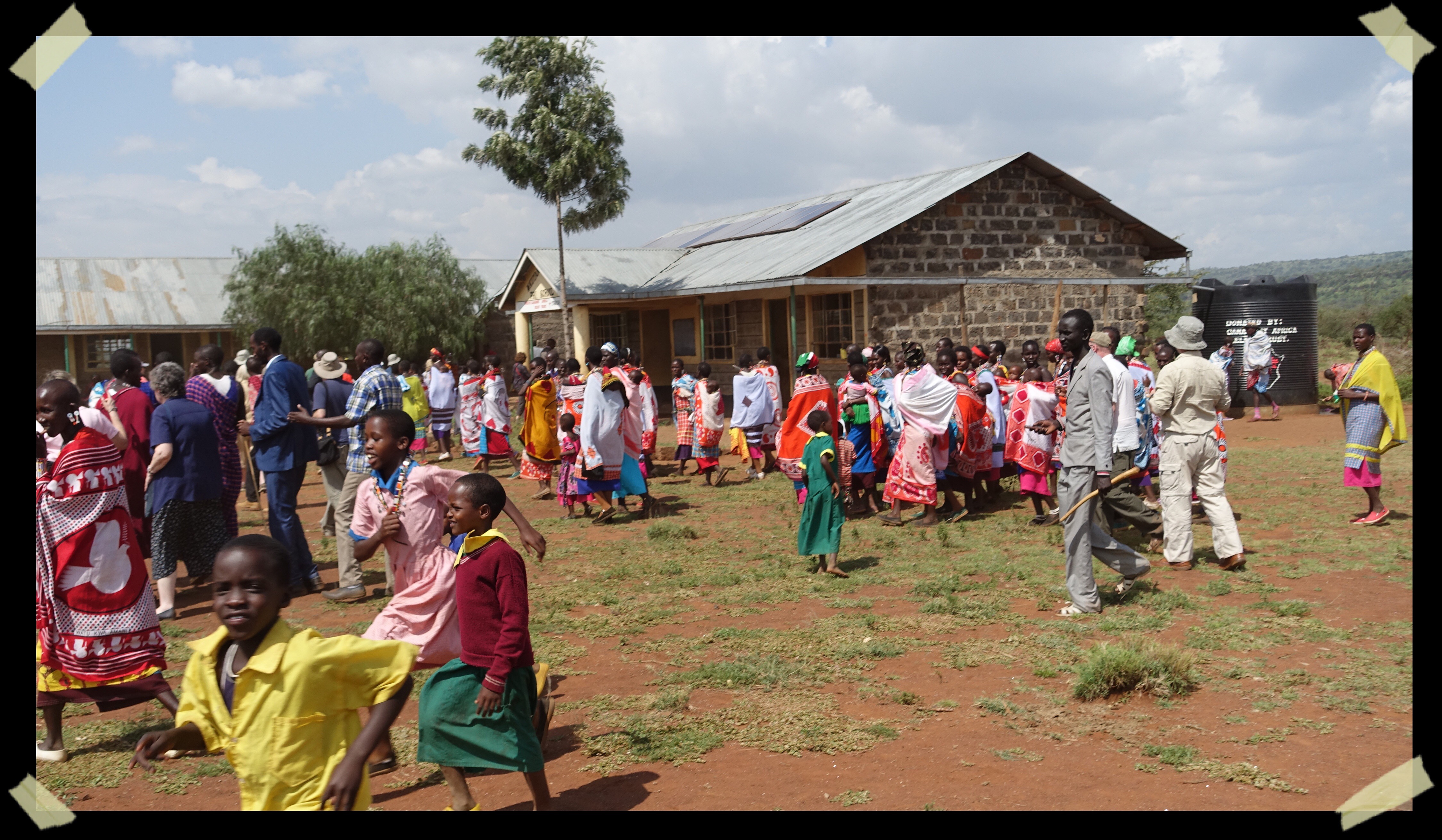
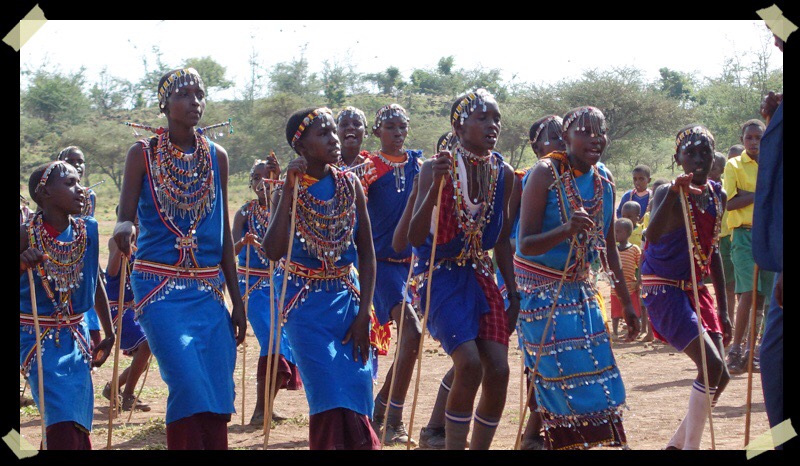
We receved the usual hospital welcome from the Nkuyan community.


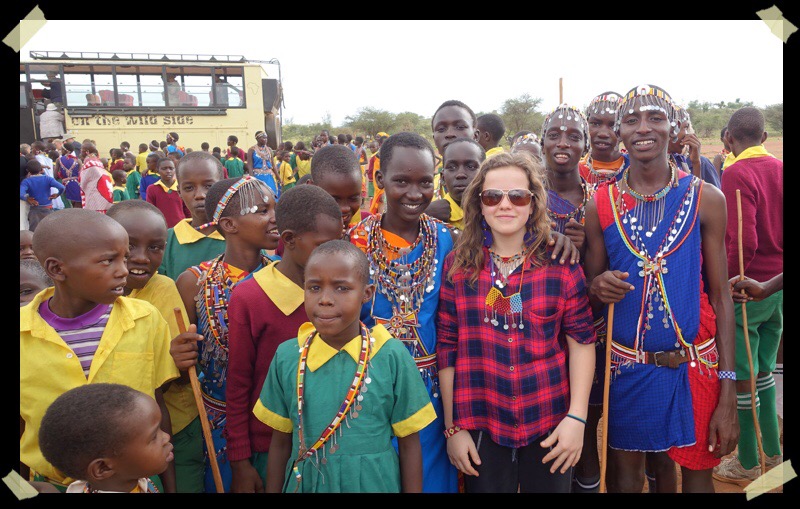
My granddaughter, Maddy, was popular with the Maasai boys!

Puzzled

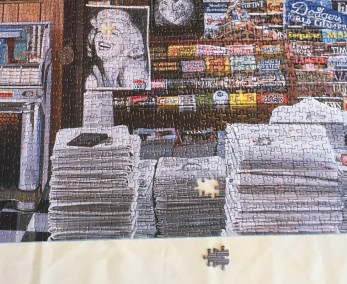
On a dreary, wet day, early in January, I opened a 1000-piece jigsaw puzzle, thinking that I would tackle it over the next several days. I was soon hooked on the challenge, settling on the common strategy of finding all the straight-edged bPuzzle 2.jpgorder pieces then filling in the centre. After the border was complete, the next step was to find recognizable pattern snippets that would go together to make part of the image. Occasionally, needing some help,  I would refer to the puzzle box to
get a clue.  Eventually I was down to the last hundred and fifty pieces and they all looked pretty much the same. Colour patterns now were very similar, so I had to switch tactics and rely on shapes and sizes to make them fit.  Most of the picture was visible but the last bit was much slower and, in the end, didn’t add that much more to the overall image. After about 15 scattered hours, over two days, I had the puzzle done.

There was one piece missing and  two of the other pieces fit together themselves but refused to squish into the space where they looked like they belonged.  Marilyn Monroe’s visage was missing her forehead. I crawled around on the floor under the table but the piece was not to be found.  I never did find it but in the end it really didn’t matter to me.  After a day of congratulating myself when I looked at the completed work, I tore it apart andIMG_3618 (1).jpg it went back into the box.

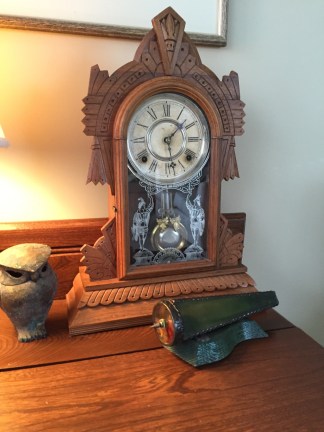
I had thought that I would put on some music while doing the puzzle but I did not. The only noise for those 15 hours, apart from my muttering to myself, was the tick tock of the 125-year-old clock that has been in our family since the late 1800’s.  Sometimes the rhythm reminded me of a tune that I would hum to myself. I was always surprised, when the clock struck the hour, that the time had gone by so quickly. One night I spend from 6pm until 1am non-stop working on the puzzle in silence. Those who know me will wonder at the silence part.

When it was all done, I reflected how this venture was like life itself.

The puzzle started as a lot of seemingly unrelated little parts but it gradually took shape into something that was recognizable and had a pattern that made sense.  The process had challenges and sometimes it seemed like it would not work out but eventually, if I persisted and stayed the course, I was able to find a piece that fit.  Finding one piece might lead to a cascade of success which soon returned to the usual plodding on another section of the puzzle.  In the end, there was a clear picture even though a couple of pieces would not fit in and one was missing. Overall it made sense even without those three missing units. After all, I had found links to 997 of the 1000 pieces, not a bad record.   Then, after I had a chance to rest and appreciate the picture for a short time, the whole thing was reduced to how it had started and went into a box.

IMG_3633.jpgLike life, the end point was not the goal. It was the process that was important.  The ticking of the antique clock made me conscious of the passing of time as I tried to make sense of the numerous pieces. Because it was a family heirloom, I also think that, in the silence, it also was a connection with those who had gone before me and who had also contributed to my own life picture. When I was finished the puzzle, I looked at what I had accomplished and was quite satisfied with the effort but also content to have it fragment back into 1000 – or as I had discovered, 999 – unrecognizable pieces.

We are all given a different life picture to work on. We may reach places where we are stalled or have to put one area of our puzzle aside for a while until we find pieces that help it make sense somewhere else. Progress comes in bursts and the closer we get to the end, the slower the process becomes and each piece added may have less impact on the whole image we are creating – more like finishing touches. We acknowledge the effort that it took and hope that it makes some sense even if every piece does not fit. And then we must  be prepared to let it go. It is the process that provides the satisfaction, not the final picture that can, and will,  be quickly reduced back to unrecognizable fragments.

A variant of ashes to ashes?

Jigsaw header

Cholera, then and now.

Video

Kingston Ontario’s history includes a cholera epidemic that, between 1932 and 1934, killed ten percent of the city’s population. Skeleton Park LogoKingston residents are all familiar with the downtown McBurney Park ( known locally as Skeleton Park}, now home to an annual summer arts festival,  where many of the victims of this epidemic were buried 180 years ago.  Kingston’s popular home-town band, The Tragically Hip, even have a song that references the outbreak. The Hip Museum website has a great summary of the cholera epidemic that basically closed down all the stores in town with the exception of lumber outlets to make coffins.

img_8862Cholera was then, and remains now, a serious consequence of inadequate sanitation and clean water. It was not until John Snow traced an outbreak in London to a water pump on Broad Street that we understood that the disease was spread through water exposed to fecal contamination from other infected people.

In Canada today, 99 percent of the population has access to improved sanitation and clean water. Cholera is a disease of the past. But for communities in developing world countries, including those in East Africa, where, by comparison, only 60 percent of people have access to improved sanitation, it remains a serious threat.

Just last week I received an email from Dr. Karen Yeates, a Kingston nephrologist who is currently with her family in Tanzania. She writes:
“I just managed a cholera epidemic over Christmas at the little hospital I am doing some part time consulting at. I never thought I would see it in my lifetime as a physician…..its incredible that we have the ability to do everything we can in this world with technology and medicine but, the poor and disadvantaged in sub-Saharan Africa struggle with diseases of more than a century ago. We have had over 30 cases but no deaths thankfully. We traced it to lack of toilets and clean water in the three communities where it came from. They had stopped boiling water due to lack of ability to afford wood for their fires…its a choice of make food or boiling water but not enough wood for both. Inflation is high here right now due to the strong US dollar and everything has become more expensive for families here.
I was thinking about CAN-ASSIST and how many toilets you have built over the years….we can’t forget about these simple things…..:). 

Keep doing what you all do so well. “


The CanAssist African Relief Trust continues to work to improve water and sanitation for schools and communities in East Africa. This week we are starting a latrine project at a school on Ukerewe Island in Lake Victoria. In 2015 we installed clean water supply and toilets in ten different schools, clinics or lakeside villages.

There is little specific treatment for Cholera other than aggressive fluid and electrolyte replacement. Prevention through sanitation, protection of water supplies and hand-washing remains the key. This YouTube video is in Swahili and aimed at instructing African people about the importance of these prevention measures. It is simply presented and without knowing a word of the language it is easy to understand the message.

A Facebook Harambee

Harambee is a Swahili word that means “pull together”.  It is Kenya’s national motto. There are times when their government should pay more attention to it. I want to tell you about my spontaneous Facebook Harambee experience this week.

Yesterday afternoon I saw a post on my Facebook News Feed from a friend in Kenya. Tobias Katete is the Beach Management Unit chairman in a small community on the shore of Lake Victoria, a little district that has become dear to my heart over the past few years through projects supported there by the CanAssist African Relief Trust.

Tobias reported a fire that had wiped out the home and all the belongings of a family tScreenshot 2015-12-29 22.33.46hat included a newborn infant in the remote rural village of Agok, Kenya. He appealed to locals to help find shelter for this family. His request for assistance was directed to  people in his region and I wondered how many of them would have Internet access.  This is perhaps a wrong assumption since I now correspond regularly with friends in Africa through email and Facebook and I notice that his Facebook friend list is 95% African faces.

I saw the post and wondered how I could help. At 3pm I shared it on my Facebook page asking my friends to either send me or promise $10 to help this family. Within 8 hours I had either collected or received an IOU for about $400.  By midnight I had sent 25,000 Kenyan Shillings to Tobias who I trusted with the responsibility of seeing that this money will be appropriately used to help this family recover.  Since I continue to receive notes promising support, this will be augmented in the next couple of days with another transfer. As I went to sleep last night I knew that this community would be waking up to the news that friends – strangers – in Canada have shown this compassion.  Several of my African Facebook friends have also offered support to this family. It chokes me up when I think about this sharing of our humanity.

It is now not even 24 hours from the time I read the initial post. Your money has been transferred and received in Kenya and Tobias had purchased construction materials and delivered them to the family devastated by their loss.  How cool is that?

I sincerely thank my friends for their response to this request.  It is the best Christmas present that I could receive.  Your generosity validates the work that I do in Africa and encourages me to keep it up, despite the many challenges.  Just as I have witnessed Canada’s welcoming reception of Syrian refugees, it reinforces my belief that most of us have goodness and kindness in our hearts.  Every day I become increasingly aware that we are, indeed, a global community, made ever closer by our ability to correspond and reach out across oceans and borders.

This has been a satisfying way to wind up 2015.   Best wishes to all in the New Year.

John sig.jpg


(I have asked for only $10 from each person. As you can see, when we pull together – Harambee –  this adds up to something significant.  If you want to join us, the easiest way to send me $10 is by an Interac bank transfer or by PayPal. Message me for the correct email address to use for this. I promise that very cent will end up in Kenya to help this family recover from their misfortune.  This is a personal gesture, not an official CanAssist one.  CanAssist remains actively involved with community infrastructure development in this and other East African districts.  You can read more about CanAssist here.)


Cleaning up

I suspect that your family didn’t gather last month to celebrate World Toilet Day. You would have visited a toilet, however, likely without acknowledging that it was actually a luxury that many in the world don’t have. Try to imagine, next time you flush, what it would be like to live in a community where no sanitation facilities exist.

Access to improved sanitation is something that we take for granted. In Canada, nearly all the population has access to some sort of private sanitation facility. I say “nearly” since, sadly, there are still some aboriginal communities who still struggle to have access to clean water and sanitation – hopefully something that our new federal government will finally address.

Kadok CanAssist latrines

CanAssist funded toilets at the Kadok Secondary School

In cooperation with several schools and communities in East Africa, the Kingston-based, CanAssist African Relief Trust continues to help improve access to toilets and clean water in Kenya, Uganda and Tanzania. It is sometimes a hard sell to donors. Toilets don’t seem to have any charismatic appeal. But they are an easily-achievable improvement to well-being that can reduce disease, cut health care costs, give some dignity, protect women and girls from assault and save lives.

Here are some United Nations figures posted recently in the Globe and Mail. Many other sources have similar figures. Improving sanitation definitely helps individuals and the society in which they live.

2.3 billion people worldwide do not have access to a private toilet and almost 1 billion of those defecate in the open.
Over 300,000 young children’s lives could be saved each year by clean water and improved sanitation.
Children will lose 272 million school days each year due to diarrheal illnesses.
For every $1 invested in eliminating open defecation, there is a $6 economic return.
Worldwide, more people die from unsanitary conditions than from AIDS, malaria and measles combined

In 2015, CanAssist installed clean water, toilets and washing facilities in ten communities and schools. These water and sanitation projects will serve at least 3000 people who otherwise would have had inadequate or no facilities. We almost always have a project related to sanitation being implemented.

For example, CanAssist is about to start a new latrine project at the Kabuhinzi School on Ukerewe Island in Lake Victoria. Several volunteers from the Kingston area visit this community regularly with a medical caravan. Hopefully the addition of improved sanitation to this community will head off some of the bowel infections that occur without proper latrines. Prevention can be more efficient and effective than treatment once disease occurs.

Kadok Toilets

Students at the Kadok Secondary school line up to use the old inadequate toilets prior.


Women and girls are particularly vulnerable when no sanitation facilities exist. Having to use open spaces and public fields when there is no toilet is not only degrading but it exposes women to the risk of assault. Teenage girls who have no school latrines miss classes for a few days every month because they have no place to tend to their menstrual sanitation needs.

Sanitation also includes accessibility to appropriate washing facilities. In many communities, there are no private area to wash or bathe. A hand washing opportunity near a latrine has been shown to be as essential and effective at preventing intestinal diseases as the toilet itself. CanAssist works to provide a source of clean water for schools along with latrines.

IMG_20150901_121834

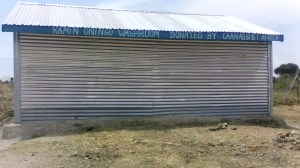
This simple washing room has made a great difference to sanitation in the fishing village of Kamin Oningo, Kenya.

In two communities we have also built washroom facilities with showers from water drawn from the lake to an elevated tank. In Osiri Village, where we just installed such facilities, Tobias Katete, the Beach Management Unit chairman reports “ The facility is in use and now attracting even our neighbours who also come to bathe. Within the first month we have had 750 showers taken. For many, it is the first time they have had a private place to wash. More people are now using the latrine instead of the bush as it is close to the washrooms. We expect this will reduce spread of cholera in the community.” The community has formed a local P.U.C. to collect 5 shillings (6 cents) for use of the showers. This money will be used for maintenance and any necessary repairs. We are also soon installing a hand-washing tap beside the latrine to complete the sanitation effort here.

At Christmas and year-end, folks like to open their hearts and wallets to charities or to help others less fortunate. You might consider a tax-deductible gift to the CanAssist African Relief Trust. CanAssist pays no Canadian salaries or expenses and our Canadian administration expenses amount to about 5%.

There will be no doubt that your donation to CanAssist will benefit East African men, women and children directly.


Donate Now Through CanadaHelps.org!

Muslims and me

During the last fifteen years I have spent close to the equivalent of three years living, working, traveling in post-war Bosnia and Herzegovina and East Africa.  During that time I have, on many occasions, had to rely on local friends and coworkers and strangers for my safety and security.  It so happens that several of those folks are Muslim.

At the time that seemed irrelevant to me.  Their spiritual affiliation had no bearing on our friendship or interaction or my willingness to trust them with my safety. But now it does matter.

 When I hear the broad anti-Muslim slurs and fears coming from so many directions it troubles me and insults me and my Muslim associates. I must stand up for them and decry this vitriolic stance.  I am happy to report that my inner circle of friends, even my wider circle of Facebook friends, seem to share my opinion about the narrow-minded purveyors of anti-Muslim rhetoric.

There are good people and people whose actions can be classified as evil.  This has nothing to do with where they come from or what god they pray to, if any.

 I condemn and am repulsed by the despicable actions of terrorists of any “religious” or political stripe who are increasingly able to sit back  and smile at how their actions have done exactly what they had hoped – turned many people into a scared, paranoid, suspicious bunch of revenge-seeking bigots.  Wow, that was a loaded sentence.  I shocked myself when I wrote it.


It is almost umbelievable that several Republican U.S. states will attempt to refuse Syrian refugees. Republicans with presidential aspirations, including Jeb Bush and Ben Carson are saying that only “Christian” refugees should be accepted. Saskatchewan’s premier has not gone that far but wants the proposed Canadian plans for early settling of 25,000 Syrian refugees suspended.  And then there is Donald Trump.  It must be very embarrassing for some to be American these days.

Recently I have seen many calls for prayer.  I don’t pray. The closest thing to prayer for me is my  inner hope that I am never, ever, tainted with the prejudice that is becoming pervasive in so many societies and that others will join me in rejecting  this kind of bias. We are not just Bosniak or Serb,  Christian or Muslim or Athiest,  Luo or Kikuyu, gay or straight, Asian or Caucasian, Liberal or Conservative.  We are human and as such we share all of those labels.

CanAssist’s investment in African infrastructure boosts local economy

Infrastructure.  In the last few weeks Canadians, during a long election campaign, have heard their now newly-elected Prime Minister, Justin Trudeau, and the Liberal party talking about it. In fact, reporters couldn’t ask Trudeau any question without ending up at his talking point which is ““Every dollar we spend on public infrastructure grows our economy, creates jobs, and strengthens our cities and towns.”

“What time is it, Justin?”  “I’m glad you asked that question, Peter. We think it is time to run a deficit to invest in infrastructure because every dollar we spend … ”

We got the point. I happen to agree with it. And it appears that a majority of Canadians did too. Trudeau’s Liberals were elected with a majority government.

Since its inception In 2008, the CanAssist African Relief Trust has been investing in infrastructure in East Africa for exactly that reason.  We have built school classrooms, bought hospital equipment, constructed toilets, provided clean water catchment and bought school desks and books.
12077310_10154277809299937_1675104093_nWe know, because we visit the communities we help, that this is making a difference to the men, women and children who live there.  Better educated girls are more likely to become self reliant, have better opportunities for employment and be more informed as mothers. Children who learn about the benefits of sanitation, clean water and sexual responsibility will be able to apply that learning to manage themselves, their families and lead in the community.  People who can read and access the Internet will make more informed decisions about their governments.  In short, improving the infrastructure relating to education, health and sanitation will allow the “human capital” any community to flourish.

Another benefit that is not quite so obvious is that by providing funding for these projects, CanAssist donors also have the opportunity to give work to many folks who otherwise are unemployed.  We don’t send goods made in Canada or old books or microscopes.  We send money.  Our African associates tell us what they need and we respond with funding.  Almost all of our money is spent in Africa, our unavoidable Canadian administrative expenses being in the range of five per cent.

When we build a classroom or a latrine in Africa, the project purchases the materials locally and employs local labor. Amuge Akol is one of our associates in Olimai, Uganda where we are currently constructing two latrines at a clinic where previously the toilets were falling apart and full,  (can you imagine no clean toilets at a clinic?) She recently reported that, in addition to improving the sanitation for staff and patients, the project has given several people work. “The project has provided 3 months employment to 12 people who otherwise would probably not send their kids to school this term or have no income for their families.”  The total cost to accomplish this, to CanAssist donors, by the way has been a meagre $6000.
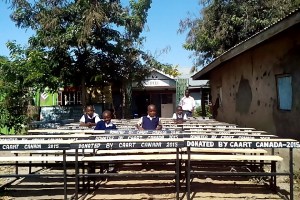
Some of the desks being locally made for the Hope School in Mbita, Kenya.

Some of the desks being locally made for the Hope School in Mbita, Kenya.

In another Kenyan community CanAssist is in the process of having desks constructed for a local school. In 2013, we completed classrooms at the Hope School but the building has been without furnishings.  CanAssist, is having 200 chairs and 100 metal-framed desks locally built to furnish the empty Hope School classrooms as well as others at the school.  This project will provide durable furnishings for the school but it is also employing three workmen over several months and acquire materials locally.  The community benefits twofold – employment and infrastructure.

This is what the Liberals are proposing to boost our Canadian economy…only the money for this will come by running a deficit rather than from well-wishers from Uganda.

“Why should individual Canadians support projects like this in Africa through organizations like CanAssist?” you ask. “Doesn’t our government give money for development in poor nations?”

The short answer to that is “Not enough.”

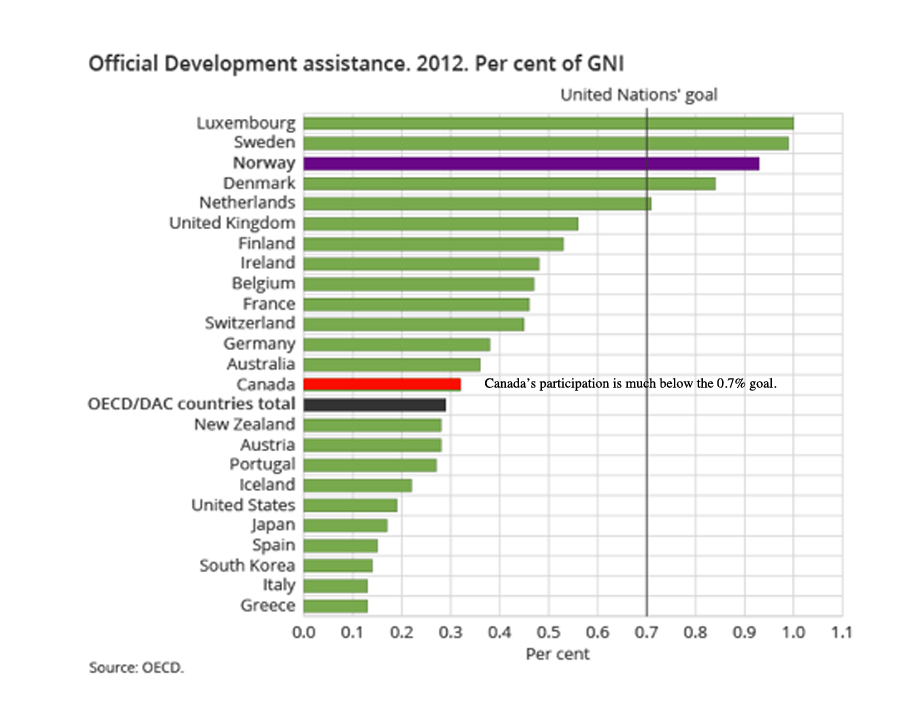
ODA 2012In 1969, Canada’s own Lester Pearson headed a commission at the UN that determined and recommended that poverty could be significantly reduced or eliminated in the developing world if the rest of us applied 0.7 percent of our Gross National Income (GNI) to Official Developmental Assistance (ODA). Many countries have achieved that goal.  What has Canada  done?  Despite repeatedly committing to reach this goal, the highest Canada ever reached was about 0.5 per cent in 1986. Over the last few years, as other countries increased their assistance to record highs, Canada’s contribution to ODA has actually dropped below .028 per cent of the GNI.  Not the kind of record internationally to be proud of.

And do you know how the Harper government was able to present, in an election year, a balanced budget? In part, it was by reducing or freezing spending on ODA, and actually not spending over 125 million dollars that were already approved for development work.  It is easier to balance your budget if you simply just don’t honour your commitments to poor countries.

Your gift to CanAssist can help provide tangible resources to East African communities and, at the same time, stimulate the local economy by providing employment.  We welcome your support of the work we do though tax-deductible donations by mail or online.

Getting my Canada back…

Today I am proud to be Canadian. More proud than usual, that is.

Canadian Prime Minister Pierre Trudeau carries a young Justin into 24 Sussex, where he will soon end up again as our Prime Minister. How cool is that?

Canadian Prime Minister Pierre Trudeau carries a young Justin into 24 Sussex, where he will soon end up again as our Prime Minister. How cool is that?

The Canadian electorate has resoundingly chosen a new government led by the Liberal party but more pointedly by a vigorous, young, positive and somewhat idealistic leader in Justin Trudeau.

This government will, no doubt, make mistakes along the way and it will take a lot of time and effort and trial and error to get all those jobs done to bring Canada back to who we fundamentally believe we are deep in our hearts.

I am excited to see many capable men and women elected to parliament and particularly pleased to turn the reins over to the generation that will have to deal with the policy decisions made in the next four years. It seemed  like my Liberal vote was giving control over to my kids and that felt very good.

2013-11-16 00.55.23-1

Canada’s House of Commons, Ottawa.

In addition, we have basically overthrown the sitting government in a peaceful, orderly way.  Do you know how significant that is?  I have worked in Bosnia and Kenya and Uganda where voters feel this is impossible.  The despair I have seen from young, frustrated citizens is indeed sad.  In so many countries in the world, where a democratic process is ostensibly in place, the electorate still feels powerless. Governments are corrupt and cling to power with money and threats and manipulation.  As our Canadian election campaign began it appeared that the the Conservatives had much more funding available to them to promote their candidates.  But money did not make the difference.  The groundswell of ABC – Anything But Conservative – and social media posts to encourage people to vote for change proved more powerful than money and scare tactics.  World, take note.  It can be done.

I am not so naive to believe there will not be snags and scandals and missteps by this government but I am eager to give them a chance. One of my friends posted a list of things that this government  will need to do to keep all their promises and it ended with “walk on water”.  At least we are starting out with a leader who appears to be honestly transparent, inclusive and progressive.  You have four plus years, Justin.  We have given you a chance to make us even prouder than we feel today.

I am seeing red in 2015

Barb and I in August 1968. Yes, folks, I was young once too.

Barb and I in August 1968. Yes, folks, I was young once too.

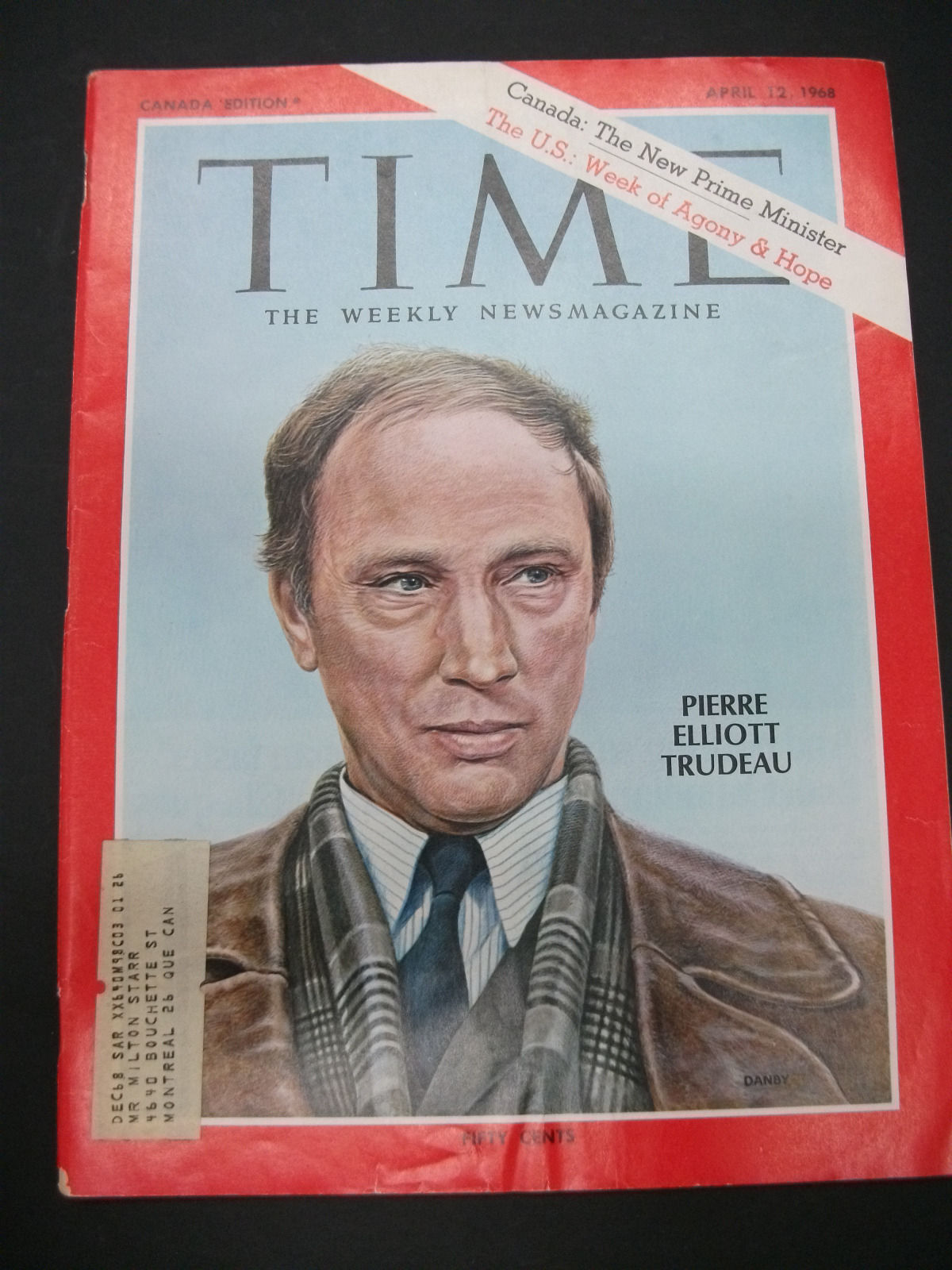
I remember seeing Pierre Trudeau, new leader of the federal Liberal Party at a rally in London Ontario in early June 1968.  He was charismatic. I remember his piercing blue eyes looking up around the crowd and connecting with everyone individually.  He won a majority government, keeping the Liberals, previously led by Lester Pearson, in power.

I couldn’t vote in that election since it occurred two months before my 21st birthday. My girlfriend at the time, later to become my wife, turned 21 nine days before the election and she could vote for Trudeau.  

I was jealous.

Pierre Trudeau in 1968

Pierre Trudeau in 1968

Since that time I have never missed voting in any of the thirteen Federal elections held since. I feel it is both my duty and privilege and I can not complain about government if I don’t exercise my right to vote.

I have never felt as strongly about the outcome as I do in 2015.  I have voted Liberal and Conservative and NDP in various elections since 1968.  Often I don’t feel that the difference between parties is really that great.  When Stephen Harper’s conservatives were first elected, I was willing to give them a chance. (although I didn’t vote for them)  How much damage could they do?

The Conservatives today are not the old “Progressive” conservatives that were led by Diefenbaker and Stanfield and Joe Clark.  The party was taken over by the much more right-wing Reform/Canadian Alliance Party who snuck in during a vulnerable time for the PC’s and cleverly kept the Conservative part of the name to retain voters.  A political Trojan horse.

And after ten years of Harper’s Conservative governance, I want my old Canada back.

When I take the online quizzes to see which party is more in tune with my views on various political issues, I come out pretty evenly balanced between the Liberals and the NDP with a few Green ideas thrown in for good measure.  I would be happier if either or any of those parties had a chance at governing. Or even better, if they could somehow cooperate to form a coalition government.

GerretsonIn Kingston and the Islands, the vote that will count to affect change will be with the Liberal Party and that is how I will mark my ballot on October 19. Mark Gerretson, the Liberal candidate in Kingston, is a bright, progressive 40 year old man who has been Mayor of Kingston. He knows the community and regardless of political party affiliation, he would be the candidate that I think could best represent Kingston in the federal government.

And Justin Trudeau? He makes a lot of promises and, I wonder if he could keep them all if the Liberals get elected. But somehow he makes me feel like he is atuned to  the Canada I want to live in.

If nothing else, listen to the last five minutes of this town hall meeting held October 5. You will have to click on the link as it is not on YouTube (yet). http://bit.ly/1Rlhhgw

Although I don’t agree with everything they say or do, I will be happy to give Liberals an opportunity to lead our country again. It is time that Trudeau’s generation – Justin’s, not Pierre’s – that of my own kids, takes some control over the future of Canada.

I hope that we get change and that a new government gets the chance to rebuild some of the erosion that has happened to our respect and influence on the international stage.