Replacing the word “Draconian” with “Musevenian”

As my friends know, it is not like me to be “speechless”. But I have had great difficulty finding the right words for this blog article. I will try.

The word draconian seems an understatement when it is used to describe the anti-homosexual law signed two days ago by Uganda’s President Yoweri Museveni.

(Draco,by the way,  was a legislator in ancient Greece who is renowned for passing laws that called for particularly harsh punishment for offenses that were minor.)

In the past few months a large divide has developed between countries that see the rights of gay individuals as being basic human rights and regions where homophobic rhetoric has led to laws that are punishing and restrictive. The debate over Russia’s laws punishing anyone who “promotes” homosexual lifestyle became overshadowed by the fireworks and glistening white snow of the Olympics. The Olympics are done but the law remains.

In Arizona, recently, the state government passed a law that would allow restaurant owners to refuse service to gay clients, the argument being that it could be against the restauranteur’s religious beliefs. This law has not yet been signed by the governor but it was obviously supported by the legislature.

This week, in Uganda, the president signed a law that called for imprisonment up to 14 years for individuals who participate in homosexual acts and life in prison for “repeat offenders” or individuals with HIV who have gay sex. (The original version of this law actually called for the death penalty for some homosexual “offenses”.) The current law also calls for imprisonment of anyone “aiding or abetting” homosexuality and makes it a criminal offense not to report someone for being gay.

Museveni claims that homosexuality is unnatural behaviour that can be controlled. He claims that the west is trying to lure Ugandan youth into a deviant homosexual lifestyle and has directly thumbed his nose at he U.S. and Obama in particular over this issue. He claims to be resisting “Western social imperialism.” Although it is hard to believe, in an interview with Stephen Fry, one Ugandan government minister reportedly has even said that rape of a young woman is less problem than consensual gay sex because it is more “natural”.

In neighbouring Kenya, there are laws in place that outlaw homosexuality but they are rarely enforced.  Still, there is a widespread intolerance and disapproval of homosexuality in Kenya and there are reports of people being brutally killed in some African countries because of their sexual orientation. But let’s not be too smug here. “Gay-bashing” has been (and still is) alive in North America, too.
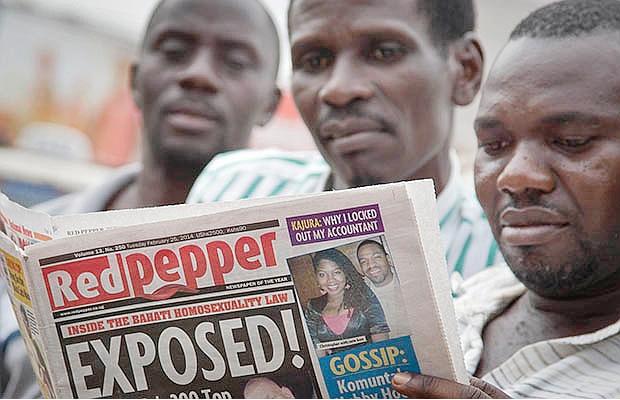
9549034Today, the day after the law was signed, a prominent newspaper in Kampala, printed names of 200 Ugandan homosexuals, many of them prominent citizens and not publicly “out”. This may lead to a backlash of not-so-subtelly-sanctioned harassment and even violence against gays. At least one gay activist was brutally murdered a couple of years ago after a similar newspaper outing. Many gays in Uganda claim to have been beaten and are understandably afraid. There are disturbing photos posted online of one fellow being burned alive, children watching, ostensively getting his just desserts for being homosexual.

What also angers me even more about this, whether it is in Arizona or Uganda is that it seems to be a sentiment that is pushed by Christian Evangelists. The anti-homosexual rhetoric in Uganda certainly has its foundation in religious zealots who may be losing their cause in the West but turning to vulnerable communities in Africa to promote this kind of intolerance and hatred. Even the head of the Anglican Church in Uganda has expressed support for this law. This is “Christian”? Really? I find it incomprehensible.

In some reports, I have also read that the Ugandan law calls for jail terms for directors of non-governmental agencies that support gay rights or gay individuals. Although the charity that I work with has no connection with any gay rights groups, we do support clinics and schools where we hope that all individuals will be treated with respect and dignity, regardless of their race, religious beliefs, age, sex or sexual orientation. We support the rights of all people. Will all clients and students be treated with respect? We do expect that. We may have Canadian supporters who are gay and who wish to visit our project partner sites? Can they be safe to do that now?

As a fall out, several countries, including the Netherlands, Denmark and Norway have announced today that they will withdraw governmental aid from Uganda. Canada has expressed disagreement with the new law but the official stance is not yet clear. To withdraw aid may make a principled statement but, as usual, those who will suffer will be the vulnerable people who live in poverty with no political power.

Societies differ. I can understand certain groups rejecting the idea of homosexuality or disapproving.  It may be totally outside their sphere of understanding or culturally “wrong”.  But punishment with life imprisonment for simply being homosexual is not tolerable. The argument that sexual orientation is a choice, that gays are “recruiting”  Africans to their lifestyle or acting like pedophiles is ludicrous.

Where will this all end? In Canada, we have debated and had strong disagreements  whether same-sex marriage will have the same legal rights as marriage between a man and woman. In some countries the debate is more whether a homosexual has the right to exist. Centuries from now laws like this may be termed as Musevenian, not Draconian.
Uganda_Gay_Rights-1

(Photos were taken from recent internet news feeds)

Desks to schools in Kenya…

I put many hours a week into the CanAssist African Relief Trust. Sometimes I wonder why I do it.  Today I received an email that reminded me.

Last year CanAssist received an application from a development group in Kenya asking for support in providing desks for three schools in Rachuonyo District near Homa Bay.  We did not know the schools or the AFORD development organization but thought that they presented an organized appeal and, in the past, we have found provision of school desks to be satisfying.  Not only do the children of the schools receive furnishings to help them learn better, the desks are locally made which gives carpenters and suppliers some income.

In December, I visited some elementary schools in Canada and they have donated about $1000 toward the $5000 needed to build 170 desks that will serve 450 students.

Last month I asked the school for some photos of the school so we could help promote this project.  Today I received these grainy photos taken recently at two of the schools. I will let them speak for themselves.  I think you will agree that they are heartbreaking.  Although the Kenyan Ministry of Education does offer “free” education to elementary school students, this is the quality in some of the remote districts.

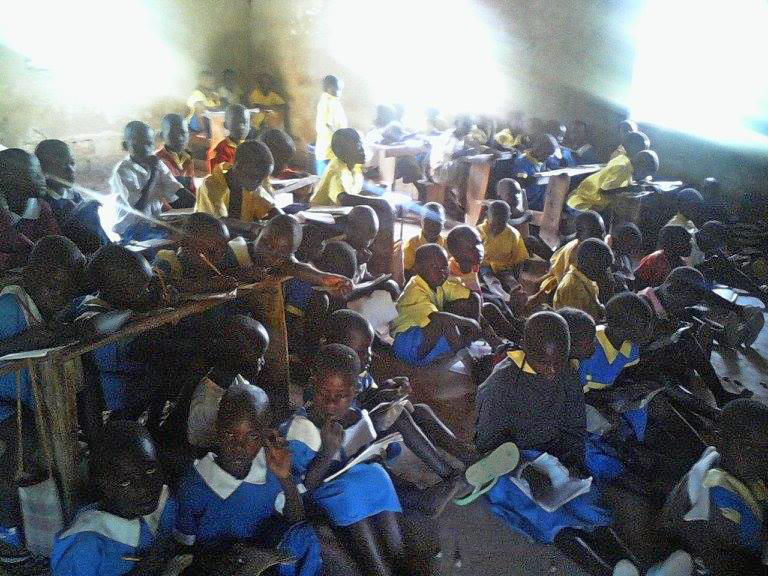
The Kamser Elementary School.  Crowded conditions not conducive to learning. There are 450 students at two schools like this one and they are requesting 150 bench desks to accommodate the students, many of whom sit on the floor.

The Kamser Elementary School. Crowded conditions not conducive to learning. There are 450 students at two schools like this one and they are requesting 150 bench desks to accommodate the students, many of whom sit on the floor.

Photo3_Kamser primary 2

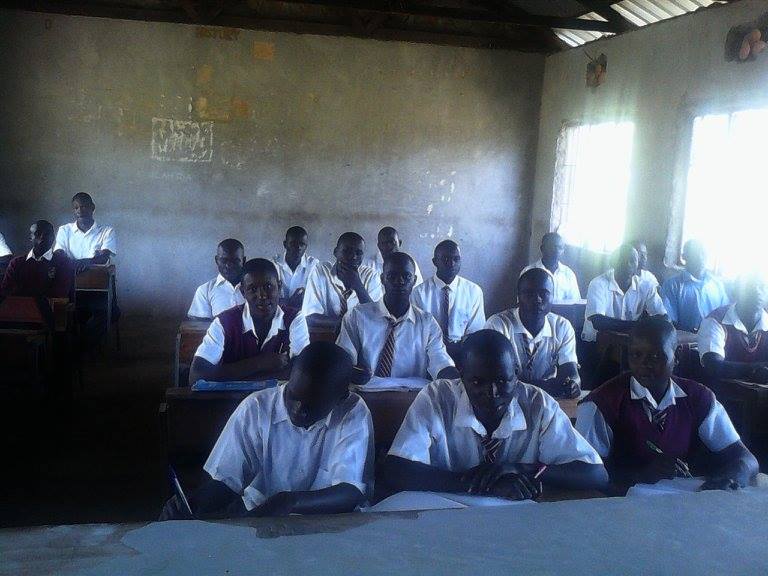
Students at the Kamser Secondary School.  This school requests 20 individual desks.

Students at the Kamser Secondary School. This school requests 20 individual desks.

Our Kenyan field representative, Dan Otieno, will visit the schools sometime in the next month and we hope we can to move ahead with the funding and construction of new desks very soon.  If you would like to help with this, CanAssist appreciates gifts of any size. The average cost per bench desk will be about $40. Can you afford to donate one? (or two would be nice.)

donateNow2b1

Graduation Day photos from Kenya

My day was brightened considerably yesterday morning when I received a sheaf of photos from Kenya showing the children at the SP Geddes Early Childhood Development Centre celebrating graduation of some of their students. I am not sure who is more proud, the kids or their parents. In the past month I have had greetings and announcements from a few of our CanAssist-supported schools in Kenya as they celebrate the end of their school year both with standard exams and graduation gatherings.

The  Canadian Flag flies proudly in the SP Geddes School compound.

The Canadian Flag flies along side the Kenyan one in the SP Geddes School compound.

The photos remind me of 64 years ago when I graduated from the nursery class at the New St James Church in London, Ontario. Always the organizer, I was the first one through the little white gate at the front of the choir loft and held it for the other “graduates”.

In the past two years, this little school has had many improvements funded by the CanAssist African Relief Trust and particularly by my father whose name is now both in the school and a little fellow in the community who, I see from the photos, is growing.

imageThis community has felt very isolated in terms of “development”. They are proud that their young kids are now able to get some early education which will make them more ready to enter the public school system when they are old enough to walk the several kilometers to the government school. Marking their graduation allows the children to feel pride and accomplishment as well and encourages them to continue.

I thank Meshack Andiwo for sending these delightful photos and send the congratulations of Stewart Geddes, CanAssist and all our Canadian supporters to the beaming graduates, not only of this school but also from Hope School in Mbita and Kanyala Little Stars on Rusinga Island who have held similar celebrations in the pars few weeks.

Little Stewart Geddes is growing.

Little Stewart Geddes is growing.

Improving access to Health Care in East Africa

Sometimes in East Africa, health care is not readily available due to the distance to a Clinic or Hospital.  People lack means of transport Ambulances are few or non-existent. Very few people have cars and “roads” are often bumpy overgrown pathways.  This results in people waiting until they are very ill before they look for competent care and by that time it is even more difficult to transport the sick person to a clinic. Many die en route to finding a qualified health care provider.

CanAssist has helped with construction of clinic buildings and provision of hospital equipment, sanitation and water for clinics in

  • Olimai, Uganda,
  • Mbita, Kenya,
  • Gembe East, Kenya
  • and Nyatike District, Kenya.

One of CanAssist’s first projects in 2008 was to complete a laundry facility for a hospital in Tanzania.

In 2012/2013, CanAssist has helped the Kared Fod Women’s Group in Nyatike District of Kenya to build a clinic/dispensary.  A nurse and two community health workers have been supported by grants from the Stephen Lewis Foundation but they had no building from which to work.  CanAssist constructed a clinic building with examining rooms, a small lab and pharmacy in 2012. In 2013 CanAssist put rainwater catchment and latrines in the clinic which opened to serve the public late in October.

An opportunity for better nutrition …

In addition to providing desks and chairs and hospital equipment and classrooms in East Africa, the CanAssist African Relief Trust has also helped establish gardens like this one at the Kanyala Little Stars School in Mbita, Kenya.  The garden’s help to provide a steady source of nutritious food and a modest income-generating activity which helps other expenses.

CanAssist has most recently funded development of a garden like the Little Stars one for a patient support group a the Tom Mboya Hospital in Rusinga Island, Kenya.

Mama Benta of Kanyala Little Stars explains the benefits of this support to African families and groups.

Helping educate African children…

One of the mandates for the CanAssist African Relief Trust is to improve education opportunities for children in East Africa by providing infrastructure that will achieve this.

One of the schools funded by CanAssist is the Oltaraja Elementary School in a remote Maasai community in the Rift Valley, Kenya.   CanAssist has built one classroom there and in 2014 will build another.  Children who would otherwise have had to walk several kilometres to a school (or not go at all) will have the opportunity to get some Primary education closer to home.

Helping Women in Kenya

In the week leading up to Giving Tuesday, CanAssist is happy to show some examples of infrastructure support work done by the CanAssist African Relief Trust in East Africa in the past several months with some short YouTube videos.  Please share them with your Facebook friends.  And on Giving Tuesday, December 3 (or any time, for that matter) please keep the CanAssist African Relief Trust in mind. Your support keeps us moving ahead and helping communities in Africa.

Today we highlight work that CanAssist has done in Nyatike District to help women and girls in that community be safer and more productive.

donateNow2b1

It’s about giving …

For several years I worked in Bosnia and spent a lot of early Decembers in Sarajevo, a multicultural city that was still predominantly Muslim, before returning home for Christmas.  The country was also in a post-war period and struggling to rebuild.  I was always struck by the contrast between their society as it prepared for the winter solstice and year-end and mark varied religious celebrations and the onslaught I got when I came home the week before Christmas where I was bombarded with the pre-Christmas hype and commercialism that we endure in North America.

In the past few years, retailers have developed special shopping days to encourage people to buy, buy, buy – Black Friday and Cyber Monday.  The aim seems to be to offer bargains for people buying Christmas gifts and help the retailer get everyone in the spending mode.

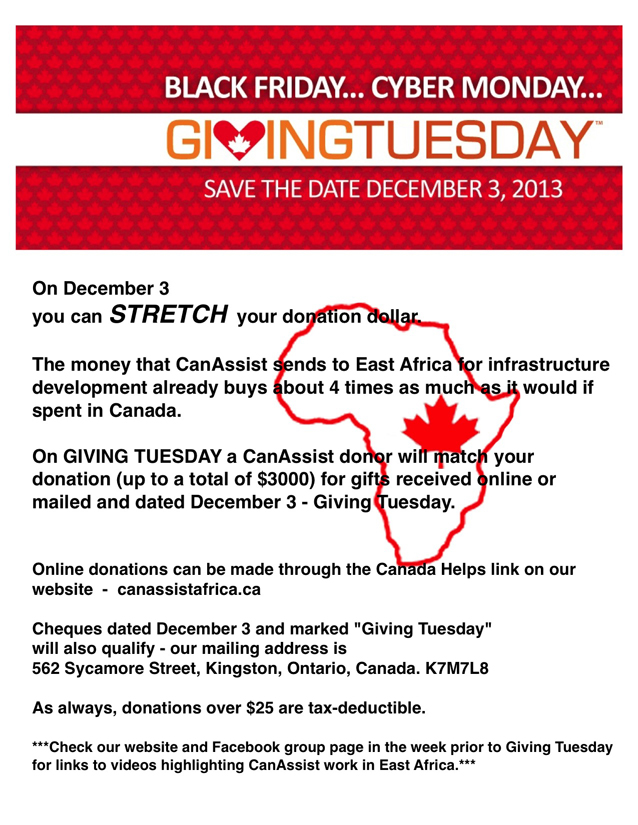
This year, for the first time, Canada will mark Giving Tuesday.  Instead of focusing on getting, on December 3 there will be a country-wide effort to think about giving back – either through donations or volunteering.

africaleaf 2The CanAssist African Relief Trust depends on donations from people across Canada to do the infrastructure support work in East Africa that we know helps communities to improve their well-being.  We fund school classrooms and desks, hospital equipment and beds, rainwater catchment equipment in schools, clinics and communities, latrines for vulnerable children and adults at schools and in villages where no facilities have existed.

Each year CanAssist attempts to fund about $100,000 work.  We rely on the generosity of donors to do this.

donateNow2b1

This Giving Tuesday we hope you will consider the CanAssist African Relief Trust in your charitable activities. And a bonus is that a donor has agreed to match the first $3000 in donations to CanAssist on December 3.  So the value your donations (which already can buy about 4 times as much in East Africa as it would in Canada) will be doubled. Your donation will also be tax-deductible.

A study in the U.S. last year showed that the majority of people would prefer to have money donated to a charity than receive a gift that they could not use or did not really want. In this Holiday Season, please put CanAssist on your Giving list.  Donations can be made with a credit card on the Canada Helps link below or by searching for CanAssist on the Giving Tuesday website.  Or you can mail a check to 582 Sycamore Street, Kingston, Canada K7M7L8.

In the next few days, I will post some videos that highlight some of the work that CanAssist has already done in Kenya, Uganda and Tanzania.  We plan to continue to do similar work next year with your support.

Listen to members of various CanAssist partner communities as they express their appreciation for the generosity of Canadians that is making a difference for them and their families.

donateNow2b1

Giving Tuesday 2013 50

It’s World Toilet Day!

Are you celebrating World Toilet Day?  Do you ever stop to  realize that billions of people around the world do not have access to sanitation facilities like we do in the “developed” world.

According to the World Bank data, only 32% of Kenyans have access to “Improved Sanitation” facilities  – either a toilet or a Ventilated Pit (V.I.P.) Latrine, The latter is basically an outhouse with a decent base, ventilation and a hole on the floor and would be far from what we might call the V.I.P. treatment.

There are many efforts to provide clean water to communities (another luxury for some)  but somehow, latrines are not very sexy to promote for NGO’s doing work in Africa.

Through the CanAssist African Relief Trust we are trying to help.  CanAssist has done several projects involving latrine construction at schools, clinics and in communities.

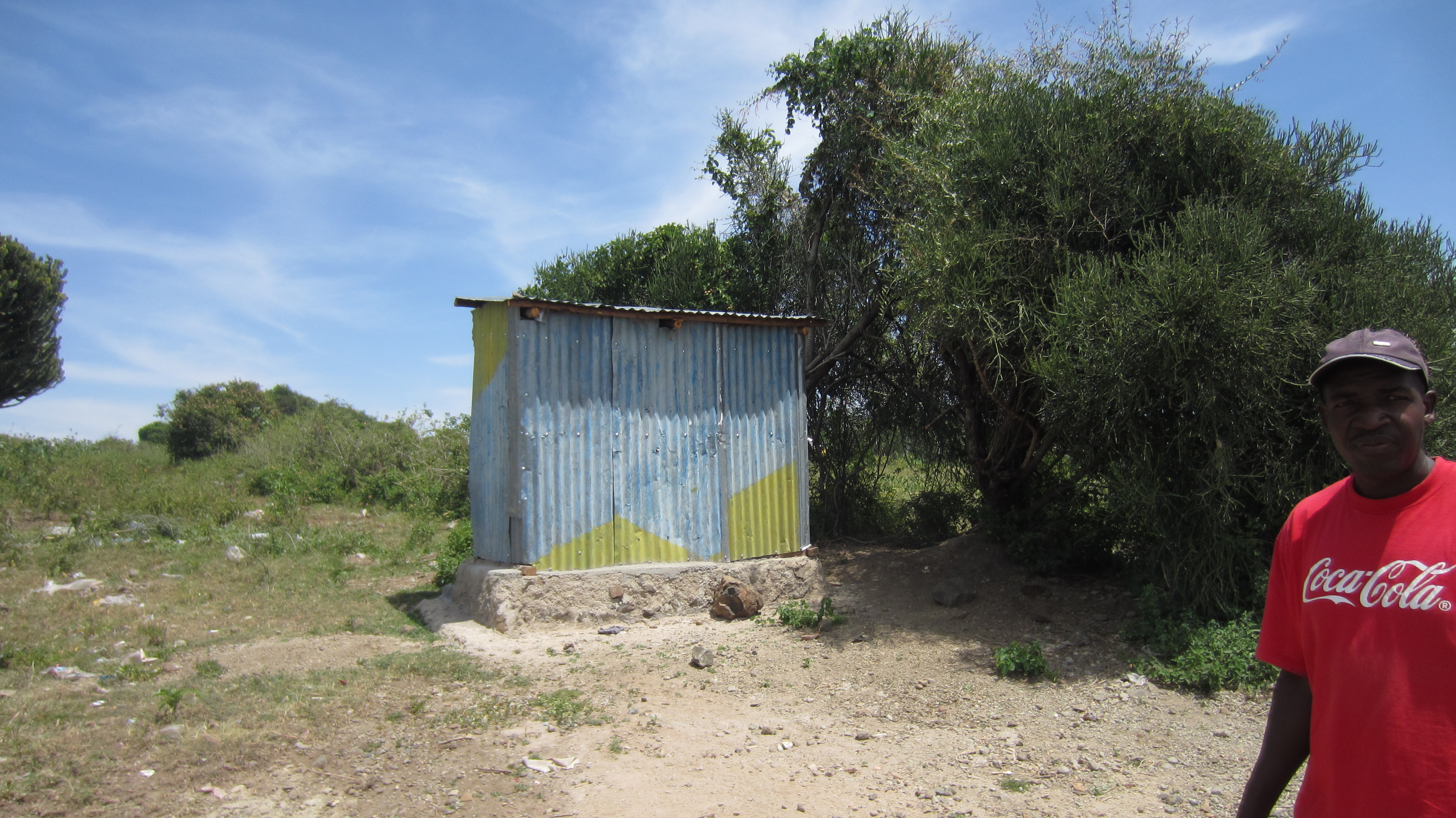
Over 200 people in the village used this small latrine with no ventilation and a full pit!

Over 200 people in the village used this small latrine with no ventilation and a full pit!

One such community is Osiri Village on Lake Victoria where over 200 people used one small toilet which was run-down and full.  Or, more commonly they used the fields and bush around the village for defecation. Not only is this humiliating and degrading, it fosters spread of bowel infections like Cholera and Typhoid.

New Latrines at Osiri Village - August 2013

New Latrines at Osiri Village – August 2013

CanAssist donors helped provide the community with new latrines in August this year.  Still not enough to serve this many people but better than what was there before.

So today, on World Toilet Day, as you flush that toilet, think of the many, many people around the world who live without that luxury.

“On behalf of  the beach management unit i would like to thank you, the entire board of the trust and also the family whom we learnt donated funds through the trust of CanAssist to put up the 4 doors pit latrine in our beach . Thanks.”  Tobias Katete  b.m.u chairman

Meet Edward and Christopher

Edward 500

This is Edward. He is the oldest of three kids living with a father who is intermittently ill and absent from the family. For much of the past three years he and his siblings have had to manage on their own.

Christopher and his older brother, Edward at the Hope for Youth School in Uganda.

Christopher and his older brother, Edward at the Hope for Youth School in Uganda.

Edward and his brother, Christopher, are just finishing up their studies at the Hope for Youth School in Uganda – a school that has been supported in several ways by the CanAssist African Relief Trust. Fortunately the staff and administration at the Hope for Youth school have been there to offer an element of stability to the lives of these kids and a bowl of porridge mid-day when food was scarce.

I have visited the school three or four times and have watched Edward and Christopher grow up. They both are involved with the traditional dancing and drumming entertainment that the school.

Christopher serves up some posho for lunch to visitor, Dave Kay, at Hope for Youth School

Christopher serves up some posho for lunch to visitor, Dave Kay, at Hope for Youth School

When I visited the school in September I asked the boys if they planned to go on to Secondary School. Their response was downturned eyes and shrugged shoulders. Their family has no money for them to attend secondary school (it would take about $550 for each boy to provide tuition and books for a year).

Their final exams are happening in December. The teachers at the school imagine that both boys will qualify for secondary school entrance.  (This little school is leading the pack in terms of grades for their district.)

Prossy

Prossy

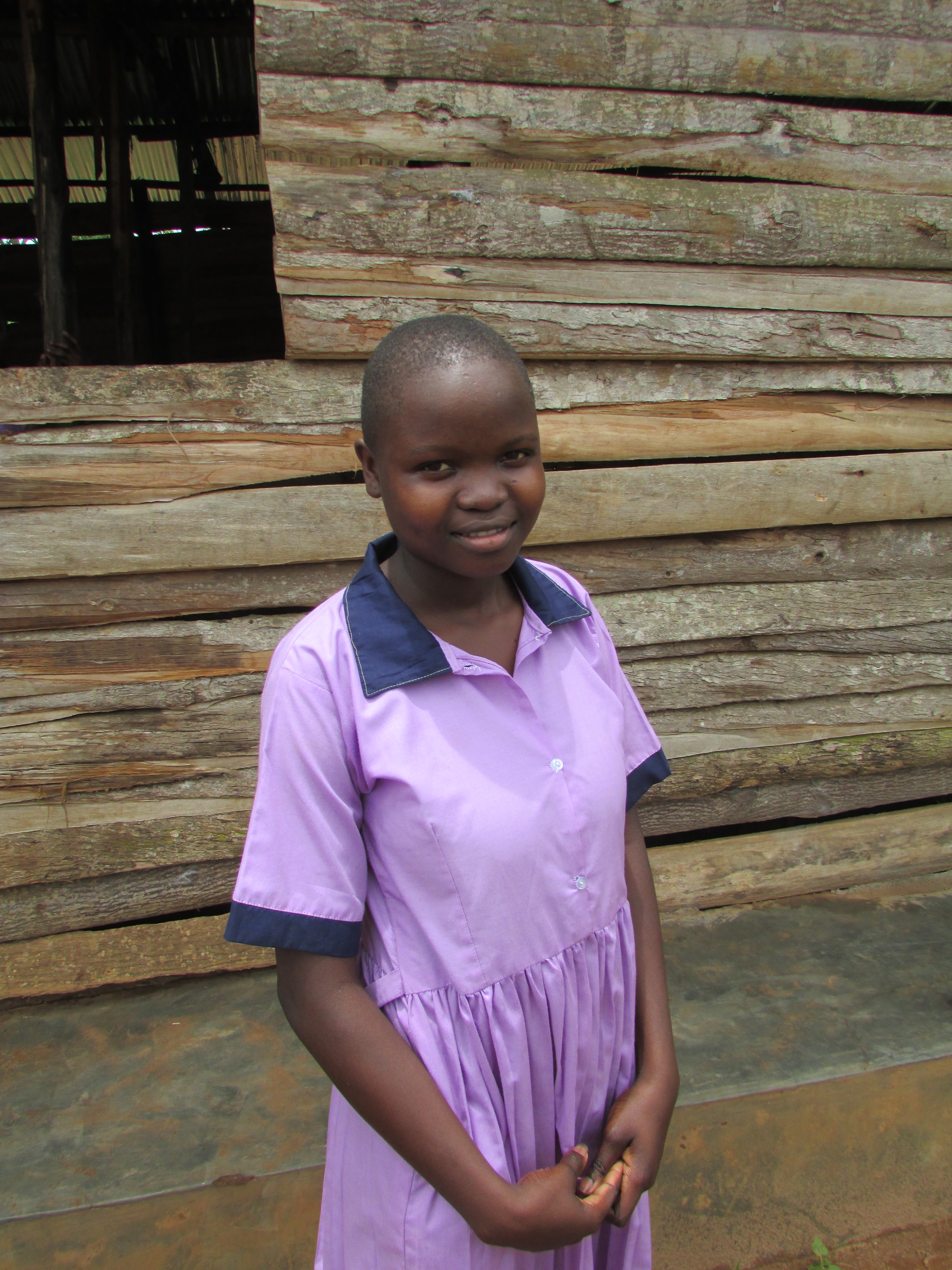
I also met a girl named Prossy who has received top marks at the school but who has no money to continue her education. The teachers report that her academic performance has also been good but she lacks the resources to go on to secondary school.

What will become of these kids, I wonder.

This is a familiar story. African kids may get through elementary school but to go on requires some tuition, books and uniforms and this is often out of reach for a family living in poverty. Even fewer go on to post-secondary education. Most rely on outside support to continue their education. But there are so many pupils in this circumstance all desperate for some assistance.

Enjoy Christopher, Edward and some of their classmates as they do some Ugandan Traditional Dancing at the Hope for Youth School in Uganda. And realize how lucky we are that most of our students are able to complete secondary school with public funding regardless of their background or family situation.