On my way to Kenya …

Saturday January 12, 2013. Noon.

Well I am on my way … Again. This is my tenth trip with The McGill Canadian Field Studies in Africa Programme (CFSIA) and an even dozen to East Africa in total. It is hard to believe. Firstly that so much time has passed and secondly that Africa has become such a big part of my life. For the ten years prior it was Bosnia. Things change and I imagine that ten years from now…I will be a lot older…things will be different again. However, carpe diem will be my mantra for now.
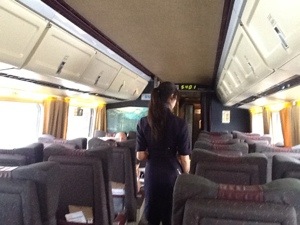
20130112-130600.jpg I am on the train on the way to the airport at Dorval. Via rail has change it’s luggage policies so I have to take a long route via Ottawa to get to the airport so I could take my bags with me. I have one large bag of “stuff” that will be left in Kenya. I have been good about my personal luggage this time, with about 15 pounds less than what I took last year. And even that may be too much. This Via-rail trip may sound like a lousy diversion but, in fact, I have a business class ticket, will still arrive in lots of time for my flight tonight and am being feted with wine and beer and food and free wifi as I travel. So the bottom line is that this is a more reasonable way to spend the day, getting ready for the long two flights to Nairobi than sitting on a bench in the airport in Dorval, guarding my luggage and waiting for the ticket counter to open. I am always glad to get the trip started – no more wondering what I have forgotten or might forget. Too late for that and nothing I can do about it now.

It is barely past noon and I have already had a beer and a glass of wine and lasagna. The steward has told me that there will be a second meal service between Ottawa and Montreal. I will gain weight before I even get off the ground.

I will keep a journal as I travel and probably post in my blog this year as well – something new. I am all set. Twende! (Swahili for Let’s go.)

Photo oops …

I enjoy photography and time that I spent a couple of years ago in the Kibale Forest region of Western Uganda was perfect for taking pictures. It was a delight to wander along the forest road and wait patiently for a butterfly to light on a nearby leaf or flower. While waiting for them to stay still enough for me to focus and get the exposure correctly set, I ended up looking in the grass or bushes and discovered dragonflies and grasshoppers and dung beetles and iridescent flies. On two occasions, by the roadside, I also chanced upon a couple of bright green snakes about half a metre long. Snakes are not my favourites and they are generally feared and killed on sight by the locals. I suspect that these were just harmless grass snakes but it makes a better story if they were poisonous mambas. Some of the research assistants at the Makerere University Biological Field Station told me they hadn’t seen a snake in over a year. I saw two in one day. Luck? Or just the time to stand quietly and wait and watch?

baboon3649 A couple of big baboons would sneak around the corner of my cottage late in the afternoon as I sat on the porch reading. If I stayed very still, they didn’t notice me. One wandered over to a tree a few metres away from me and sat down in the shade, leaning up against the trunk. After a few moments, he looked my way and our eyes met. Well, his eyes and mine through the viewfinder of my camera. He thought for minute, then gave a brief baboon bark and got up to wander off, followed by his pink-rumped companion.

Red colobus 3182One afternoon, I stood for about 20 minutes waiting for a couple of Red Colobus monkeys to follow the rest of their troop in a rather precarious jump across the road. The jump involved climbing high in one tree, rocking the branch to get some spring, then virtually flying through the air spread-eagled to catch the lower branch of a tree across the road and scramble up to safety.

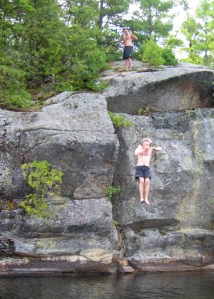
This pair was particularly cautious. They took turns heading to the takeoff spot, rocked a bit, peered over the road to their intended destination then hesitated and sat back down. Second thoughts. They looked at each then traded places, only to agree that this would be a perilous jump. jumpThey reminded me of two of my friends who carried out the same exchange while preparing to jump off a rock cliff into Georgian Bay one summer. I wondered if the monkeys sat around a campfire drinking Bailey’s at night. Not likely.

Eventually one of the monkeys braved the jump. Her success gave new courage to her friend. But the end of this adventure came so fast that I missed the shot. I had framed the photo, set the focus and waited so many times that when the final leap actually occurred, I had written it off as another false alarm. By the time I snapped the shutter, the deed was done. (I did catch my friends in mid air on their way into Georgian Bay, however.)

I also enjoyed taking pictures of the beautiful children in the nearby village of Kanyawara – children that I had met on other visits to the community – Fiona and Moses and the ragamuffin, Rose.

The kids are always happy to pose, and then squeal with excitement when I show them their photo on my digital camera screen.

kan]yawara kids3501One young fellow also decided to give me something good to photograph. I had motioned to some kids to get a bit closer to the cattle they were tending in a field near the village, They chased the animals around a bit then stopped for me to take a couple of pictures. Initially I didn’t notice that one of the boys was leaning up against a bull and massaging the bull’s scrotum. The bull didn’t seem to mind – at first. But suddenly the bull decided that this interaction had become altogether too personal and he determined that it was enough. He grunted and turned on the kid, head down like in a Spanish bullfight. He chased the boy around the field while the other children squealed in delight. Once again the action was too quick to catch and when it stopped, I was too embarrassed for the frustrated and aroused bull to take his photo.

Another group wanted to perform acrobatics for me. As one fellow stood on his head, the pinkish soles of his feet waving in the breeze, another group decided that they would jump over a rolling automobile tire like Russian dancers. I was never quite able to catch the jump as they didn’t understand my instructions to wait until I was ready before they started to roll the tire.
handstandOne little girl stood behind the older boys and raised her leg high into the air to kick it over the tire as it passed. She was wearing a vivid blue dress that set off her smooth brown skin and I caught, quite by accident, her jump behind the boys. I thought, as I reviewed the picture on my camera that this was actually the best moment and a little cropping would make it my picture of the day. But when I looked a little more closely, I realized that this wouldn’t do. The girl had no underwear on and my shot had caught her like Sharon Stone in Basic Instinct. No amount of Photoshop manipulation could fix this up.

Another opportunity lost, but what I lost in photos, I remember as great stories.

African Butterflies

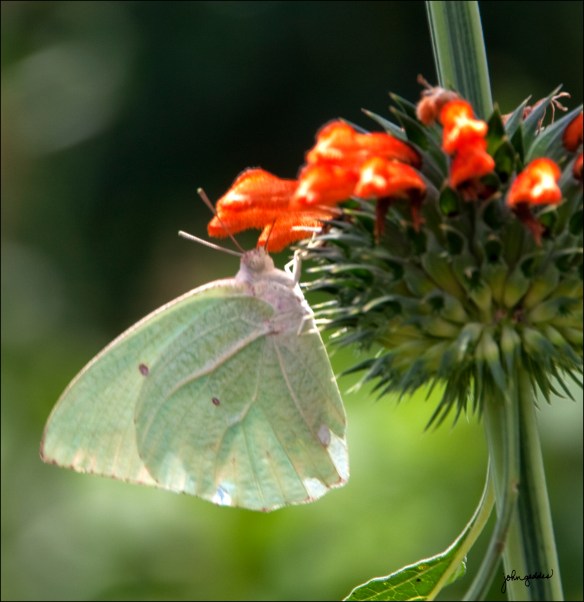
Red butterflyMy last blog about the Monarch Butterfly and Africa got me looking through photos I have taken of Butterflies in Africa.  Good segue into this one which will only be butterfly photos – give you a reading break.  I have enjoyed chasing butterflies all over Kenya and Uganda to get their pictures – more challenging than photographing giraffes. Butterflies don’t stay still for long.

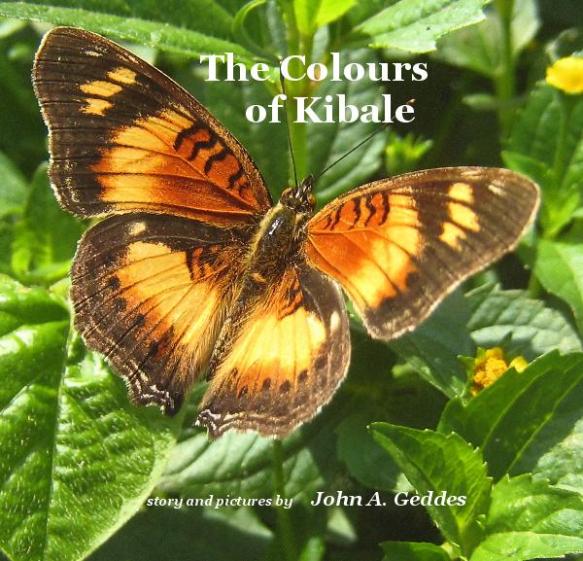
I even wrote a children’s book for my grandchildren based on butterflies in Kibale Forest, Uganda. Some of these photos were taken on Poinsettia bushes in Kenya, others on the forest floor in Western Uganda. The one against the bricks is called a Christmas butterfly.  I hope you enjoy them.  Happy New Year.

butterfly 3

blue butterfly 2

christmas butterfly2butterfly 4

bflies 4458 art

Colours of Kibale Book cover

A tragic death in Tanzania

I never met Susan Wells. The news that this 41 year old Canadian aid worker had been killed in late November shortly after arriving in Tanzania to do charitable work struck home, however.

I imagined her arriving at the Kilimanjaro airport, tired from the long flight from Canada but invigourated and very excited to be back where she felt she belonged in some way. She would have been eager once more to meet loving children who would swarm her and welcome her in a heartwarming way that is hard to describe.

But she never made it. Her body was found in a field near Arusha. What exactly happened is still not certain but the bottom line is that her mission to East Africa ended in tragedy.

The message conveyed to others by this horrendous assault might be that East Africans are cruel and heartless. It is actually quite the opposite. I’m sure that the people living in the community where Susan Wells worked are grieving with a deep despair. I know that she would have had loving associations with many. Why else would she continue to return?

There are bad people everywhere. We don’t want all Canadians judged by the likes of Luka Magnotta, Russell Williams or Paul Bernardo. All of America can not be measured by the actions of the young man who murdered children at a Connecticut school this week. Tanzania has the same population as all of Canada. A tourism sector report in 2010 reported close to 1,000,000 tourist visits per year. Foreign visits  – both by tourists and by community aid workers – are  an important contributor to the local economy. Violence of this nature towards foreigners is rare.

Travel anywhere has its risks. Visitors to East Africa are aware that crime rates there are much higher than at home. Foreigners are perceived (and rightly so) as having more money than the locals. It must be tempting if you see a visitor using an iPhone that costs as much as you live on for a year, to want to relieve them of it. Pickpocketing and theft is rampant. Even the locals are cognizant of security risks and the potential for them to be victims of crime. Caution is always required. I’m sure that Susan Wells knew that and in all likelihood she thought she was being safe. Most of the people you meet are friendly and helpful. It is hard to imagine that you may be the victim of of such a violent crime – whether at home or abroad.

It is very sad that a young woman who had dedicated herself to sharing with people less fortunate in Africa has been brutally murdered. I suspect, however, that she would not want this crime to taint the reputation of the East Africans who had provided many other loving moments that she must have experienced while living and working there.

Visitors to East Africa are much more likely to be greeted with welcoming affection than negativity.

Visitors to East Africa are much more likely to be greeted with welcoming affection than negativity.

My goat – Veronica

In an earlier post, I mentioned my goat, Veronica. Let me tell you about how she came to be mine.

Over the time I spent with the Canadian Field Studies in East Africa, I became good friends with Stephen Moiko, a Maasai fellow who, I met in 2004. In addition to having a traditional Maasai background (he is the second youngest of 27 in his extended Maasai family) Stephen has excelled in academics and is soon completing his Phd in Anthropology at McGill.

His family lives just outside Nairobi on a home site that was once part of his father’s traditional village. They are gradually acquiring various more modern amenities but still struggle with access to water and have outdoor latrines. Electricity is a convenience introduced to their home only 3 years ago.

I have stayed with this family several times since meeting them in 2004 and the many conversations I have had with Stephen, his wife, his mom and his kids have really helped me understand Maasai culture.

On one visit, young Dennis, a nephew of Stephen’s who lives across the road, was sitting with me in the living area as the solar lights were gradually dimming. He was about 12 at the time and intrigued by this muzungu from Canada.

Our conversation was limited and some of our time was spent sitting side by side in silence.

At some point we started talking about friends. “Who is your best friend?” I asked.

“Right now, you are.” was his answer. He took a Maasai bracelet that had been made by his grandmother off his wrist and gave it to me. “I want you to have this,” he said.

Then he said “And I want to give you one of my goats, too.”

I was flattered but didn’t want the boy to give me something so valuable to their family. “Thanks, Dennis but I can’t take it. You know I live far away.”I said

“Oh, you won’t take it away, I will look after it for you but it will be yours. I want to give it to you as my friend.”

The next morning he took me to the paddock and showed me the goat that was to become mine. It was a healthy young female goat with dark marks over the eyes. “She looks like Veronica Lake,” I said. “Let’s call her Veronica.”

Time has gone on. Dennis is now a young man, having just completed secondary school. Veronica looks a little old and tired but she has had a few kids over the years and Stephen’s mom can still point them out to me. Maasai herdsmen identify their animals by making a unique combination of cuts in their ears to show who owns them. Veronica and her progeny are marked with my unique brand – as part of the Moiko clan. When I visit the family, I always go out to the field to find Veronica and what remains of her extended family. Some of her offspring have, no doubt, become someone’s dinner.

I will always remember the generosity of this young Maasai boy. I still have the beaded bracelet and although I have been given many other beaded items over the years, this is the one that I wear when I visit Maasai communities in Kenya. And Dennis and his grandmother still notice with pride that it is his bracelet that is on my arm. The bracelet reminds us all of the endearing connection we have established despite our quite divergent backgrounds.

I suspect that when I visit them over the years, Maria will point out a goat that is supposed to be one of Veronica’s offspring. I won’t know if they are just humouring me or if it really is one of “mine”. But really, it doesn’t matter. We know that it is a little remembrance that will bond us and that is what is important.

Dennis LP.S. How cool is this? As a result of publishing this blog article three days ago, my young friend Dennis has found me online and we have had a chat. He is now a young man, attending University in Nairobi. What a Christmas treat for me!!! The internet has shrunk the world beyond belief.

My very extended global family

Although I am Canadian to the core, since 1998 I have spent many scattered weeks and months working elsewhere in the world and, to my surprise, have come to think of myself as a global citizen.

One of the great pleasures I have had is developing enduring friendships with people in many communities where I have visited or worked.

In Bosnia I enjoyed the hospitality of several families, and developed ongoing friendships with co-workers during the 11 years that I worked there. My closest associates were Bosniak Muslims, Orthodox Serbs and Croat Catholics. We were all able to get along and work together despite the preceding years of war based on “ethnic” differences.

With my Italian “family”. We chat regularly by Skype and get together every year or two either in Europe or North America.

In Italy, I have friends who have a bedroom in their house that they call “John’s room”. I have enjoyed making pasta with Aunt Bruna, babysat young Enrico when he was a baby and enjoyed special pizza made for me by their friend, Antonio.

In East Africa I have been blessed with cultural nicknames. In Maasai, I am John Ole Moiko Geddes and am a part of the Maasai Oseuri age set. In Uganda I also have been given traditional names of endearment. In western Uganda I have been given the empaako name Amooti. In another part of Uganda I am known as Otim. Emails that I get from there are addressed to Dr. Otim.

My non-conformist calf.

I have my own goat in Kenya (her name is Veronica) and have actually developed a little herd of her offspring. When I visit there, my Moiko family can find my goat(s) in their herd and point them out to me. The goats, however, don’t remember me.

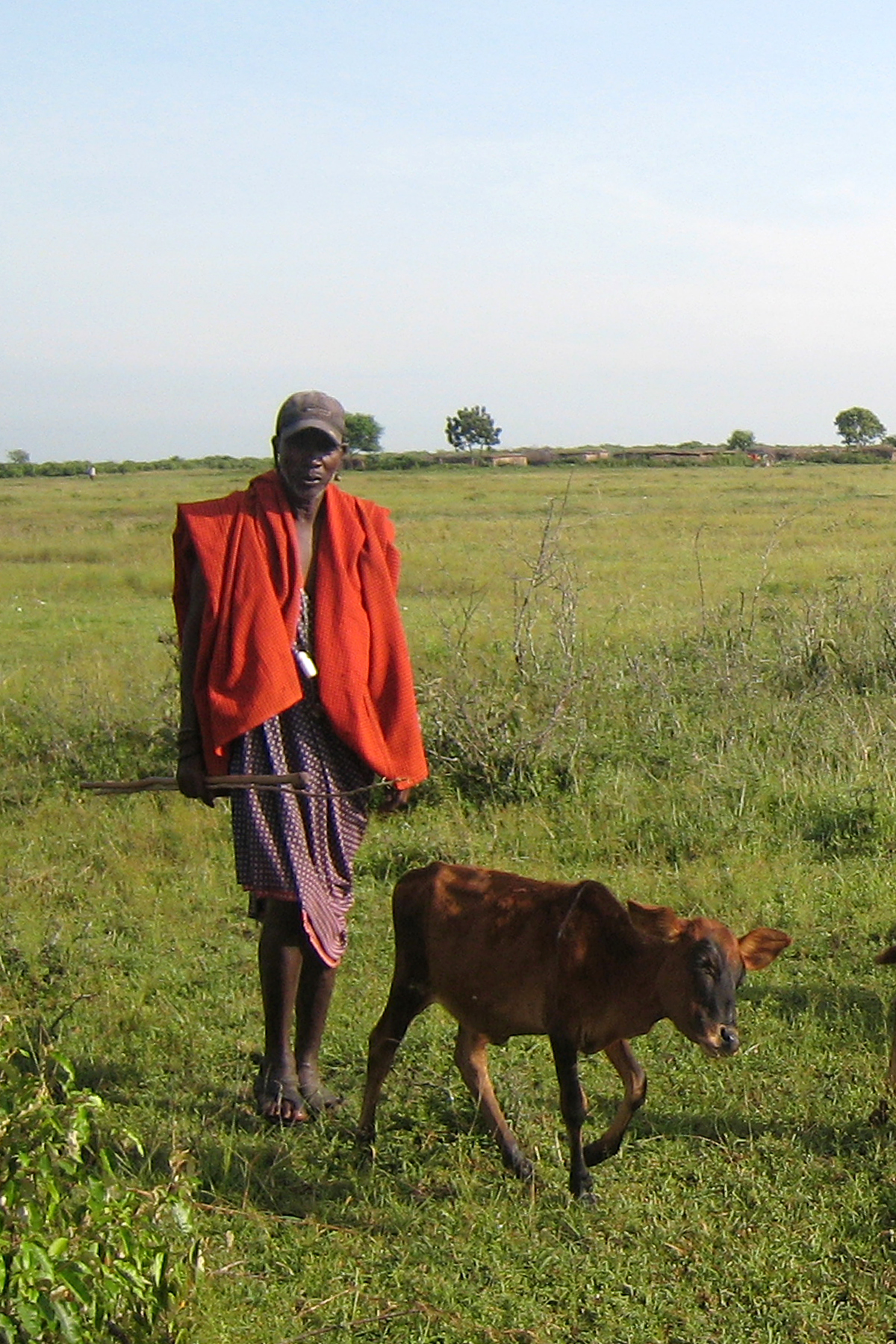
I also had a calf given to me a few years ago. The Maasai fellow who did this said he picked this particular animal because it was “weird”. It was a real non-conformist liking to ramble with the other animals, goats and sheep. I took this as a compliment. Culture, colour, race or religion make no difference to me as to who my friends and family are.

Dan learned early on that if he wanted to be part of my family, he had to sport the right T-Shirt.

In Kenya there is a fellow who calls me “Dad”. I hear from him every week (more often sometimes than my kids here in Canada!) and he is Facebook friends with my family, has chatted on Skype with my 93 year old father and has pictures of my grandchildren stuck on the door of his refrigerator.

Having the chance to actually live with families in different communities has definitely given me opportunities to develop close friendships not usually available to “tourists”. These relationships have enriched my life immeasurably.

Alzheimer’s disease – a personal reflection

How many times has this happened to you? You have spent all Saturday afternoon doing your Christmas shopping and you emerge from a crowded WalMart, ladened with bags into the parking lot. It is snowing a bit and cold. You head down the aisle where you think you parked your car but as you wander along you can’t see it. You stand for a minute, perplexed. All the rows look the same and that red van that you think was parked beside your car has left. For fifteen minutes, you wander up and down the aisles. At some point you actually wonder if someone has stolen your car. Do you call the police? You become frustrated and curse yourself for not taking more notice of your spot when you parked. All these parking lots look the same. Eventually your vehicle appears, right where you left it. You vow this won’t happen again. But, of course, several months later it does.

Now imagine what it is like to live like that day-in and day-out – never remembering exactly what you did two hours ago, what season it is or who that friendly person was who said hello to you in the grocery store. You are at a party and seem to be the centre of attention. Is it your birthday? An anniversary? Is it Christmas or Thanksgiving? Those young adults are calling you Grandma but your grandchildren are much younger than that. Or are they? This is all so confusing.

My Mom had Alzheimer’s disease. Throughout her life she was always a very social person, loving parties and music and people. As her dementia progressed,
robbing her of her memory, it also took her ability to do what she loved most – interact with friends and family. She knew something was wrong. At first others would politely correct her or challenge her gently about what she was saying. Then people began to sit quietly, unable to have a meaningful, accurate conversation. Instinctively, Mom noticed this change and she began to withdraw as well. I’m sure she was feeling increasingly isolated in her fog. She worried that she was “driving everyone else crazy”…or that she was crazy herself.

During World War II my mom entertained troops training for war with a touring show in Ontario. She loved it. Her signature numbers were Minnie the Moocher and Frankie and Johnny. Even years later her friends would urge her for a rendition at parties. And she would gladly oblige.

As I watched her, I imagined that her life had become like living in a constant dream-like state. Her mind would take elements of truth – things she had read or seen on TV- and mingle them with people and events from her past into a tangled, but very inaccurate story. Dreams can be entertaining, bizarre and even terrifying. How difficult must it be to live in a dream all day, never being able to ground yourself in reality?
It helped to keep a sense of humour and even Mom seemed to hold on to this at times.

I remember a heated debate between my parents one Saturday afternoon as we drove up Richmond Street. Mom was insisting that one of her old friends was participating in a sing-along version if The Sound Of Music that was to play at the Grand Theatre the next week.
“He’s dead, Lorraine.” insisted my Dad.
“No,” claimed Mom ” He is playing in the orchestra. I read it in the Free Press.”
“We went to his wake, three weeks ago.” grumbled Dad.
A tense silence followed. Then she added “He looks like hell.” More silence. ” It must have been those three days in the funeral home.”

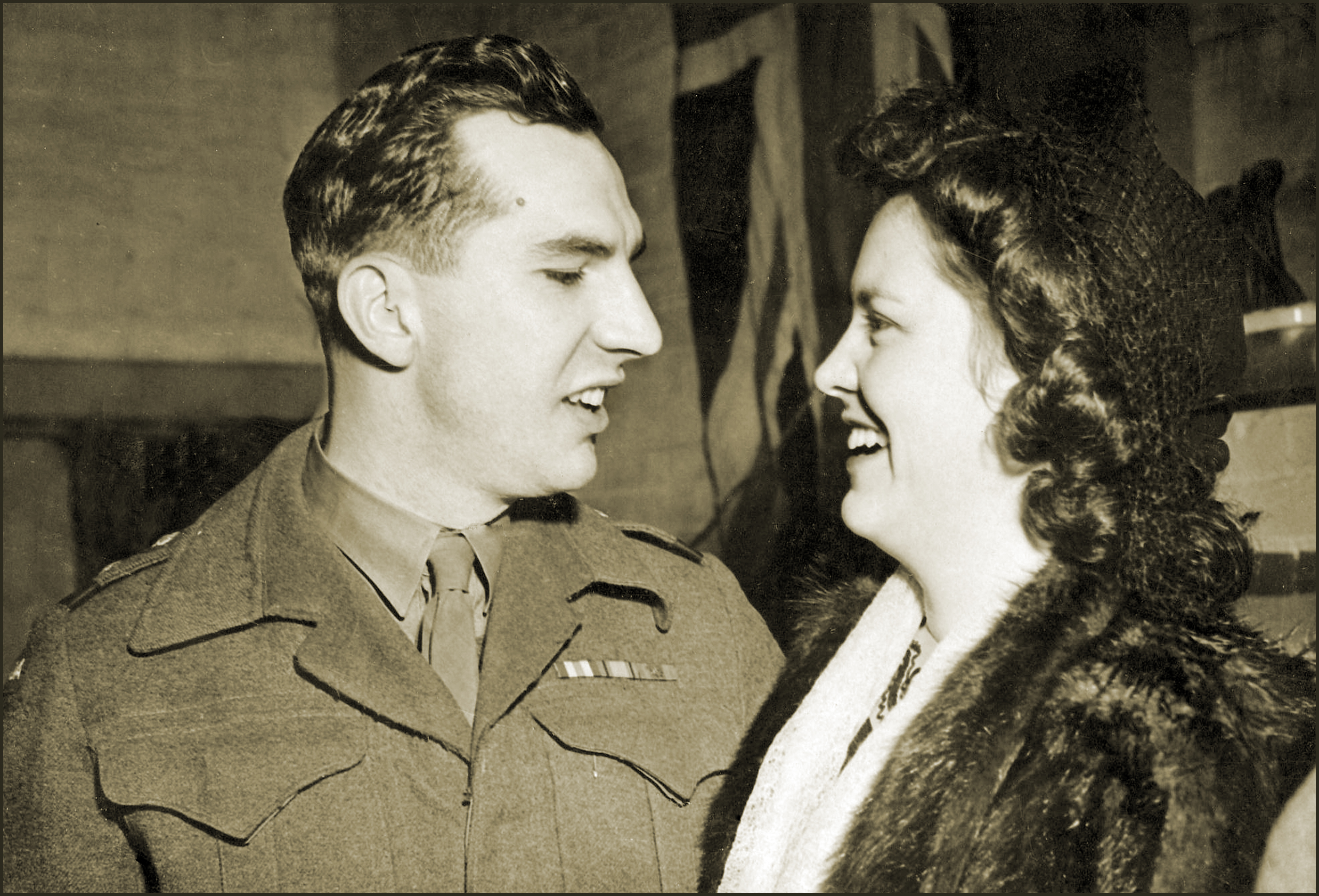
Mom and Dad greet each other at the train station as my Dad returns from service in Europe during WWII. This photo was taken in late December 1945. They married June 8, 1946.

It was touching to watch my Dad try to continue to involve Mom in decisions and planning just as they had done throughout fifty five years of marriage. Long discussions would end in some consensus but an hour later, Mom would not remember what had been decided and ask the same questions over again. Mom was losing her memory. Dad was losing his life partner.

The progressive course of Alzheimer’s is frustrating and saddening for both the person a their family. It is also a common problem that will become more prevalent as we baby- boomers age. We are not alone. Our family shares this difficult experience with the families of Ronald Reagan, Margaret Thatcher, Charlton Heston, and possibly even yours.

The last time I saw Mom she was in a chronic care facility. She really didn’t know where she was. We had spent the evening before listening to old songs on a Tillsonburg radio station. She loved music. It gave us a springboard to reminisce about times past. When I left to go home the next day, Mom was in wheelchair in the hallway waiting to go to lunch. I leaned over and kissed her on the forehead. As I stood up to go she grabbed my hand and squeezed it. “Do that again” she whispered. I did. It was our last goodbye.

Getting the jump on jiggers

A couple of years ago, while I was traveling in Uganda, I thought that I had a blister or a plantar wart on the end of my little toe. I even bought new running shoes to try to remedy the situation.

Little did I know.

When I was sitting on a patio in sandals, one of my African friends looked at my foot. “You have a jigger.” he said. I pooh-poohed this suggestion but he insisted. ” I know jiggers. When I was a kid I had so many of them. Sometimes when I was going to fetch water, I would sit down and cry because my feet hurt so much.”

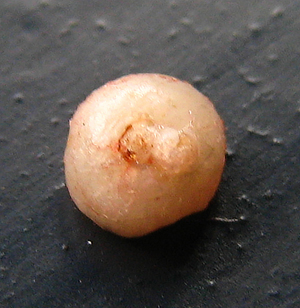
I was surprised when my friend “delivered” this cyst full of jigger eggs out of the tip of my right pinkie toe.

“I can cut it out for you.” he offered.

He could have started that sentence with “I’m no doctor, but …”

So as he whittled away at my toe, extracting a lump that was the size of a small kernel of corn from the tip, I learned about jiggers.

Jiggers (quite different from chiggers) are little fleas that live in the soil. They are a common plight in East Africa. The female finds some flesh into which she can burrow and produce hundreds of eggs which are encased in a cyst-like structure that gradually grows within the flesh of the host. Eventually the cyst bursts and the eggs scattered back into the dirt where the cycle starts again.

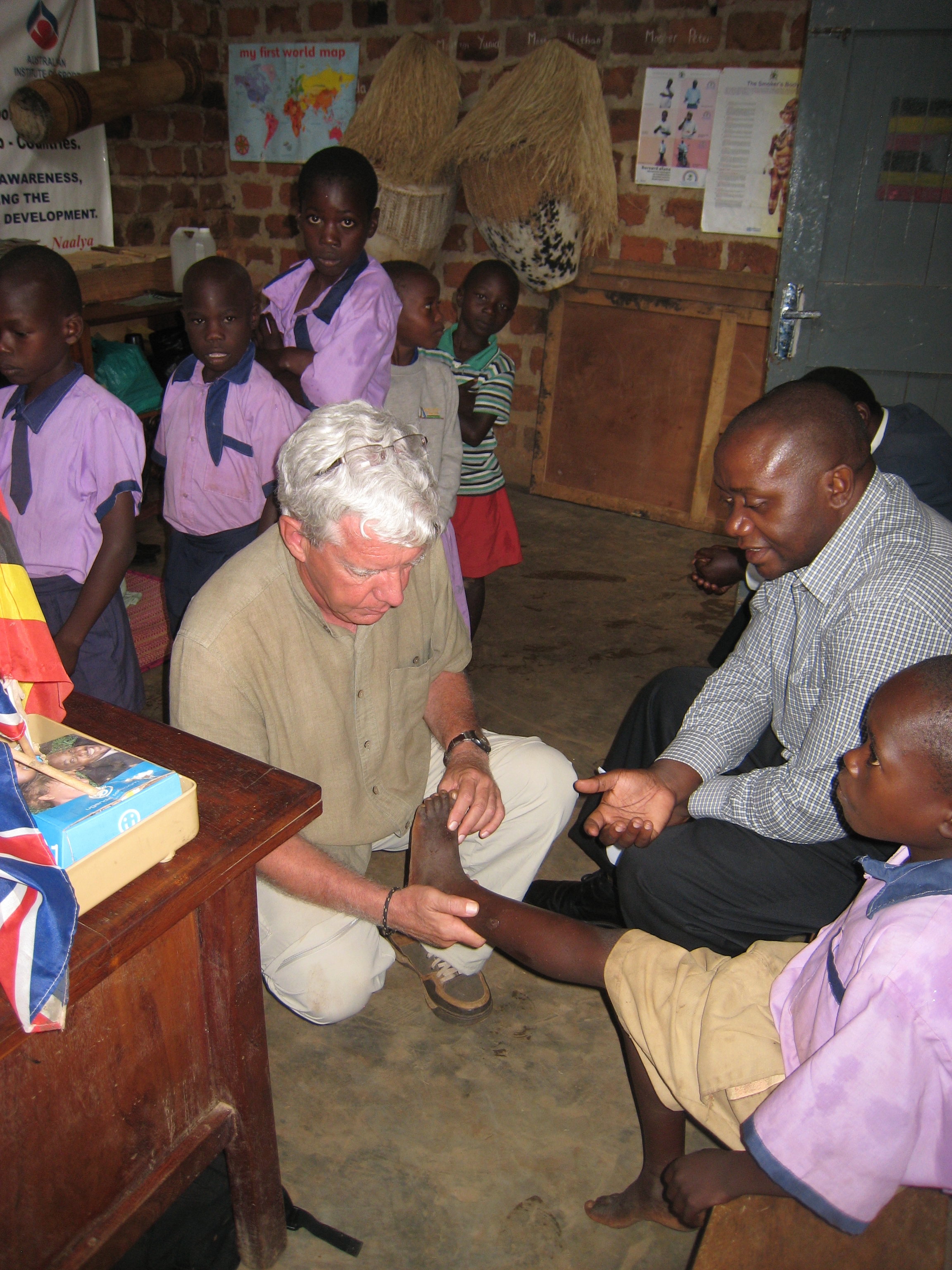
These fleas live in tropical environments where people are often barefoot or wearing minimal footwear. In addition, traditional homes and even schools and churches often have dirt floors, the perfect environment for the jiggers to flourish. Children’s feet in crowded, dirt-floored classrooms are particularly vulnerable to infestation.

The CanAssist African Relief Trust learned of this plight for children in the Hope for Youth School near Mukono Kenya. The teachers insisted that cementing the floors of the classrooms would help eliminate this scourge. So, with money raised by the children at Sweet’s Corners School near Lyndhurst, Ontario, CanAssist set about cementing the floors of the Hope for Youth School.

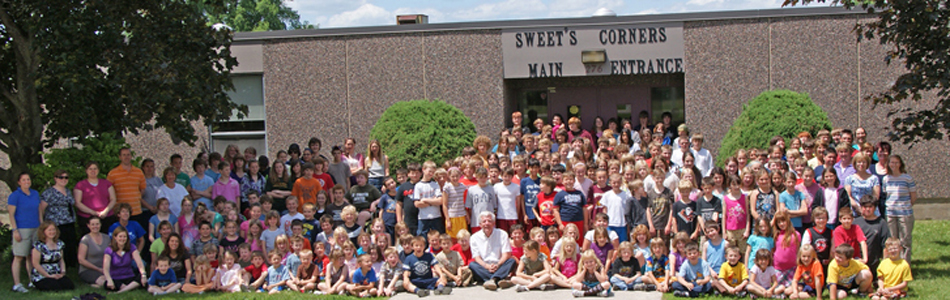
The children of Sweet’s Corners Elementary School helped their African counterparts by funding the cementing of school floors to prevent jiggers.

The children at Hope for Youth school were happy to show me their healthy feet after the classroom floors had been cemented to prevent jiggers.

With development projects it is often difficult to evaluate outcomes. But for this one it seemed relatively simple.

I had the school check the feet of all 107 children in the classrooms before the flooring was installed. 74% of the kids had jiggers and more than half of these had more than three in their feet. A few months after the floors were cemented, I was in the school and personally checked the feet of all the same children. The prevalence of jiggers went from 74% to 7%. The children were delighted.

The cost of this project was in the range of $1500  It brought relief to over 100 children and also demonstrated that cement floors that can be washed and swept can stop a jigger infestation.

A dilemma

A recent article that I wrote for the Kingston Whig Standard about little Jerry O, a 4 year old Kenyan orphan that I encountered earlier in 2012, brought several responses that included questions about adoption. Here is a response that I sent to one couple who inquired about adopting this child.

“There are many, many children in Africa who are vulnerable in so many ways. Your offer to help is kind and generous.

By “adopt” I am not sure if you are meaning a true adoption – bringing a child to Canada – or a distance adoption which amounts to sponsorship and support from here.

The true adoption process is long and complex and I really know very little about it. African countries tend to be pretty strict on the process of adoption to another country, requiring that the adoptive parents actually live in the African country for a period of time prior to any adoption happening. Private adoption would also likely entail similar restrictions. But I am not familiar with all the laws and rules. You may have explored them already.

Sponsoring a child is often the support from a distance that an individual child needs for schooling, food, security. Some individuals decide to do this through an organization or on a one-to-one basis. It certainly provides good support for children in need and is much less expensive and also keeps the child in their own cultural environment. (This piece entitled “A Small Act” was on CBC radio a few months ago can illustrate the value of this kind of support. http://www.cbc.ca/thecurrent/episode/2011/09/26/a-small-act-chris-mburu/ )

Individuals who support a child through organizations like World Vision can be sure that money that they donate is being used in the community where the child lives. Your “adopted” child benefits through the supprt that is given to the community for sanitation, education and health.

At the CanAssist African Relief Trust, we realize that it is impossible to help any one child specifically without overlooking someone else who may be as deserving. Our preference has been to provide help within a community or school that will, in some way, benefit all. CanAssist does not facilitate individual supportive programs for school fees, etc, but rather works to help within the community, using community leaders, teachers and health care workers to guide our work there.

You may have heard this talk that I did at a Chalmers United Church service in Kingston, Ontario a couple of years ago. My talk addresses this dilemma. A Youtube link to it is here:

I commend your interest in helping these vulnerable children.

There are, no doubt, families in Canada who would gladly “adopt” a struggling orphan child from a developing country. But it is not simple. Not only is the adoption process encumbered with discouraging red-tape, but rescuing one child leaves many others behind who are equally needy and deserving of support.

Through CanAssist we try to do what we can to help a community to improved water access, sanitation, health or education. Hopefully there will be many children who will benefit in some way from this process rather than by plucking just one for exceptional attention.”

Digging in to help Africa

Food security is a major issue in Africa. The cost of living in East African countries has risen substantially over the past couple of years and, coupled with erratic climate changes, this has resulted in a situation where people who are already living on the edge are having trouble affording basic foods, let alone nutritious diets.

The CanAssist African Relief Trust has sponsored  school garden projects that have been very successful. Our first project related to this was with the Kanyala Little Stars school on Rusinga Island, Kenya. The first step in starting a garden here was to put up fencing to keep hippos and other grazing domestic animals like donkeys and goats out of the garden. If you think think squirrels and rabbits are a garden nuisance, imagine the havoc that can be created by a family of hippos lumbering up from Lake Victoria to graze overnight. For the Little Stars garden,  CanAssist also arranged appropriate irrigation through a pump and sprinkler system and set up a work shed, toilets and provided seeds and fertilizer. The garden has proven to be a great boon to the school and community, now producing fruits and vegetables that supply the school children with better nourishment, and provide a bit of extra income to help with other school expenses, provide nutritious supplements to needy families in the community at reasonable cost. It has worked well.

In other schools in Kenya and Uganda we have supported similar projects which are also proving to be equally successful.

Earlier this year, we also helped a local youth group in Migori district of Kenya and this week we received an encouraging report from Edward Kabaka, director of Rieko Kenya, a local development organizaton.

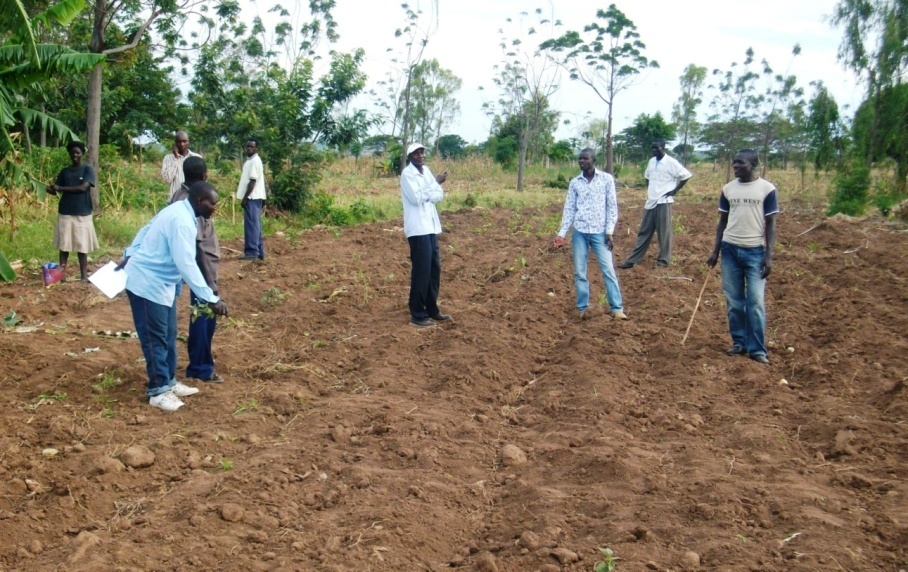
The Nyaruanda Youth group provides the manpower to till and maintain their local garden.

“The Nyaruanda Youth Development Group is a community based initiative started in March 2010 in south Kadem Location, Nyatike District in Kenya. It was started by a group of orphaned youths who were left behind as head of households in their families. When they were 10-12 years old, many of them lost their parents to HIV/AIDS. They have graduated to replace their deceased parents in roles of fending for their siblings. As they grew up together, they realized that they were facing the same challenges and started organizing themselves in small groups. They need to provide food, clothing, shelter, medical care and above all schooling for their families.

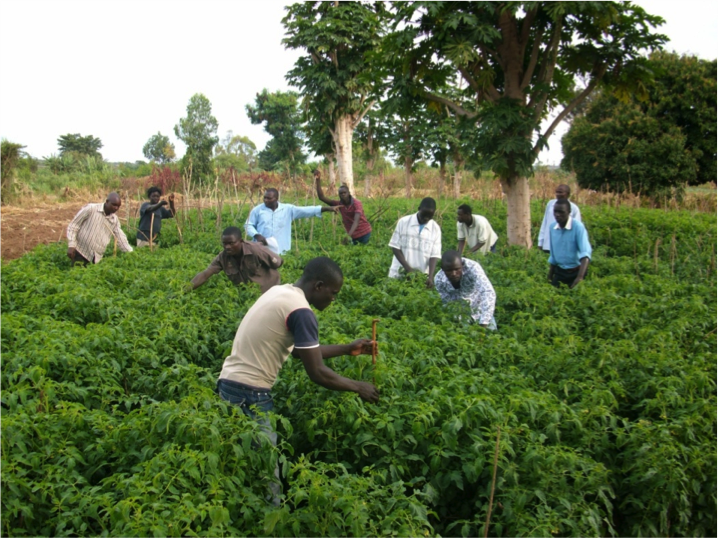
A first harvest of Tomatoes, Watermelons and Sukuma wiki (a staple African green rich in iron and vitamins) from the CanAssist-supported Nyarunda Youth Group garden.

In the beginning of 2012, Rieko Kenya had the opportunity to be visited by John Geddes, the Executive Director of CanAssist African Relief Trust (CAART). Rieko Kenya considered Nyaruanda Youth as one of the groups to be visited by John. John agreed to present an application to CAART to help support the group, through Rieko Kenya, with small scale irrigation equipment and materials. The support from CAART was realized with Rieko Kenya providing training and facilitating the purchase of the irrigation equipment and materials (Water pump and pipes) and presented to the group. After a period of a half a year and following this life saving and transforming support, the Nyaruanda group is very excited and happy to report a huge financial gain. They are now able to be self reliant and meet their financial obligations.”

CanAssist is delighted that these local agriculture projects are not only providing better nutrition to communities; they are helping to stimulate economic development.