What little people can do …

This is an article that I wrote which was published in the Kingston Whig Standard on Saturday June 22, 2013.

The pupils in Mrs. Pare’s class at Glenburnie Public School are ending the year on a high note and children in a rural Kenyan school are also celebrating, thanks to the generosity of their Canadian peers.

IMG_0485In May, I visited the Glenburnie School class to talk about Africa.  They had been reading a book called Alexandria in Africa by Eric Walters. In the book, Alexandria, a young teen from a privileged background ends up in Kenya and sees the challenges of people who live with much less. The Canadian students became both curious about the way people live in Kenya and also motivated to do something to help children living in communities that are not as fortunate as we are.

I showed the Glenburnie kids pictures of my many Maasai friends, told them how traditional Maasai people live, showed them Maasai beadwork and ornaments and photos of my goat, Veronica, whose family is ever growing in fields near the Rift Valley.

We also talked about schools in other regions of  Kenya and, in particular, about the S.P. Geddes Early Childhood Development school in a little fishing village on the shore of Lake Victoria.

Through donations to CanAssist from my 93 year-old Dad and some of his friends and family, we have been able to fence a schoolyard, put in latrines and build a couple of new classrooms at this rural lakeside village.  In appreciation, the community named the school after my father and when I visited them last February they even plunked a six-month old boy in my lap and said “Meet little Stewart Geddes.” You can imagine how wide my smile was and how excited I was to share this news of this Kenyan namesake with my father when I got home.

Although the village school has two classroom buildings, the older one needs repair and they have absolutely no furnishings.  The children learn sitting on mats on the floor – a dirt floor in the older building. CanAssist hopes to remedy that soon.

When the Glenburnie students heard about this they decided that they would like to help out.  They started a “Dimes 4 Desks” campaign at the school, set up a table at the school Fun Fair, took tin cans and jars around to other classes to collect dimes and told their neighbours about their project to help African children.  One of the students made a video/powerpoint presentation (which can be seen on the CanAssist website).

Last week I went back to the school and they made me guess how much they had raised.  I was astounded when the figure reached $1100.  I wondered, “If 24 grade four students could come up with $1100 in a month collecting dimes, how much could the same number of adults raise collecting toonies?” Does anybody out there want to try?
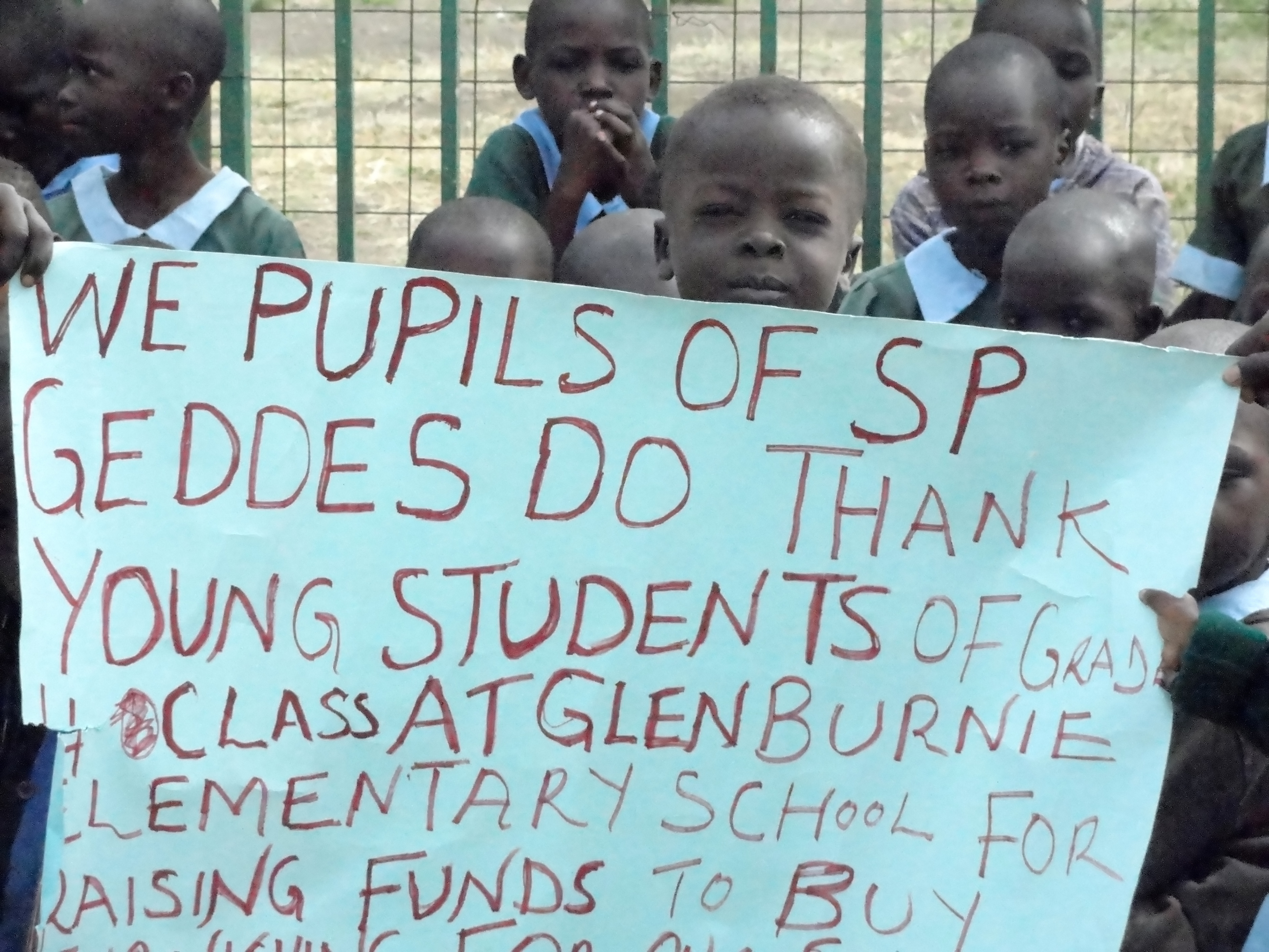
Thank you from AfricaI relayed the good news that the Kenyan school will soon be able to purchase desks and chairs  and soon received a photo of the kids at the school preparing a thank-you sign for their friends in Glenburnie.  I can only imagine the excitement of the children in her class when Mrs. Pare shows them this personal thank you from Africa.

The children at Glenburnie School told me that they had learned a lot about Africa in the last month. And I learned too.  These kids proved that with teamwork and enthusiasm goals can be met.  They proved that small financial contributions can mount to accomplish something significant if everyone contributes a bit and shares the load.  The smiles on their faces and their delight at being able to help others has buoyed me up for the ongoing work that CanAssist is doing in East Africa.

As Gavroche in Les Misérables says “This only goes to show what little people can do!”

What would you do?

Peter Singer starts a recent TED talk with a dramatic video of a small child in China being knocked down by a car on the street. As she lies there, injured, three passers-by totally ignore her. The incident is reminiscent of the Good Samaritan story from the Bible, where a priest and a Levite ignore the plight of the injured traveler on the road before the Samaritan stops to help.

Singer asks the audience – “How many of you would have stopped to help?” Not surprisingly, most of the hands go up.

African Child - can you overlook her needs?

African Child – can you overlook her needs?

Singer then says something like “Well, there are children all around the world who live in poverty, vulnerable to preventable violence and disease – millions of them. Are you paying any attention to them?”

“Unicef reports that in 2011 over 6.5 million children under age 5 died of preventable poverty-related diseases.”

Singer is an Australian philosopher and humanist who writes and speaks out about many ethical issues including poverty and animal rights. In 2009, he wrote a book called “The Life You Can Save”. In the book he encourages readers to commit to helping developing communities with a small portion of their income. If you can afford to pay $2.00 for a bottle of water that is free from the tap, do you not have money to spare – to share, in fact, with others who are living without many of the necessities of life that we take for granted?

His message is not a guilt trip. He encourages us to enjoy the fruits of our labours and our good fortune at living in a community where there is law and order, fresh water, social responsibility and enough food but to share a portion of that with others who must live without those amenities.

We are constantly bombarded in the media with photos of children in North America who have perished in the natural (or unnatural) disasters like the recent tornado in Oklahoma City or the bombing at the Boston Marathon. Our hearts go out to the families of these children and we feel sad and that these deaths seem unfair. These are a very few children whose stories touch us because they are in communities like ours.

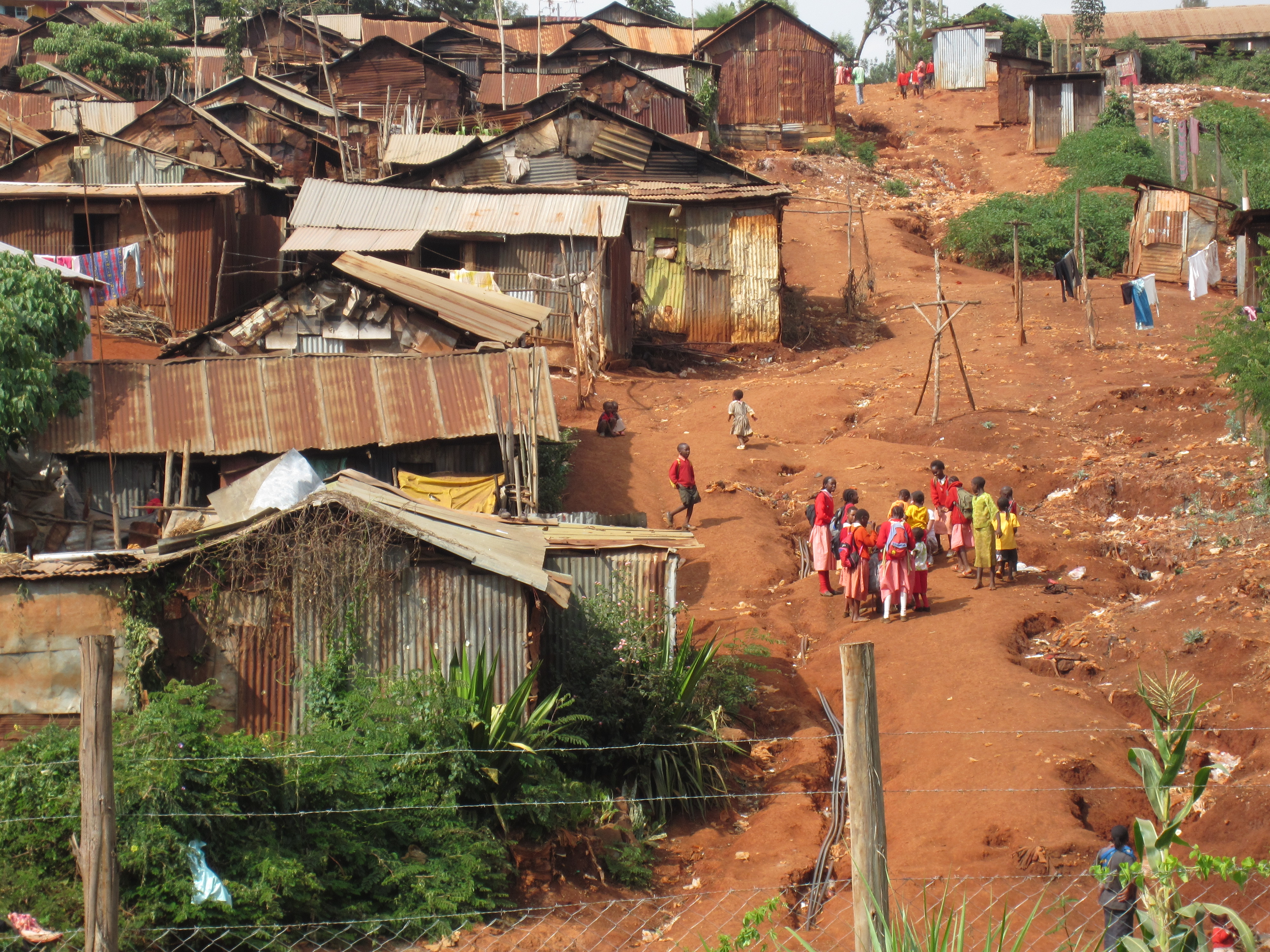
Nairobi slum

Nairobi slum

But what about the mothers of the 19,000 children who die in the developing world every day from preventable poverty-related problems? Do we give them much thought? Do we pour money into the developing world to help these 19,000 like we do to help families of the few North American families touched by tragedy?

Think about this for a minute. It is sobering. 19,000 per day.

The CanAssist African Relief Trust is attempting to so something, however small to help these families in East Africa. Rather than pick a few children for special attention, CanAssist funds community infrastructure projects like school classrooms, water and sanitation improvements, food security through local agriculture and health care facilities. We have funded around $300,000 in projects since 2008. Our Canadian community helping communities in Africa.

If you are interested in what we do, please look at our website http://canassistafrica.ca We are always happy to receive support, moral or financial, for the work we are committed to do to lessen the effects of poverty for vulnerable East African families.

(If you would like to participate in what CanAssist is doing to help communities in East Africa you can donate using the Canada Helps link below.)

donateNow2b1

Here is a link to the Peter Singer TED talk. If you have 15 minutes please listen to what he has to say.

Every day a school day…

Earlier in the month I posted a blog about the dilemma faces by African girls who attempt to cope with the monthly need for sanitary pads with no money to purchase them.

Here is a video of Mama Benta Odhiambo of Kanyala Little Stars on Rusinga Island, Kenya outlining that need.

I have also written a complementary article for the Kingston Whig Standard published on April 4, 2013. If you are interested, here is a link to that article.

An African solution to an African problem…

When I visited my friends, the Moiko’s, in Kenya in January they were having a problem. They are a typical (modern) Maasai family who, in addition to pursuing higher education and communicating with their iPhones and on Facebook, continue to raise cattle. Traditionally, the Maasai have had a strong link with their herds of cows and most of their typical day revolved around tending to their cattle as their main investment. Finding water and grass for their herds, often when water and pasture is scarce, milking the cows in the morning and evening and protecting them from predator animals took most of the Massai herdsman’s time.

img maasai bomaIn many parts of Kenya and Tanzania, there are Maasai villages that continue in this tradition. People live in bomas, small collections of mud huts around a central paddock where the animals are kept overnight. During the day, the women look after the children, collect firewood and water, cook and repair the homes while the men and boys take the cattle and goats out to graze.

At Stephen’s place, the children are up early to catch the school bus and Stephen goes off in his car to work at a Food Security program as he finishes his work on a PhD from McGill in Montreal. But at home, there are still the cattle to manage. Hired herdsmen look after the cows and goats but the family still goes to the paddock in the evening to inspect the livestock and milk the cows. It is a nice mixture of modern life with the traditional. I imagine that this blend is not easy to maintain.

In rural areas, Maasai men, dress traditionally and periodically meet together to "eat meat" and discuss community problems, like predators attacking their cattle.

In rural areas, Maasai men, dress traditionally and periodically meet together to “eat meat” and discuss community problems, like predators attacking their cattle.

One of the problems in more rural settings is with predators attacking the cattle. I remember dropping in to a clinic at Talek, near the Maasai Mara, only to be drawn into the small treatment room by the local health care provider who was covered in blood as he sewed up the wounds of a young Maasai fellow who had been mauled by a lion he was chasing away from his cattle.

Nearer to Nairobi, the risk of these larger predators is not as great although I do recall Stephen’s daughter telling me of having to walk past a cheetah on her way up the driveway one day as she came home from school.

The recent problem for Stephen is buffalo that come down from the Ngong Hills to a salt lick in his pasture. They break down the fence and they eat the grass. Buffalo are also a significant security risk as they can be ornery beasts, dangerous to humans. When I visited in January, Stephen was getting tired of mending the fence and wondering what to do.

Well it seems that not far away other Maasai were having similar problems with lions. And this boy came up with a solution. Check it out. I wonder if it will work for Stephen’s buffalo problem.

Everyone is a winner…

I am always happy to be part of a win-win situation. Last year I enjoyed one that was win-win-win. If I think about it I could add more win’s but you get the point, I am sure.

The St Gorety School is a secondary school in a small village called Mikei, Kenya. It is pretty rurual, about 20 km inland from Lake Victoria and in Nyanza Province, one of the least advantaged districts of Kenya.

Through CanAssist, and with my Canadian friends, Virginia and Suzanne I met Edward Kabaka a couple of years ago. Edward is a founder of a local support group called Rieko Kenya. Well, to make a rather long story shorter, Edward brought the needs of St Gorety School to our attention. Basically the school, serving secondary students from the surrounding region, was overcrowded and needed more classroom space.

St G classroom 2013So in 2012, CanAssist agreed to construct one classroom and complete another which had been partially built with Kenyan government funds which dried up before the roof could be put on the building.

Virginia and Suzanne, secondary school teachers themselves in Kingston, promoted this project to some of their students who responded with fundraising to help with this building.

At the same time, the Queen’s Health Outreach group, university students whose mandate is to promote Health education to students and youth in various parts of the developing world, were looking for a new district in Kenya to work. I have been an ad hoc mentor to this group for the past several years and it seemed natural to put them in touch with Edward and the St. Gorety School.

QHO students visited several schools and community groups in the Nyatike region in 2012.

QHO students visited several schools and community groups in the Nyatike region in 2012.

Last year the QHO group spent several weeks in the Mikei/Nyatike community, living in a house overlooking the rolling Kenyan hills and interacting with schools and women’s groups in the region to educate and promote healthy living practices. Another group of six QHO students are excited to be returning to the community in May/June this year.

When I visited the St Gorety School and other groups in the region in February, they all lit up with smiles at the mention of the QHO students and were ecstatic to hear that there would be a group returning this year.

So where do all the “win’s” come in?

  • CanAssist has been delighted to be able to provide infrastructure support to the school (and three other community groups as well…more about those in later posts).
  • The QHO group has found a welcoming community where they are able to do their outreach work to promote education about health to young Africans.
  • The community which was actually quite neglected and off the beaten track for development has been excited to welcome visitors from Canada who are eager to help them improve their living circumstances. Kenyans love visitors.
  • Edward Kabaka has found support for his dream of improving well-being in the community.
  • Some of the students at KCVI and LCVI in Kingston have established pen-pal relationships with students in Kenya and have the satisfaction of having been able to help their peers in Africa.

And I sit back and smile. It’s all so good.

Treat yourself to the joyous music from the St. Gorety school choir in the Youtube video below.

A delicate matter …

Imagine being a 14 year old girl heading off to school with your menstrual period and not having a clean place to tend to your sanitary needs – or any money to buy sanitary towels for protection. This is the dilemma faced by young African women have no money for the luxury of sanitary pads.

Young African women have enough to contend with but when I visit African schools, the female students are quite vocal about this disadvantage. Schools recognize that girls miss a few days each month because they have no means of dealing with the problems caused by menstruation. This slows their ability to achieve at school and causes them to fall behind the boys.

Sanitary pads are expensive. Particularly if you are barely getting by with other school expenses or even food. In some communities there are initiatives for producing reusable, washable sanitary towels but even this requires a private place to look after your needs which is often not available.

The women at St Mark’s Church in Barriefield, Ontario heard about this problem at one of the schools that has been supported by the CanAssist African Relief Trust for the past few years. Provision of ongoing supplies and consumables is not within the mandate of CanAssist so we approached this Anglican Church Women’s Group for help. And they responded.

The ACW at St Mark’s have been providing funds to purchase sanitary towels and undergarments for the young girls at Kanyala Little Stars School for the past 18 months. And the reward has been better attendance from the girls who now can match the boys in academics. One young woman even got top marks for the region in the last set of standardized exams before secondary school.

Another Kingston couple came forward with a donation to CanAssist to build construct improved latrines and washing areas for the girls. What an improvement!

This problem is huge. But I commend the women at St Mark’s who have determined that they will help the young girls at Kanyala Little Stars with this somewhat delicate problem.

The school is running low on supplies and the St Mark’s ACW will be looking to send another $450 to help for the next few months. In order to keep this ongoing, I’m sure they would welcome a $10 from other Canadian women (or men) who would like to contribute.

Next time you see me, pass me $10 and I will be glad to send it on to the St Mark’s ACW and thence to the Kenyan young women. Evelyn Bowering (ebowering@cogeco.ca)would also be happy to be the intermediary to help bolster the ACW funds to keep this program going.

ACW friends
To quote Mama Benta “I have to congratulate those Anglican girls. They are good ladies!”

Sanitation improvements on Rusinga Island

Rusinga Island, on the shore of Lake Victoria, is off the beaten path for development and in a very poor region of Nyanza Province, Kenya. The people in lakeshore beach villages rely on fishing for their meagre incomes and the population of the villages fluctuates with the season. Declining fish stocks in Lake Victoria and lowering sale prices for their catch has made living conditions difficult for these people.

Kaswanga Beach - Rusinga Island, Kenya

Kaswanga Beach – Rusinga Island, Kenya

The CanAssist African Relief Trust has been looking to improve sanitation in four of these lakeside commnities. The villages may have a population of between 100 and 400 inhabitants throughout the year and have had no toilets or washing facilities. Bathing has been done in the lake where there was no privacy and near the same region where household water was drawn for both cleaning and even drinking. The fields near the village were makeshift night toilets and became both contaminated and a health hazard. When it rained, fecal contamination was washed into the lake close to the bathing/water retrieval areas. This, of course, provided a significant health hazard for diarrheal diseases like typhoid and cholera.

CanAssist has been working through the Badilisha Ecovillage Foundation on the island to improve this situation.

VIP (Ventilated Improved Pit) latrines and a washing room at the Kaswanga Beach community.

VIP (Ventilated Improved Pit) latrines and a washing room at the Kaswanga Beach community.

We  built latrines at four of these villages around the island. Although four stalls may not really seem adequate to serve the population of the village, these are four more than zero and the communities are grateful for their addition. The fields adjacent to the villages are much cleaner. Fecal contamination no longer is washed into the lake near the village where water for drinking, washing and cleaning is gathered.

The communities have also asked for washing facilities so that they can have some privacy when cleaning themselves and also discourage contamination of their water supply with detergents and soaps. Last year, assisted by a specific donation from the Mission Committee of St.Peter’s Cathedral in London, Ontario, CanAssist built two washing rooms with cement floors, four private stalls with doors and drainage into a grey-water underground pit.

I visited the Kaswanga Village in February (see the movie trailer here! and was assured that these improvements, which may seem rudimentary and even crude to the North American reader, were making a grand difference to the people who live there.

The treasurer of the Beach Management Unit smiled and added ” If we could get a water pump to bring water from the lake to a raised tank near the washing facility it would be warmed in the sun and we could have warm showers.”

Some things that we just take for granted are deemed luxuries to many African villagers.

Voters queueing to cast ballot in Nairobi this morning.

According to news reports people in Kenya started lining up in the middle of the night to vote. They blew whistles and horns to rouse everyone to get out to vote and lined up in long, long lines waiting for the polls to open. This is an historic vote for Kenya, both in terms of the outcome and the aftermath. I am following reports on Twitter to get a sense of it.

Here is a photo posted on Twitter of a bird’s view of voters queueing to cast ballot in Nairobi’s Eastlands.

And here is another posted on Twitter of people lined up to vote. Incredible.

Would Canadians queue like this to vote?

Kenya Elections

Kenya is having a very important election on March 4, 2013.  Not only will the outcome of the election determine the course that the country takes in the next four years, it will test if  fair, democratic elections, free of tribal antagonism  can happen in Kenya.  Last time it was a disaster.  I do hope that this election is free of corruption and tribal violence.

This is a copy of an article that I wrote for the Kingston Whig Standard when I was in Kenya last month. It was published on Saturday February 23.

Kenya goes to the polls on March 4 and throughout the. country there is an air of anticipation and some angst.  After the last general election in December 2007, allegations of rigging and unfairness led to two months of tribal turmoil that left about 1500 dead and many people displaced.

Traditionally, political parties in Kenya have been organized with tribal affiliations.  There are over 40 tribes in Kenya, each with their own customs and language. Three of these make up the majority of the population and since the country got independence in the early 1960’s governments have been predominantly formed by these.  In a culture where nepotism and rewarding friends is common, this meant that many people were left disadvantaged because they had no effective political representation.

But this is changing.  The ruling President, Mwai Kibaki, has had his share of corruption scandals and improper political manipulations but the freedom of speech and right to protest that was introduced when he was elected in 2003 is remarkably different from the preceding regimes of Moi and Kenyatta.  Under their rule, dissenting views were not permitted and perpetrators were punished and even tortured.

 The resulting opening-up of the press and media and the ability for people to freely challenge or express opposing views has allowed Kenyans to participate more openly in the process. Last week, an historic open debate between the 8 Presidential hopefuls took place. Kenyans throughout the country were glued to their radios or looked to find televisions to witness their leaders actually debate policy rather than just face off like power mongers.  This sort of open contest of ideals has never happened here before. It symbolizes progress.

After the last election, some Kenyan leaders were indicted to go to The Hague on charges of crimes against humanity resulting from their alleged inciting of the 2008 post election violence.  In a peculiar twist, two of these men, whose followers in 2007-8 were in violent opposition to each other, have united into one party and are seeking the posts of President and Vice President.  Although this seems a strange alliance, there are many who support their party because of their tribal allegiances.  On the positive side,  the uniting of these two opposing groups into one party will likely dramatically dilute the risk of violent post-election conflicts this round. On the down side, if they are elected it may provide some strain on international relations.

Another hopeful sign of democratic progress occurred last month when party nominations were held.  Because there is an almost assured win for some parties in different constituencies, and because new alignments of parties and tribes have happened since the last government was formed, the competition to get the nomination certificate was fierce.  In some regions, winners were announced that clearly were the result of unfair practices or rigging of the voting process.  This led to protests in many areas and although these were sometimes rowdy, they did not lead to violence.

And what is even more encouraging, in many locations, the nominations that were announced with corrupt support were revoked and the candidates preferred by the people through a legitimate voting process were installed.  Many established Members of Parliament lost their positions and thereby their power to control. 

In one city there was great celebration as the corrupt nominations were overturned and a joyful parade ensued, people singing and waving tree branches in a symbol of peace.

Kenya is a young democracy. Canadian confederation occurred in 1867 and one has only to look at the Robocall scandal in 2011 go know that we still have some problems with our elections. Kenya was granted independence in 1963 and so are 100 years behind us in development of governance. In this technological age we are used to things happening with immediacy.  The growth of a democratic society takes time.  For years this country was under colonial rule with a control being in the hands of a few.  Kenyans learned that power was concentrated at the top and that individuals, particularly Africans, had little opportunity to express their political views or have any influence. So it is no wonder that it is taking time for Kenya to grow into a freely democratic society.

The people who live here are anxious for this change to happen and it may be frustrating to them that it is so slow.  But in the ten years that I have been visiting Kenya, there are many improvements and opportunities for citizens to express themselves freely and exercise their franchise to vote.  As a result of the new constitution, the judicial system has been revamped and people now have confidence that they can be represented fairly in their courts.  

 The upcoming elections will be a chance to overcome the turmoil that ensued after the last debacle which may turn out to be a difficult but essential lesson.  The consensus now is that with the contentious party nomination process behind them, the introduction of electronic voting for the election (supported in part by Canadian aid), a fair judicial system to prosecute perpetrators of crime and violence, and the realignment of parties and constituencies there will be an openly fair upcoming election. I hope that the country will be able to celebrate progress after March 4.

This article on BBC may expand if you are interested in learning more.

BBC news video about the upcoming Kenya Elections.